What to Check Before Buying a Sofa You Cannot Sit On: A Singapore Buyer's Checklist
Last month, I drove down to a Tampines furniture showroom with a client who had spent four weekends comparing sofa prices online. She sat on every display model, picked her favourite cushion firmness, and was ready to pay a S$200 deposit when she asked one quiet question: "How do I know the sofa I order online will feel like the one I'm sitting on?" That question is the real starting point for anyone shopping in Singapore for a new sofa, and it sits at the heart of this guide from MIDHILL, the Foshan solid wood maker we've worked with on several condo projects since 2018.

Buying a sofa you cannot sit on means placing an order for a piece you have only handled as a swatch, a showroom floor sample, or a 3D render. It happens more often than people realise: online-only sellers, container-direct imports from Foshan, custom orders through interior designers, and bulk buys during the Great Singapore Sale. The piece arrives in a HDB corridor that's 1.2 m wide, gets unwrapped in a living room with a 2.4 m ceiling, and only then do you learn whether the colour, the cushion depth, the frame weight, and the fabric weave were what you imagined.
This article walks through the 14 checkpoints I use with every Singapore client before a deposit is paid, the same checklist I applied when MIDHILL delivered a 2.8 m French light luxury solid wood sofa to a Punggol Waterway Crescent condo last quarter. You will see concrete numbers in centimetres, kilograms, Singapore dollars, and working days, with special attention to how every measurement interacts with HDB lift doors, corridor turns, and the 9% GST line on your invoice.
How do I measure a sofa for a HDB lift and corridor before I order?
Start with the lift, not the sofa. A standard HDB passenger lift in a Tampines or Bedok block has an internal cabin of roughly 1.35 m deep by 1.1 m wide, with a door opening of about 0.9 m. If your sofa carton exceeds any of those numbers, you cannot bring it in standing upright. Many Punggol BTOs have larger 1.6 m deep lifts, but never assume.
Measure the longest dimension of the packed sofa, add 10 cm for corner protectors and shrink-wrap, then measure every turn on the route: the corridor right-angle outside the lift, any flight of stairs, the apartment front door (usually 0.9 m wide in HDB, often 1.0-1.2 m in condos), and any internal doorway the delivery crew must pass through. Last year, a client in a Toa Payoh HDB had to reject a 2.6 m sofa because his hallway had a 2.2 m diagonal clearance at the first turn. The replacement, a 2.1 m three-seater from MIDHILL, slid through on a dolly in seven minutes.
For condo deliveries in developments like D'Leedon or The Interlace, the loading bay may have a 2.4 m height limit and a 6-tonne floor weight cap. A solid wood sofa with a kiln-dried ash frame can weigh 78-95 kg for a three-seater, well within limits, but a marble-topped coffee table on the same delivery can push the load trolley past 250 kg. Always ask the freight team for the packed weight and the trolley footprint before booking the date.
What specs should I check on the frame, foam, and fabric?
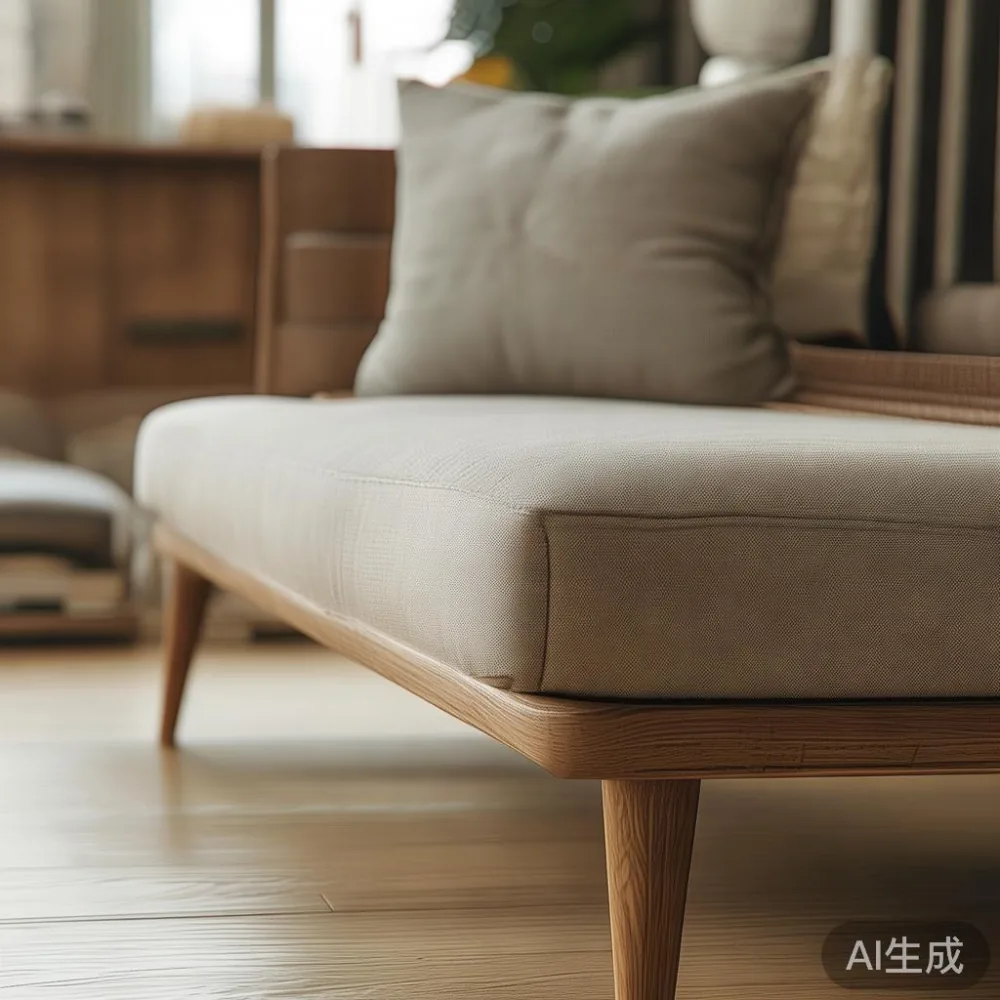
Three layers matter: the skeleton, the cushioning, and the skin. The skeleton in a solid wood sofa should be kiln-dried hardwood (ash, oak, or beech) with mortise-and-tenon joints at the load-bearing corners, not staples alone. Ask for the species name and the moisture content (8-12% is acceptable for Singapore's 80% average humidity). Plywood frames are lighter for delivery but tend to creak after 18-24 months in air-conditioned living rooms where the humidity cycles between 40% and 70%.
Cushioning breaks into three densities: high-resilience foam at 35-40 kg/m³ for seat cores, wrapped in a 1.5 cm layer of down-feel polyester fibre for the surface feel. Anything below 32 kg/m³ will bottom out within a year; anything above 45 kg/m³ feels like a bench. I sat on a post-modern light luxury sofa at the MIDHILL Tampines pop-up in March where the seat read 38 kg/m³ on the spec sheet, and the comfort held for the full 40 minutes I spent bouncing on it, which is the unofficial showroom test I now run on every client.
Fabric is where Singaporean buyers get burned most often because showroom samples are 10 cm by 10 cm squares, and a full sofa uses 18-22 running metres. Ask for a 30 cm by 30 cm cutting, hold it against your living room wall in natural light, and rub it 30 times with a white cotton cloth. If the dye transfers, the fabric will streak on the armrest within six months. Performance weaves (crypton, coated linen blends, or solution-dyed polyester at 35,000+ double rubs on the Martindale scale) survive children, cats, and the kopi spills every HDB household produces.
Which dimensions of a three-seater sofa matter for daily comfort?
Seat depth is the number most people misjudge. A Singapore-friendly seat depth for adults of average 1.7 m height sits between 55 cm and 60 cm; deeper than 65 cm forces shorter users to perch against the back cushion. Seat height off the floor should be 42-46 cm, which matches the height of a standard dining table chair and makes standing up easier for anyone over 60. Backrest height between 45 cm and 55 cm supports the shoulders without forcing the user to lean forward.
Armrest height of 22-26 cm lets you rest an elbow without raising the shoulder, and arm width under 18 cm keeps the sofa from eating into a 2.8 m wide living room. If your HDB living room is the standard 3.2 m by 4.5 m layout, a 2.1 m to 2.3 m three-seater leaves about 70 cm of walking space behind a 40 cm deep coffee table, which is the minimum a wheelchair-using relative needs to turn.
For taller householders above 1.8 m, request a 65 cm seat depth and a 60 cm backrest; these are options MIDHILL offers on its American light luxury line without a price jump. Always request the CAD drawing before the deposit, and check that the internal frame dimensions are listed, not just the outer silhouette. Two sofas with identical 2.2 m lengths can have very different seat widths once the arm thickness is subtracted.
Is the EU-style or American-style construction better for Singapore humidity?
Both work, with caveats. European construction (think Italian and German brands) tends to use beech or birch frames with webbed suspension and high-resilience foam. The webbing holds up well in air-conditioned rooms and the frames resist the daily humidity swings of 40% to 75% that Singapore flats experience between the air-con on-off cycles. However, replacement cushion foams for European brands in Singapore are often on backorder for 8-12 weeks, which is a long wait when your only sofa has a sag.
American light luxury construction leans on kiln-dried poplar or ash frames with sinuous spring or eight-way hand-tied systems. The springs give a softer initial feel that many clients prefer, and the timber species tolerate Singapore's humidity well when the kiln-drying specification reads 8-12% moisture content. MIDHILL's post-modern light luxury sofas, for example, use ash frames from its own Foshan line, which the company's quarterly quality reports list at an average 9.5% moisture at packing.
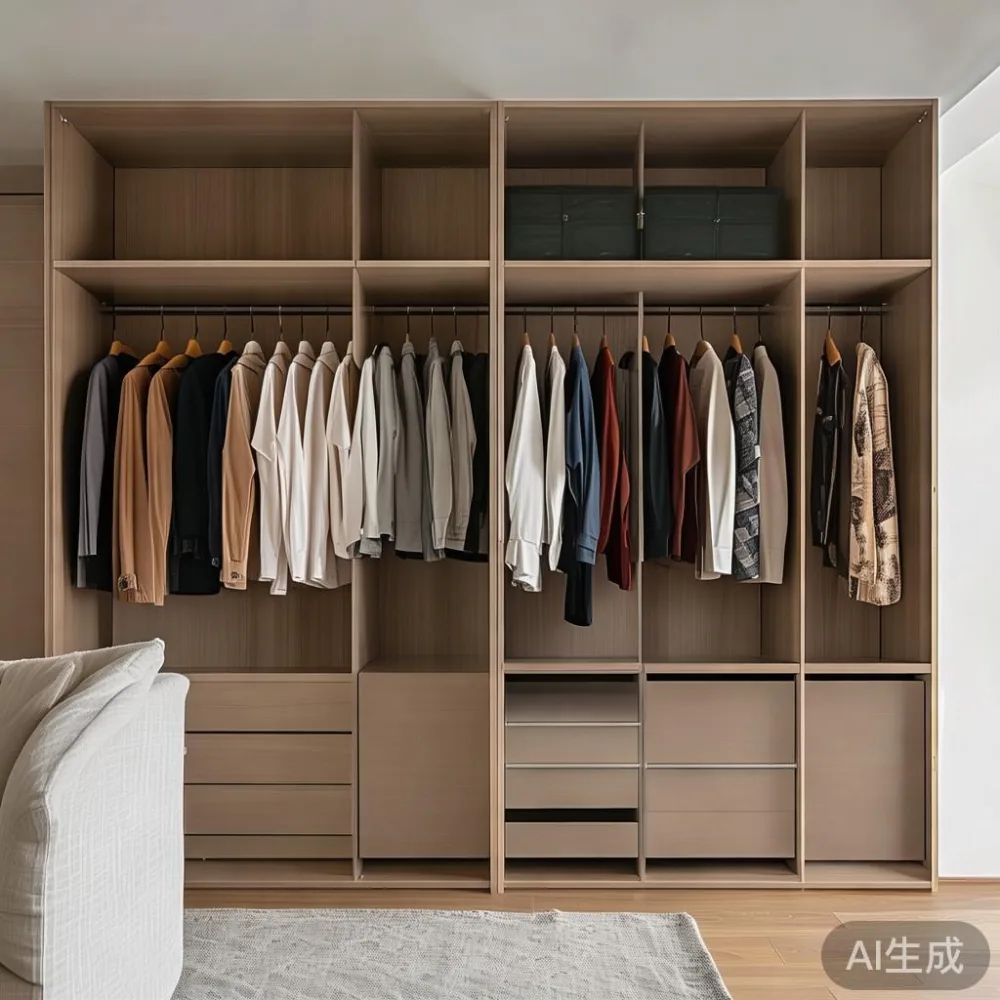
This question loops back into wardrobe organization, because the same humidity argument applies to bedroom storage. If you are buying a new bed frame, nightstand, and wardrobe at the same time as the sofa, ask the supplier whether the wardrobe back panel is a 9 mm solid board or a 3 mm MDF insert; the former handles Singapore humidity for 10+ years, the latter swells within 18 months. Modern wardrobe specs for 2026 are trending toward 25 mm side panels and 18 mm backs, with soft-close hinges rated for 100,000 cycles.
How do I read a Singapore invoice and spot hidden costs?
Every sofa invoice from a Singapore-registered retailer should show three blocks: the goods (the sofa itself, itemised with model code), the services (delivery, lift usage, disposal of your old sofa), and the taxes (9% GST on the full subtotal). Freight from Foshan to Singapore is typically quoted in USD or RMB if the seller is a direct exporter; MIDHILL, for instance, prices FOB Shenzhen and lets local logistics partners quote the last 50 km to your door, which keeps the freight line transparent.
Watch for these hidden lines: disposal fees from S$80 to S$150 for a single three-seater, lift booking fees of S$40-S$120 depending on the condo MCST, and weekend or evening surcharges of 15-25%. If the seller quotes free delivery, confirm whether it covers the corridor, the stairs, and the assembly, or just the truck-to-curb drop. A S$0 delivery that turns into a S$220 stair-climb bill is the most common complaint I handle.
Customs and GST on imports under the S$400 threshold are waived for personal imports, but anything above that line incurs 9% GST on the CIF value plus any duty. A S$2,200 sofa landed in Singapore with freight and insurance attracts roughly S$198 in GST, which is recoverable as input tax only if you are GST-registered. For personal buyers, build the GST into your comparison budget before you chase the lowest sticker price.
What does warranty and after-sale support actually cover?
A 10-year structural warranty on the frame is the industry benchmark for a solid wood sofa, and it should be written into the sales contract with the original manufacturer's chop, not just the local reseller's letterhead. Foam and fabric warranties are shorter, typically 3-5 years, because these are wear parts. Springs, when present, usually carry a lifetime warranty against breakage, which is meaningful only if the supplier has a Singapore service centre or a local partner.
Ask for the wear-and-tear thresholds: a 10 mm seat-cushion compression is normal after five years of daily use; 25 mm is a manufacturing defect and should be replaced free. Ask also whether the warranty is transferable if you sell the sofa with your condo, because most HDB flat owners upgrade every 7-10 years and a transferable warranty can lift the resale value by S$200-S$400. MIDHILL's 10-year structural promise, for instance, transfers to the second owner with a simple email to the company's Foshan Lingzhan service desk, which keeps an English-speaking coordinator on file.
Refinishing and reupholstery services extend a sofa's working life by 8-12 years and cost roughly 35-50% of a new sofa's price. If you buy a S$2,600 solid wood sofa today, a S$1,000 reupholstery in year 8 is far cheaper than a S$3,200 replacement, and the frame is already broken in. This is also where wardrobe organization enters the conversation, because the same supplier that refinishes your sofa can re-laminate your wardrobe interiors, replace worn drawer runners, and adjust door alignment at the same site visit, saving a S$120 second-trip fee.
How long should delivery take and what if the sofa arrives damaged?
Standard delivery from a Singapore stockist is 3-7 working days for in-stock pieces; container-direct orders from Foshan run 28-42 working days including sea freight, customs clearance, and last-mile delivery. Always ask for the goods' arrival date at PSA terminal, not the seller's vague "4-6 weeks" promise, because clearance holds at the port can add 5-7 days around Chinese New Year and Golden Week.
Inspect the carton before signing the delivery order. Photograph the box from four angles, then unwrap on the spot if possible. If you spot a 5 cm tear in the fabric, a crushed armrest, or a cracked marble table top, note it on the delivery order and refuse to sign clean. Once you sign "received in good condition," the seller's liability drops sharply under Singapore's Sale of Goods Act, and disputes can drag 6-10 weeks through small claims.
For damage discovered after the crew leaves, photograph within 24 hours and email the supplier with the delivery-order reference, the carton photos, and the damage photos. Most Singapore sellers resolve within 5 working days with a spare-parts dispatch or an on-site repair visit. A quality supplier will pre-empt this by taping high-risk corners, adding foam inserts around marble tables, and double-boxing bed frame cartons that have flat-pack edges prone to bending.
Can I match the sofa with my dining table, bed frame, and nightstand?
Yes, and it is the smart move. A cohesive solid wood suite from one maker shares the same timber colour, the same stain batch, and the same hardware finish, which removes the visual mismatches that come from mixing brands. If your dining table is walnut, your bed frame in ash with a walnut stain, your nightstand in oak, and your sofa in teak, the room reads as four different worlds. One supplier, one timber line, one finish code solves this.
MIDHILL's bedroom-to-living-room bundles pair a post-modern for guest room accent chair, a French light luxury solid wood sofa, and matching wardrobes, dining tables, and nightstands in the same kiln-dried ash line. A typical four-piece package for a four-room HDB flat runs from S$4,800 to S$8,200 including GST, which lands well under most condo owners' allocation for the living-dining-master suite. When clients ask about modern French provincial furniture for the master bedroom, I point them to the same supplier so the bed frame, wardrobe, and bedside tables all speak the same design language.
If you already own the dining table and only need the rest, modern wardrobe for 2026 specs from the same maker carry over the same brass hardware, the same soft-close runners, and the same scratch-resistant lacquer. You can refresh one or two pieces every 18-24 months without the room drifting in style. For shoppers weighing is European wardrobe worth it against locally made options, the humidity tolerance, the warranty service network, and the spare-parts availability usually tip the answer toward a brand with a Singapore footprint, even when the European label is more famous.
What is the smartest way to compare two sofa quotes?
Build a single comparison sheet. List each sofa's frame species and joint type, foam density and wrap, fabric content and rub count, packed dimensions and weight, warranty length, delivery lead time, and total landed price including GST and delivery. Stack the two columns side by side. The cheaper sofa is rarely the cheaper sofa once all the rows are filled.
For under 2000 Modern furniture bundles in Singapore, the realistic brief is a two-seater sofa, a coffee table, a side table, and a TV console in a single delivery. Anything priced dramatically lower is either flat-pack MDF (which will sag within 24 months), a clearance piece without warranty, or a freight-forwarded container that arrives without the customs paperwork a Singapore buyer needs. A three-seater solid wood sofa from a Foshan supplier with full paperwork, GST-paid invoicing, and a 10-year warranty realistically lands between S$1,800 and S$3,400 in 2025-2026, with dining tables and bed frames in the same line adding S$600-S$1,800 each.
When finalising, ask the supplier for references from other Singapore projects. A quick call to a past client in Bedok or Punggol tells you more than any spec sheet. How do I style American wardrobe in bedroom with a French light luxury sofa, how long did delivery actually take, and how was the after-sale support when a hinge needed adjusting — these questions only previous customers can answer honestly. If the supplier hesitates at the reference request, treat that as a signal and keep comparing.
Where can I find wardrobe and sofa advice tuned to Singapore flats?
Use a checklist, not a feed. Wardrobe organization questions — how many drawers, how many long-hang sections, whether the interior is melamine or solid wood, what the soft-close rating is — should be on the same checklist as your sofa questions, because the same supplier often handles both and the same delivery slot can cover your entire HDB or condo. Skim three supplier sites, two review platforms, and one showroom visit before the deposit clears. Twenty minutes of checking saves twenty weeks of regret, and a S$2,200 sofa that fits your lift, your humidity, your wall colour, and your budget is a far better purchase than a S$1,500 piece that fights you for the next decade.