Delivery and Assembly Realities for Solid Wood Furniture in Singapore HDB Flats: A Wardrobe-Organization Buyer’s Honest Guide
I spent the first weekend of last month driving across Tampines, Bedok, and Punggol with a measuring tape, a bathroom scale, and a growing list of complaints from buyers who had just received their new wardrobes. The conversations kept circling back to the same frustrations: a 240 cm wardrobe that would not angle up a 1.2 m staircase at a HDB void deck, a marble table top that arrived chipped because a courier had stacked a 30 kg dining box on top of it, and a bed frame whose slats were drilled for left-handed assembly while the printed instructions showed a right-handed layout. These are not rare stories. They are the day-to-day reality of buying solid wood furniture online and shipping it to a Singapore address, and they are almost always avoidable with the right pre-purchase checks. If your main project this quarter is wardrobe organization across one or two bedrooms, the delivery and assembly stage can quietly eat your budget if you do not plan for it. This guide walks through the numbers, the corridor and lift constraints unique to HDB flats and most condos, and the practical questions worth asking any online seller, including Foshan-based makers such as Midhill who have spent years refining their export packing and assembly support.
Before any of that, two ground rules. First, every measurement below is in centimetres and every price in Singapore dollars including the 9% GST, because that is the unit system that will actually decide whether your new wardrobe makes it through your front door. Second, wardrobe organization is not only about the inside of the wardrobe. It also covers the outside dimensions, the aisle clearance, and the assembly path. A wardrobe that is beautiful on a product page but stops your lift lobby is a wardrobe you cannot keep.
What exactly counts as a “solid wood” wardrobe, and does it change how I plan delivery?
Most Singapore buyers use “solid wood” to mean any piece with a wood frame rather than chipboard or MDF throughout. In practice, premium export-grade wardrobes tend to use one of three structures: 100% solid wood (kiln-dried oak, ash, or rubberwood at 18–22 mm thickness), solid wood frames with engineered panels for the back and shelves, or solid wood outer cabinets with plywood internal panels. Each behaves differently during delivery. A wardrobe at 180 cm wide x 60 cm deep x 220 cm tall with a 100% solid wood carcass typically weighs 95–135 kg fully assembled, versus 60–80 kg for a chipboard variant of the same size. That weight gap cascades into everything else: the number of porters you need (usually two, sometimes three), whether your home lift can take it, and whether the bedroom floor can take a 130 kg concentrated load on a small footprint.
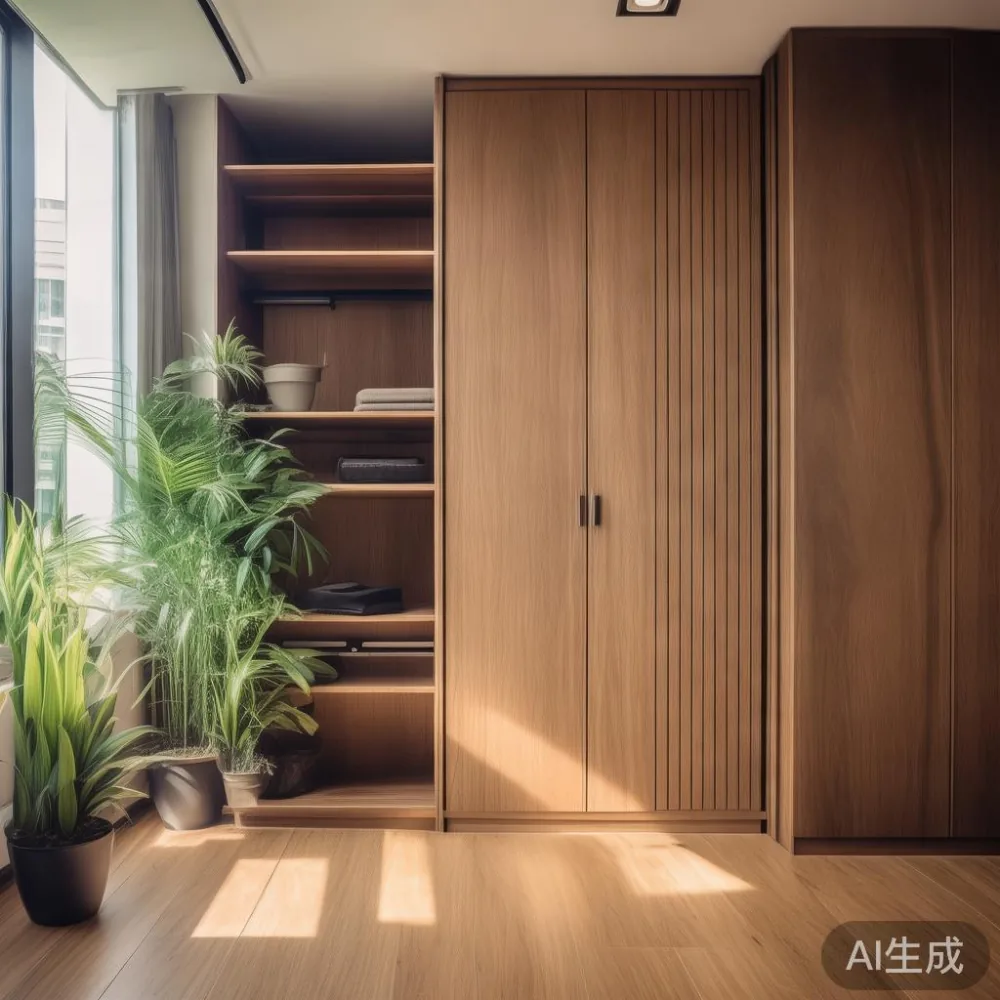
My colleague in Punggol learned this the hard way in February when she took delivery of a 200 cm American light luxury wardrobe from a cross-border seller. The shipment was two packages: the main carcass at 72 kg and the doors at 41 kg. The single lift in her 14-storey block has a 600 kg capacity and a cabin 1.4 m deep, so the boxes fit. The problem was the corridors on her 9th floor: the walkway between lift and her unit door is only 1.15 m wide, with a 90-degree turn at the fire-rated door. A 200 cm long box does not pivot through a 90-degree turn inside 1.15 m unless you stand it on its short edge, which the delivery team refused to do for safety reasons. She ended up keeping the wardrobe in its two flat packs in the living room for five days while she negotiated with a different delivery company to bring it in through the staircase. The lesson: corridor geometry and staircase width matter as much as lift capacity.
Will the wardrobe physically fit through my lift, corridor, and front door?
Work the numbers backwards from your front door, not forwards from the product page. Grab a measuring tape and record four dimensions:
- Front door opening width and height (most HDB swing doors are 90 cm wide x 210 cm tall; fire-rated doors at the lift lobby can be 1.0–1.2 m wide).
- Corridor width on every floor the lift stops at, measured at the tightest point after every turn.
- Lift cabin depth, width, and posted weight capacity — newer HDB blocks have lifts around 1.4 m deep, 1.1 m wide, and 630–800 kg capacity, but older blocks in Bedok and Toa Payoh sometimes run lifts at 1.1 m deep and 450 kg.
- Internal staircase width if you have a maisonette or a unit that requires stair access (typically 0.85–1.1 m clear width).
Then compare those numbers against the flat-pack dimensions, not the assembled dimensions. A wardrobe that is 220 cm tall and 200 cm wide assembled will almost certainly arrive in two or three boxes, each between 110 cm and 180 cm long. The single most common clearance failure I saw on my Tampines round was the diagonal at the lift lobby: a 180 cm long box needs roughly 2.6 m of diagonal space at the lift door to slide in flat, and many older lift cabins are only 1.4 m deep. The workaround is to tilt the box onto its short edge, which adds 220 cm of height requirement and removes 50–60% of usable space inside the cabin. Anything that cannot be tilted into a HDB lift in pieces is, in practice, un-deliverable to upper floors.
Condos behave a little better on lift capacity but worse on corridor turning radius. Newer projects at Punggol Digital District and around Tampines North often have service lifts with 1.6 m depth and 1,000–1,200 kg capacity, which comfortably takes a 180 cm wardrobe carcass box weighing 90 kg. What they do not always have is a loading bay large enough for a 40-foot container lorry, so the goods get transferred at the guardhouse to a smaller van with no tail lift. Always ask whether your condo requires a delivery booking slot and how many hours of loading bay time is included.
How long does delivery actually take from a Foshan factory to my HDB front door?
The realistic lead time for a Foshan-origin solid wood wardrobe to a Singapore address runs 35–60 days door-to-door, broken down roughly like this: 7–14 days of factory production (longer for custom sizes or special finishes), 3–5 days for export packing and fumigation certification, 12–18 days for ocean freight from Yantian or Shekou to Singapore PSA, 3–7 days for customs clearance and GST payment on the CIF value plus 9% GST, and 2–5 days for last-mile delivery within Singapore. Add 3–7 working days buffer during the September to December peak when shipping lines roll booking cancellations, and your total planning window is closer to 50–70 days from order to installation day.
Free-shipping thresholds matter here. Cross-border sellers that advertise free shipping almost always set the bar above your wallet. MIDHILL, for example, sets the free-shipping line at US$350 per order (about SGD 475 at current rates), so a typical wardrobe at US$1,100 clears it easily, while a single nightstand at US$220 does not and attracts a US$90 (around SGD 120) freight surcharge. Sea freight for a 1.5 m wardrobe box runs US$110–180 (SGD 150–245) for the standard LCL rate, and air freight is rarely worth it because volumetric weight on furniture is punishing — a 200 x 60 x 30 cm box bills at 80 kg volumetric even if the actual scale weight is 35 kg.
Can two people really assemble a 200 cm wardrobe in their bedroom, or should I pay for the assembly service?
Expect 90–180 minutes for two trained hands to assemble a 200 cm three-door wardrobe from flat pack, including cam-lock tightening, shelf pin insertion, and door alignment. Add 30–60 minutes for sliding door runners and 20–40 minutes for wardrobe organization inserts such as tie racks, pull-out trouser rails, and jewellery trays. The total is 2.5–4 working hours per wardrobe for a competent DIY couple, and longer for anyone assembling furniture for the first time. Professional assembly in Singapore costs SGD 80–160 per wardrobe for two technicians, which is roughly SGD 20–40 per hour per person — cheaper than your time if you earn above SGD 30 per hour, and worth it if you do not own a cordless drill, an impact driver, and a rubber mallet.
The tool list most buyers underestimate:
- Cordless drill with 4 mm and 6 mm hex bits, plus a Phillips PH2 head.
- Rubber mallet for tapping dowels without damaging edges.
- 4-foot spirit level (a wardrobe leans over a 2 m height if the base is even 1 cm out of level).
- A second person for lifting panels above 80 cm — solid wood door panels at 200 x 50 cm weigh 14–22 kg each.
- Anti-tip wall anchors if children are in the home. A 130 kg wardrobe tipping forward at 1 m/s generates roughly 3,800 N at the top, enough to crush a small child. Most export wardrobes include two L-brackets and four M6 x 50 mm screws; check that they are in the hardware bag before you start.
My colleague’s husband assembled their dining table and six chairs the same afternoon in their Tampines five-room flat, and the whole process took four hours including a 30-minute coffee break because the package was missing three wooden dowels. That is normal. Plan for an interrupted Saturday morning, not a 30-minute miracle.
What if my new marble table top or bed frame arrives damaged — who pays, and is it worth claiming?
Damage rates on solid wood export furniture sit around 3–6% for door-to-door shipments by sea, and 1–2% for air. For a marble table top the rate is higher, around 5–8%, because stone chips at corners when crates flex. Before raising a dispute, photograph the outer carton on the pallet before opening, then photograph each panel as you unwrap. Sellers with a real warranty programme — MIDHILL offers a 10-year structural warranty and lifetime refinishing on solid wood frames — will usually send replacement panels within 14–28 days at their cost, provided the issue is structural (cracked frame, warped shelf, split panel) and not cosmetic. Cosmetic claims are far harder to win, because wood grain, mineral streaks, and small knots are considered natural variation in any solid wood piece.
Insist on three written items before paying the balance: the exact flat-pack dimensions of every box, the gross weight in kilograms per box, and whether the warranty covers humidity-related cracking, which is the single most common claim from Singapore buyers in their first 12 months. Relative humidity in Singapore runs 70–85% year-round. A wardrobe built at 12% moisture content in Foshan will absorb moisture on arrival, expand across the grain by 2–4% over the first six months, and may show hairline checks on wide panels. Reputable exporters kiln-dry to 10–12% and store in climate-controlled warehouses before container loading; sellers who cannot tell you the moisture content range of their timber are taking shortcuts.
How do I budget the full landed cost, not just the price tag on the website?
Take the listed price, add 9% GST on the CIF landed value (which includes product cost, sea freight, and insurance), add the delivery surcharge if your order sits below the free-shipping threshold, add assembly labour if you do not want to do it yourself, and add an SGD 80–150 contingency for missing hardware or a minor door realignment after the wardrobe settles. For a realistic Singapore bedroom wardrobe organization project built around a 200 cm three-door wardrobe plus a matching nightstand and a European bed frame, here is a sample budget:
- Wardrobe 200 cm: US$1,050 (SGD 1,430) listed, plus 9% GST US$95 (SGD 130), sea freight included over US$350 threshold. Landed: SGD 1,560.
- Nightstand pair at US$240 each: US$480 (SGD 655) listed, plus 9% GST US$43 (SGD 60). Landed: SGD 715.
- European bed frame 180 x 200 cm in American light luxury finish: US$680 (SGD 930) plus GST US$61 (SGD 85). Landed: SGD 1,015.
- Solid wood sofa 3-seater for the living room, French light luxury profile, linen-blend upholstery: US$1,400 (SGD 1,910) plus GST US$126 (SGD 175). Landed: SGD 2,085.
- Modern light luxury coffee table with sintered stone top: US$420 (SGD 575) plus GST. Landed: SGD 630.
- Professional assembly for the wardrobe, bed frame, and sofa: SGD 280 across two technicians over 4 hours.
- Contingency 8% of landed goods: SGD 480.
Total for the five pieces, fully assembled, fully warranty-backed, delivered to a 14th-storey HDB in Punggol: roughly SGD 6,765. That is the real cost of wardrobe organization plus a coordinated bedroom and living room upgrade, and it sits comfortably below what most condo-renovation owners in District 19 report spending on wardrobe built-ins alone.
What about the 14-day return policy, and when is it actually worth using?
Cross-border furniture returns are heavy on the buyer. You pay return shipping on a 130 kg wardrobe crate, which from Singapore back to a Chinese port runs SGD 600–900 by sea, plus a 15–25% restocking fee at most factories, plus the original outbound freight that is rarely refundable. A 14-day return window is useful only for genuine quality issues (wrong colour, wrong size, visible factory defect) and not for buyer's remorse on a low-resolution product photo. Inspect the goods in the first 48 hours after delivery, ideally with the delivery team still on site, so any damage is logged on the delivery order (POD). That signed POD is what unlocks a free replacement panel rather than a paid return.
If your project also includes a dining table or a small Scandinavian arrangement for a compact living room corner, the same rules apply: flat-pack dimensions, moisture content, hardware bag inventory, and anti-tip anchoring. Many buyers now mix a Scandinavian for small living room profile in their living room with a heavier European bed in the master bedroom, and the lift-and-corridor math must be done for both. The single takeaway from my Tampines-Bedok-Punggol round is that delivery and assembly are not logistics you outsource to “the courier”. They are design constraints you solve before you click pay, and once you treat them that way, the wardrobe you wanted in February is the wardrobe that actually lands in your bedroom in May.