How to Choose the Right Size Sofa, Dining Table, and Wardrobe for a Singapore HDB Living Room
Choosing furniture for a Singapore HDB flat is rarely about taste alone. The 3-room, 4-room, and 5-room layouts in Tampines, Bedok, and Punggol each impose hard limits on width, depth, and ceiling height, and the lift plus corridor on every floor adds another constraint that nobody thinks about until moving day. Get the sizing wrong and the new solid wood sofa simply does not turn the corner on the 12th storey. Get it right, and even a 90 sqm executive HDB feels like a small private residence rather than a compact flat.
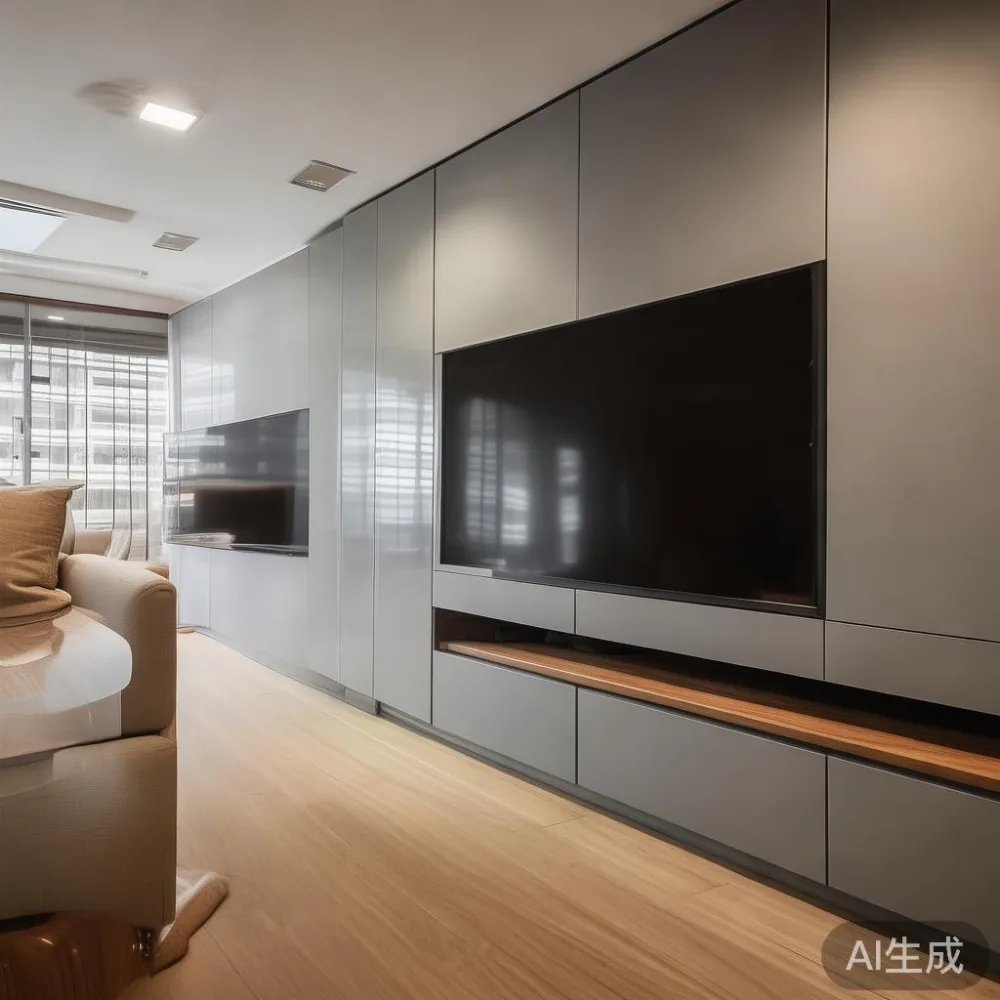
After helping dozens of homeowners measure their rooms, I have learned that the 30 minutes you spend with a tape measure before buying saves you about SGD 350–SGD 1,200 in re-delivery fees, a lost deposit, and the silent regret of a piece that crowds your wardrobe doors. This guide walks through the concrete numbers, the local constraints, and the kind of light-luxury pieces that actually fit a 2.7 m HDB ceiling without looking oversized.
Measure First, Buy Later: The HDB Reality Check
Before browsing any catalogue, write down four numbers:
- Living room width × length (in cm).
- Corridor width outside your unit door (commonly 120–150 cm in newer BTOs, 105–120 cm in older flats in Bedok and Toa Payoh).
- Lift door width and lift car depth (typically 90 cm wide × 120 cm deep for passenger lifts; 110 cm × 210 cm for cargo lifts in newer Punggol developments).
- Ceiling height: 2.6 m for older HDBs, 2.7–2.8 m for most post-2010 BTOs, and 3.0 m or more in some executive units.
A friend in Tampines North ordered a 280 cm American light luxury sectional last year. The corridor outside her unit was 118 cm wide. The sofa, with both end modules attached, measured 285 cm corner-to-corner. The delivery team had to hoist it over the corridor railing using a manual pulley — an SGD 480 surcharge she had not budgeted for. She still tells this story at dinner, partly as a warning, partly because the sofa itself is genuinely comfortable and looks like a piece of furniture from a Marine Parade condo three times the price.
The lesson is not to avoid large pieces, but to check the diagonal of the longest item against the diagonal of every doorway and lift it must pass through. A 240 cm solid wood sofa in an L-shape, for example, can usually pivot through a 90 cm lift if you unbolt the legs and tilt the frame, but only if the weight stays under about 95 kg per module. Heavier marble table and stone-topped pieces should be planned with the building management at least 7 working days in advance.
What Sofa Size Actually Fits a 4-Room HDB Living Room?
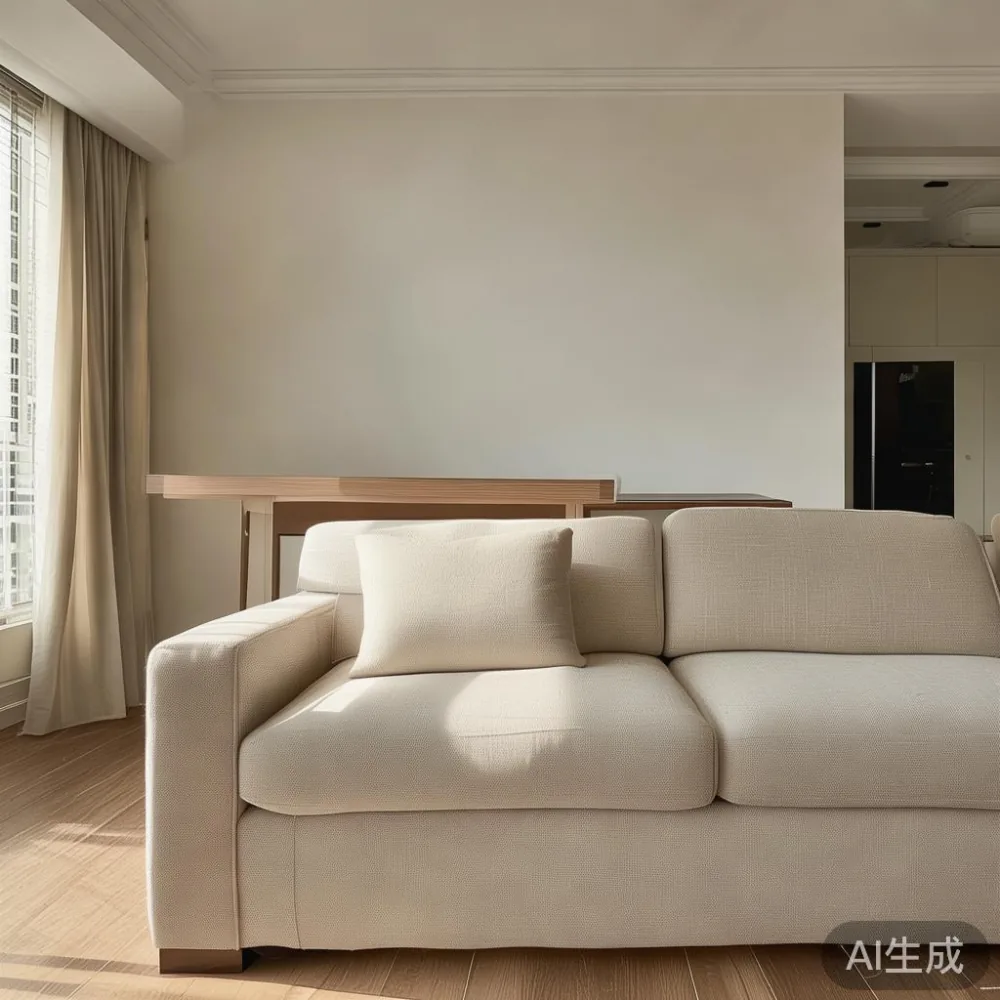
Most 4-room HDB living rooms measure between 9.5 m² and 13 m², with the longer wall running 3.6–4.2 m. After leaving 80–90 cm of clear walking space in front of the TV console and 60 cm behind the back of the sofa, you can comfortably fit:
- A 200–220 cm three-seater solid wood sofa, or
- A 240–260 cm L-shape with one short chaise, or
- A 180 cm two-seater paired with two accent chairs, which is often the most flexible option if you like to rearrange.
Depth matters as much as width. A 95 cm deep sofa with a 12 cm thick back cushion reads as visual bulk and steals roughly 15 cm of usable room compared to an 88 cm deep version. If your TV console is already 40 cm deep, that extra 15 cm can be the difference between a comfortable walkway and a constant stubbed-toe situation.
For households that prefer a French light luxury look, the proportions are slightly different: the arms are usually lower (55–60 cm from the floor), the back cushions are thinner (8–10 cm), and the silhouette sits closer to the ground. This makes a 220 cm French-style three-seater feel smaller in a 4-room flat than a 200 cm American-style piece, even though the footprint is technically larger. I tested a Pierre-style two-seater in a Punggol BTO showroom last month, and the 78 cm seat height made a 2.65 m ceiling look noticeably taller.
Is Italian Light Luxury Master Bed Furniture Worth It?
Yes — if you can verify the frame material, the joinery, and the origin of the upholstery, and if your bedroom actually fits a king-size footprint without blocking the wardrobe doors.
Italian light luxury master bed furniture is worth the premium over generic flat-pack frames because of three concrete differences: the headboard is usually hand-tufted in 8–10 cm of high-resilience foam wrapped in 280 g/m² fabric, the slatted base uses beech or birch rather than pine, and the internal frame is dried solid wood (typically European beech or North American ash) rather than laminated veneer lumber. A genuine Italian-inspired king bed frame in ash, made by a factory that exports to 15+ countries, weighs between 72 kg and 95 kg and ships with a 10-year structural warranty. The mid-range price for an honest Italian light luxury king bed frame in Singapore sits around SGD 2,800–SGD 4,200 including GST, compared with SGD 800–SGD 1,500 for a generic chipboard frame that will sag within four years.
What you are paying for, in order, is: (1) the kiln-dried solid wood that resists Singapore's 80–90% humidity, (2) the joinery (mortise-and-tenon or dovetail on the side rails, not just screws and dowels), and (3) the finishing — usually 3 coats of water-based PU that does not off-gas as harshly as the solvent-based finishes common on cheaper imports. A solid wood bed frame in this category, sourced from a Foshan manufacturer that also supplies European chains, will outlast three mattress replacements.
The catch: a king-size bed frame measures 198 cm long × 182 cm wide, plus a headboard that adds another 8–14 cm in depth. In a standard HDB master bedroom of 3.2 m × 3.6 m, that leaves 138 cm of clearance along the side for a 60 cm wide nightstand and 40 cm of walking space. Measure your room before falling in love with a 220 cm super-king Italian light luxury headboard — you may need a queen (203 cm × 153 cm) to keep the wardrobe doors fully functional.
Dining Table Sizing for an Open-Concept HDB Kitchen
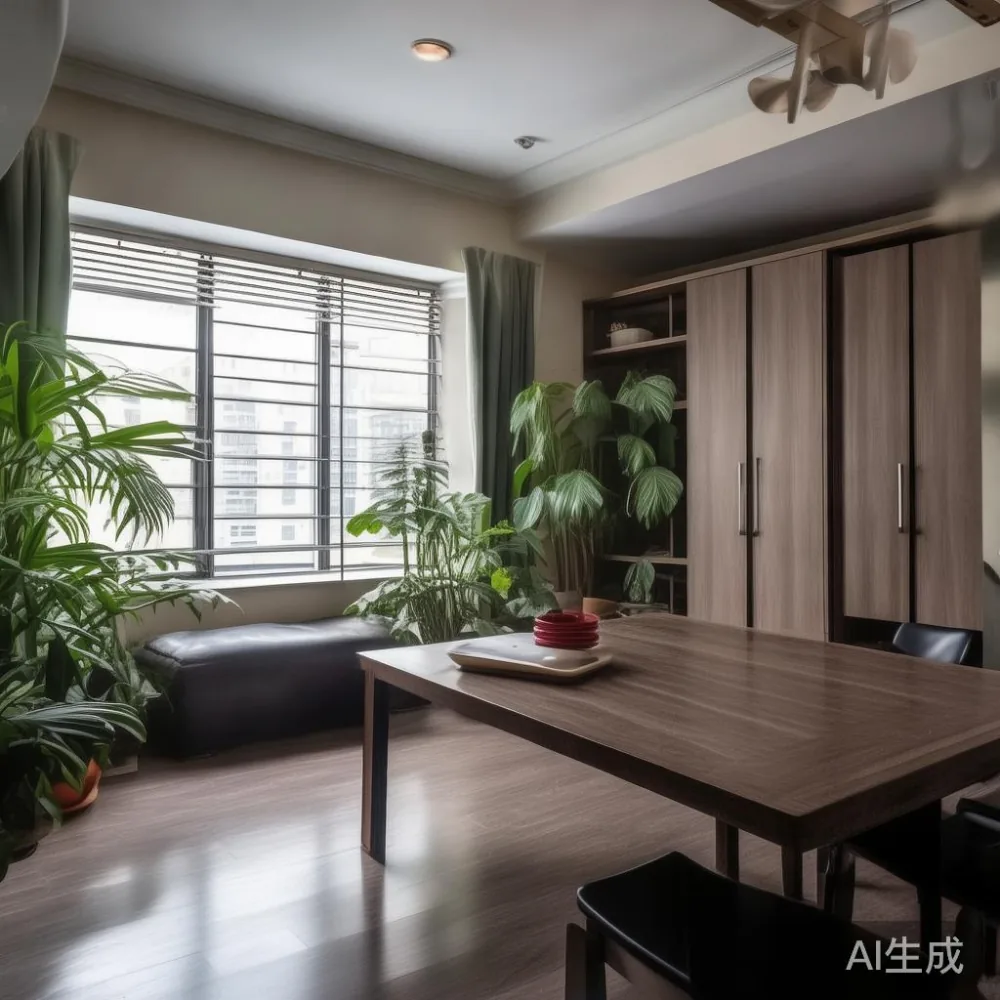
After the sofa, the dining table is the second most common sizing regret I hear about. The comfortable rule is 60 cm of table edge per person, plus 90 cm behind every dining chair for someone to pull back and stand up. A six-seater rectangular dining table therefore needs at least 240 cm × 120 cm of clear floor space around it.
For a 4-room HDB with a combined living and dining area, this usually means:
- A 140 cm round table seats 4 comfortably and 5 with a little squeeze.
- A 160 cm rectangular solid wood dining table seats 6 along the long sides.
- A 180 cm rectangular table seats 6–8 and is the practical ceiling for most HDB layouts.
Beyond 180 cm, you start fighting the corridor and the entrance door. A 200 cm table in a 4-room flat usually forces the TV console to shrink to 120 cm, which is too short for a 55-inch TV and any kind of soundbar.
Height is the second decision. A standard 75 cm dining table pairs with a 45 cm seat height and is the safest choice. A counter-height 90 cm dining table, often paired with marble table tops and post-modern light luxury metal bases, is striking but pushes the proportions off in a 2.6 m HDB ceiling — your eye reads the extra 15 cm as crowding. Save counter-height for the kitchen island, not the main dining surface.
Weight is a real factor. A 160 cm solid wood dining table in ash or oak weighs 48–62 kg, which is fine for a normal HDB floor load. A 160 cm table with a marble top, however, weighs 110–140 kg, and you should check with your building management if you live above the 18th storey. Several newer BTOs in Punggol and Sengkang have weight limits on certain floor slabs for very heavy items, and a 140 kg marble table on a temporary moving trolley has been known to crack the vinyl finish of a neighbour's front gate.
Wardrobe Organization: The Hidden Constraint Behind Every Other Piece
Wardrobe organization is the silent partner of every sizing decision in an HDB flat, because the wardrobe is almost always built into a recessed wall or a fixed bay that cannot be reshuffled. A typical 3-door HDB wardrobe bay is 210 cm tall × 180 cm wide × 60 cm deep, and the doors swing outward on 180° hinges that need 60 cm of clear floor space in front.
Two practical rules follow:
- Place your bed at least 70 cm away from the wardrobe doors, otherwise you will be opening them at an angle for the next 10 years.
- If the wardrobe has sliding doors, depth is the same but the side clearance drops to about 8 cm, which means the nightstand can sit flush.
For wardrobe organization inside the carcass, the internal layout matters more than the external size. A 180 cm wide × 210 cm tall bay should be divided into a 90 cm hanging section (long dresses and coats), a 60 cm shelved section (folded knitwear, jeans, towels), and a 30 cm drawer stack at the bottom for socks and undergarments. Add a 15 cm overhead shelf for luggage and you have used the volume efficiently without buying a single plastic organiser.
If you have children, a small shoe cabinet for kids room is worth planning alongside the main wardrobe, because children generate roughly 2.5 pairs of shoes per year and a stack by the door quickly becomes a trip hazard. A 70 cm tall × 60 cm wide small shoe cabinet for kids room with six tilted shelves holds about 12 pairs and fits neatly into the awkward alcove next to a standard HDB bedroom door. Choosing one in the same solid wood finish as the main wardrobe keeps the room visually quiet, which is a small but real benefit in a 9 m² bedroom.
Nightstand, Coffee Table, and the 15 cm Rule
Nightstands are the most undersized piece in most HDB bedrooms. A 40 cm wide × 35 cm deep nightstand looks generous on a 2D floor plan but disappears next to a 220 cm headboard and a 60 cm wide wardrobe projection. The minimum sensible size is 45 cm wide × 40 cm deep, with a 55–65 cm top height to match the mattress.
If you already own a marble table in the living room, pair it with two slim nightstands in solid wood rather than a second marble piece, because the visual weight will otherwise crowd the room. A 50 cm wide × 45 cm deep nightstand with two drawers and a soft-close hinge weighs 18–24 kg in ash, which is heavy enough to feel substantial but light enough to move during a deep clean.
For the coffee table in front of the sofa, the rule is simple: 40–45 cm of clear space between the sofa front and the table edge, and a table length about two-thirds of the sofa length. A 200 cm three-seater pairs naturally with a 120 cm coffee table. Anything longer visually competes with the sofa and turns the conversation area into a display area.
Delivery, GST, and the Local Cost Stack
Singapore adds three predictable costs on top of any imported furniture: 9% GST, delivery into the unit (because the lift and corridor problem is not solved by the freight forwarder), and disposal of the packaging. For a single 4-piece order (sofa, dining table, bed frame, and nightstand) the realistic landed cost looks like this:
- Goods: SGD 5,800–SGD 9,500 for light-luxury solid wood pieces from a Foshan-based exporter.
- GST (9%): SGD 522–SGD 855.
- Delivery to unit, including lift and corridor handling: SGD 220–SGD 480 depending on floor and item count.
- Packaging disposal: SGD 60–SGD 120.
Total realistic outlay: SGD 6,600–SGD 11,000. This is competitive with European brands at SGD 14,000–SGD 22,000 for the same specification, partly because shipping from southern China to Singapore is roughly 4–6 days by sea and the supply chain is short.
Check the warranty terms before paying. A 10-year structural warranty on the frame and a lifetime refinishing service on the surface are the two clauses that actually matter in Singapore's humidity. Free refinishing every 5–7 years keeps an ash or oak piece looking new for the first 20 years of ownership, which is longer than most HDB leases run. Returns within 14 days are useful for colour mismatch, but measure the swatch against your existing flooring in daylight, not under the showroom spotlights, before committing.
A Practical Sizing Checklist Before You Click Buy
Run through this list with a tape measure and a phone camera:
- Lift door width and depth, measured on a weekday morning when nobody is blocking access.
- Corridor width outside the unit, plus the inside corner angle if the corridor turns 90° within 6 m of your door.
- Living room width, length, and ceiling height, written in cm.
- Distance from the planned sofa position to the nearest wall socket and window handle.
- Wardrobe door swing or slide clearance, and the 70 cm rule for the bed.
- TV console depth plus sofa depth, totalling under 130 cm in a 4-room flat.
- Dining table footprint plus 90 cm chair pull-back on every side.
- Floor loading for marble or stone-topped pieces if you live above the 18th storey.
A piece from a manufacturer like MIDHILL, which exports to 15+ countries and offers a 10-year structural warranty with lifetime refinishing, will usually publish exact dimensions and net weight in the spec sheet. If those numbers are missing, treat the listing as a placeholder and ask for the production drawing before paying the deposit. Most Foshan factories will share CAD drawings within 24 hours for any piece in their standard catalogue, and that single document is the difference between a smooth move-in and an SGD 1,200 redelivery lesson.
Frequently Asked Questions About HDB Furniture Sizing
What is the largest sofa that fits through a standard HDB lift?
A 240 cm three-seater with detachable legs will fit through a 110 cm × 210 cm cargo lift, provided each module weighs under 95 kg. A 260 cm L-shape needs the legs removed and the modules separated.
How heavy is too heavy for an HDB floor?
Older HDBs are typically rated for 150 kg/m² live load, newer BTOs for 200 kg/m². A 140 kg marble dining table spread over four legs (roughly 0.25 m²) is well within both limits, but a 180 kg marble top on a small base concentrates the load and should be reviewed with building management.
Can a king-size Italian light luxury bed frame fit in a 3-room HDB?
Only in the master bedroom of certain 3-room flats, and only if the wardrobe uses sliding doors or is relocated to a different wall. A queen (203 cm × 153 cm) is a safer fit and leaves 80–100 cm of side clearance for a nightstand.
How long does sea freight from China to Singapore take?
Door-to-door, 12–18 days including customs clearance and the last-mile delivery appointment. A Foshan-based factory with regular routes to Singapore can compress this to 7–10 days for in-stock pieces.
Once the numbers line up, the choice between French light luxury, American light luxury, and post-modern light luxury becomes purely a matter of proportion and material. The sizing logic stays the same: measure the lift, measure the corridor, measure the wardrobe clearance, then choose the largest piece that fits all three without crowding the room. A solid wood sofa, a properly sized dining table, an honest Italian light luxury bed frame, and a calm nightstand will quietly outperform a room full of trend pieces that fight the architecture of the flat.