How to Read a Furniture Warranty in Singapore (Without Getting Caught Out)
I spent a Saturday morning at the MIDHILL showroom in Foshan last month, sitting on a walnut dining table with a Singaporean importer who had flown in to renegotiate warranty terms on a 40-foot container of pieces destined for Tampines and Punggol. Two hours of reading fine print on three different documents taught me more about warranties than ten years of buying furniture had ever revealed. If you are about to spend SGD 2,000 to SGD 12,000 on a wardrobe, a bed frame, or a dining table, that two-hour lesson is worth passing on.
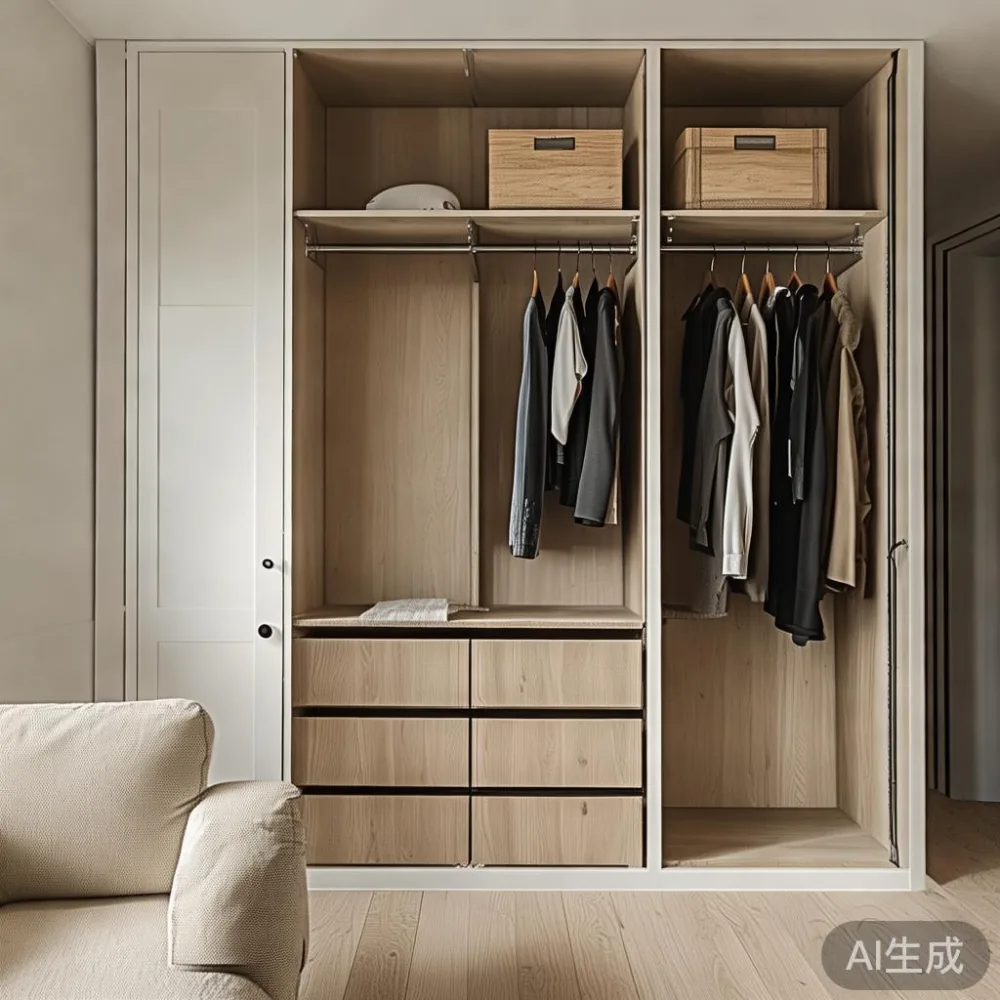
Where can I buy a wardrobe sg in Singapore?
You can buy a wardrobe in Singapore directly from factories like MIDHILL that export to the country, from local authorised dealers in Tai Seng or Sungei Kadut, or from platform sellers on Carousell and Shopee. The safest route is the one where the warranty terms, the warranty giver, and the warranty claim process are all written down in one document, in plain English, before you pay a deposit.
Why a 10-year warranty is not always a 10-year warranty
The phrase "10-year structural warranty" sounds like a shield, but the shield only covers the parts the maker chose to define as "structural". I have read seven versions of this clause in the past year. Five of them covered the frame, the joints, and the load-bearing rails of a wardrobe. The other two also excluded the back panel, the drawer runners, and anything that the customer had assembled themselves. Read the definition of "structural" before you read anything else.

A second quiet trap is the difference between "defects" and "wear and tear". A solid wood bed frame that develops a 5 cm crack along a stretcher within 24 months is almost universally a defect. The same crack after 36 months in a Tampines HDB where the morning humidity sits at 82% may be classified as natural movement of timber. One importer I met in Bedok told me he had a claim refused because the customer lived on the 14th floor and the maker argued "differential humidity between floors". The claim never went further.
Ask for the exact list of exclusions in writing
If the document does not list exclusions, assume the worst. Typical exclusions across the solid wood furniture industry include:

- Natural colour change of wood (a normal process in teak, oak, walnut)
- Movement, cracking, or warping under 4 mm per linear metre
- Damage from direct sunlight, air-conditioning directed at the piece, or a dehumidifier running below 40% RH
- Scratches, dents, and surface stains after delivery
- Hardware not supplied by the maker (handles, locks, soft-close dampers you installed yourself)
- Assembly by anyone other than the maker's crew or a named contractor
- Commercial use in a co-working space or Airbnb
Any maker worth your SGD deposit will email you the full list within 24 hours. If they say "standard exclusions, you know how it is", walk away.
What "free shipping over US$350" actually means for a Singapore buyer
You will see "free shipping over US$350" on most factory-direct sites. US$350 is roughly SGD 470 at today's rate. A single wardrobe from a mid-range Foshan workshop costs USD 1,100 to USD 2,400 CIF (FOB, or CIF if you prefer the seller to handle insurance), a solid wood sofa around USD 1,800, a 1.8 m dining table around USD 1,200, and a queen-size bed frame around USD 950. Shipping is bundled.
The cost most people forget is not the ocean freight. It is the last 80 metres: the HDB corridor, the service lift, the corner at the top of the stairwell, and the door frame. I watched a four-person crew in Punggol deliver a 2.4 m tall wardrobe in 38 minutes. The same crew in a 1990s Bedok block needed two and a half hours because the lift interior measured only 1.6 m deep and the wardrobe had to be partially disassembled. The warranty covered manufacturing defect, not on-site disassembly. The customer paid SGD 280 in technician time. Ask whether disassembly and reassembly on delivery are included, and ask what the per-hour rate is if they are not.
What does a "lifetime refinishing" promise actually cover?
Lifetime refinishing is the clause that looks like gold and is, in fact, a service contract. Read the verbs: is it "free lifetime refinishing", "discounted lifetime refinishing", or "lifetime refinishing available at our then-current rates"? Each version puts a different dollar amount in your pocket, or out of it.
Free lifetime refinishing usually means one scheduled refinishing per piece every 8 to 15 years, with the customer covering transport both ways. Discounted refinishing typically offers 30% to 50% off the published rate. "Then-current rates" gives you nothing more than a booking channel. MIDHILL publishes its refinishing service as a standalone line on its quotation, which is a quiet signal that the cost is real, traceable, and budgetable.
Three refinishing questions to ask before you buy:
- Is collection and redelivery within Singapore included, or do I pack and ship the piece?
- Does refinishing cover the carcase as well as the doors, or only the visible faces?
- If the piece has been moved outside Singapore (for example, a relocation to Jakarta or Tokyo) is the lifetime clause still valid?
The third question matters because expat turnover in Singapore averages 3.7 years. A lifetime clause that does not travel is a five-year clause.
How do French light luxury and post-modern light luxury affect what you are actually buying?
The labels French light luxury, American light luxury, and post-modern light luxury describe design vocabularies, not quality grades. French light luxury leans on curved silhouettes, soft-close hardware in brushed brass, and marble accents on a marble table or nightstand. American light luxury tends toward cleaner lines, larger panels, and engineered joinery on a solid wood bed frame. Post-modern light luxury is the most playful, mixing contrasting timber tones with metal inlays on a wardrobe or dining table.
Two pieces that look identical in a showroom photograph can be built very differently. A French light luxury wardrobe at SGD 2,900 might use a 22 mm solid oak carcase with dovetailed drawers and soft-close runners from a German brand, or it might use a 16 mm engineered core with a 2 mm oak veneer over MDF. The warranty will not tell you which. The technical drawing will. Ask for the cross-section of the side panel, the thickness of the back panel (8 mm is solid; under 5 mm is usually MDF or plywood), and the weight of the drawer runners per cycle (50,000 to 100,000 cycles is residential grade; 200,000+ is commercial grade).
What about GST, GST relief, and the 14-day return clause?
Singapore applies 9% GST on imported goods above the SGD 400 threshold for personal imports, but for commercial imports handled by a local dealer the GST is calculated on the CIF value plus duty, and the dealer passes it through. Ask whether the quoted price is GST-inclusive. The difference on a SGD 6,000 dining table is SGD 540, which is the cost of a respectable solid wood nightstand.
The 14-day return clause is another quiet corner. Three things to check:
- Does the clock start on order, on delivery, or on first inspection?
- Is the return a refund, a store credit, or a swap?
- Who pays the return shipping on the chair, a 1.8 m wardrobe, or a marble table whose packed weight is 142 kg?
For a 142 kg marble table, the return shipping inside Singapore alone is roughly SGD 320 to SGD 480. A "14-day no-questions-asked return" that does not name the return shipper is not really a return.
How do you check that the warranty giver is actually the warranty payer?
The biggest trap of all is the importer who sells you a piece, takes your SGD deposit, gives you a warranty card printed with a Foshan factory name, and then disappears. When you file the claim 14 months later, the factory says it is the importer's responsibility, and the importer's phone is dead.
Three documents protect you:
- A commercial invoice naming the factory as the seller of record, with the factory's Chinese name, address, and 统一社会信用代码 (Unified Social Credit Code).
- A warranty certificate signed by the factory, not just stamped.
- A local service agent in Singapore with a name, an address, and a working landline. Mobile-only is not enough; the few operators I have seen rotate every 18 months.
MIDHILL, for example, runs its Singapore after-sales through a named Tanjong Pagar office with a published extension number and a Singapore-based service manager. That is the difference between a piece of paper and a working warranty. You can verify the office exists, you can walk in, and you can hand a defect report to a person who has the authority to book a callback from the factory.
What should your pre-purchase checklist actually look like?
Print this. Bring it to the showroom. Tick every box before you wire any SGD.
- Total delivered price, GST-inclusive, in SGD, valid for 14 days from quotation.
- Lead time from deposit to delivery in Singapore, in calendar days, with a stated buffer for Chinese New Year (Feb 2026 falls on 17 February, expect 18 to 25 days of factory closure).
- Packaged dimensions of the largest piece in cm, against your lift interior (HDB service lifts are typically 1.6 m deep x 1.4 m wide x 2.3 m high; newer condos vary).
- Packaged weight of the heaviest piece in kg, against your floor load of 1.5 kN/m² for standard HDB slabs.
- Wood species with the Latin name (Quercus alba for white oak, Tectona grandis for teak, Juglans nigra for American walnut).
- Hardware brand list (hinges, runners, dampers).
- Finish type: oil, wax, lacquer, conversion varnish. Each behaves differently in Singapore humidity.
- Warranty exclusions in a separate attachment.
- Refinishing terms, including transport responsibility and Singapore coverage.
- Local service agent name, address, landline, email, and service manager's name.
If the seller cannot fill five of the ten within 48 hours, you are buying from a middleman who cannot reach the maker.
Are there hidden costs Singapore buyers forget about?
Yes, and they are almost always the same five:
- Disposal of the existing piece. HDB charges SGD 30 to SGD 60 per large item for removal via the town council's bulky item service, and most condo MCs require you to book a lift and pay a SGD 100 to SGD 300 refundable deposit.
- Door frame trimming. Older HDB doors are 0.78 m wide; newer ones are 0.9 m. A 1.0 m wardrobe panel will not pass without trimming the frame, which can cost SGD 180 to SGD 320 per opening.
- Wall reinforcement for wall-mounted wardrobes. A 2.4 m x 2.4 m wardrobe can weigh 220 kg empty. Hollow partition walls need a plywood backer of 18 mm to 25 mm at SGD 90 per m² installed.
- Air-conditioning airflow. A solid wood wardrobe placed within 1.5 m of an AC vent will move differently than one placed against an interior wall. The maker is not responsible for the move, but you should plan for it.
- Insurance. A standalone furniture rider in Singapore costs around 0.8% to 1.2% of the piece's value per year. For a SGD 6,000 dining table, that is SGD 48 to SGD 72 per year. Skip it, and the warranty still does not pay for a flood or a fire.
What does a fair wardrobe organization warranty look like for Singapore humidity?
Wardrobe organization is the area most exposed to humidity swings in a Singapore home, particularly in HDB flats where the master bedroom shares a wall with the common bathroom. A warranty that respects that environment names the conditions under which a wardrobe, its drawers, and its internal wardrobe organization accessories (tie rails, jewellery trays, pull-out hangers) are covered.
Specifically, you want:
- Five years on the carcase, doors, and runners, regardless of humidity.
- Two years on soft-close dampers, LED lighting, and any electronic locks.
- One free on-site inspection in the first 12 months to catch any movement early.
- Clear coverage for wardrobe organization accessories fitted by the maker.
- Right of replacement over repair when a single panel warps beyond 6 mm per metre.
Without those clauses, your wardrobe organization system is a kit of parts with no backer, and the SGD 4,000 you paid for it becomes a decoration rather than an asset. MIDHILL's published terms name each of these five points in a separate schedule, which is the closest thing to a fair contract I have come across for Singapore conditions.
What is the one question that exposes a weak warranty in under three minutes?
Ask, in writing: "If the wardrobe arrives with a 7 mm crack along the top panel in the first 90 days, who pays for the replacement panel, who arranges the technician, who pays the technician, and how many calendar days does the entire process take from my phone call to resolution?"
A confident answer names a person, a price, and a number of days. A vague answer talks about "our quality department" and "we will look into it". Send the question by email. Save the reply. That reply is your real warranty, and it is the only one that will matter 18 months from now when the piece starts to settle into a job it has not done before.
Final practical note on buying direct from a Foshan factory
Buying direct from a Foshan factory such as MIDHILL removes two layers of margin and adds one layer of due diligence. The two layers of margin saved on a SGD 5,000 wardrobe are roughly SGD 900 to SGD 1,500. The layer of due diligence is about three to five working hours of your time, mostly spent asking questions and waiting for written answers. If you are willing to do the three to five hours, you get a piece at a fairer price with a 10-year structural warranty, lifetime refinishing, free shipping above US$350, and 14-day returns that you can read in plain English. If you are not willing to do the hours, pay the importer's margin and buy the importer's warranty instead. Either way, the warranty is the document, not the salesperson.
Where can I buy a wardrobe sg in Singapore, again?
You can buy a wardrobe in Singapore from a Foshan factory with a Singapore service agent, from a local authorised dealer with a physical showroom, or from a platform seller with a published returns policy. The route that protects your SGD is the one where the warranty certificate, the service agent, and the technical drawings all line up before you place the deposit. Anything less is a leap of faith that is not in the warranty.