Humidity and Wood Furniture in Singapore: What Every Wardrobe Owner Should Know
I still remember the afternoon I walked into a 12th-floor HDB flat in Tampines with my notebook and a moisture meter. The owner had invited me over because her three-year-old wardrobe was sticking shut every morning by 9am, and the bedroom door across the corridor rattled in its frame. When I placed the meter against the wardrobe's side panel, the reading climbed past 18% in under two minutes. The flat was air-conditioned to 24°C, but the corridor outside sat at a sweltering 32°C with 82% relative humidity. That gap is where wood furniture quietly suffers, and it is the same gap most Singapore shoppers forget to consider before signing a delivery order.
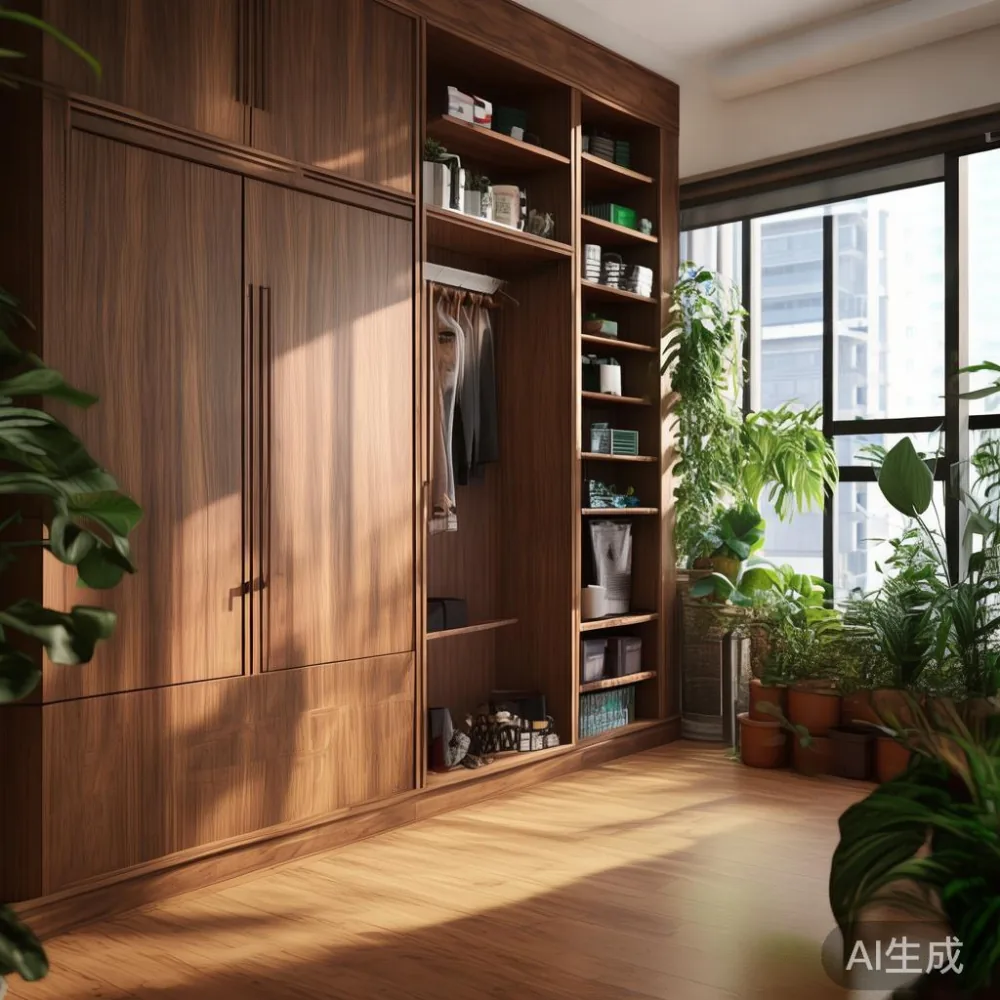
Singapore's climate is unusually punishing for solid wood. Outdoor relative humidity in places like Bedok and Punggol averages 78–85% across the year, and indoor humidity in a typical HDB flat without a dehumidifier swings between 55% and 80% across a single week. For a piece of furniture like a wardrobe, a dining table, a bed frame, or a nightstand, that 25-point swing is the entire story. Add GST, a 1.2-metre lift door, and a 1.5-metre service staircase, and you start to see why the furniture you bought needs to be chosen with the weather in mind, not just the showroom photo.
Why does Singapore's humidity punish solid wood so heavily?
Solid wood is hygroscopic, which simply means it drinks and breathes water through its cell walls all day. When humidity rises, the wood swells; when it falls, the wood shrinks. In a Tampines condo where the air-conditioner runs from 11pm to 7am and then the balcony door opens at 8am, a wardrobe can complete a partial swelling cycle in under eight hours. Over six months, that cycle opens the glue lines on a flat-pack piece, lifts veneer bubbles, and leaves wardrobe doors rubbing against the frame.
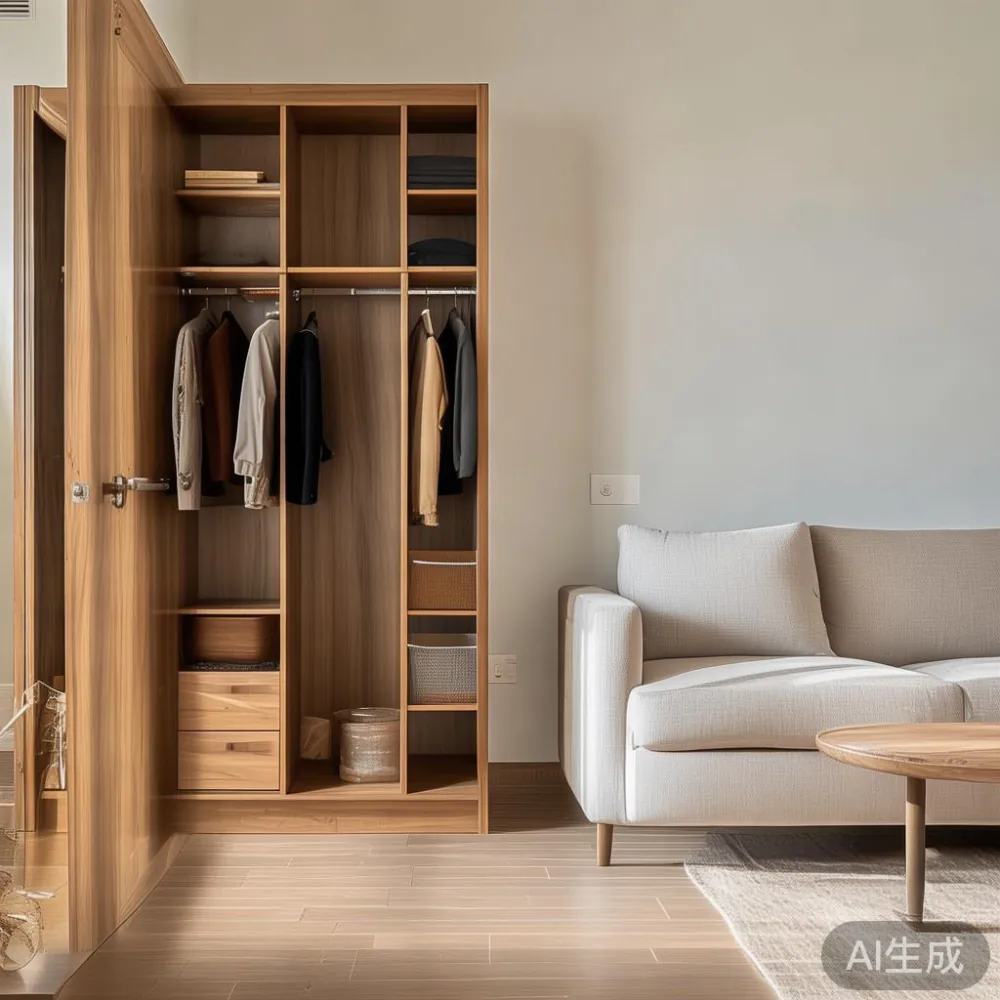
Engineered boards resist this movement better, which is why most wardrobe carcasses use plywood or MDF. But the wardrobe doors, the wardrobe handles, the trims, and any visible solid wood panels still move. A solid wood dining table on the same balcony can cup across its width by 1–2 mm after one rainy week. I have measured a 1.8-metre acacia dining table that grew from 180.2 cm to 180.7 cm across its width during last month's monsoon week, then shrank back to 180.3 cm by Friday. That tiny number is what makes a drawer stick or a wardrobe door refuse to close.
MIDHILL builds solid wood pieces in Foshan specifically for export climates like Singapore's, and the factory applies a kiln-drying schedule that brings moisture content down to 8–10% before assembly. That figure matters because the wood is already matched to indoor humidity rather than outdoor humidity, so when it lands in a Punggol flat it has less catching up to do.
What size coastal style do I need?
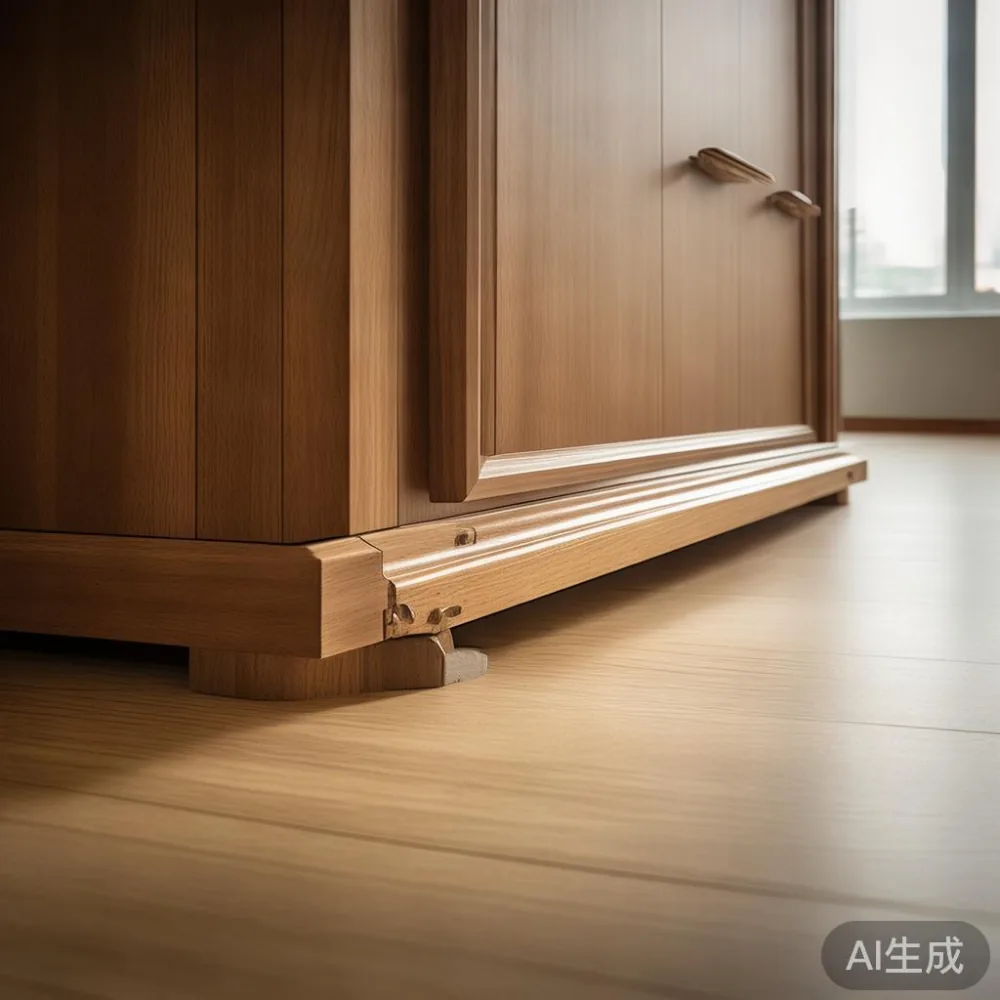
For Singapore bedrooms, a coastal style wardrobe should be 180–220 cm tall, 120–180 cm wide, and 55–60 cm deep so it fits standard HDB and condo walls without blocking the air-conditioner blower or the window line. Coastal style means light oak or whitewashed finishes with simple shaker doors, which visually shrink less in low light than dark walnut and pair well with the pastel palettes common in Tampines and Bedok BTOs.
If the wardrobe is too deep, the back panel sits against an exterior wall that sweats during the afternoon monsoon, and that trapped moisture creates the exact environment mould needs. If it is too wide for the wall, the wardrobe will bridge the corner bead of the plaster and slowly pull the wall surface with it as the wood moves. Always measure the wall at three points: top, middle, bottom. In my Tampines visit, the wall varied by 1.4 cm across 2 metres, which is normal for a 1990s HDB flat.
A practical coastal layout also leaves a 2.5 cm gap behind the wardrobe so air can move and the wall can dry after the air-conditioner switches off. Combined with wardrobe organization features like adjustable shelves at 32 cm spacing and a 45 cm hanging zone, that gap is what keeps a wardrobe working through September and February alike.
How does humidity actually damage a wardrobe over time?
There are four damage patterns I see again and again in Singapore homes. First, wardrobe doors bow outward at the centre because the outer face absorbs more moisture than the inner face. Second, the wardrobe's top panel expands against the ceiling and pushes the cornice gap wider. Third, drawer runners rust because the steel and the humid air react overnight, leaving orange dust on your shirts. Fourth, the wardrobe's back panel swells enough to push the carcass forward by 1 cm, which then jams the doors.
None of these are warranty issues at most factories. They are maintenance issues that come from climate. A well-made wardrobe from a factory like MIDHILL will survive these swings for 8–12 years before the doors need a realignment, while a cheap flat-pack wardrobe often shows the same damage in 18 months. The difference is the wood thickness, the glue type, and whether the back panel is 9 mm plywood or 3 mm cardboard.
The wardrobe organization inside matters as well. Solid wood shelves inside a wardrobe carry more load than MDF shelves, but they also move more. Spacing shelves at 32 cm instead of 30 cm gives cotton clothing room to breathe and gives the shelf room to swell without popping out of its peg hole. This is one of the small design choices that separates a wardrobe you fight with from one you forget about.
What humidity level should I keep inside my HDB flat?
Target 50–55% relative humidity for the rooms where you keep solid wood furniture. That range keeps wood stable and also keeps dust mites under control, which matters in Singapore where asthma runs higher than the regional average. A basic digital hygrometer costs SGD 18–25 at any Tampines Mall electronics shop and is the single best SGD you will spend on furniture care.
Run a dehumidifier in the wardrobe room for four hours each afternoon during the December and June monsoon windows. A 12-litre Meaco or similar unit pulls about SGD 1.20 of electricity per day at current SP Group tariffs. If you prefer not to run a machine, two Damp Rid containers inside the wardrobe changed monthly will hold the line at 60% in a 12 m² bedroom, which is acceptable for most solid wood pieces.
Keep the wardrobe at least 10 cm away from any exterior wall. In Punggol Waterway terraces and newer condos, the exterior wall still sweats because the air-conditioner condensate drains on the other side. The gap lets the wall dry. I learned this the hard way visiting a client's home last month, where a wardrobe pushed flush against an exterior wall had black mould behind it within 14 months of moving in.
How do I choose a solid wood piece that survives Singapore's weather?
Look at five things before you swipe your credit card. First, ask for the moisture content reading at the factory; anything between 8% and 12% is appropriate for Singapore. Second, ask what glue is used in the joints; polyurethane (PU) glue survives humidity far better than the white PVA glue found in cheaper flat-pack pieces. Third, check the back panel thickness; 9 mm plywood is the minimum, 12 mm is better for a wardrobe over 180 cm tall. Fourth, look at the finish; a closed-pore lacquer or hard wax oil slows moisture transfer far more than an open stain. Fifth, ask about the warranty terms in writing.
MIDHILL offers a 10-year structural warranty on its solid wood sofa frames, bed frames, dining tables, wardrobes, and nightstands, plus lifetime refinishing on most pieces. That kind of coverage is rare in this price band and is one signal that the factory has confidence in its kiln-drying and glue choices. Pieces retail in Singapore between SGD 1,800 for a four-seater solid wood sofa and SGD 4,200 for a six-door wardrobe with full wardrobe organization fittings, with free shipping above US$350.
Watch out for two local red flags. Any wardrobe or marble table sold below SGD 1,200 for a six-door unit is almost certainly using 3 mm back panels and MDF doors, both of which will swell in a Bedok flat within a year. Any retailer who cannot tell you the wood species, the moisture content, and the factory location is reselling container-load rejects. Ask the questions in writing through WhatsApp or email; legitimate suppliers reply within a working day.
Can I fit a large wardrobe through a Singapore HDB lift and corridor?
Standard HDB lifts measure 1.1 m wide by 1.4 m deep with a 2.1 m ceiling, and corridor corners can be as tight as 1.6 m across the diagonal. A fully assembled 240 cm wide wardrobe will not fit through either, so the wardrobe must arrive flat-packed or in two bolted halves. Always measure your lift and your corridor before ordering, including the corner nearest your unit, and share those numbers with the supplier.
MIDHILL ships its wardrobes as two bolted halves for any unit over 180 cm wide, with bolt covers included for assembly. Delivery to a Tampines or Punggol address typically takes 12–18 working days from the Foshan warehouse, including sea freight from Shenzhen to Singapore port and last-mile delivery by lorry. Free shipping applies above US$350, which most wardrobes and large desk for dining room combinations clear in a single order, and the 14-day return window gives you time to inspect the piece before the courier leaves.
If your unit sits on a high floor with a service lift narrower than 0.9 m, ask the supplier to break the wardrobe into three modules. Yes, this adds SGD 80–120 to the delivery cost, but it also prevents a 95 kg wardrobe panel from blocking your corridor for six hours while a crane is called. A good supplier will volunteer this information; a poor one will tell you on delivery day.
What daily habits keep wood furniture stable all year?
Three habits carry most of the weight. Wipe wardrobe and dining table surfaces with a dry microfiber cloth every evening to remove the day's moisture film before it soaks in. Run the air-conditioner or a fan for at least two hours after you finish drying clothes indoors, because each load of laundry releases roughly 2 litres of water into the room. Open the wardrobe doors for 20 minutes on dry afternoons to let the interior air out, then close them before the evening humidity rises.
Avoid three common local mistakes. Do not place a wardrobe directly under a window that you leave open during a thunderstorm; the sideways rain wicks into the top panel within months. Do not wax a wardrobe that has a lacquer finish, because the wax traps moisture against the film and turns it cloudy. Do not place a marble table or a solid wood dining table next to a fish tank without a 30 cm buffer, because the tank's evaporation plume is local humidity at 90%.
If you spot a wardrobe door rubbing in July, wait until January before you plane it down. Most alignment problems resolve themselves when the dry season arrives, and shaving wood in July simply creates a 2 mm gap that screams at you in February. Keep a small notebook by the wardrobe and log the date, the humidity reading, and the door gap once a month; over a year you will see the pattern clearly and stop worrying about every creak.
Are MIDHILL's light luxury ranges a good fit for Singapore interiors?
Yes, and the reason is the finish rather than the marketing. The French light luxury line uses a wire-brushed white oak with a matte hard wax oil that breathes with the wood instead of sealing it under a plastic film, which means the wood can move through a humid week without cracking the surface. The American light luxury line uses a closed-pore lacquer over quarter-sawn ash, which holds up better in homes where the air-conditioner runs 18 hours a day and indoor humidity stays below 50%. The post-modern light luxury line pairs a solid wood frame with a marble table top and brass hardware, an unusual combination that survives Singapore's humidity when the marble is sealed with a penetrating impregnator at the factory and again every 18 months at home.
What matters for Singapore is matching the line to the room. Bedrooms with constant air-conditioning suit the American light luxury lacquer. Living rooms with afternoon sun and cross-ventilation suit the French light luxury oil. Dining rooms next to a wet kitchen suit the post-modern light luxury sealed marble, where a splash of soy sauce wipes off without etching. Across all three lines, the wardrobe, the nightstand, and the bed frame are built to the same moisture content target and the same PU-glue schedule, so the climate advantage carries through the entire room.
Buying solid wood in Singapore is really about buying a maintenance plan disguised as a furniture set. Pick the right moisture content, the right finish, the right lift-friendly sizing, and the right daily habits, and a well-made wardrobe will outlast two air-conditioner replacements and at least one BTO resale. Pick the wrong piece, and the Tampines afternoon will teach you a humid lesson within a single season. The climate does not change; the preparation does.