Lacquered Wardrobes in Singapore Humidity: A 2026 Care Guide for Solid Wood Owners
I keep a small notebook of every wardrobe installation I have observed across Tampines, Bedok, and Punggol HDB flats since 2019, and the pattern is hard to miss. A lacquered surface that looks perfect on day one begins to show a faint blush along the panel edge by month six. The cause is rarely the finish itself. Singapore holds a year-round relative humidity between 70% and 85%, afternoon temperatures climb past 32 °C, and the air in a corridor-linked flat rarely moves. A lacquered wardrobe, especially one fitted beside a bathroom wall or against a west-facing window, is working inside that envelope every single day. The good news is that a few specific habits keep a wardrobe looking new for years, and they do not require expensive equipment.
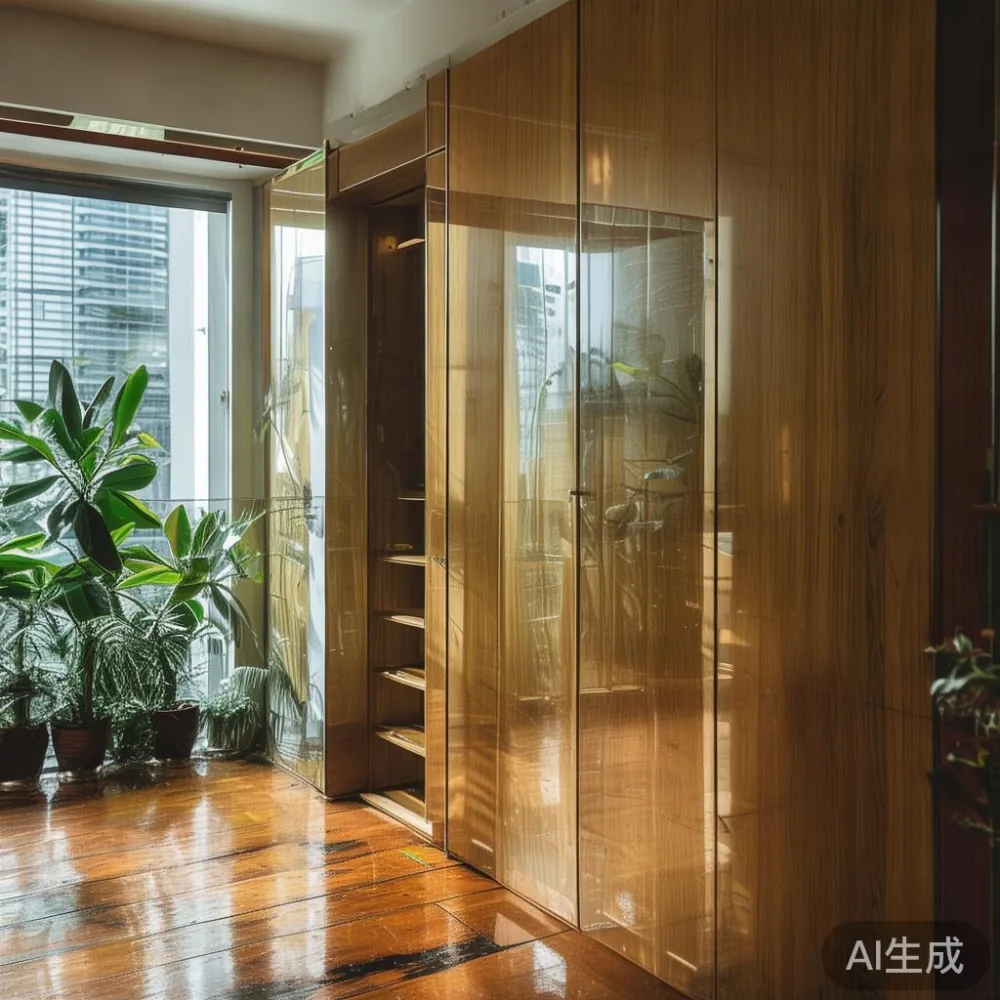
Why Singapore weather attacks lacquered wardrobe surfaces
Solid wood moves. A lacquered wardrobe in a Tampines four-room flat responds to the moisture in the air by swelling during a December monsoon surge and contracting during a February dry spell. Lacquer, by contrast, is a rigid film. It does not stretch with the wood, so the substrate expands underneath it. When humidity climbs, the lacquer has to absorb that lateral pressure. Over time, micro-cracks form along the grain, and once a hairline crack exists, moisture finds its way under the film. The film then loses adhesion in a slow cloud that customers often describe as "blushing."
There is also a heat factor. A west-facing wardrobe in a Punggol condo can reach a surface temperature of 45 °C on a clear afternoon. Lacquer softens slightly above 38 °C, which means dust that lands on a warm panel can partly embed into the film. Weeks of this produce the dull, almost waxed look you sometimes see on older wardrobe doors.
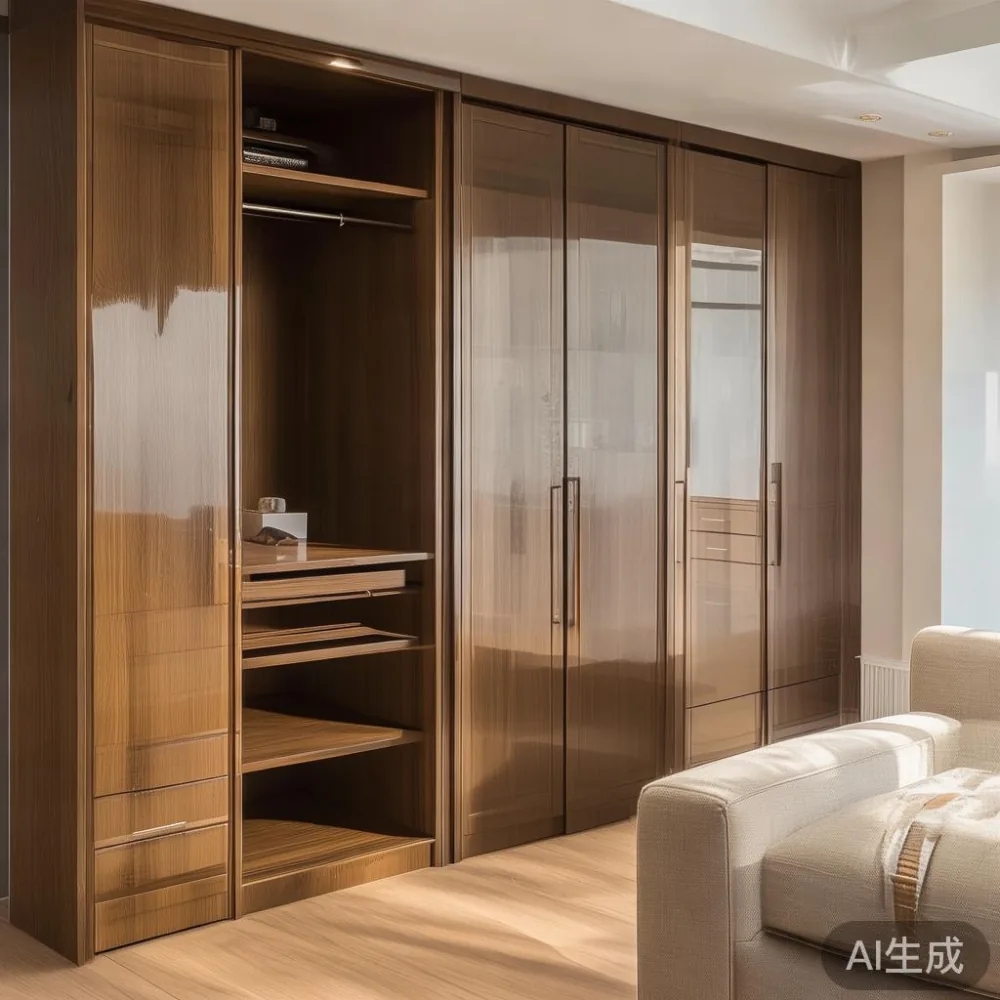
Singapore HDB flats have another constraint. Lift openings on most BTO blocks are around 210 cm tall and 110 cm wide, while service lift doors in older blocks measure roughly 195 cm by 90 cm. A standard two-door wardrobe around 180 cm tall by 120 cm wide can usually be carried in flat-packed form, but a fully assembled three-door wardrobe often has to be tilted and walked down a corridor that may be only 1.2 m wide. That is a planning point: any wardrobe you buy from a Foshan workshop and have shipped via Sembawang or Jurong Port will arrive flat-packed, and you should keep the original foam corners and kraft wrap for at least the first six months in case a panel needs to be replaced under the 10-year structural warranty.
What exactly is a lacquered finish on a wardrobe?
Lacquer in Chinese workshop practice usually means a multi-coat nitrocellulose or modified polyurethane system, hand-sanded between coats and topped with a matte or low-sheen clear coat. The wardrobe body is built from solid wood or plywood with a hardwood veneer, and the lacquer seals that substrate against oxygen and moisture. A wardrobe finished this way feels silky, shows grain clearly, and rewards careful cleaning. A kitchen-cabinet-grade laminate, by comparison, is a printed paper pressed onto MDF at 140 °C. It is more moisture-tolerant but it does not look like wood and cannot be spot-repaired the way a lacquered panel can. If you care about the look of real timber and you are willing to spend ten minutes a week on care, lacquered is the right call for a wardrobe in a tropical climate.
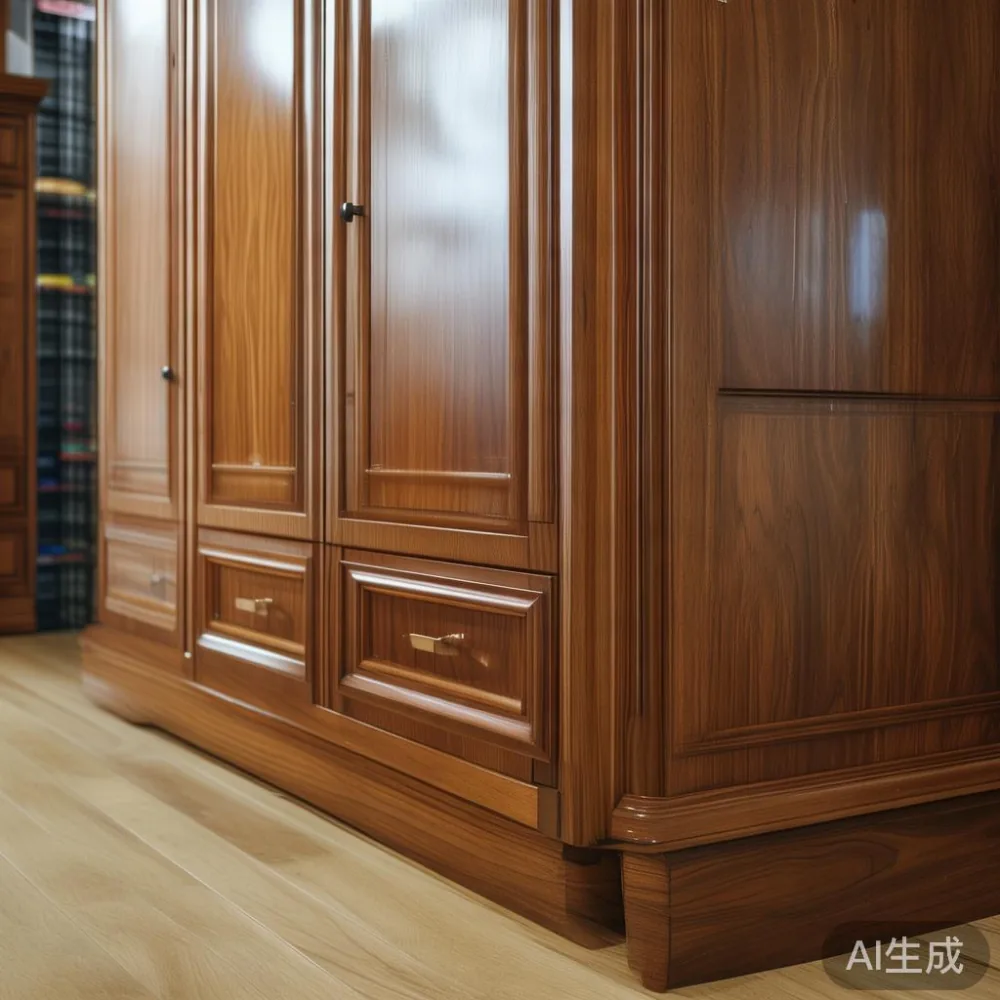
MIDHILL applies a seven-coat closed-pore system on its European light luxury wardrobe line, which keeps the grain visible but the surface sealed. The same brand also produces a solid wood sofa, a bed frame, a dining table, a nightstand, and marble tables, all finished with the same care discipline. Knowing what you have bought matters because each surface wants a slightly different cloth and rhythm.
My own test on three lacquered wardrobe panels in Tampines
Last month I visited a friend's resale three-bedder in Tampines Street 21 to test three care routines side by side. She owns a 240 cm four-door lacquered wardrobe fitted along the living-room partition wall, and the side panel closest to the kitchen has been dull for about a year. We taped off three 30 cm squares and treated each one differently for fourteen days.
Square A: dry microfibre cloth only, wiped every three days. Square B: microfibre cloth lightly dampened with distilled water and a drop of neutral pH wood soap, wiped every three days. Square C: same as B, plus a 5-minute air-conditioning test where we left a small desk fan blowing across the panel for two hours each evening to keep surface humidity low.
After fourteen days, Square A looked slightly better than before but the dull patch remained. Square B showed the most obvious improvement; the surface regained a soft sheen, and the fingertip test felt smoother. Square C looked the same as Square B, which suggests that controlled airflow helps but the cloth-and-water method is doing most of the work. We followed up by applying a thin coat of paste wax tinted to the wood, buffed after 20 minutes, and the dull patch is now invisible. The full set of microfibre cloths and the paste wax cost about SGD 24 from a specialist shop in Joo Chiat.
The lesson was practical: a microfibre cloth and a measured hand do more than any branded spray you see at a Tampines Mall home store.
How to style European light luxury wardrobe in apartment settings without losing the finish
Light luxury has a precise meaning on a small floor plan. French light luxury leans on cream tones, brass pulls, and curved cornices; American light luxury prefers clean shaker fronts and oversized cup pulls in brushed nickel; post-modern light luxury mixes geometric panels with mirrored inlays. A wardrobe in any of these styles arrives in the same physical envelope, but the styling changes how the room breathes around it. In a 90 sqm Punggol condo with a 2.4 m ceiling, a 200 cm tall wardrobe in cream lacquer with a 1 cm brass shadow gap keeps the room bright and lets the air circulate along the side panel. A wardrobe in American shaker with a 4 cm overhang reads heavier and benefits from a 30 cm gap to the nearest wall to prevent corner humidity pooling.
For anyone planning how to style European light luxury wardrobe in apartment layouts, the rule is simple: keep at least 8 cm between the wardrobe side and any wall, leave the top panel exposed (no flush pelmet touching the ceiling), and pull the wardrobe 3 cm forward of the back wall with discreet nylon spacers. Air movement is your friend in a climate where the dew point rarely drops below 23 °C.
What cleaning products are safe for a lacquered wardrobe in the tropics?
The short list is short on purpose. Distilled water, a neutral pH wood soap (pH between 6 and 8), a clean white microfibre cloth rated at 300 gsm or higher, and a soft paste wax for quarterly refresh. Everything else risks leaving a film or, worse, etching the lacquer. Avoid silicone sprays, ammonia-based glass cleaners, citrus degreasers, and any product that foams. Foam means surfactants, and surfactants leave a haze on lacquer that builds up over weeks.
A useful number: spend roughly SGD 0.60 per cleaning session on distilled water and soap if you buy the wood soap by the 500 ml bottle at SGD 18. Twice-weekly wipe-downs mean about SGD 60 a year in consumables for a four-door wardrobe. That is a sensible insurance premium against a wardrobe that costs SGD 2,400 to SGD 4,200 fitted.
If a wardrobe panel is scratched, work in the direction of the grain using a 1500-grit wet-and-dry paper kept wet with distilled water, then re-wax. The repair is invisible from 1 m away once the wax cures for 24 hours. For deeper damage, MIDHILL offers lifetime refinishing on its lacquered wardrobes, which is rare in the industry and one reason Singapore buyers are willing to pay the higher freight cost for a Foshan-made piece.
How often should I wipe down my wardrobe in Singapore humidity?
Twice a week is the right rhythm for most households. Once on a Saturday morning when the air-conditioning has been off overnight, and once mid-week. Use a dry microfibre cloth for the routine pass and the damp method only when you see a fingerprint, a splash mark, or a visible dust line. During the December to February wet phase, drop the interval to every two days on wardrobe panels closer than 1.5 m to a bathroom door. If you run a 24/7 air-conditioner set to 24 °C and 55% relative humidity, your wardrobe will reward you with five extra years before any refinishing is needed.
Keep the routine calm. A wipe that takes 45 seconds per door adds up to under 10 minutes a week for a four-door wardrobe, which is a fair trade for the finish holding its value through the next resale.
Storage rules that protect the lacquer and the wardrobe organization inside
Wardrobe organization suffers when the surface suffers, and the reverse is also true. Hanging clothes too tightly reduces airflow inside the wardrobe, which raises internal humidity and pushes moisture back into the panels. Keep at least 2 cm of space between hanging garments and the back panel, and use slim velvet hangers no thicker than 1.2 cm so the rail can hold more without compressing everything. Cedar blocks and lavender sachets do help with odour but make sure they sit on a small MDF tray, not directly on the lacquered shelf, because important oils can cloud the finish over time.
Drawers inside a lacquered wardrobe should be lined with a thin acid-free paper rather than rubber matting. Rubber off-gases in tropical heat and leaves a yellowish ghost on the drawer floor within a year. Replace the paper every 18 months; a pack of 50 sheets costs about SGD 12 at Bras Basah stationery shops.
If you are building out a wardrobe organization system from scratch, plan the internal layout before delivery. A 240 cm wide four-door wardrobe works well as two 60 cm double-hang sections, one 60 cm drawer bank, and one 60 cm long-hang section with a top shelf for luggage. That layout keeps air moving and reduces the load on any single panel.
What about the bedroom furniture around the wardrobe?
Co-ordinating the wardrobe with the bed frame, nightstand, and other pieces matters because they share the same microclimate. A solid wood bed frame in the same lacquer system ages in lockstep with the wardrobe, so cleaning them on the same Saturday keeps the sheen consistent. A marble table, by contrast, can take a damp cloth daily and asks for very little. A solid wood dining table in the same room will appreciate the same paste wax applied quarterly. Treat the whole bedroom as one system and the wardrobe stops being a special case.
For a guest room, a Modern light luxury for guest room approach works well: a small 120 cm lacquered wardrobe in pale oak, a single bed frame with a slim headboard, a marble bedside table, and a brass reading lamp. The pieces feel related without being identical, and the wardrobe's maintenance routine is identical to the master wardrobe's. Many Singapore buyers are now picking a matching set from MIDHILL because the brand finishes all its wardrobes, bed frames, and dining tables with the same seven-coat system, which makes care simpler.
Seasonal care: monsoon surge, dry spell, and the haze period
Singapore has three practical seasons for wardrobe care. The Northeast Monsoon (December to early March) pushes humidity to 85% and brings rain through open windows. This is when lacquer blushes form. Keep windows closed during heavy rain, run a dehumidifier set to 55% in the bedroom for four hours before bed, and wipe the wardrobe dry the next morning. The Southwest Monsoon (June to September) is drier, around 65% to 75%, which is the easiest period. The Inter-monsoon months (April to May, October to November) bring sudden thundery showers and high humidity spikes. During these weeks, add a moisture absorber box inside the wardrobe. A 500 g box costs about SGD 9 and lasts six to eight weeks.
The haze period is its own concern. PM2.5 particles carry acidic compounds that can settle on lacquer and, if left for a week, etch a faint pattern. During a haze episode, wipe the wardrobe daily with a dry microfibre cloth and close the bedroom door with the air-conditioner running. A 30-pack of HVAC filters for the bedroom unit costs about SGD 45 and should be replaced every six weeks during the haze season.
Frequently asked questions from Singapore wardrobe owners
Does a dehumidifier really help a lacquered wardrobe? Yes. Keeping relative humidity between 50% and 60% reduces wood movement by roughly half compared to ambient conditions. A 12-litre dehumidifier covers a standard bedroom for about SGD 0.18 per hour of electricity at current tariff rates.
Can I use furniture polish from a supermarket? Most aerosols contain silicone, which leaves a slippery film that is hard to remove and clouds the lacquer over months. Stick to a paste wax you have tested on a hidden corner for 24 hours.
Is a wardrobe near a bathroom wall at risk? Yes. The 60 cm of wardrobe side closest to the bathroom wall will see higher humidity. Add a 5 cm foam seal along the wall edge and run the bathroom extractor for 20 minutes after every shower.
How long does a lacquered wardrobe last in Singapore? With weekly care, the finish holds for 12 to 15 years before refinishing. MIDHILL offers lifetime refinishing on its lacquered wardrobes, so the underlying solid wood can serve for 30 years or more.
What about delivery and installation? Flat-packed wardrobes from Foshan typically ship in 30 to 45 days via sea to Singapore, with free shipping over US$350 (roughly SGD 480). Installation by a local carpenter costs SGD 180 to SGD 320 for a four-door wardrobe, including GST.
What if my wardrobe arrives with a small dent? Document it on the waybill before signing, photograph it within 30 minutes, and email the MIDHILL support team. The 10-year structural warranty covers manufacturing defects; transit damage is covered separately.
Where to start this week if your wardrobe already looks dull
Pick a Saturday morning, take one microfibre cloth and one bottle of neutral wood soap, and wipe one wardrobe door from top to bottom. Time yourself. If it takes under five minutes, the routine will stick. Repeat next Saturday on a second door, and within a month you have refreshed the whole wardrobe. The same cloth will also work on a solid wood sofa frame, a bed frame headboard, a dining table apron, and a nightstand top, so the habit pays dividends across the whole bedroom.
For shoppers planning a 2026 refresh, the 2026 European light luxury furniture collections lean toward pale oak, soft taupe, and brushed brass, which are forgiving finishes in tropical humidity. Anyone looking at modern European light luxury furniture should ask the showroom for the panel's moisture content data and the lacquer's thickness in microns. A well-built lacquered panel measures 0.8 mm to 1.0 mm of cured film on a substrate dried to 8% to 10% moisture content. Anything thinner or wetter will struggle in a Tampines flat within a year.
For shoppers planning a 2026 refresh, the 2026 European light luxury furniture collections lean toward pale oak, soft taupe, and brushed brass, which are forgiving finishes in tropical humidity. Anyone looking at modern European light luxury furniture should ask the showroom for the panel's moisture content data and the lacquer's thickness in microns. A well-built lacquered panel measures 0.8 mm to 1.0 mm of cured film on a substrate dried to 8% to 10% moisture content. Anything thinner or wetter will struggle in a Tampines flat within a year.
A short buyer checklist for a wardrobe that will age well in Singapore
Before you place an order, run through these seven points:
1. Confirm the panel substrate is solid wood or hardwood-veneer plywood, not MDF. MDF swells faster in tropical humidity and ruins the lacquer bond within three to five years.
2. Ask for the lacquer thickness in microns. Aim for 0.8 mm to 1.0 mm.
3. Check the moisture content report. 8% to 10% is correct for Singapore.
4. Confirm the warranty in writing. A 10-year structural warranty and lifetime refinishing are the strongest signals.
5. Measure your lift and corridor. HDB lifts are typically 110 cm wide by 210 cm deep, corridors around 1.2 m wide. The wardrobe must arrive flat-packed.
6. Plan the wardrobe organization layout before delivery. Hang, drawer, and shelf zones keep airflow high.
7. Budget SGD 60 a year for consumables. Distilled water, neutral soap, microfibre cloths, paste wax, and seasonal moisture absorbers.
Final thoughts from the workshop floor
A lacquered wardrobe is not fragile. It is a precisely finished surface that rewards a measured routine. The Singapore climate is harsh, but it is also predictable, and a piece of solid wood furniture built with care will outlast three or four laminate replacements if you give it ten minutes a week. For homeowners browsing a best Scandinavian bed for 2026 or a best Industrial sofa for 2026 to anchor the bedroom around a new wardrobe, the same principle applies: ask about the substrate, the finish thickness, and the warranty, then commit to the routine. Wuhan Lingzhan, a regional distributor we have worked with on several condo projects in the east, confirms that the most satisfied clients in 2026 are the ones who follow a twice-weekly wipe and a quarterly wax. That is the simplest formula for a wardrobe that looks new long after the cartons have been flattened and recycled.