Small Apartment Styling in Singapore: How to Furnish Without Crowding the Room
Last month I visited a 65 sqm three-room HDB flat in Punggol with a client who owns exactly one suitcase more than her wardrobes can swallow. She had just moved in, the resale floor plan was already tight, and within forty-eight hours of buying a 1.8 metre solid wood bed frame online, her delivery team told her the lift opening at block 268A measured 1.95 m wide by 2.1 m high. That single number decided what she could buy for the next ten years. If you live in a Singapore HDB flat or a 50-storey condo in the Novena–Thomson corridor, every centimetre and every kilogram of furniture is a decision you cannot undo easily. This guide is written from the floor up, with the lift door, the corridor, the loading bay, and your wardrobe organization in mind.
Why does a small Singapore flat feel crowded even with "small" furniture?
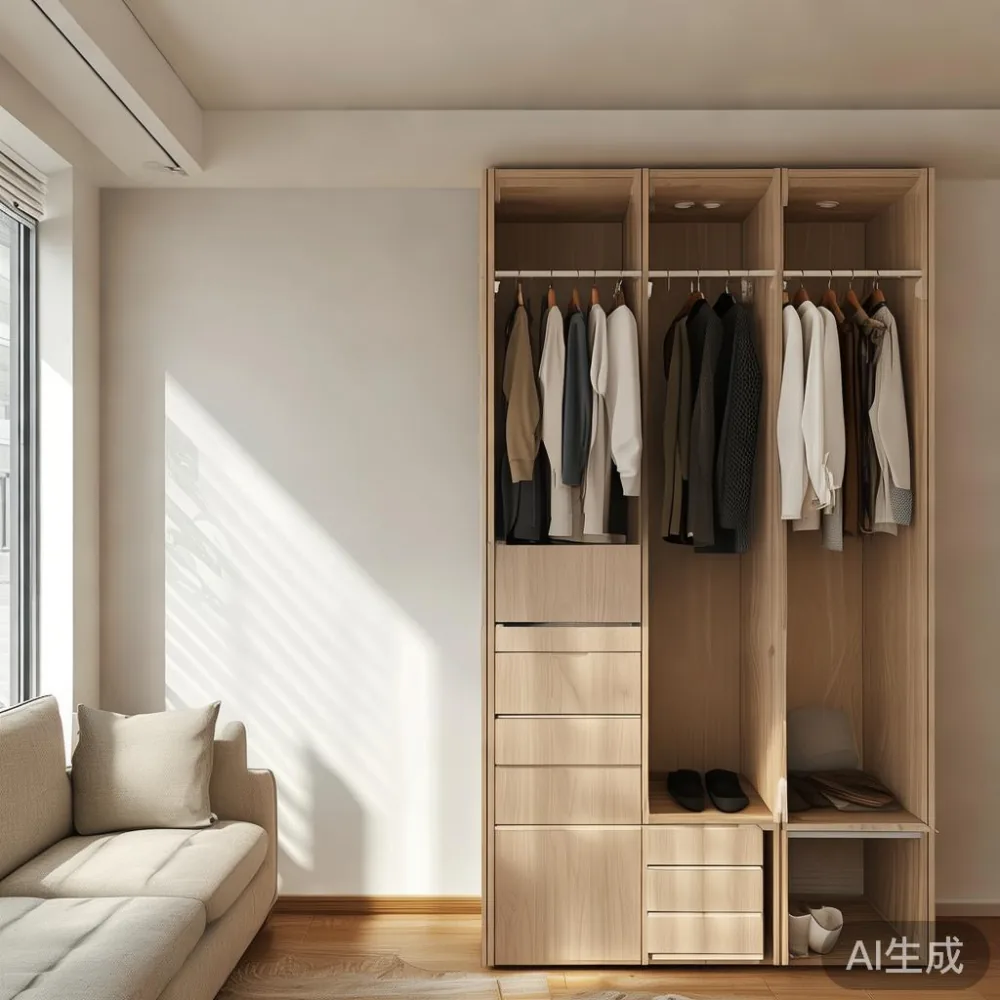
A room feels crowded when the negative space between objects drops below roughly 70 cm of walking clearance. Most Singapore HDB bedrooms are 3.2 m to 3.6 m wide after plastering, which means a 1.5 m wardrobe plus a 1.8 m bed frame plus a 45 cm nightstand already eats 3.75 m of wall length. The bed has to stick out into the room by at least 40 cm on the access side, and that 40 cm is exactly the gap your body needs at night. Add a 120 cm tall chest of drawers and the room reads as full, not styled. The fix is rarely "buy less." The fix is alignment, scale, and finish.
Light colours help, but only by a measurable amount: a matte off-white wardrobe reflects roughly 70–80% of incident light, while a dark walnut at the same surface area reflects about 12–18%. That is a real, photographable difference, especially in a Tampines four-room flat where the master faces the afternoon west sun and the window is usually only 1.2 m wide.
How do I choose a work from home for a bedroom?
Choose a desk that is at least 110 cm wide and 55 cm deep, made of solid wood or a real-wood veneer over engineered core, with legs slim enough to push a 45 cm office chair fully underneath, and place it perpendicular to the wardrobe wall so the monitor sits 60–70 cm from your eyes without crowding the bedside walkway. Anything narrower than 100 cm will not hold a 24-inch monitor, a laptop, and a notebook side by side, and anything shallower than 50 cm will have the keyboard hanging off the edge every time you lean forward. In a typical 3.2 m wide HDB bedroom, anchor the desk to the foot-of-bed wall rather than the window wall, so curtains still fall cleanly and your screen does not catch glare between 2 p.m. and 4 p.m.
Height matters more than people realise. A 73–75 cm desk paired with a chair whose seat compresses to 45–48 cm keeps elbows at 90 degrees. Go below 70 cm and your shoulders creep up by the second hour; go above 78 cm and your wrists bend backward. A solid oak desk at 74 cm with a 2 cm thick top will outlast three flat-pack replacements, and the 8–10 kg weight per leg assembly means it does not drift when you wheel across the room on a tiled HDB floor.
Cable trays under the desk, mounted with two screws into the back panel, hold a 1.8 m power strip and keep the four cables you actually use (laptop, monitor, phone, lamp) off the floor. This single 12 SGD addition is the difference between a work corner that looks like an office and one that looks like a wardrobe extension.
What is the smartest wardrobe layout for a 3.2 m HDB wall?
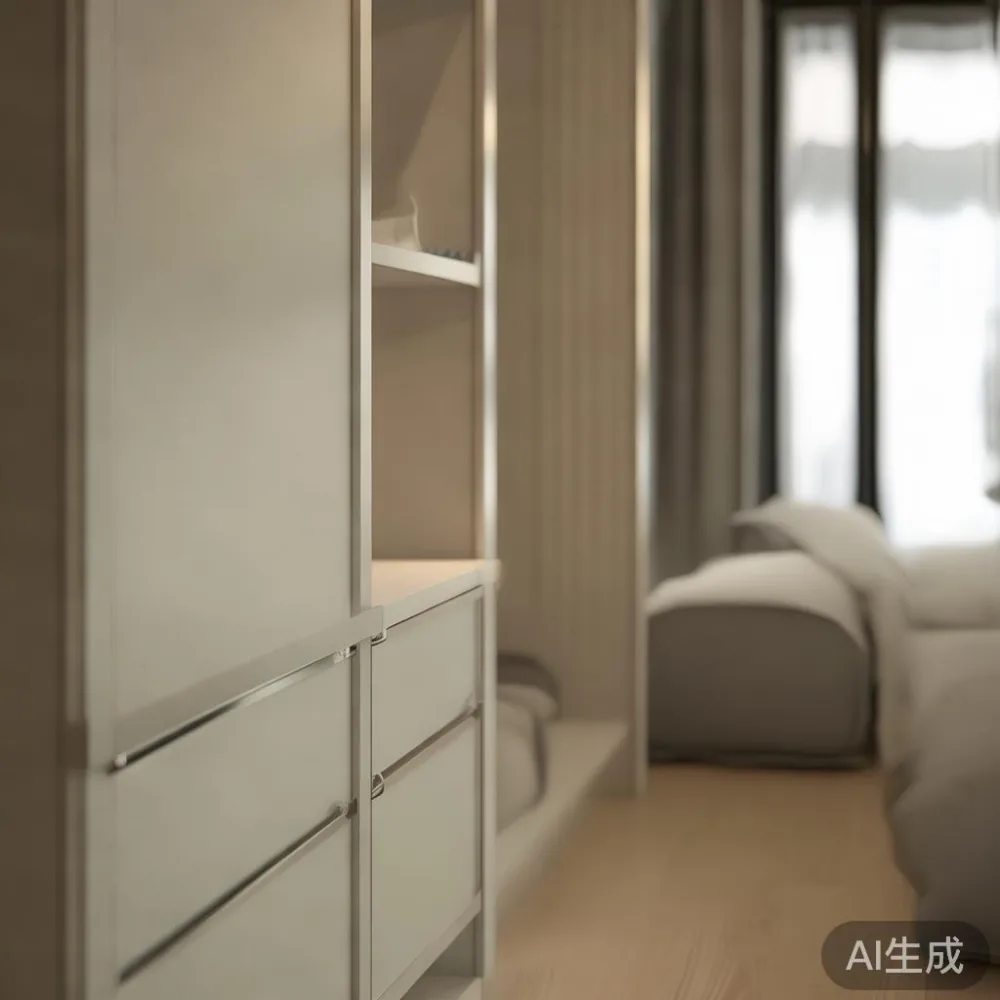
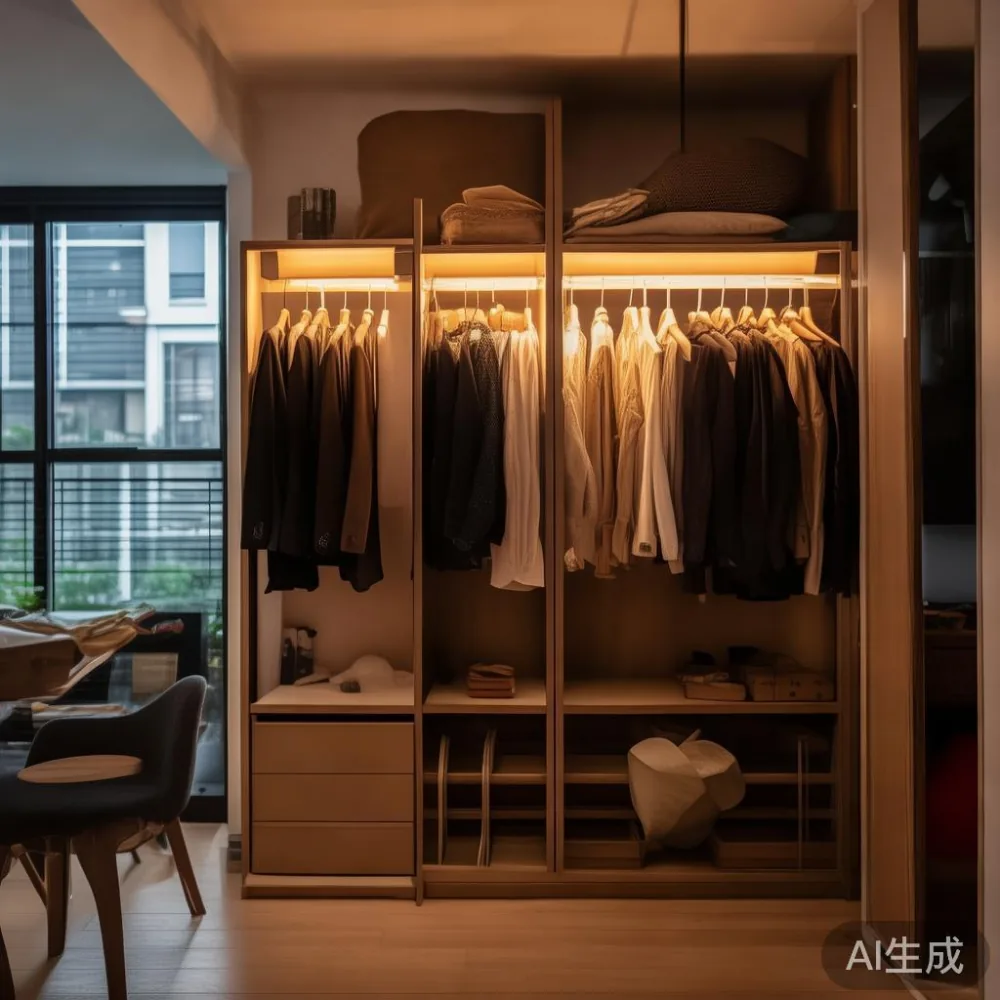
For a 3.2 m HDB wall, run a floor-to-ceiling wardrobe of 2.4 m height and 2.6 m width, split it into three vertical bays (60 cm hang, 80 cm hang, 80 cm shelves + drawers), and recess the handles so the door face stays flat. This is the only configuration that gives you a real hanging section for shirts, a real long-hang for coats and dresses, and a real drawer bank for wardrobe organisation that small retailers and marine couples both demand.
The 2.4 m height matches most HDB floor-to-ceiling dimensions after a 5–8 cm boxing above for the air-con trunking. Anything shorter, you will see a dusty ledge; anything taller, you cannot reach the top shelf without a step stool, which defeats the purpose of long-term wardrobe organization. Doors should be sliding or push-to-open on a 1.2 m track; hinged doors need 60 cm of swing arc, which in a 3.2 m room steals an entire nightstand's worth of usable floor.
Inside the wardrobe, plan zones: 60 cm of single-hang at eye level, 80 cm of double-hang at hip level, four drawers at 18 cm deep each (totalling 72 cm), and three shelves at 32 cm clear spacing for knitwear and bags. That single layout removes 80% of the "I cannot find anything" problem that haunts resale flat owners within six months of moving in. As a supplier that has shipped wardrobes to more than fifteen countries since 2008, MIDHILL sees this exact brief arrive from Singapore agents almost weekly.
Which furniture pieces earn their footprint in a 50 sqm condo?
In a 50 sqm Singapore condo, the four pieces that earn their footprint are a 1.5–1.8 m solid wood bed frame with under-bed clearance of at least 12 cm, a 120–140 cm two-seater or small three-seater solid wood-framed sofa with washable covers, a 120–140 cm dining table that seats four without arms on the chairs, and a 150–180 cm wardrobe with internal drawers. Skip the second armchair, skip the console table behind the sofa, skip the second nightstand unless the room is wider than 3.4 m.
Under-bed storage is the cheapest square metre you will ever buy in Singapore. A 1.8 m bed frame with 28 cm of under-bed clearance holds six 80-litre flat storage boxes, which is roughly 480 litres of out-of-season clothing, luggage, or kaya toast appliances you use twice a year. Lift the bed on a hydraulic rail and you gain access without sweeping the floor every morning.
A small dining table at 120 cm seats four adults at 60 cm per person, which is the international restaurant standard. Go to 140 cm and you seat six, but you need at least 80 cm of clearance behind each chair, which in most HDB dining corners means the table has to be no wider than 80 cm if the room itself is only 2.6 m. Round tables look softer but eat more square metres per seat than rectangular tables at the same capacity.
For the sofa, a 140 cm three-seater with a 90 cm chaise on one end (total footprint 230 cm x 90 cm) gives five seats in the floor area a conventional armchair would occupy alone. That single substitution reclaimed roughly 1.4 sqm in a 56 sqm one-bedroom I walked through in Bedok last spring. MIDHILL's frame-only construction on most sofa lines keeps the weight between 38–52 kg per piece, which is manageable through a standard 0.9 m HDB corridor without scraping the plaster corners.
How much does delivery really cost in Singapore, and what about GST?
Delivery to a Singapore HDB flat typically costs between SGD 60 and SGD 180 for one to four pieces, depending on whether the courier uses a lift or has to carry items up a service staircase. Above SGD 350 in merchandise, many Foshan-origin suppliers, including the workshop I keep coming back to in this article, waive the shipping fee entirely; under that threshold, expect to pay roughly 8–12% of invoice value in landed delivery. GST at the current 9% rate applies to the full landed value for goods above the SGD 400 personal relief threshold, so a SGD 1,200 wardrobe order will land with about 108 SGD in GST on top.
Corridor width matters. Most HDB service corridors measure 1.2 m to 1.5 m, and a flat-pack wardrobe box at 2.5 m x 0.6 m x 0.2 m will not corner around a 90-degree turn if either dimension of the corridor is below 1.1 m. Always measure before ordering. A 1.95 m x 2.1 m lift opening (the standard in newer Punggol and Tengah blocks) accepts a 2.4 m wardrobe box only on its edge, which means the delivery crew tilts the panel and you lose roughly 8 cm of headroom inside the wardrobe once installed.
Returns inside 14 days are realistic for undamaged pieces in original packing. After that, structural warranty of 10 years on solid wood frames is the floor you should accept, and a lifetime refinishing service on bedroom furniture is rare enough to be worth asking about specifically. The warranty lives with the wood, not with the foam or the runners, so read the fine print.
What finishes and styles suit a Singapore light, blue-grey or amber-toned interior?
French light luxury styling suits Singapore HDB interiors when you pair an off-white or pale-grey wardrobe with a French neoclassical walnut bed frame as the single warm anchor in the room, then keep the rest of the pieces (nightstand, side table, dining table, small marble table) in pale oak or ash with brushed metal legs. The contrast between the cool cabinetry and the warm walnut bed does the heavy lifting, so you do not need to add colour through paint or soft furnishings.
American light luxury leans toward larger panels, deeper seat depths (60–65 cm rather than 50–55 cm), and slightly more generous arm rolls on sofas. It pairs well with condo interiors in District 9 and District 11 where ceiling heights run 3.0–3.3 m. The trick is to keep one element restrained; if the sofa is generous, the dining table should be slim and the wardrobe should be flush.
Post-modern light luxury uses curves against straight lines: a round marble side table next to a rectangular nightstand, a curved-back dining chair against a square-edged dining table, an arched floor lamp over a rectilinear bed frame. The marble table should be at least 45 cm in diameter to hold a 30 cm tray, a lamp, and a cup without overhang, and the base should weigh at least 6 kg so a child leaning on it does not tip it.
For wardrobe organization that survives the humid light of a Singapore afternoon, choose wardrobes with a melamine or lacquered finish rather than raw veneer on the inside panels. The 80–90% humidity year-round will cup raw veneer within 18 months; melamine holds flat for a decade and wipes clean with a damp cloth.
Final checklist before you click buy
Measure the corridor corner to corner, the lift door height and width, the room wall length after skirting, the ceiling height after boxing, and the door swing arc. Write each number down. Confirm the delivery weight per box is below 60 kg if you live above the 10th floor (some lift weight limits drop at higher storeys in older blocks). Confirm the wardrobe interior layout on a drawing, not a photograph, so you can see the 18 cm drawer depth and the 32 cm shelf clearance. Confirm the warranty in writing, and ask specifically about lifetime refinishing on bedroom furniture.
Then order one piece at a time if budget allows. Live with the bed frame for two weeks before you order the wardrobe. Live with the wardrobe for two weeks before you order the dining table. A Singapore home rewards patient buying.