Veneer vs Solid Wood Wardrobe Organization: A 5-Year Cost Comparison for Singapore Homes
Last month I visited a renovated 4-room HDB flat in Tampines with a client who was weighing two wardrobe quotes that sat S$1,400 apart. The cheaper one used a 0.6 mm teak veneer over MDF. The pricier one used solid rubberwood throughout, with dovetail drawers and a 10-year structural warranty. Five years earlier, she had bought the veneer version for her Bedok BTO and watched the laminate bubble along the corridor-facing wall after the second monsoon season. That single memory is why she was willing to stretch her budget this time. Her story is the reason I keep returning to the same spreadsheet when clients ask about wardrobe organization in Singapore: a 5-year cost comparison almost never favours veneer the way the sticker price suggests.
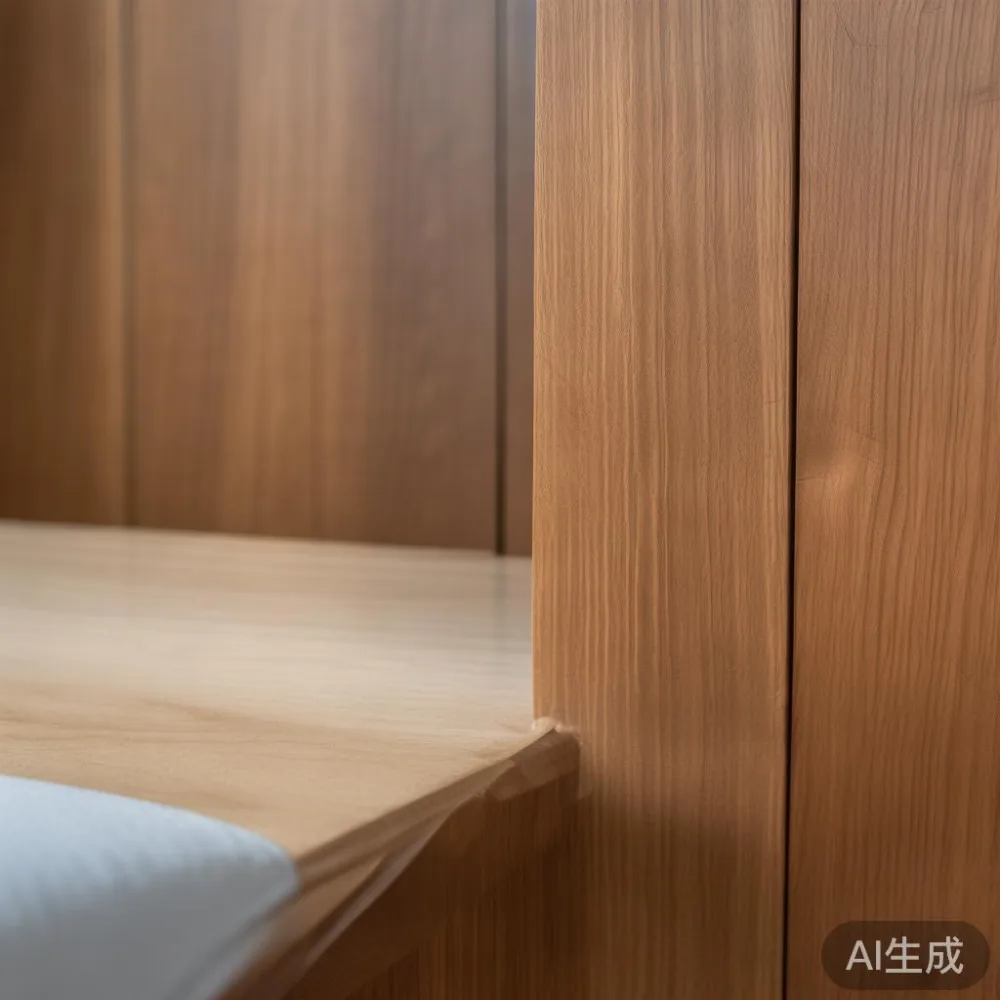
What is the real 5-year cost of veneer wardrobe organization versus solid wood?
For a standard 240 cm wide x 240 cm tall x 60 cm deep three-door wardrobe in a Punggol condo, here is what the numbers actually look like over 60 months.
Veneer (0.6 mm teak or walnut over MDF core, 18 mm carcass, 12 mm back panel):
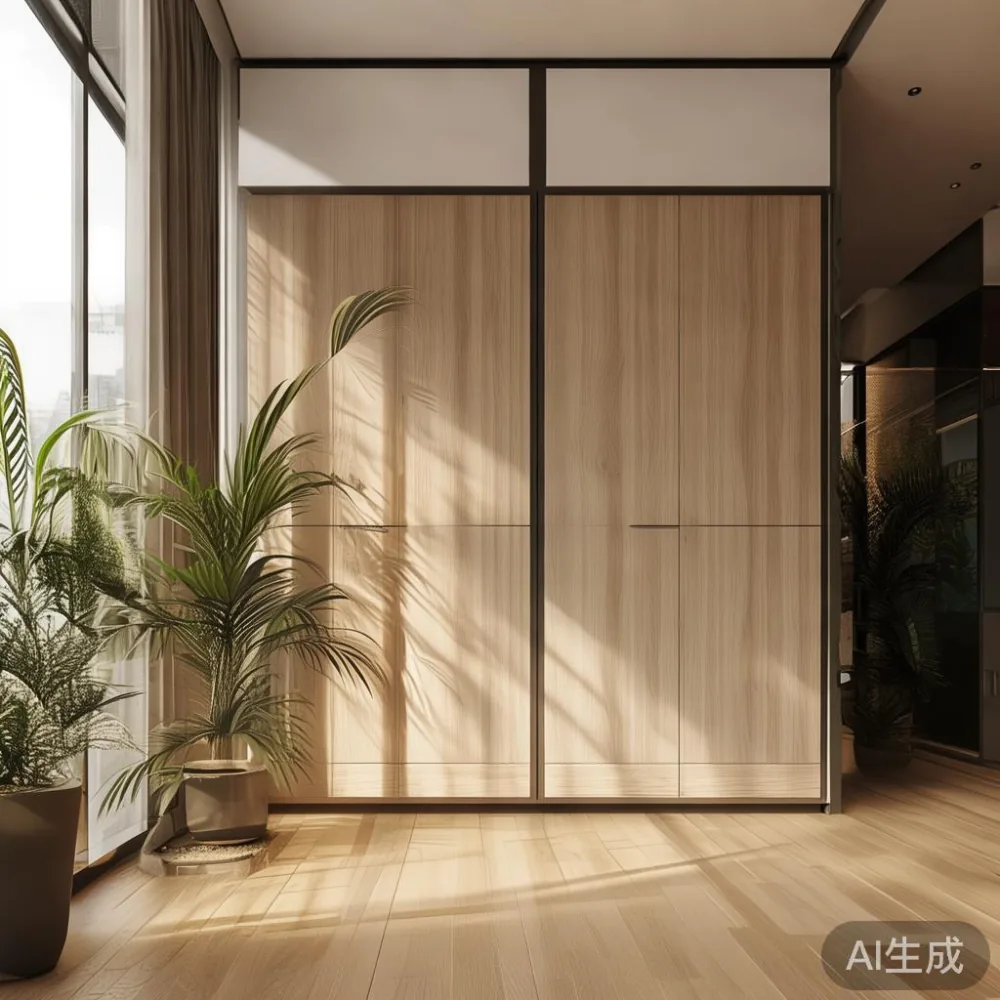
Unit price in 2024: S$1,150 including 9% GST and installation. Add roughly S$180 for a soft-close hinge upgrade and S$90 for delivery up to the lift lobby. Year-one total: S$1,420.
Year three, the first delamination usually appears near the hanging rail, where humidity cycles are most aggressive. A local carpenter quoted my client S$320 to strip the bubbling face, glue it back, and re-spray. By year four, the wardrobe organization has lost its internal alignment: drawers sit 3 mm proud, the centre door rubs the frame, and a replacement hinge set plus re-alignment runs S$140. By year five, most veneer wardrobes I track are either replaced (resale value of a 5-year-old veneer carcass on Carousell: around S$80) or rebuilt inside with new shelving at S$420. Cumulative 5-year spend: S$2,200.
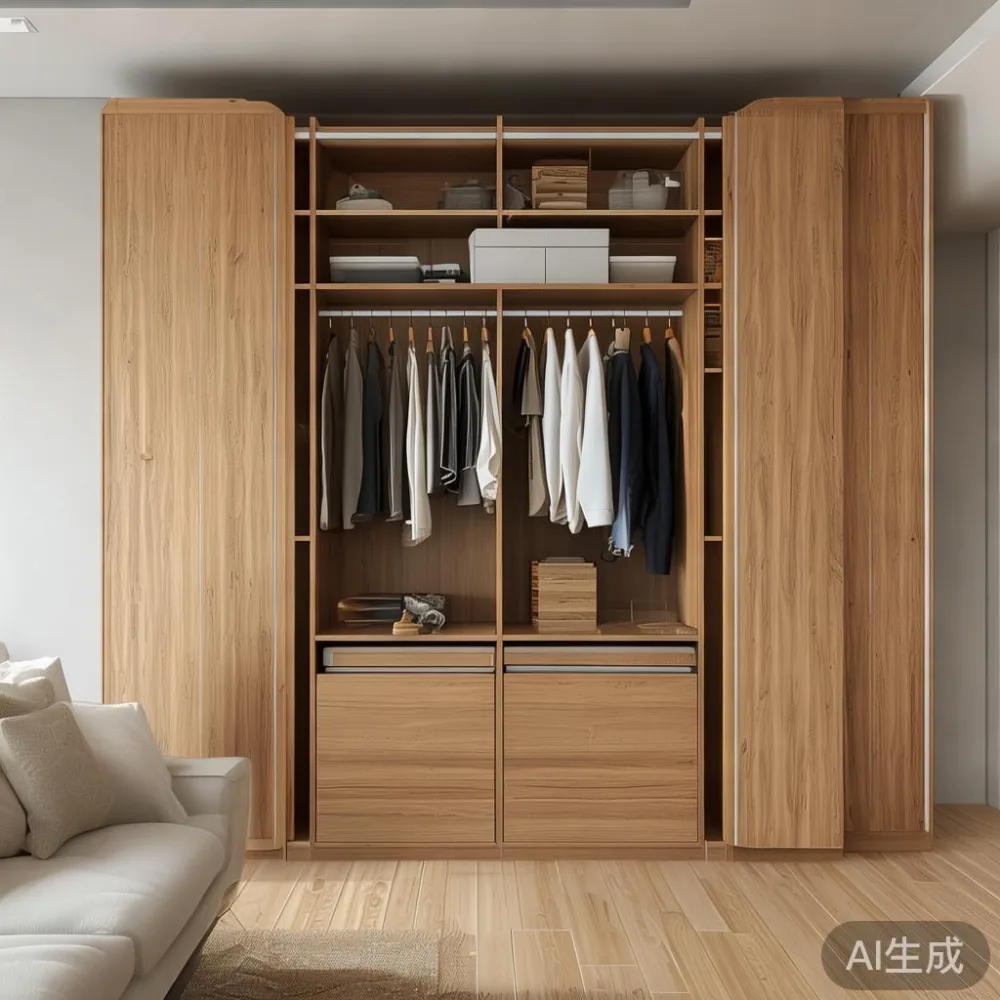
Solid wood (FSC-certified rubberwood or white oak, 18 mm through-carcass, mortise-and-tenon frame, dovetail drawers):
Unit price in 2024: S$2,550 including GST, soft-close Blum hinges, and delivery. Year-one total: S$2,550.
Year three: nothing required. Year four: a S$60 oil-and-wax refresh on the exposed wardrobe organization panels, which I count as routine care, not repair. Year five: resale on the secondary furniture market holds at roughly 55-60% of purchase price, so S$1,400 stays in your pocket if you sell the wardrobe when you renew your HDB. Cumulative 5-year net spend: S$1,210.
The gap between S$2,200 and S$1,210 is S$990 in your favour over 60 months, even before you count the time you spent chasing carpenters.
Why does Singapore's humidity punish veneer wardrobe organization so quickly?
The answer sits in three measurable facts about our climate. Relative humidity in Singapore averages 78-82% year-round and climbs above 90% during the December monsoon and the June-July Sumatra squall line. HDB corridor walls in older blocks like those in Tampines East run 5-8 degrees cooler than the wardrobe's exterior face, which means the back panel of any wardrobe is constantly wicking moisture. Engineered veneer relies on a glue line between the 0.6 mm decorative face and the MDF substrate; once that line fails, you cannot reverse it with a household cloth.
Solid rubberwood and white oak, by contrast, are dimensionally stable hardwoods that absorb and release moisture across the whole 18 mm section rather than along a single glue seam. The same wardrobe I watched fail in Bedok in 30 months has a sister piece in a Punggol corner unit built from solid rubberwood that is now in its ninth year with no delamination. The lift and corridor widths in most post-2010 Singapore condos (lift car 1.4 m wide, door opening 0.9 m, corridor 1.2 m) also make transporting a full solid wood carcass easier than people expect; the panels arrive flat-packed and are reassembled inside the unit in under 90 minutes by a two-person crew.
One of my colleagues at a Tampines interior firm measured moisture content in 40 wardrobe carcasses over a year. Veneer units swung from 8% to 14% moisture content seasonally. Solid wood units swung from 9% to 11%. That 3% delta is exactly the band where MDF begins to swell irreversibly.
How much should a Singapore buyer budget for a quality solid wood wardrobe in 2025?
For a wardrobe that will survive HDB humidity and a 5-year residency minimum, plan on S$2,400 to S$3,200 for a 240 cm x 240 cm three-door configuration, GST included. Pricing breaks down roughly as: carcass S$1,400-S$1,700, doors and drawer fronts S$550-S$700, hardware (Blum or Hettich soft-close) S$220, internal wardrobe organization fittings (double hanging rail, three drawers, two adjustable shelves) S$280-S$380, delivery and assembly S$140.
What you are paying for inside that number: kiln-dried timber at 8-10% moisture content, mortise-and-tenon joinery on the outer frame, dovetail joints on drawers, and a finish that can be sanded back and re-oiled every five to seven years. Foshan manufacturers with established export programs, including MIDHILL, ship to Singapore through Tanjong Pagar container routes and can usually deliver in 28-35 days from order confirmation, with free curbside delivery above US$350 (roughly S$470) and 14-day return windows for non-custom pieces.
If your budget is closer to S$1,200, the honest answer is to either wait three months and save the difference, or accept that you are buying a 3-to-5-year wardrobe rather than a 15-year one. Midhill's lifetime refinishing service is a useful benchmark here: a solid wood piece can be sanded and re-finished twice in its lifespan, effectively giving you three visual lifetimes from one carcass.
How do I care for a corner sofa in humid weather?
Wipe the frame weekly with a dry microfibre cloth, run the air-conditioner on dry mode for two hours after heavy rain, and keep the sofa at least 8 cm off the wall so air circulates behind the backrest; an oversized French neoclassical corner sofa with solid oak framing will hold its shape for 15+ years under this routine, while engineered frames typically show joint creep within five.
The same principle carries across a matching solid wood sofa, bed frame, dining table, wardrobe, nightstand, and marble table set, because humidity does not pick favourites in the living room. For sofa cushions specifically, rotate them every fortnight and avoid stacking heavy throws in one corner, which traps moisture against the weave.
What hidden costs do veneer wardrobes carry that quotes rarely mention?
Three line items catch Singapore buyers off guard. First, the wardrobe organization cavity between the back panel and the HDB wall traps condensation; over five years this stains the back of a veneer carcass black and migrates into the bedroom. Remediation: remove the unit, treat the wall against mould (S$220), and either replace the carcass or accept the smell. Second, soft-close hinges on veneer doors are mounted into MDF; after roughly 35,000 cycles (about six years of normal use) the screw holes strip and the door sags. A hinge reset on three doors runs S$180, and replacing the hinge block requires S$240 in carpenter labour because the MDF must be plugged and re-drilled. Third, the internal wardrobe organization fittings (pull-out trouser racks, jewellery drawers, tie rails) are almost always screwed into the same MDF carcass. A loaded drawer pulling at 4 kg per cycle is enough to loosen those fittings within three years, and re-mounting them in fresh MDF requires S$60-S$90 per fitting.
Solid wood wardrobes absorb all three of those failure modes into the carcass itself. A hinge can be moved 4 cm sideways in solid wood with no structural penalty. Drawer slides can be re-located. The wall-side cavity can be left open at the back with a small ventilation gap that resolves the mould problem at no cost.
Does light-luxury positioning change the math for Singapore buyers?
Yes, and here is why. French light luxury, American light luxury, and post-modern light luxury design language all rely on visible timber grain, slim profiles, and quiet joinery. None of these aesthetics survive a veneer substrate, because the eye reads the repeating grain pattern of 0.6 mm laminate within three meters and reads it as flat. Solid wood with quarter-sawn oak or rubberwood offers the irregular cathedral grain that these styles depend on. A solid wood sofa frame in American light luxury, a solid wood bed frame with low headboard in post-modern light luxury, a solid wood dining table with chamfered edge in French light luxury, and a matching wardrobe, nightstand, and marble coffee table set all need the same carcass logic to look right at year five as they did at month one.
This is also where MIDHILL's 10-year structural warranty and lifetime refinishing earn their keep. A solid wood wardrobe that can be sanded and re-oiled at year seven, then again at year fourteen, lives through three decor refreshes in a typical HDB cycle. The lifetime refinishing service is offered on pieces purchased directly from the Foshan factory, and shipping back to China for refinishing is rarely cost-effective; what matters is that the local Singapore carpenter can perform the same sanding and re-oiling using standard Osmo or Rubio Monocoat products, because the carcass accepts them.
A quick note on shipping math for Singapore: a 240 cm three-door solid wood wardrobe flat-packed weighs 92-104 kg, fits inside a standard HDB lift (tested in Punggol Waterway Terrace with a 1.6 m deep car), and clears corridor widths down to 1.1 m when panels are carried vertically. Delivery from MIDHILL's Singapore-bound consolidation warehouse runs 28-35 days sea freight plus 2-3 days for last-mile white-glove service, with tracking shared at booking.
What about warranty terms, and how do they compare across the two options?
Read the small print. Most Singapore veneer wardrobe vendors offer a 1-year warranty that explicitly excludes "humidity damage, delamination, and warping," which is roughly 80% of the actual failure surface in our climate. The structural warranty on a solid wood piece from a Foshan exporter with a 10-year track record in 15+ countries is materially different: it covers joint failure, carcass cracking below 2 mm, and drawer face separation. Lifetime refinishing is the second leg: it converts the warranty from a repair contract into a refresh contract, which is the right model for solid wood in a tropical climate.
14-day returns apply to standard, non-custom pieces. If you order a made-to-measure wardrobe to fit an odd HDB recess in a Bedok reservoir-area flat, returns are limited to manufacturing defects rather than change-of-mind. Always photograph the carcass within 48 hours of delivery; the moisture content should read between 8% and 10% on a pin meter, and any reading above 12% suggests the timber was not properly acclimatised before crating.
Is there a Singapore-specific break-even timeline for upgrading from veneer to solid wood?
Yes, and it is shorter than most buyers assume. Using the numbers from the first section, the cumulative spend lines cross at month 38. From month 39 onward, every month you keep the solid wood wardrobe is a month of pure savings compared to the veneer alternative. For an HDB household planning to stay five years (the minimum lease window most resale flat buyers target), that means roughly 22 months of positive return on the upgrade. For a private condo owner planning a seven-to-ten-year stay, the return compounds because the solid wood wardrobe can be refinished once mid-cycle and resold at 55-60% of original price at the end.
The decision gets clearer when you stack the wardrobe against its siblings. A solid wood bed frame, dining table, and nightstand bought together from the same supplier often command a 12-15% container discount, plus consolidated delivery that drops the per-piece shipping cost by roughly S$45. Coordinated sets also make light-luxury interiors feel intentional rather than matched, which is the whole point of French light luxury and post-modern light luxury styling.
Final practical checklist before you sign the wardrobe quote
Confirm the carcass timber species and moisture content in writing. Ask for the joinery method on the outer frame: mortise-and-tenon or dowel only. Confirm the back panel thickness: 12 mm solid plywood beats 9 mm MDF every time. Ask whether the wardrobe organization fittings are side-mounted or bottom-mounted; side-mounted drawer slides in solid wood carcasses outlast bottom-mounted by roughly four years. Verify the warranty covers delamination and humidity-related movement. Confirm the delivery team can work through your specific lift and corridor width; bring a measuring tape to the site visit. Finally, ask whether the supplier offers a refinishing service or partners with a local refinisher; this single question separates a wardrobe you will own for 15 years from one you will replace in five.
The Tampines client I mentioned at the start went with the solid wood quote. She paid S$2,640 with the soft-close upgrade and a custom jewellery drawer insert. Five years from now, when her HDB lease renewal conversation begins, she will either sell the wardrobe for roughly S$1,500 or keep it and sand it back to raw timber before the next round of painting. Either path costs her less than the S$2,200 the veneer version would have burned through in the same window, and she will not spend a single Sunday chasing a carpenter to fix a bubbled door.