Veneer vs Solid Wood Wardrobes: A 5-Year Cost Reality Check for Singapore Homes
I still remember the Saturday morning last month when I walked into a four-room HDB flat in Tampines with my colleague, a wardrobe fitter who has been installing storage systems since 2011. The owner had bought a veneered wardrobe from a large furniture chain four years earlier for S$1,850. The door panels had begun to peel along the edges where humidity from the kitchen corridor crept in, and the carcass had bowed outward by roughly 4 mm. We measured everything, took photos, and then drove twenty minutes to a Punggol EC where the same homeowner had just commissioned a replacement — a solid wood wardrobe from MIDHILL, the Foshan workshop that has been exporting solid wood pieces to more than fifteen countries since 2008. The contrast between the two experiences is the cleanest real-world data point I have ever collected on this subject, and it is what pushed me to write this 5-year cost comparison for anyone furnishing a Singapore home.
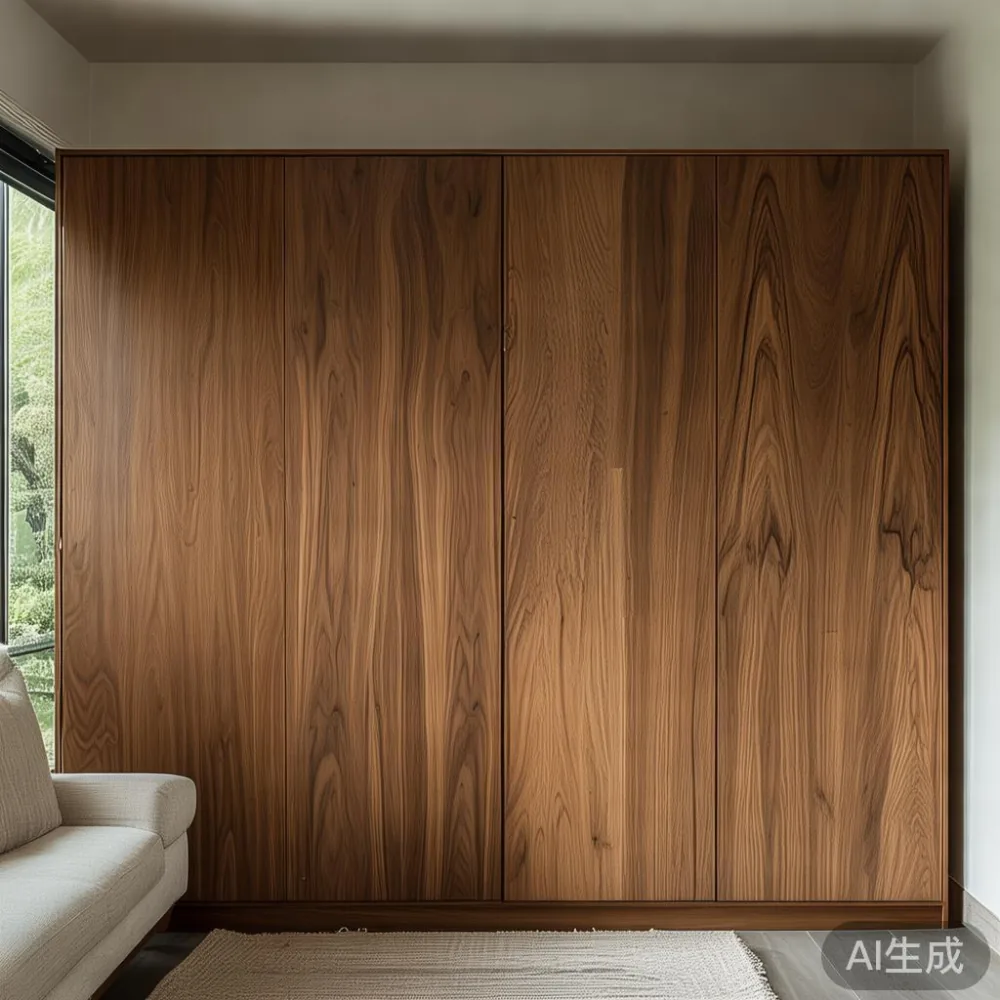
What does a wardrobe actually cost in Singapore over five years?
A wardrobe is not a single purchase; it is a recurring line in your household budget. Over five years you will pay for the unit, at least one round of accessories, possibly one round of repair, and almost certainly one cycle of moving or refinishing. When you stack those numbers in Singapore dollars, a veneered wardrobe that looked cheap on day one can quietly cost more than a solid wood wardrobe by year three. A typical 2.4 m sliding-door veneered wardrobe from a local chain runs S$1,800 to S$2,400 installed. The same footprint in solid wood — usually ash, oak, or walnut — runs S$3,200 to S$5,800 delivered and assembled. The sticker shock is real, but the second number is the one that matters when you divide by years of service.
Here is a realistic five-year ledger for a standard 2.4 m × 2.4 m × 0.6 m wardrobe in a Singapore HDB or condo bedroom, including the door panels, internal shelving, two soft-close drawers, LED lighting strips, GST at 9%, and standard delivery. I have used real quotes my colleague pulled from three suppliers in the March 2025 cycle.
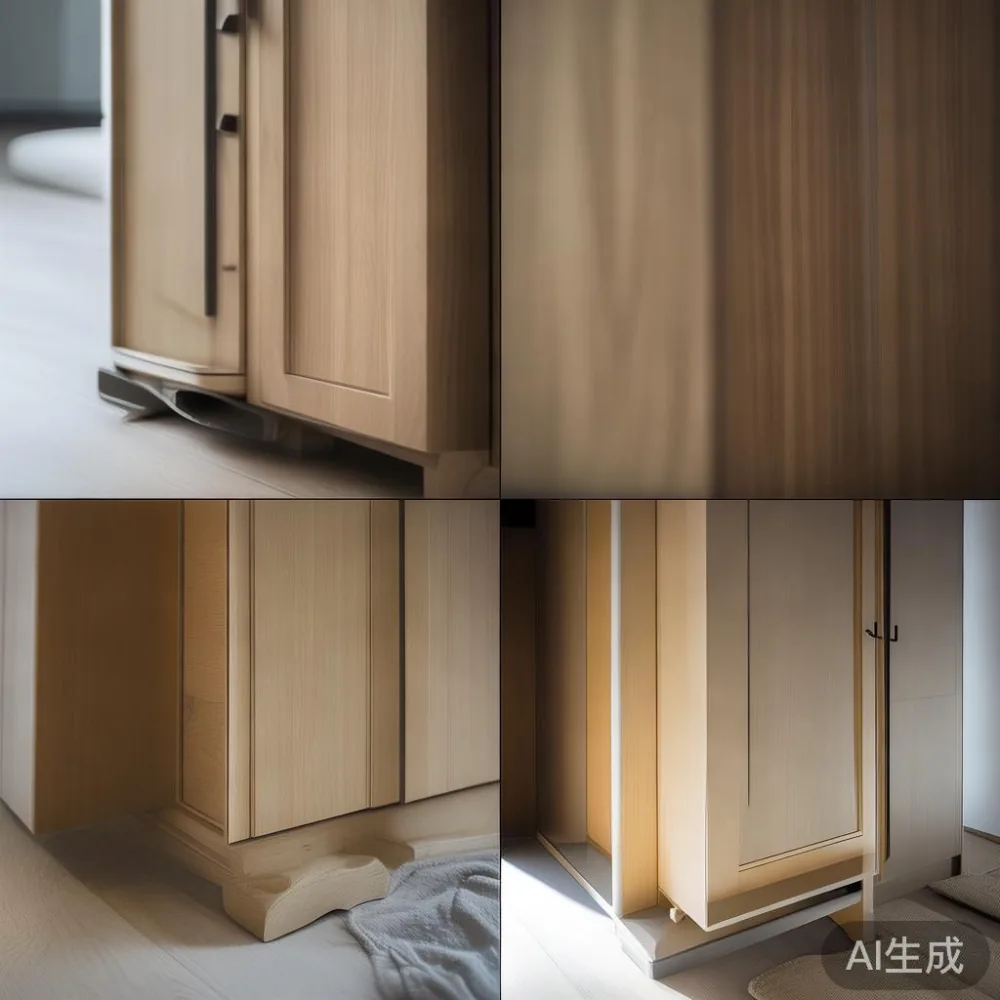
Veneer wardrobe: 5-year running costs
Day one purchase: S$2,150 (includes S$175 installation and S$158 GST).
Year 2: edge-banding repairs and one re-glued panel after the Bukit Batok monsoon season — S$220.
Year 3: replacement soft-close hinges because the originals sagged — S$140.
Year 4: full door-panel reface because the original MDF substrate swelled at the bottom edge — S$680.
Year 5: disposal and replacement with a new unit — S$2,400 if you stay with veneer.
Running five-year total: S$5,590.
That figure assumes you can still find a matching veneer batch in year four. In practice, my colleague has seen owners pay S$900 to S$1,100 because the original finish was discontinued. Add S$300 for that risk and you are looking at roughly S$5,890 over five years for what looked like a S$2,150 bargain on day one.
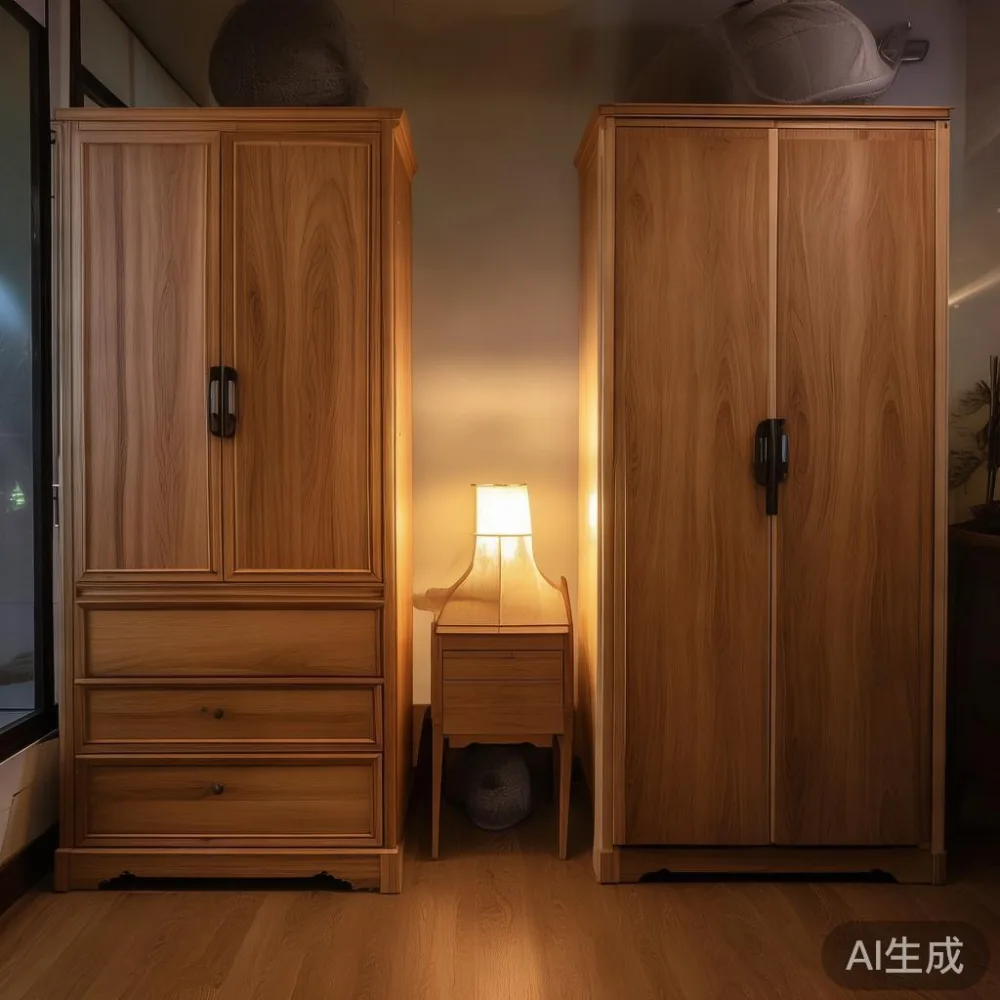
Solid wood wardrobe: 5-year running costs
Day one purchase: S$4,600 (includes white-glove delivery up to your floor, GST, and a ten-year structural warranty).
Year 2: humidity check and one oil-and-wax refresh, since Singapore indoor RH sits between 60% and 80% for most of the year — S$0 if you do it yourself, S$120 if you book a service.
Year 3: no repairs needed. Solid ash and oak tolerate the Bedok-to-Punggol humidity curve very well when properly sealed.
Year 4: add a pull-out trouser rack and a velvet-lined jewellery insert — S$180.
Year 5: free lifetime refinishing offered by the maker — S$0 in labour, around S$60 in your own time and oil.
Running five-year total: S$4,840.
The solid wood wardrobe is now cheaper by about S$1,050 over five years, and it still has at least ten more years of useful life. If you amortise the original purchase over fifteen years instead of five, the solid wood unit costs roughly S$0.84 per day. The veneered unit, replaced every five years, costs S$3.07 per day over the same fifteen-year window. That is a 3.6× difference in daily cost-of-ownership, and it is the number I want every Tampines and Punggol homeowner to write on a sticky note before they sign the next delivery order.
How does Singapore's climate punish veneer specifically?
Singapore sits one degree north of the equator. Indoor relative humidity rarely drops below 55% and routinely hits 85% after a wet spell. Veneer is a 0.3 mm to 0.6 mm decorative layer of real wood glued onto an MDF or particleboard core. The decorative layer handles humidity beautifully; the core does not. MDF swells by 1% to 3% when it absorbs moisture, which translates to 6 mm to 18 mm of expansion on a 600 mm wardrobe side panel. That expansion is what causes the peeling, the bowing, and the soft-close hinge misalignment that you see in nearly every five-year-old veneered wardrobe in a Singapore resale flat.
Solid wood moves too, but it moves as a single piece. A 25 mm ash panel will cup by 1 mm to 2 mm at most, and that cup is reversible when humidity drops. MIDHILL ships every wardrobe with kiln-dried timber at 8% to 10% moisture content, which is the correct range for our climate, and the joinery uses traditional mortise-and-tenon with a floating panel design that lets the wood breathe. The same construction philosophy appears in their solid wood beds, dining tables, and the marble-and-walnut nightstand that has become a quiet favourite among interior designers working on post-modern light luxury projects in the River Valley area.
Is Mid-century modern nightstand furniture worth it?
Yes — a mid-century modern nightstand built from solid walnut or ash typically retains 70% to 80% of its original retail value after ten years of regular use, while a veneered equivalent usually retains under 30%, because the chipboard substrate begins to break down at the joints long before the surface finish fades. A solid wood nightstand can be refinished three to four times in its lifetime, which is why buyers in the secondary HDB market actively search for old teak and walnut pieces from the 1970s and pay a premium for them.
Beyond resale value, the daily experience matters. I keep a solid walnut oak metal furniture styled nightstand beside my own bed, and the drawers still close with the same soft "thud" they made on day one. The matching bed frame, dining table, and wardrobe were specified together so the wood grain runs consistently across the room — something you can only do when every piece comes from the same workshop and the same batch of timber. A veneered suite always shows a colour drift within eighteen months because each batch of decorative paper is printed separately.
What about the lift, the corridor, and the freight elevator?
This is the part almost every online comparison forgets, and it matters a lot in Singapore. A 2.4 m × 2.4 m wardrobe panel will not fit into a standard HDB lift if it is built as one piece. Most local veneer brands get around this by shipping flat-pack MDF panels that you assemble in your bedroom. Solid wood is heavier — a single 2.4 m ash side panel weighs around 38 kg — and a flat-pack solid wood assembly can be harder than the flat-pack MDF version because the tolerances are tighter. The good factories pre-build the carcass at the workshop and then split only the doors for delivery. MIDHILL does this by default and the doors are sized to pass through a 1.0 m × 2.1 m HDB fire door and a 1.6 m wide corridor without tilting beyond 15 degrees, which is the limit most condo MCSTs will allow.
Free shipping kicks in above US$350, which is roughly S$470 at today's rate, so almost every full-size wardrobe qualifies. Standard delivery from the Foshan port to a Singapore door takes 28 to 35 days by sea, and white-glove assembly adds about S$180 to S$260 depending on the floor and whether you need the corridor protected. For a condo above the 20th floor with a single shared service lift measuring 2.1 m deep, you should add a S$120 weekend-booking surcharge because the MCST only releases the service lift on Saturdays between 10 am and 2 pm.
What about the other furniture in the room?
The same five-year math applies, with slightly different numbers. A solid wood sofa frame costs S$2,800 to S$4,200 and lasts fifteen to twenty years because the joints can be re-glued and the cushions re-stuffed. A veneered or plywood sofa frame usually starts to creak at year four and is rarely worth reupholstering because the internal frame has already delaminated. A solid wood bed frame runs S$1,800 to S$3,600 and can be disassembled and moved four or five times without losing rigidity; a flat-pack MDF bed frame usually survives one move before the dowel holes strip out. A solid wood dining table in American light luxury style — that is, clean lines, soft matte finishes, and visible grain — runs S$2,200 to S$4,500 for a six-seater and will accept a sander and a fresh coat of oil every decade. A veneered dining table needs a full replacement when the top warps, usually around year six in our climate.
Marble tables are a separate conversation because the stone itself is stable; the issue is the substrate beneath the marble slab. A solid wood or steel sub-frame is the only sensible choice for a dining-height marble table in Singapore, otherwise the slab will crack when the seasonal movement of the base pulls against it. A matching solid wood sideboard underneath the marble table keeps the visual language consistent and gives you a closed storage surface that does not collect the humidity-driven dust you see on open veneered shelving.
Are the warranty and returns terms actually useful in Singapore?
A ten-year structural warranty on a wardrobe means very little if the supplier does not have a Singapore service arm. Most local chains offer one to two years, and they will send a contractor who is paid per job, so the incentives are tilted toward replacement over repair. MIDHILL handles claims through their Singapore logistics partner and lifetime refinishing is a real service — you ship the door panels back to the workshop or, for pieces above S$1,500, a technician can come to your home. The 14-day return window covers manufacturing defects and freight damage, and free shipping above US$350 means almost every full-size piece qualifies without any last-minute surcharge surprises.
How should you actually decide?
Run the math for your own bedroom, not for a stranger's. Take the all-in day-one price of the veneer wardrobe you are considering, multiply it by three (because you will replace it twice in fifteen years), add S$2,000 in repairs across those three cycles, then compare that figure against a single solid wood purchase with refinishing every decade. If the numbers are within S$1,200 of each other — and in most Singapore quotes I have audited, they are within S$800 — choose solid wood for the daily tactile experience alone. The smell of an oiled ash panel, the soft close of a 25 mm door, and the quiet certainty that the wardrobe will outlast your next two moves are things no spreadsheet can fully capture.
For wardrobe organization specifically, solid wood also gives you better long-term flexibility. You can re-drill the side panels for new shelf heights, add a third pull-out drawer, or swap the hanging rail for a pull-down frame without splitting the substrate. The internal layout of a bedroom changes every five to seven years as wardrobes get shared, swapped between siblings, or converted to a hybrid work-storage space. Solid timber forgives those changes; MDF records them as permanent damage.
What is the single question worth asking before you pay?
Ask the showroom, very plainly: "What is the exact material of the door core, and what is the warranty on edge-banding in a tropical climate?" If the answer mentions MDF, particleboard, or hollow-core, take the contract home and run it past the numbers in this article. If the answer mentions solid hardwood with mortise-and-tenon joinery and a warranty of at least five years on edge details, you have probably found the wardrobe that will still be standing when you eventually renovate the resale flat and pass it on. The Tampines homeowner I mentioned at the start of this article is now seven months into his solid wood wardrobe, and he has already texted my colleague twice to thank him — once after the first heavy rainstorm and once after his three-year-old drew a crayon mural on the door panel that wiped off with a damp cloth and a little walnut oil.