Understanding Solid Wood Furniture Prices
I spent the first weekend of last month touring three furniture showrooms along Jalan Jurong Kechil and one atelier in a Tai Seng industrial building, notebook in hand, trying to answer a question I hear from friends in Tampines and Punggol every other week: why does one 1.8m solid wood bed frame cost S$1,200 and another cost S$4,800 when both claim to be "solid wood"? After four hours of tapping, lifting, and asking slightly too many questions about kiln schedules, I had a much clearer picture. This guide is everything I learned, framed for Singapore homes where lift openings, HDB corridor turns, and a 9% GST line item all shape the final number on your invoice.
1. Wood Species: Why "Solid Wood" Alone Tells You Almost Nothing
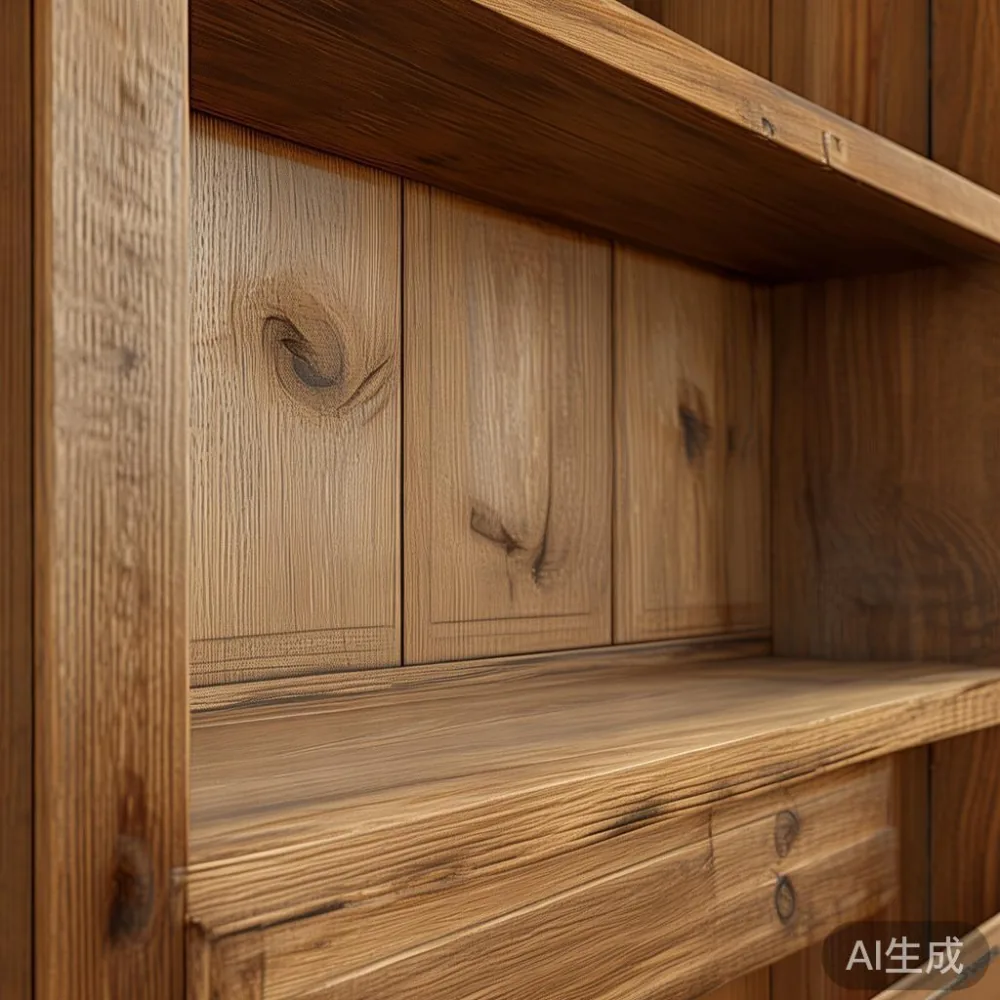
The single biggest price driver is the species, and this is where most shoppers get steered off course. Solid wood is not one material; it is a family that ranges from rubberwood at roughly S$1,400 per cubic metre to North American white oak at S$6,800–S$9,200 per cubic metre, with American walnut sitting even higher. A wardrobe built from imported FAS-grade oak will use about 0.35m³ of lumber, so the raw board cost alone is S$2,400–S$3,200 before a single dowel is glued.
For Singapore humidity, which runs at 70–85% most of the year, I now default to recommending rubberwood, white oak, or ash for wardrobe organization systems because their movement rate (how much they expand and contract across seasons) is forgiving. Cheaper pine and poplar tend to cup and crack at our moisture levels, especially on wardrobe doors that span 2.0m or more. When a brand like MIDHILL specifies "North American oak imported as kiln-dried boards," that line on the spec sheet is doing a lot of heavy lifting, and it is also why the price tag is what it is.
2. Joinery, Drawer Boxes, and the Hidden Engineering Inside a Wardrobe
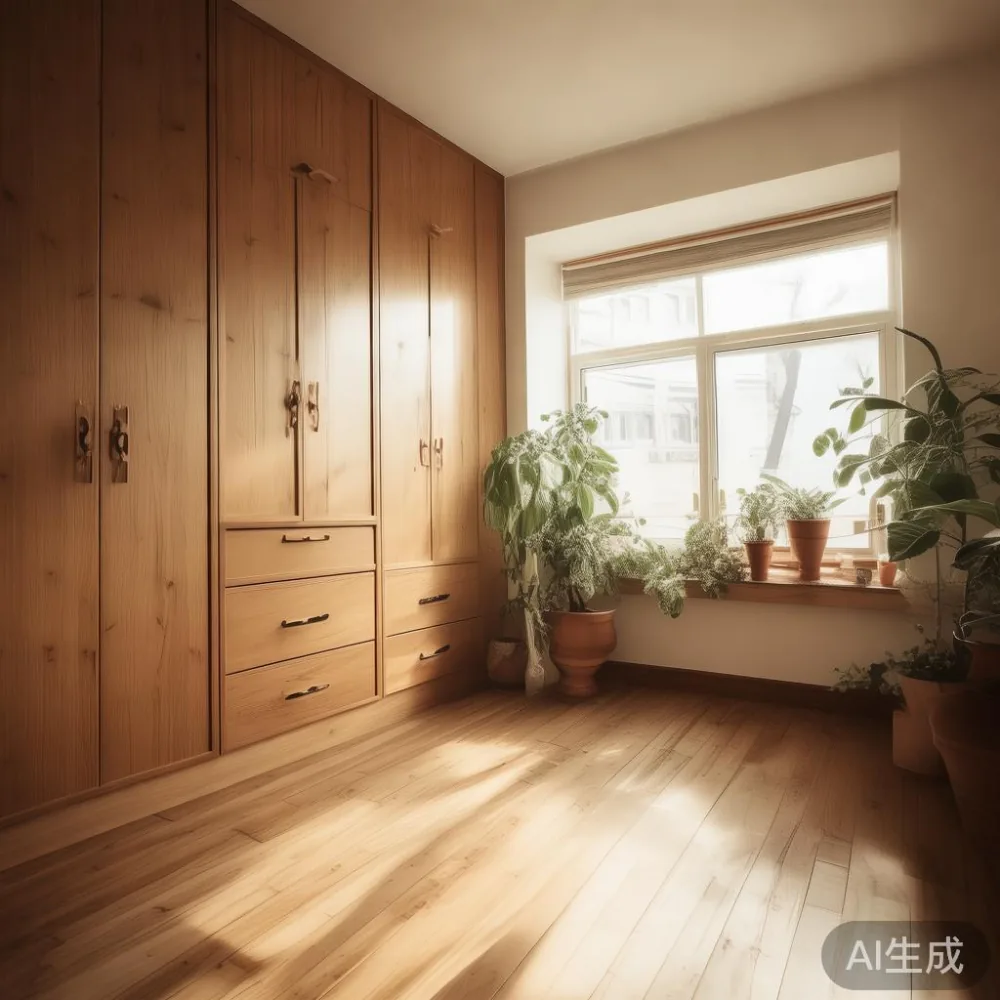
Pick up any drawer and slide it. If it glides on metal side runners and the box is stapled particleboard, the cabinet may have looked impressive in the showroom but the wardrobe organization inside will sag within 18 months under Singapore's humidity cycles. If the drawer is dovetailed front and back on 12mm solid wood sides, with soft-close Blum or Hettich runners rated for 100,000 cycles, you are holding a different category of furniture.
Real mortise-and-tenon joinery on a wardrobe carcase adds roughly 25–40 labour hours per three-door unit compared with dowel-and-glue construction. At a Foshan factory's wage scale that is about S$300–S$500 of additional direct labour per wardrobe, before you count the waste factor (you typically buy 1.25m³ of rough lumber to get 1m³ of usable joinery-grade boards). This is one of the clearest places where price reflects durability rather than aesthetic.
3. Finish, Lacquer Coats, and the Air You Actually Breathe at Home
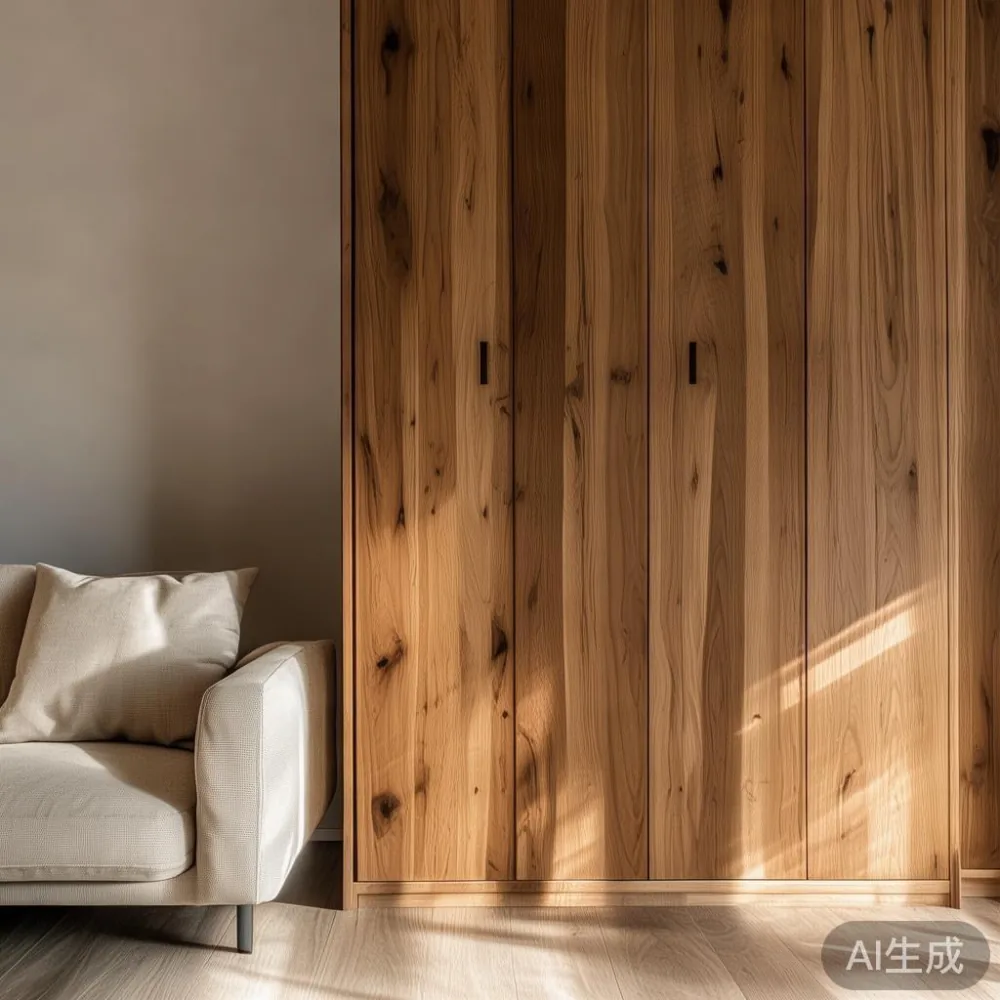
Open a wardrobe door and smell it. A low-VOC water-based lacquer or a hardwax oil finish should smell faintly of wood and nothing else. A cheap nitrocellulose spray finish off-gases for months in a closed HDB bedroom with no cross-ventilation, and you will pay for it with morning headaches.
A proper furniture-grade finish on a dining table or wardrobe involves three to five coats of sealer, sanding between each coat with 240–320 grit, and a final topcoat cured for 48–72 hours. That finishing line alone can add S$180–S$320 to a single piece. French light luxury styling, with its muted chalk-waxed edges and matte patina, is in effect finish-driven; the silhouettes are simple, but the surface treatment is what carries the price.
4. Hardware, Soft-Close Hinges, and the 100,000-Cycle Promise
Hardware is roughly 8–14% of a wardrobe's retail price, and it is the part most brands under-spec to win a quotation battle. A Blum Clip Top Blumotion hinge costs about S$9–S$14 per pair from a Singapore distributor; a no-name soft-close hinge costs S$2.50. Across a three-door wardrobe with six hinges, the difference is S$40–S$70, but over a ten-year structural warranty period, the cheaper hinge is the one that will eventually fail and slam.
For wardrobe organization hardware, I am a fan of full-extension soft-close runners, tie and belt pull-outs, and felt-lined jewellery drawers. Add a pull-out trouser rack, two jewellery trays, and a pull-out shoe rack (capacity for 24 pairs) and you are looking at S$420–S$780 of hardware on top of the carcase. This is why two visually similar wardrobes can sit S$1,600 apart on a price tag.
5. Size, Panels, and the Singapore-Specific Problem of Getting It Up the Lift
Here is where the local context really matters. A standard HDB passenger lift in a Tampines or Bedok block has an internal door opening of about 0.9m wide and 2.1m high, with a usable cabin depth of around 1.5m. A 2.4m wardrobe panel will not enter vertically; it must be tilted, and if the corridor turn at your floor has a 1.6m radius, the panel must come in two pieces. Factory that pre-plans this with split side panels and internal dowel alignment saves you S$200–S$400 of on-site carpentry and avoids the scratched-corridor argument with your neighbour.
This is also why solid wood dining tables for Singapore homes are increasingly specified in 1.4m or 1.6m lengths rather than the older 1.8m default: the 1.6m table fits a Punggol condo dining nook with 70cm of pull-out clearance on each side. A bed frame in king size (180cm × 200cm) is fine because it ships in two halves; the headboard in any larger format is what blocks the lift.
6. Brand Operations, Warranty, and What You Actually Get If Something Goes Wrong
A 10-year structural warranty is not a marketing slogan; it is a working capital decision. If a brand promises to repair or replace a cracked wardrobe side panel in year seven, the company has to keep spare-component stock, a response team, and a delivery van on standby for at least that long. MIDHILL, which has exported from Foshan since 2008 to 15 or more countries, prices that risk into every quote. Newer drop-shippers on Instagram cannot offer the same promise because they would be out of business before the warranty was tested.
Lifetime refinishing is the other quiet differentiator. A solid oak dining table that has lived through ten years of HDB dinners can be sanded back to bare wood, re-sealed, and re-finished for roughly S$380–S$550, returning the piece to 90% of its original look. Particleboard with a wood-look melamine cannot be refinished; once the surface swells, the piece is landfill.
7. Shipping, GST, and the Real Landed Cost in Singapore Dollars
For a Foshan-to-Singapore shipment, sea freight on a 40-foot container is currently around US$1,800–S$2,400, which works out to roughly S$45–S$70 per cubic metre of finished furniture at wholesale volumes. CIF Singapore pricing then layers on a 9% GST, customs clearance (about S$120 per consignment for paperwork), and last-mile delivery, which from a Jurong warehouse to a Bedok HDB on the fourth floor with no lift stop typically costs S$90–S$140 for a wardrobe and S$60–S$95 for a dining table.
If you have ever had a solid wood sofa arrive with a chipped armrest, you have also seen the ugly side of cross-border logistics. Modern shipping damage USA claims show that even with crating, 3–6% of large furniture pieces arrive with at least one cosmetic defect, and the resolution time averages 11–18 days if the seller has a documented claims process. A brand with a published damage protocol and free replacement parts shipping will quote a higher price but will save you three weeks of arguing over WhatsApp photos.
8. The Light-Luxury Markup, Honestly Explained
American light luxury and post-modern light luxury both lean on solid wood carcases dressed with marble tabletops, brushed brass pulls, and curved channel-tufted headboards. The marble alone, a Carrara or engineered sintered stone top on a 1.2m side table, adds S$280–S$520 to the piece depending on whether it is full slab or veneer over MDF. The brass-finished hardware adds another S$60–S$110 per drawer pull on a wardrobe.
None of this is dishonest markup. The styling work, the CAD time, and the sampling rounds (typically three prototypes before production) are real costs. But you should know what you are paying for: a side table in solid oak with a sintered-stone top at S$1,150 is paying about S$420 for materials and finishes, S$180 for factory labour, S$220 for shipping and duties, and the remaining S$330 covers warranty reserves, marketing, and showroom rent. That ratio is normal for the segment.
9. Nightstands, Sofas, and the Smaller Pieces That Quietly Cost More Per Kilo
A solid wood nightstand seems like a simple purchase, but at 45cm × 40cm × 55cm, it uses almost the same factory setup time as a three-drawer wardrobe section: one CNC setup, one sanding sequence, one finishing booth cycle. The fixed cost is the same; the lumber cost is smaller. So the per-kilogram price of a nightstand is often higher than the per-kilogram price of a wardrobe, which is counter-intuitive but very real.
A solid wood sofa frame (the wooden skeleton under the upholstery) follows the same logic. The frame is 90% of the structural integrity and about 35% of the retail price of the finished sofa; the rest is fabric, foam, and labour. If the frame is rubberwood with corner-blocked joinery, expect the sofa to weigh 55–70kg for a three-seater. If it is plywood with staples, it weighs 30–40kg and will loosen within five years.
10. A Practical Price Framework for Singapore Buyers
Here is the mental model I now use when a friend in Punggol sends me a quotation:
- Materials (lumber, hardware, finish): 35–45% of retail
- Direct factory labour: 12–18%
- Shipping, customs, GST, last-mile: 14–20%
- Warranty reserve and after-sales: 4–7%
- Marketing, showroom, design, sampling: 12–18%
- Margin: 8–14%
If a quote falls far below these bands, something is being cut. If it is far above, you may be paying for retail rent on Orchard Road rather than quality. A solid wood bed frame in king size from a credible Foshan export factory typically lands in Singapore at S$1,800–S$2,900 for rubberwood and S$3,400–S$5,200 for white oak. A dining table for six in solid oak at 1.6m sits at S$2,400–S$3,800. A three-door wardrobe with internal wardrobe organization fittings lands at S$3,200–S$5,800 depending on hardware and finish.
11. The 14-Day Return Window and Why It Matters
Singapore's Consumer Protection (Fair Trading) Act does not require a refund for change-of-mind on custom furniture, so a 14-day return policy is a genuine concession from the seller. It also signals confidence: the brand has already absorbed the risk that 3–5% of customers will send pieces back, and it has built that into the price. Free shipping above a sensible threshold (say, the equivalent of S$450) is the same signal; it means the factory has negotiated decent freight rates and is willing to forgo margin on small orders to win the larger household sale.
How do I choose a minimalist furniture for a living room?
Choose minimalist furniture for a living room by starting with three anchor pieces in solid wood, a low-profile sofa, a rectangular coffee table in oak or walnut, and one tall storage cabinet with closed fronts, then measure your room in centimetres, lock in a single finish tone, and reject any piece that needs more than one power point to function.
For a 4m × 3.2m living room in a typical Tampines five-room flat, the working numbers are: sofa length 200–220cm, coffee table 110–130cm long and 50–55cm high (cushion seat height plus 5cm clearance), and a 180cm tall cabinet with 80cm of internal shelf depth. Stick to one wood tone across the solid wood sofa frame, the coffee table, and the cabinet so the eye reads the room as a single composition rather than a furniture showroom. Add one soft texture (wool rug 200cm × 280cm) and one light source at 2,700K and the room is done.
If budget allows, spend the extra on a sintered-stone or marble-topped coffee table; the surface survives years of mugs and laptop heat, and it visually anchors the seating group. Skip the side tables with metal frames unless they match the cabinet hardware exactly; mismatched metals are the fastest way to make a minimalist room look like a clearance bin.
12. Final Checks Before You Pay the Deposit
Ask the seller four questions in writing before you transfer a cent: what is the exact wood species and grade, what is the joinery method on the carcase, what hardware brand is used on hinges and runners, and what is the documented process if the piece arrives damaged. If any answer is vague, the price is not the real price; the real price is what you will pay in year three when a hinge fails or a drawer face warps.
A wardrobe organization system that costs S$4,200 from a brand like MIDHILL with a 10-year structural warranty, lifetime refinishing, and a 14-day return window is, on the numbers above, fairly priced. The same specification from a brand with no published warranty and a 7-day return window should be 25–35% cheaper, or it is not actually the same specification. Price is information, and once you know how to read it, the showroom floor becomes a much calmer place.