Humidity, Wood, and Wardrobe Organization: A Singapore Homeowner's Guide
I still remember the first time I walked into a Tampines HDB walk-up after a three-week rain spell. The owner, a retired teacher named Mr. Goh, had spent SGD 2,400 on a solid wood wardrobe from a local showroom about 14 months earlier. The doors no longer closed flush. The bottom panel had crowned by nearly 4 mm, and a faint line of white bloom had crept across the inner shelf where a damp towel had rested the night before. He looked at me and said, "Nobody told me this would happen." That visit changed how I think about every piece of solid wood I recommend, especially for wardrobe organization in Singapore homes where corridor humidity regularly sits between 78% and 92%.
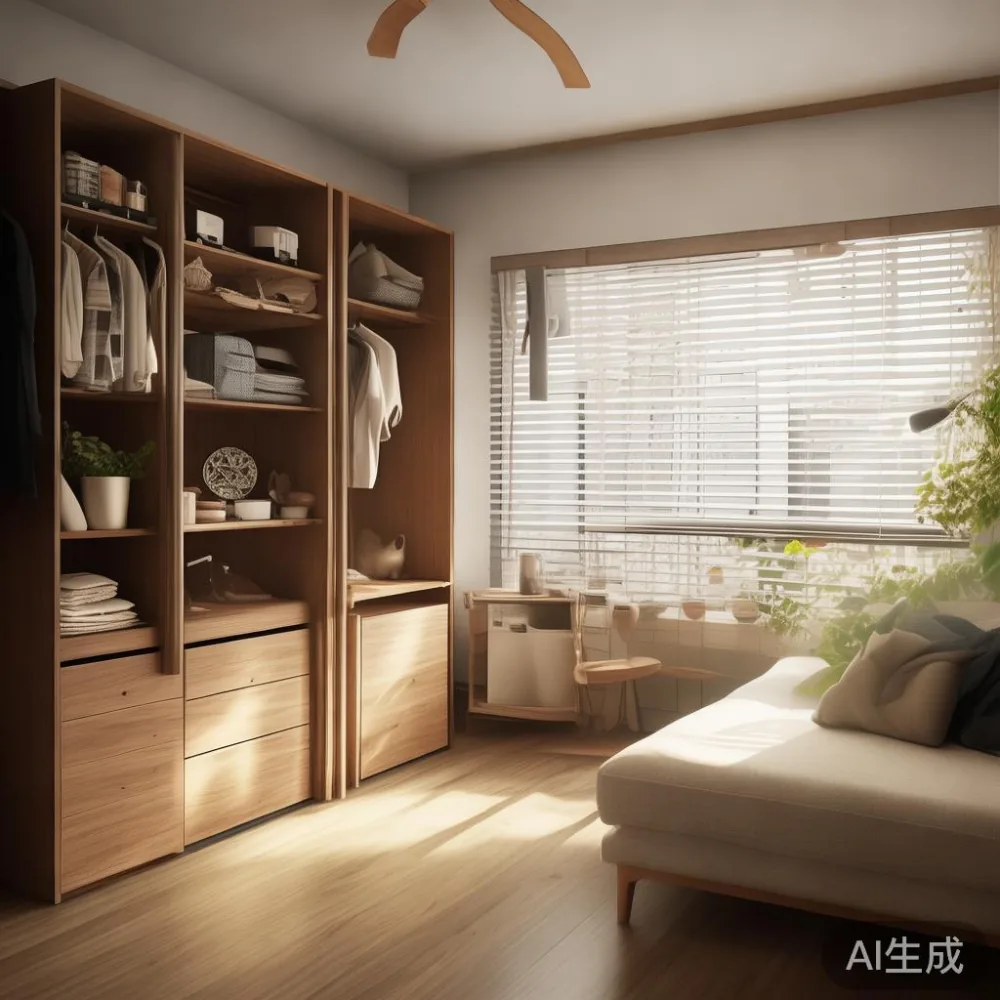
Whether you live in a 4-room BTO in Punggol, a 1,200 sqft condo in Bedok, or a landed terrace off Bukit Timah, the climate inside your home behaves like a slow tide against your furniture. A solid wood bed frame absorbs moisture in July and releases it in January. A dining table expands at the grain and contracts across it. Even a carefully chosen nightstand can develop a hairline check if the air-conditioning cuts out for a week while you are overseas. Understanding this rhythm is the first step toward protecting pieces you have paid real money for.
Why is humidity such a problem for solid wood furniture in HDB and condo homes?
Singapore's average relative humidity runs 80% to 85% year-round, with daily peaks above 90% between 11 pm and 6 am. Solid wood is hygroscopic, which means it constantly trades moisture with the surrounding air. A 180 cm wardrobe panel made of oak or ash can swell by 2 to 3 mm across its width during the wet season and shrink by a similar amount during a dry week when the air-conditioner runs 18 hours a day. Over 24 months, that movement adds up. Hinges drift out of alignment. Drawer faces develop a 2 mm lip. Doors that closed perfectly at delivery begin to catch on the carcass.
The reason this matters more in HDB flats and condos than in, say, a Tokyo apartment is the lack of a moisture buffer. Concrete walls in a Tampines BTO do not breathe the way a brick terrace wall does. When the air-conditioner switches off at 2 am and the humidity climbs past 88%, every exposed wooden surface starts absorbing at once. A wardrobe positioned against an exterior wall in a Punggol corner unit can sit 1.5°C cooler than the room air, which means condensation forms on the back panel first. That is where black mildew spots appear, usually behind a stack of folded baju kurung or stored bedsheets.
The same physics affects every other solid wood piece in the room. A bed frame headboard can lean slightly forward after a humid month. A dining table leaves a faint ring when a cold mug sits on it for 20 minutes, because the surface fibres swell faster than the wood beneath. Even a Japanese-inspired Japandi oak fabric sofa, with its exposed timber base and linen-wrapped cushions, will feel different in August than in February if the room humidity is not managed.
How do I choose a bean bag for a home office?
Pick a bean bag with a removable, washable outer cover in a breathable fabric such as cotton-linen or performance weave, a YKK or equivalent zip rated to 15,000 cycles, and an inner liner that lets you add or remove EPS beads so you can tune the loft after 6 to 12 months of use. For a Singapore home office, avoid PVC outer shells because they trap heat and feel sticky once the room hits 30°C with 85% humidity, and skip memory foam fillings because they soften and lose shape within 8 to 14 months in this climate.
Now, why include a bean bag question in a piece about humidity and wood furniture? Because the same air that swells your wardrobe will collapse a cheap one. A 60-liter bean bag left near a window during the November monsoon can absorb enough ambient moisture to feel 1.5 kg heavier by morning, and the beads will clump if the cover is not breathable. If you are furnishing a 9 sqm home office nook carved out of a Bedok condo bedroom, the bean bag is often the most-used seat for video calls, so it deserves the same humidity logic you apply to a wardrobe.
Look for a cover with a thread count of at least 280, double-stitched seams, and a base panel that is slightly wider than the seat so it does not slide on tile. A 75 cm diameter bean bag works for most adults up to 90 kg. If you are taller than 182 cm, step up to a 90 cm model so your knees stay supported during a 90-minute Zoom block. Store the spare beads in a sealed 5-liter container, not loose in the cupboard, because loose beads attract moisture and static together, which is a bad combination in a HDB corridor where the air already feels damp at midnight.
What humidity level should I keep my bedroom and wardrobe at?
Target 50% to 60% relative humidity in the room and 45% to 55% inside the wardrobe itself. This is the range where solid oak, walnut, and ash stay dimensionally stable within 0.5% moisture content variation, which is the threshold furniture makers use when they grade timber at the workshop. Outside this band, you are asking the wood to work harder than it should.
A SGD 25 digital hygrometer from a hardware shop in Bedok is the single best tool you can buy. Place one inside your wardrobe, on a middle shelf, and one on the bedroom wall near the wardrobe door. Check them at 8 am, before the air-conditioner starts, and at 11 pm, after it has been off for three hours. If the wardrobe reading climbs above 65% for more than 48 hours, you have a microclimate problem inside the cabinet, usually because the back panel is too close to an exterior wall or because folded fabrics inside are holding residual moisture from laundry day.
For wardrobe organization specifically, line the shelves with cedar blocks or a 3 mm wool felt sheet. Cedar absorbs ambient moisture at a steady pace and releases it slowly, which buffers the wardrobe interior against the 10% to 15% humidity swings that happen every time the bedroom door is left open during cooking. Wool felt does the same job for a fraction of the price. Replace the cedar blocks every 18 months and air the felt sheet in direct sunlight for two hours once a quarter to reset its moisture capacity.
Which wood species survive Singapore humidity the best?
White oak, Burmese teak, and African mahogany perform best in this climate, while rubberwood and untreated pine struggle within the first 18 months. The reason is cellular density and natural oil content. Teak contains natural silica and oil that repel moisture, which is why it has been used in boat-building for 400 years. White oak has tyloses that physically block moisture movement into the grain. African mahogany has a tight, interlocked grain that resists the swelling-contraction cycle better than straight-grained species.
A solid wood dining table in Burmese teak, 160 cm by 90 cm, will typically move less than 1.5 mm across its width over a full year in a Singapore condo, even without air-conditioning running 12 hours a day. The same table in European beech would move 3 to 4 mm, which is enough to crack a joint at the apron or split a breadboard end. If you are choosing a new dining table for a 4-room HDB, ask the showroom for the moisture content reading at delivery. It should be between 8% and 10% for tropical conditions. Anything above 12% and the table is still factory-dry, which means it will shrink noticeably in your home within the first 90 days.
This is also why a French light luxury design piece, often built around oak or walnut with brass-tipped legs, can actually be a sensible choice here. The silhouettes look delicate, but the materials are chosen specifically because they respond gracefully to humidity. The same logic applies to American light luxury bedroom sets, which lean on white oak and maple for exactly the same reason. Look past the marketing language and ask the salesperson what species the carcass and drawer boxes are made from. If the answer is "MDF with a wood veneer," the wardrobe organization system inside will not survive a Punggol monsoon the way a solid timber carcass will.
How does MIDHILL approach wardrobe construction for tropical climates?
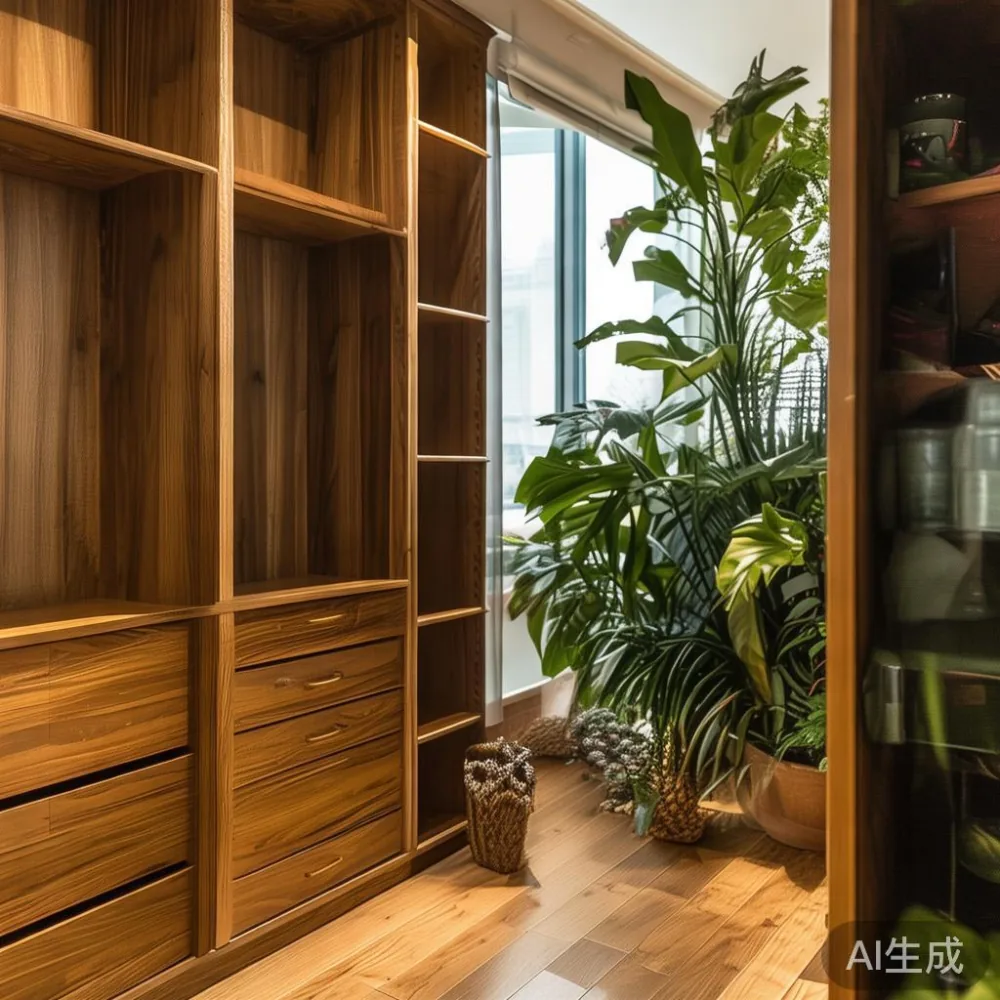
MIDHILL builds wardrobes with kiln-dried timber at 8% to 10% moisture content, dovetail joints on the drawer boxes, and back panels that sit 8 mm off the wall on integrated spacers so air circulates behind the carcass. I visited a friend's new Punggol BTO last month where the MIDHILL team had delivered a 240 cm wardrobe, disassembled it in the corridor because the lift opening was only 900 mm wide, and reassembled it inside the master bedroom in under four hours. The back-panel spacer detail is the one I keep coming back to in client conversations, because it directly addresses the condensation problem I described earlier.
The same approach shows up in their solid wood bed frames, where the slats sit 12 mm above the base rail so moisture does not wick up from a damp floor, and in their nightstands, where the rear legs are set 5 mm shorter than the front to encourage a gentle forward tilt that prevents the back panel from sitting flat against the wall. These are small, almost invisible details, but they are the difference between a piece that lasts 15 years and one that needs the carpenter in by year three.
What daily and weekly habits protect a solid wood wardrobe in a HDB flat?
Run the air-conditioner for at least four hours daily with the wardrobe doors open 10 cm, leave a 5 cm gap between the back of the wardrobe and the wall, and wipe down the interior shelves with a dry microfiber cloth every Saturday morning. These three habits, repeated for 52 weeks a year, will do more for your wardrobe organization system than any dehumidifier product on the market.
The four-hour air-conditioning window matters because it drops the room humidity from 85% to about 55%, which gives the wood a chance to release the moisture it absorbed overnight. Leaving them open 10 cm lets the dry air reach the back panel and the drawer boxes. The 5 cm rear gap prevents the condensation cycle that ruins back panels in Punggol corner units. The weekly wipe-down removes the 2 to 3 grams of dust that settle on each shelf every week, because dust holds moisture and bind humidity together against the wood surface.
If you travel often, leave the wardrobe doors closed but place a 500-gram silica gel pack on each shelf and replace it every 90 days. A 50-gram pack costs SGD 3 and will absorb roughly 30% of its weight in water before it needs recharging in a 100°C oven for two hours. Two packs per shelf, four shelves per wardrobe, SGD 32 a year. Cheaper than a dehumidifier, quieter than a dehumidifier, and you do not have to empty a water tank every morning.
Can a marble table or fabric sofa survive the same conditions as a wardrobe?
Yes, but with different rules. A marble table in a Singapore condo will develop a faint patina and may etch if acidic liquids sit on it for more than 20 minutes, but it will not move dimensionally the way wood does. Wipe it down with a pH-neutral cleaner weekly and seal it once a year with a marble-specific sealant. A Japandi oak fabric sofa, on the other hand, needs the same 50% to 60% humidity band as your wardrobe, because the exposed timber base and the linen cushions both respond to ambient moisture. Rotate the cushions monthly and vacuum the base weekly to prevent dust buildup at the joinery.
A solid wood sofa frame, especially one in white oak or teak, is one of the most forgiving pieces you can own here, precisely because the timber is doing the same slow moisture dance it was doing in the forest. It just needs the room conditions to stay within reason. Keep the sofa 30 cm away from the air-conditioner vent so the cold air does not dry one side faster than the other, and never push it flush against a glass sliding door, because the temperature difference between the glass surface and the room air can reach 6°C after a sunny afternoon, and that gradient pulls moisture out of the nearest wooden face in a way the rest of the frame does not experience.
What should I do if my wardrobe already has moisture damage?
Stop the source first, then assess the damage. If the back panel shows white mildew, wipe it with a 1:4 white vinegar and water solution, dry it with a fan blowing directly at the panel for 48 hours, then check whether the finish has lifted. If the finish has gone milky, a furniture refinisher can sand and re-lacquer the affected panel for roughly SGD 180 to SGD 280 per square meter. If a door has crowned by more than 4 mm, the carpenter can plane 1 to 2 mm off the offending edge for SGD 60 to SGD 90 per door.
For deeper problems, such as a split along a drawer box joint or a warped shelf that has pulled away from its supports, contact the original maker. MIDHILL offers lifetime refinishing on the structural joints of its wardrobes, which means a craftsman can reset a dovetail, replace a warped shelf, or re-align a hinge set for the cost of transport only, typically SGD 120 to SGD 180 for a Punggol or Tampines home visit. That kind of after-sale support is what separates a 10-year structural warranty from a piece that quietly falls apart in year four.
How do I plan wardrobe organization so humidity becomes a non-issue?
Design the interior so air can move. Use cedar blocks, breathable cotton shelf liners, and leave 2 cm of vertical space between stacked items and the shelf above. Avoid packing a wardrobe to 100% capacity, because compressed fabric traps moisture and prevents circulation. Aim for 70% to 80% capacity and rotate seasonal items out every 90 days so they can air out in direct sunlight for two hours before going back in.
For a typical 4-room HDB master bedroom with a 240 cm by 220 cm wardrobe, this means roughly 18 linear meters of hanging space, six to eight adjustable shelves, and two to four drawers. The drawers should be lined with cedar or wool felt to buffer the contents against humidity swings. Shoes should sit on a ventilated rack, not in closed boxes, because closed boxes in a humid wardrobe develop black mildew on the soles within 60 days. If you must store shoes in boxes, slip a 10-gram silica gel pack inside each one and replace it every 120 days.
Wardrobe organization in a Singapore home is really humidity management in disguise. The hangers, the dividers, the felt liners, the cedar blocks, the weekly wipe-down, the four-hour air-conditioning window, the silica gel packs, the 5 cm rear gap, the 70% capacity rule. Each one is small. Together they keep a solid wood wardrobe looking the way it did the day it was delivered, which is the whole point of buying one in the first place. Spend SGD 50 a year on consumables, spend 15 minutes a week on habits, and your wardrobe will outlast the lease on your HDB flat and probably the next one too.
Frequently Asked Questions
How long does a solid wood wardrobe last in Singapore?
A well-built solid wood wardrobe, properly maintained, lasts 20 to 30 years in a Singapore HDB or condo. The hinges and drawer runners may need replacement at year 12 to 15, but the carcass and panels should remain structurally sound.
Is a dehumidifier worth it for a wardrobe?
A room-sized dehumidifier costs SGD 280 to SGD 450 and runs SGD 8 to SGD 14 a month in electricity. For a single wardrobe, silica gel packs and cedar blocks deliver 80% of the benefit at 10% of the cost. For an entire 1,200 sqft condo, a dehumidifier is worth it during the November to January monsoon peak.
Can I place a solid wood wardrobe against an exterior wall?
Yes, but leave a 5 cm rear gap and ensure the wardrobe back panel has integrated spacers. Avoid exterior walls that face west, because the afternoon sun load raises the wall surface temperature by 8 to 12°C, which creates a moisture gradient that pulls damp air through the back panel into the wardrobe cavity.
How do I get a wardrobe into a HDB flat with narrow corridors?
Measure the lift opening and the corridor turn radius before ordering. Most HDB lifts are 900 mm to 1,100 mm wide, and corridor turns are 1,400 mm to 1,600 mm. Choose a maker that delivers flat-pack with a 240 cm max panel length, or one that disassembles and reassembles on site. MIDHILL provides this service for Tampines, Bedok, and Punggol deliveries, typically within 14 to 21 days of order confirmation.
Does the 10-year structural warranty cover humidity damage?
Most structural warranties cover manufacturing defects such as joint failure, cracking, and warping beyond 4 mm. They do not cover surface mildew, finish lifting, or movement caused by room humidity above 70% sustained for more than 90 days. The warranty protects the build quality, not the maintenance routine, which is why the habits in this guide matter.