Wardrobe Organization and Beyond: Styling a Small Singapore Apartment Without Making It Feel Crowded
Last month I visited a 65 sqm two-bedroom flat in Punggol with my colleague, who had just taken the keys. The developer had handed over a blank canvas with cream walls, a galley kitchen, and one corner reserved for a four-door wardrobe. By Friday she wanted to invite friends over. By Sunday she wanted to stop bumping into the sofa. That weekend taught me something I now repeat to every client who walks into our Foshan showroom: wardrobe organization is not a corner of the room. It is the room. Get the wardrobe right, and the rest of the apartment breathes. Get it wrong, and no marble table, no velvet armchair, no matter how French light luxury the moodboard, will save the space.
Why Singapore Flats Punish the Wrong Furniture
A typical three-room HDB in Bedok or Tampines gives you 65 to 75 sqm. The lift opening in most blocks built after 2010 is 1.1 m wide and 2.1 m deep; older blocks drop to 0.9 m. Corridors inside the flat usually run 1.0 to 1.2 m. None of this sounds dramatic until you try to bring home a 2.4 m American country extendable dining table usa in a crate that measures 2.5 m. It will not fit the lift on a 12-storey stack. It will sit in the lift lobby until the weekend, and the Town Council will not thank you.
The numbers are unforgiving, so the furniture has to be forgiving. A solid wood bed frame in queen size sits around 155 cm wide and 215 cm long, but with the headboard it can push past 220 cm in depth on certain craftsman models. A dining table for four, even a compact round one at 90 cm diameter, eats 90 cm of clear floor space plus another 60 cm of chair pull-back, so you need 150 cm of room diameter just to sit down. Multiply that across a sofa, a nightstand per side of the bed, a six-drawer dresser, and a wardrobe, and you have spent 8 sqm of a 65 sqm flat before you have hung a picture.
How do I style a Modern light luxury sectional sofa in a small apartment?
Pick a left-or-right-facing chaise sectional in a 220 cm by 160 cm footprint, in a bouclé or linen-blend fabric no darker than oat, and place it 90 cm from the TV console so you can actually walk behind it. A Modern light luxury sectional sofa in a small apartment should float, not anchor the wall, and should be the largest single object in the room at no more than 28 percent of the floor area.
The chaise extension matters more than people think. On a 1.8 m by 2.2 m rug, a 160 cm chaise leaves a 20 cm border on three sides and a 40 cm border at the foot, which is what stops the rug from reading as wall-to-wall carpet. Stay under 75 cm of seat depth so a 1.7 m adult can sit cross-legged without the cushion pushing them forward. Skirts on the base should be skipped entirely; visible legs of 12 to 15 cm create the optical lift that makes a post-modern light luxury piece feel airy instead of heavy.
Wardrobe Organization as the Spine of the Room
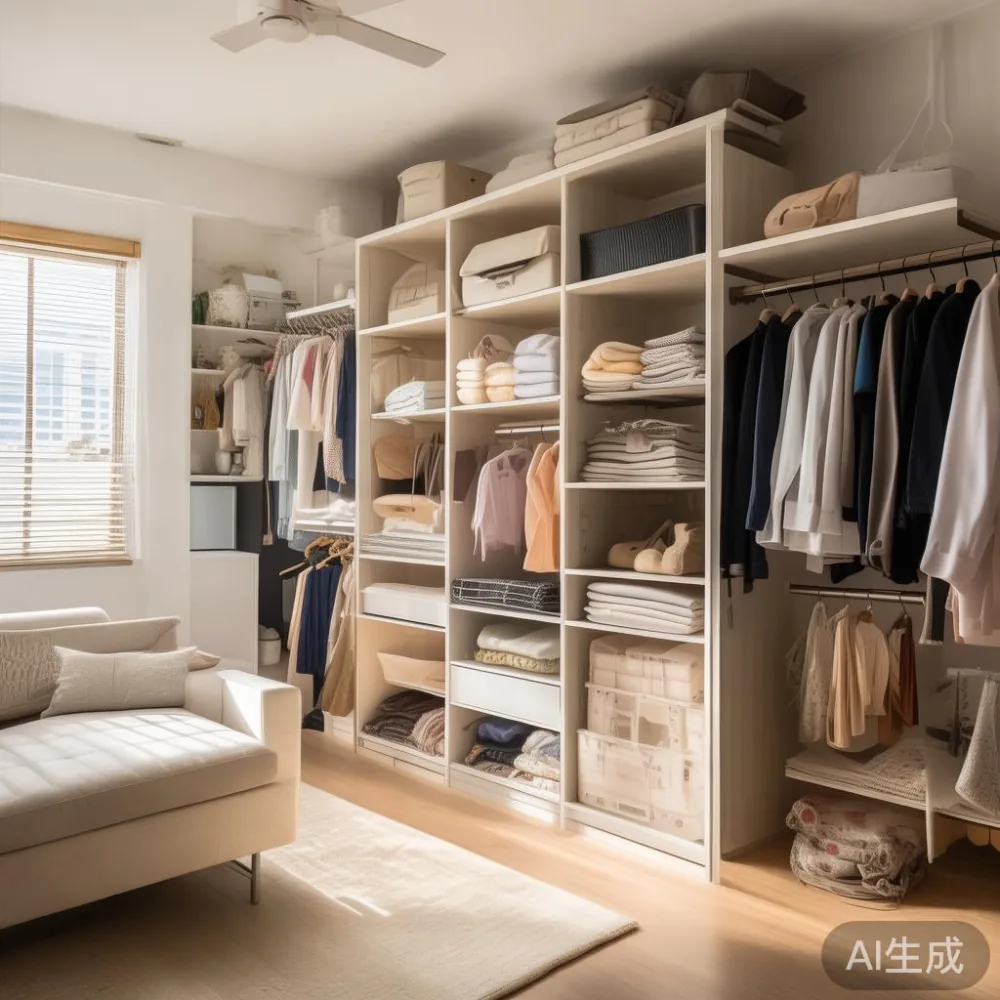
Most Singapore couples I work with arrive with the same assumption: the wardrobe is a box, and the interior fittings are an upgrade. The opposite is closer to the truth. The outer carcass can be a plain slab in 18 mm engineered board or, for a step up, a solid rubberwood frame in a 2.0 m to 2.4 m height range. What separates a calm room from a chaotic one is what happens behind the four doors.
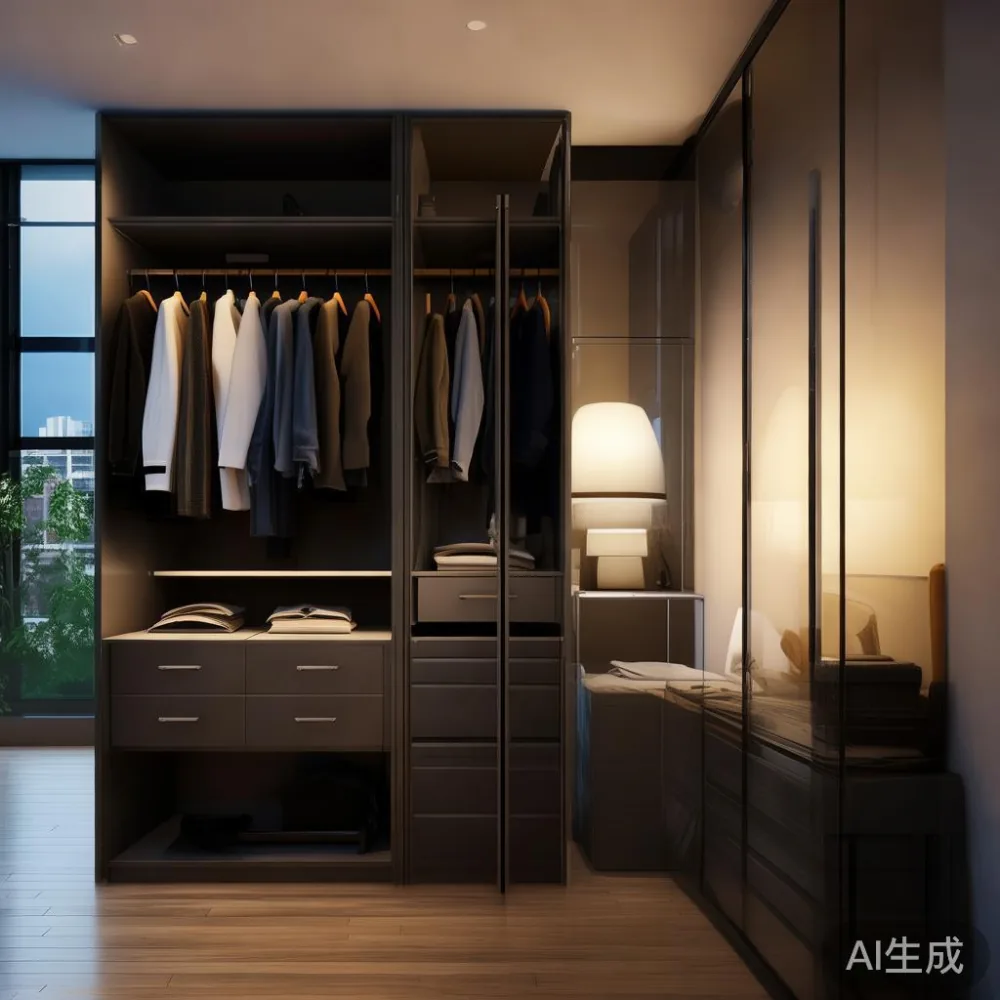
Plan the interior before the exterior. A 200 cm wide wardrobe divided into four 50 cm bays lets you dedicate one bay to hanging shirts at 100 cm drop, one to hanging pants and dresses at 140 cm drop, one to shelves at 32 cm spacing for knitwear, and one to a stack of four drawers 18 cm deep. Add a 160 cm vertical pull-out rod for ties and scarves and a single full-width drawer 22 cm deep at the bottom for bulky items like winter knits or laundry. The total interior height should reach 195 cm inside a 220 cm outer carcass, leaving 25 cm for a top shelf used twice a year.
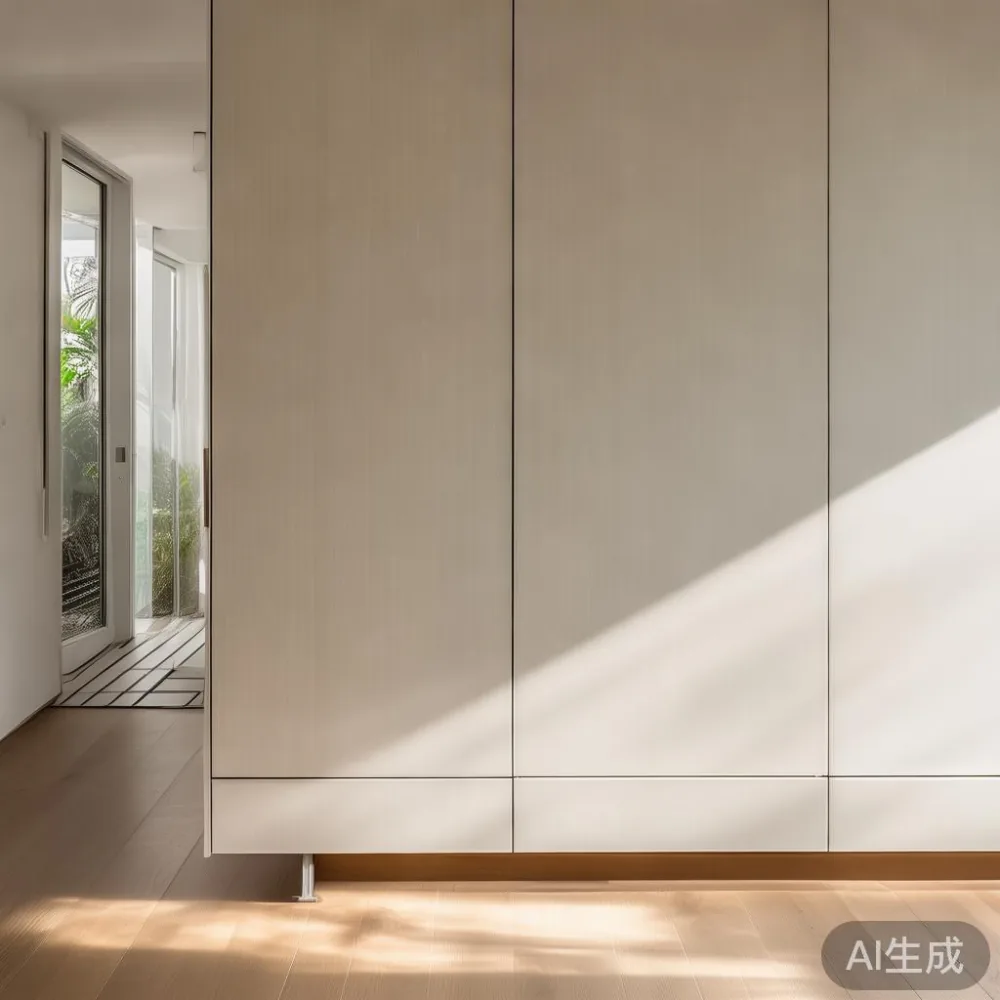
Mirror the doors. A four-door wardrobe with mirrored fronts returns 1.6 sqm of reflection into a room that averages 12 sqm of usable living area. That is a 13 percent visual gain for zero square metres. For HDBs in Punggol and Sengkang, where afternoon sun can bleach fabrics through west-facing windows, the mirror also lets you check outfits without a second full-length panel taking up wall space.
Then clear the floor. A wardrobe raised on a 5 cm plinth reads as a built-in; a wardrobe sitting flat on tile reads as furniture you forgot to install. The 5 cm gap also gives the robot vacuum somewhere to drive.
What Actually Costs What in Singapore (SGD, April 2026)
Numbers anchor decisions, so here is what my colleagues and I have seen across Tampines, Bedok, and Punggol showrooms and online listings over the past quarter. A solid rubberwood queen bed frame runs SGD 1,450 to SGD 2,200 before GST; with the 9 percent GST layered on at checkout, expect SGD 1,580 to SGD 2,400. A six-drawer dresser in matching solid wood, 120 cm wide, lands at SGD 1,100 to SGD 1,650. A four-door wardrobe 200 cm wide with internal fittings from a Chinese factory shipping directly sits between SGD 2,400 and SGD 3,800 installed, freight included for orders over USD 350. A compact round dining table in solid ash at 90 cm diameter is SGD 780 to SGD 1,050.
Sectional sofas vary more than any other category. A three-seat with chaise in a basic woven fabric starts around SGD 2,200. A Modern light luxury sectional in bouclé, with a kiln-dried hardwood frame and pocket-spring seats, sits at SGD 4,800 to SGD 6,500 for a 220 by 160 cm configuration. Marble tables are usually accent pieces: a 60 cm round Carrara-look top on a black metal base is SGD 480 to SGD 720, while a solid marble top of the same size pushes past SGD 1,400.
Shipping from Foshan to Singapore clears at the Port of Singapore in 18 to 26 days by sea, then another 5 to 9 days for last-mile delivery to your door in Tampines or Bedok. Lift-up deliveries on the 7th floor without a service lift cost an extra SGD 80 to SGD 120 per item, which is worth confirming before checkout so the final invoice matches your budget.
The Three Things That Always Go Wrong
Every small apartment I have walked through in the past two years has had the same three mistakes, in the same order. First, an oversized rug. Anything over 2 m by 3 m in a 12 sqm living room swallows the floor and makes the sofa sit in a swimming pool of pattern. Cap the rug at 1.6 m by 2.3 m, or step down to a 1.4 m by 2.0 m flatweave that exposes 40 cm of tile on every side.
Second, wardrobes placed against the wrong wall. A floor-to-ceiling four-door unit should sit on the wall that shares the bedroom door, not the wall opposite the window. Otherwise the morning light never crosses the bed, and the wardrobe casts a permanent shadow over 4 sqm of floor. In a typical HDB master bedroom, that means the wall opposite the door, between the window edge and the adjacent bathroom, almost always the longer of the two interior walls at 2.6 to 3.0 m.
Third, mismatched wood tones. A solid wood bed frame in warm oak, a nightstand in cool ash, and a wardrobe in yellowy pine will fight each other for attention even when the shapes are correct. Pick one tone, either warm or cool, and stay within two shades of it. The MIDHILL showroom in Foshan groups collections under exactly this logic, which is why two of my regular clients have flown up just to see the boards side by side rather than order from a swatch.
What About Storage That Isn't a Wardrobe?
Wardrobe organization gets the headline, but the supporting cast matters. A 120 cm console table behind a sofa, 35 cm deep, holds six woven baskets that absorb the daily clutter of keys, mail, and charging cables. A 40 cm square marble table beside the sectional carries a lamp and a single plant without crowding the armrest. A 45 cm wide nightstand on each side of the bed, with one drawer and one open shelf, holds the things you reach for at 2 a.m. without forcing you to leave the bed.
The rule I give every client: if an object does not have a home, it does not come home. That sounds strict until you apply it for a week and realise how much of what you own is, in fact, homeless. A 35-liter under-bed drawer on casters, 12 cm tall, fits under most solid wood bed frames with 15 cm of clearance and swallows the off-season rotation: extra blankets, festival clothes, the bags you keep meaning to repurpose.
Two Real Floor Plans That Worked
The first was the Punggol flat I mentioned earlier. Living room 3.6 m by 3.2 m, bedroom 3.4 m by 3.0 m. We placed a 220 cm Modern light luxury sectional along the 3.6 m wall with the chaise facing the balcony door, freeing a 1.2 m walkway behind it. A 60 cm round marble table sat in front of the chaise as a laptop surface. In the bedroom, a 200 cm four-door wardrobe with mirrored fronts went on the 3.4 m wall opposite the window, a 155 cm solid wood bed frame floated 70 cm off the opposite wall, and two 45 cm nightstands closed the gap. Total spend on furniture, including a dining table for four and a six-drawer dresser, came to SGD 11,400.
The second was a 48 sqm one-bedroom in Bedok, owned by a friend who works from home three days a week. Living room 3.0 m by 3.4 m. The challenge was a workspace that disappears by Friday evening. We used a 140 cm wall-mounted desk that folds down to 12 cm, paired with a wardrobe that has a slide-out ironing board in one of the 50 cm bays. The dining area was a 90 cm round drop-leaf table that expands to 130 cm when her parents visit, then collapses back so she can roll her office chair out for yoga. Total spend: SGD 8,200.
What I Wish More Buyers Knew Before They Click
Measure the lift. Photograph the corridor. Measure the doorframe at 90 degrees when it is fully open, which on most HDBs is between 78 cm and 88 cm. If your wardrobe is 200 cm wide, it will not pass through the doorframe assembled. It will arrive flat-packed in two cartons, each around 100 cm long, 45 cm wide, and 18 cm deep, weighing 38 to 52 kg. Two people can carry each carton; you do not need a contractor unless you live above the 12th floor without a service lift.
Check the structural warranty in writing. A ten-year structural warranty on a solid wood bed frame or wardrobe means the maker will replace a cracked slat or a warped door panel within a decade, not that they will send you a coupon. Lifetime refinishing on wear surfaces is rarer than it sounds and worth a few hundred extra dollars if you have children or a cat that thinks sisal is a salad.
Returns on large furniture in Singapore are governed by each retailer's policy more than by statute. A 14-day return window from delivery is standard among direct-from-factory sellers, with the freight back to the warehouse sometimes billed at SGD 120 to SGD 280 per item. Custom orders, and most wardrobes with internal fittings specified by you are custom, are usually non-returnable except for manufacturing defects. Photograph the cartons on arrival before opening them. If the outer carton shows a corner crush over 5 cm, write it on the delivery order before the driver leaves.
Where Solid Wood Earns Its Place
Engineered board has its uses. A 200 cm wardrobe carcass in 18 mm particleboard is fine as long as the back panel is at least 9 mm and the shelves are reinforced with metal pins. The places I insist on solid wood are the ones that take weight or movement: bed frames, especially the slats and centre rail; dining table tops, where heat and spills happen daily; and sofa frames, where a kiln-dried hardwood frame outlasts softwood by a factor of three under normal use.
A solid wood dining table in ash, oak, or rubberwood at 140 cm by 80 cm seats four comfortably and six with a 30 cm extension leaf. Heft is part of the experience. A 35 kg table feels different under your forearms than a 12 kg one, and the 35 kg version will not drift across the tile when a child leans on the edge. The same logic applies to a marble table, where a 38 kg top on a welded steel base sits where you put it and does not shimmy when you type.
For clients who entertain often, an extendable dining table that opens from 140 to 180 cm gives you the daily footprint of a four-seater and the weekend footprint of a six-seater in one piece of furniture. The mechanism, usually a German or Italian cam-lock rail, costs SGD 280 to SGD 450 over the base price and is the single upgrade I recommend most often to small-space owners in Singapore.
The Quiet Power of a Calm Room
Three months after my colleague moved into the Punggol flat, she sent me a photograph. The four-door wardrobe sat against the longer bedroom wall, doors closed. The Modern light luxury sectional held a single folded throw and two cushions. The marble table by the chaise carried one plant in a 20 cm pot. Nothing else was visible. The room looked bigger than 65 sqm, and the GST-battered invoice for the furniture, somewhere north of SGD 9,000, had been worth every cent because the apartment felt calm rather than crowded.
That is the entire project. Buy less, measure twice, let the wardrobe do the heavy lifting, and let the rest of the furniture behave like guests who know when to leave the room.