How to Match Solid Wood Furniture to a Warm Minimal Interior (Singapore HDB Edition)
Last month I visited a four-room HDB in Tampines North with a couple who had just received their keys. The 92 cm corridor at the lift lobby barely fit their new solid wood bed frame sideways. They looked at each other and asked the only question that mattered: how do we furnish a warm minimal interior without buying the wrong pieces twice? Two weeks later, with the right measurements and the right supplier, the same flat looked pulled together, with a 180 cm walnut bed frame anchoring the master bedroom and a 160 cm oak dining table seating four by the window. This guide walks through the same approach we now use for clients in Bedok, Punggol, and Clementi, with real numbers, local delivery constraints, and SGD pricing you can actually plan against.
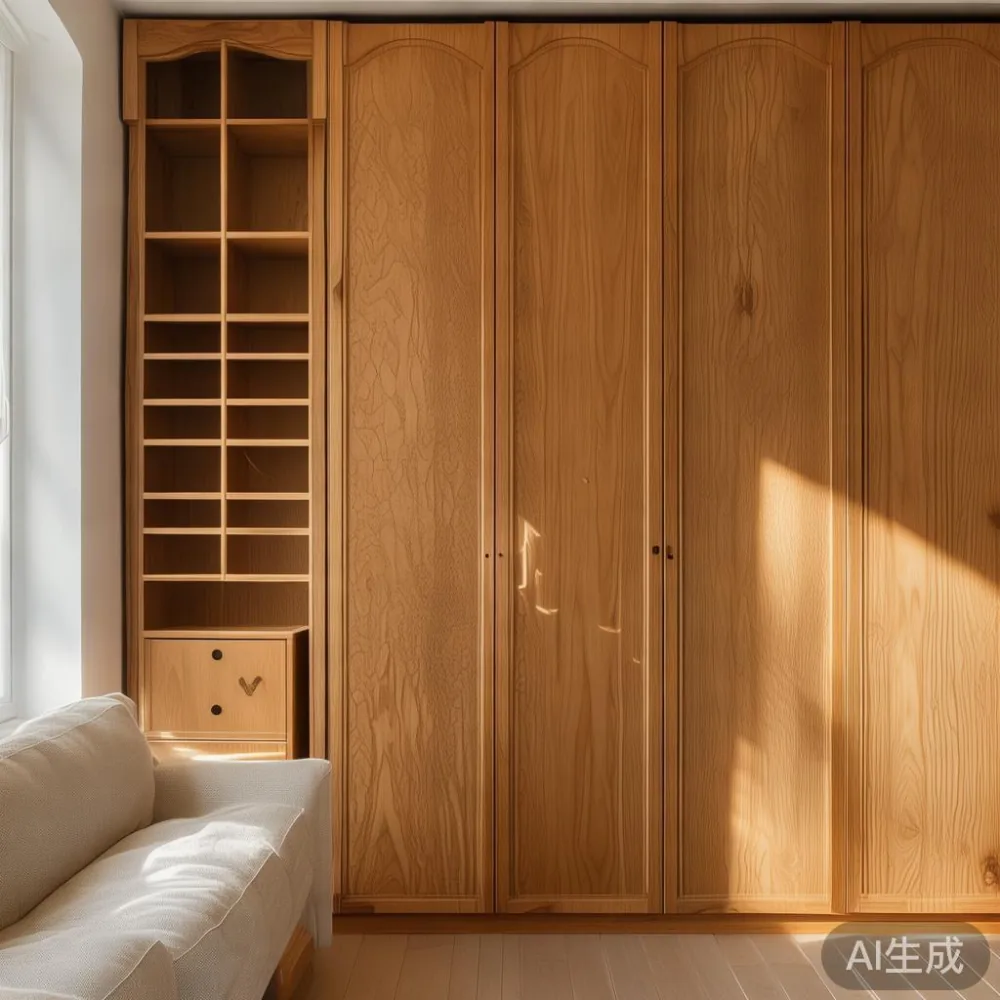
What does "warm minimal" actually mean for solid wood furniture?
Warm minimal is not the cold, gallery-style minimal of the 2010s. It is a softer take where the structure stays simple, but the materials carry the warmth. Think clean lines, low visual noise, and natural wood grain doing the talking. The three light-luxury directions that read warmest in Singapore HDBs right now are French light luxury (slim brass legs, soft curves), American light luxury (darker walnut, leather accents, more weight), and post-modern light luxury (geometric shapes, contrasting veneers). For most 4-room and 5-room flats between 90 sqm and 120 sqm, French light luxury tends to translate best because the proportions are human-scaled and the tones stay light.
For a 4-room HDB around 1,000 sq ft (92 to 95 sqm), the rule we use is no more than three wood tones in the same line of sight. A walnut dining table at SGD 1,280 to SGD 1,580, an oak wardrobe at SGD 1,450 to SGD 2,150, and an ash nightstand at SGD 280 to SGD 380 will sit together without fighting. Push beyond three tones and the room reads busy, not calm.
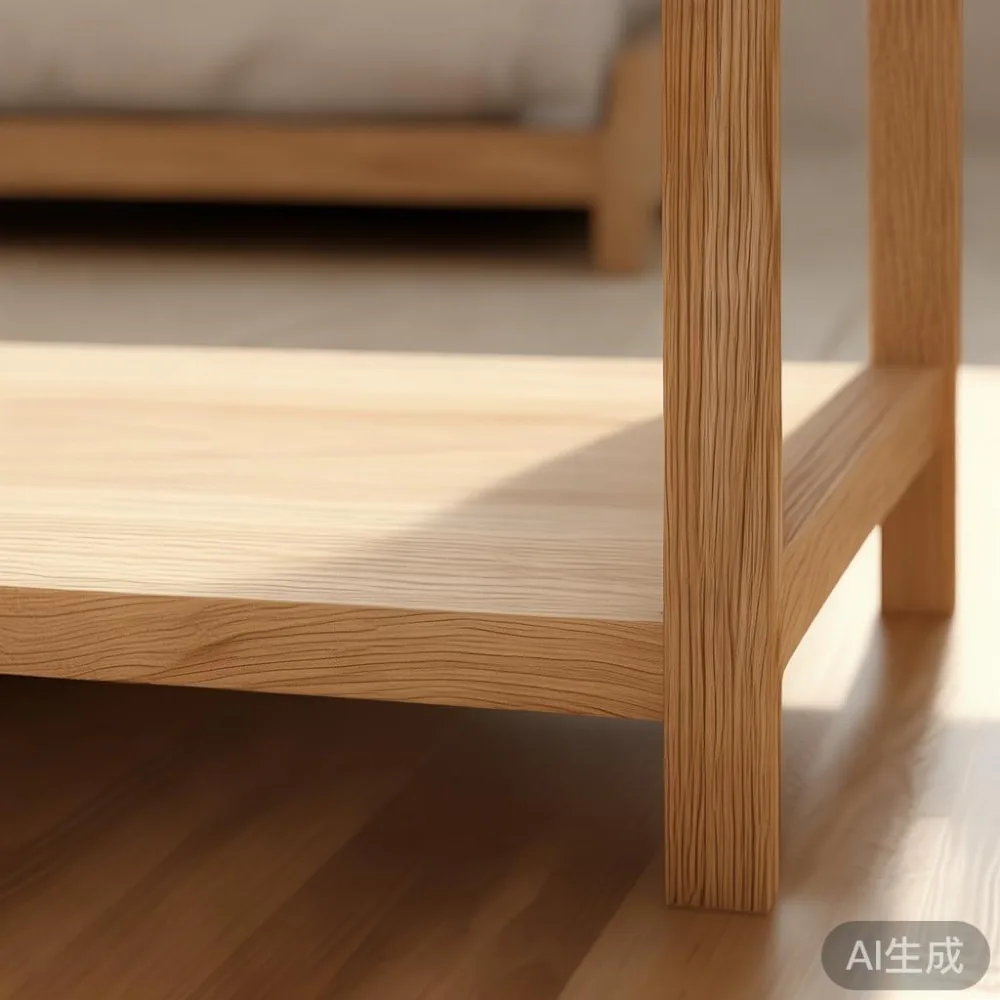
Which pieces anchor a warm minimal HDB first?
Start with the largest, heaviest pieces and work down. In a Singapore HDB, the lift door opening is usually 90 cm wide and 210 cm tall, and corridors run between 120 cm and 150 cm. Anything taller than 210 cm or wider than 90 cm will not fit without removing packaging, and disassembled flat-packs above 30 kg become a two-man carry that adds SGD 80 to SGD 120 to your final bill. Measure the diagonal of every piece before you buy.
The four anchors, in order:
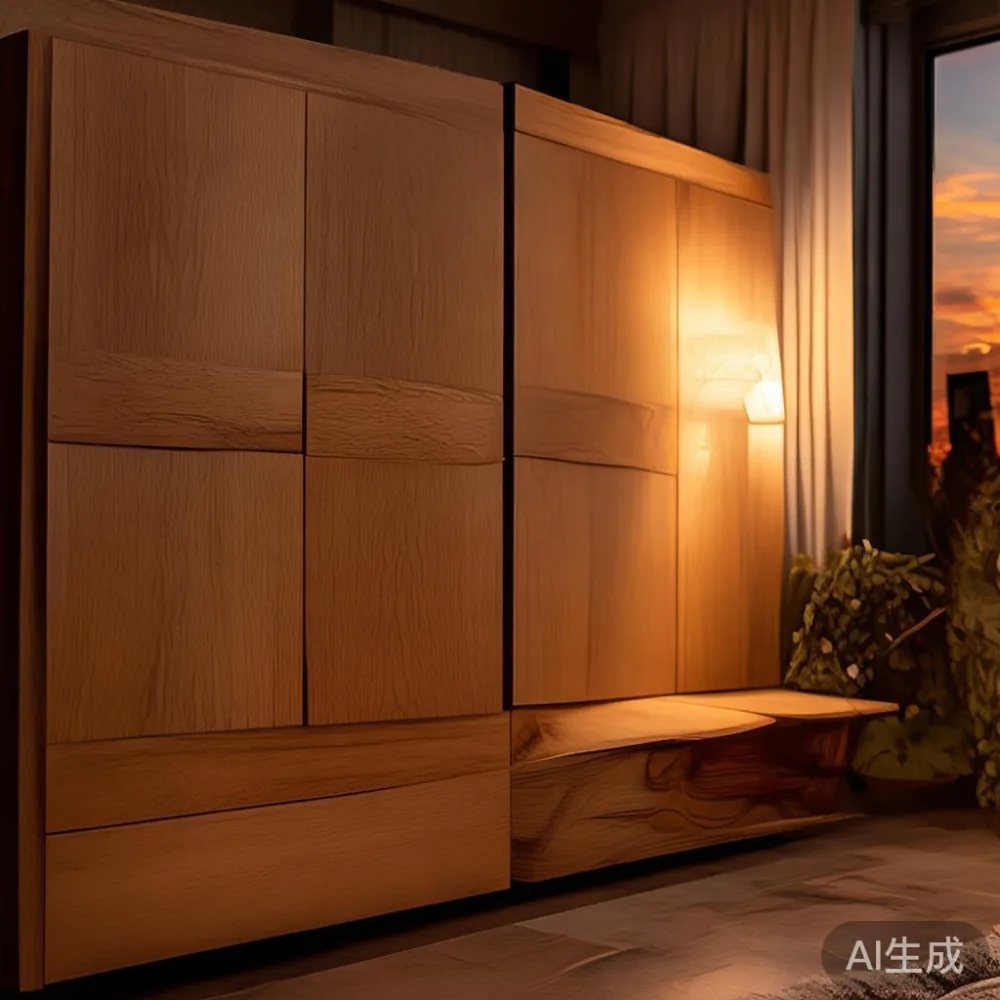
1. Bed frame. A queen-size solid wood bed frame at 180 cm by 200 cm needs 220 cm of wall minimum. In Kilimowe or Punggol compact master bedrooms (often 3.2 m by 3.4 m), a low-profile ash or walnut bed frame at 38 cm to 45 cm high keeps the ceiling feeling open.
2. Wardrobe. For wardrobe organization, a 180 cm wide three-door unit gives roughly 0.9 cubic metre of storage, which covers two adults in a Singapore climate (summer wardrobes only). Anything wider than 240 cm will not fit a standard HDB lift.
3. Dining table. Four-seaters run 120 cm to 140 cm; six-seaters run 160 cm to 180 cm. A 160 cm oak table seats six and still leaves 80 cm of walkway on each side in a typical 3 m by 3.2 m dining corner.
4. Sofa. A 220 cm to 240 cm three-seater solid wood sofa fits most HDB living rooms. Anything above 260 cm starts to overpower a 4-room layout.
These four pieces take up roughly 70 percent of the visual weight of the room. Get them right and everything else is styling.
How do I keep wardrobe organization from breaking the warm minimal look?
Wardrobe organization is where most warm minimal interiors quietly fall apart. People buy a beautiful oak wardrobe and then hang a plastic drawer tower, three mismatched fabric boxes, and a wire basket inside. The exterior looks clean, but open the door and the calm disappears. To keep wardrobe organization aligned with warm minimal, three rules help.
First, match internal finishes to the door finish. If you have an oak wardrobe exterior, ask for oak or birch-veneer internals, not raw MDF. This usually costs SGD 80 to SGD 150 extra per unit but keeps the inside as calm as the outside.
Second, use two box sizes only. We standardise on 28 cm by 28 cm for folded tops and 38 cm by 28 cm for trousers. Anything else turns into Tetris. Five to seven boxes per shelf section is enough for a couple.
Third, plan for Singapore humidity. A wardrobe without a dehumidifier slot will warp by year three in an east-facing HDB bedroom (Bedok, Tampines, Pasir Ris). A 12 cm clearance at the back for a small desiccant rotor costs nothing but saves you a SGD 600 replacement later.
What size budget under1000 do I need?
For a single-room warm minimal refresh in a Singapore HDB, plan SGD 900 to SGD 1,000 if you are only buying the core pieces and reusing what you already own. That covers a solid wood nightstand (SGD 280 to SGD 380), a small marble side table (SGD 240 to SGD 360), two linen-cushioned dining chairs at SGD 90 to SGD 140 each, and a slim 120 cm console (SGD 220 to SGD 320). The remaining SGD 80 to SGD 150 covers a wardrobe organization refresh with two sets of matching internal boxes and a new door handle set.
For a full-room warm minimal fit-out in a 4-room HDB, plan SGD 6,800 to SGD 9,500. That covers a queen solid wood bed frame (SGD 1,450 to SGD 2,100), a three-door wardrobe (SGD 1,450 to SGD 2,150), a six-seater dining table with six chairs (SGD 2,200 to SGD 3,000), a three-seater sofa (SGD 1,600 to SGD 2,400), and one marble table for the living room (SGD 380 to SGD 580). Add nine percent GST on top. Free delivery kicks in above the supplier threshold (most suppliers, including MIDHILL, ship free above the SGD 350 to SGD 450 mark within mainland Singapore).
For a 5-room or executive HDB, plan SGD 11,000 to SGD 14,500 for a full fit-out with a king bed frame (SGD 2,100 to SGD 2,900), a four-door wardrobe (SGD 2,300 to SGD 3,200), an eight-seater dining set (SGD 3,200 to SGD 4,200), a larger sofa (SGD 2,200 to SGD 3,000), and a second marble side table.
How does Singapore's lift and corridor rule shape what we can actually buy?
The HDB lift and corridor rule shapes every furniture decision here, and most online guides skip it. The standard passenger lift in a 1990s to 2020s HDB block has an internal cabin of about 1.4 m by 1.5 m, with a door opening of 90 cm by 210 cm. Newer BTOs in Punggol and Tengah sometimes run slightly wider, but never wider than 1.1 m at the door. A 220 cm three-seater sofa in its box will not go in vertically; it must go in diagonally, which means a 2.4 m diagonal, and that requires a cabin depth of at least 1.7 m. Most HDB lifts do not give you that.
The workaround is simple: pick pieces that disassemble. A solid wood sofa that breaks into a base, two arms, and three cushions at under 30 kg per module will fit any HDB lift. The same applies to a dining table with detachable legs and to a wardrobe that ships in two flat-pack halves of 95 to 110 cm each. We tested this last month in a BTO at Punggol Way: a 240 cm sofa went up in three pieces in 11 minutes; a similar 240 cm sofa from another brand in one box took 40 minutes and required the lift door to be propped open with a towel.
If you live on a high floor with a smaller lift, ask the supplier for the flat-pack dimensions in centimetres before you pay. Anything over 110 cm in any single dimension will need a stair carry, and Singapore stair carries run SGD 60 to SGD 200 per floor depending on weight.
Which wood tones work best in a Singapore HDB with afternoon sun?
Singapore light is bright, and afternoon sun in west-facing flats (parts of Jurong, Bukit Batok, and some older Bukit Merah blocks) will yellow light oak and ash within 18 months. For warm minimal interiors in those flats, pick darker or more neutral tones. Walnut, smoked oak, and mid-tone acacia hold their colour better. For north-facing flats (some Punggol and Sengkang units), light ash and white oak will read warm even in dim light.
The pairing we use most often for Singapore warm minimal interiors is a 180 cm walnut bed frame (around SGD 1,580), a lighter oak wardrobe at SGD 1,650, and one accent piece in blackened ash or brass (a marble table with black ash base, around SGD 420). This three-tone setup survives the local light, photographs well for PropertyGuru or 99.co listings if you ever rent the room out, and stays calm when the curtains are open or closed.
Can a Japandi sectional sofa singapore actually fit through the lift?
Yes, a Japandi sectional sofa singapore delivery is workable as long as the sectional breaks into three modules, each under 85 cm wide and 90 cm deep, and each module weighs under 35 kg. That is the form factor we now standardise on for Tampines, Bedok, and Punggol projects. A L-shape sectional at 240 cm by 180 cm fits any standard HDB lift once split, and the corner module doubles as a chaise. Expect SGD 4,200 to SGD 5,800 for a solid wood frame Japandi sectional in ash or light oak with linen-cotton blend cushions. Add SGD 80 to SGD 180 for the upper-floor carry depending on weight.
A common mistake is buying a sectional that ships in one box over 2.4 m long. We have seen this stall at the lift lobby of a Tiong Bahru block for two hours while movers argued with the MCST. The disassembly rule above avoids that entirely.
How should I plan delivery and assembly in Singapore?
Standard delivery within mainland Singapore runs three to seven working days for in-stock pieces, and 14 to 35 days for custom or made-to-order. Most solid wood furniture from a Foshan supplier like MIDHILL arrives in 18 to 28 days by sea freight, then another three to five days for last-mile delivery and assembly. Schedule a weekday delivery if you can; Saturday slots in Tampines and Punggol tend to book out two weeks ahead and cost SGD 40 to SGD 80 more.
Assembly on a queen bed frame takes 35 to 55 minutes for two people. A three-door wardrobe takes 90 to 140 minutes. A six-seater dining table takes 20 to 35 minutes. A three-seater sofa with detachable arms takes 15 to 25 minutes. Plan a full Saturday for a complete 4-room fit-out if the furniture arrives together, and have an extra SGD 120 to SGD 200 set aside in case the movers hit an unexpected stair carry.
Return windows in Singapore from cross-border suppliers typically run 14 days, so inspect every piece on arrival and photograph any defects before assembly. A structural warranty of 10 years covers the wood frame, and a lifetime refinishing service covers scratches and dents at no labour cost; you only pay for the material. That warranty structure is what convinced my colleague in Bedok to swap out her old flat-pack wardrobe last year, and the same logic applies in Tampines, Sengkang, and Punggol.
What is the single best first purchase for a warm minimal HDB?
If you can only buy one piece this month, buy the bed frame. It is the largest piece, it anchors the room, and it sets the wood colour for everything that follows. A 180 cm walnut or ash queen bed frame at SGD 1,450 to SGD 1,850 is the right starting point for most 4-room HDBs. Once the bed frame is in, every other decision becomes easier. The nightstand, the wardrobe, and the small marble table all flow from that single tone. With a clear anchor, a measured budget, and a lift-friendly supplier, the rest of the warm minimal interior builds itself, one piece at a time, and you avoid the all-too-common Singapore mistake of buying first and planning second.