How Southeast Asian Humidity Affects Wood Furniture—and How to Protect Your Wardrobe Organization
Singapore’s equatorial climate can change the moisture inside a wooden wardrobe in ways that are easy to overlook. Relative humidity often rises above 80% during the monsoon periods, while air-conditioned bedrooms may become much drier by midnight. That repeated expansion and contraction can affect doors, drawers, veneer, joints, and hinges. For residents of Tampines, Bedok, and Punggol, the solution is not simply to buy solid wood furniture. It is to plan wardrobe organization around airflow, humidity control, realistic measurements, and furniture designed for daily use.
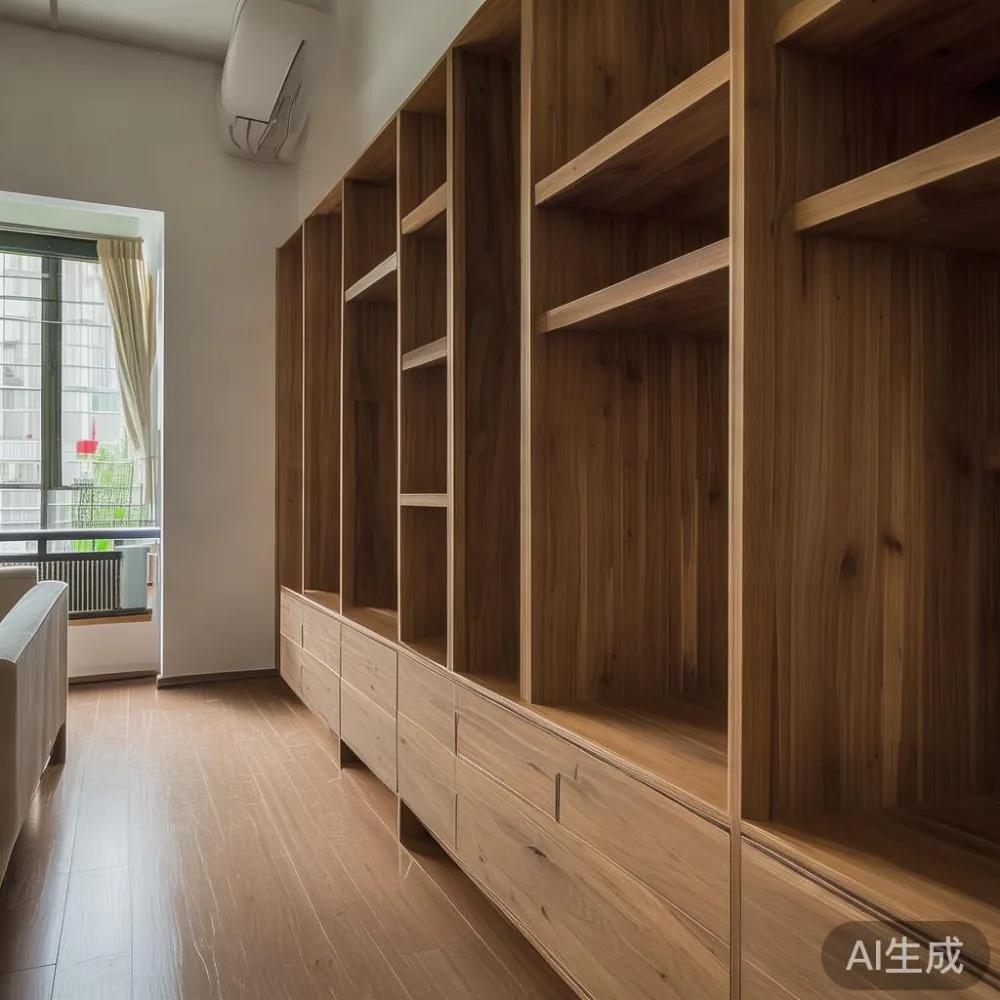
I tested one of MIDHILL’s solid wood wardrobes last month in a client’s three-bedroom HDB flat near Tampines West. The unit stood 210 cm high, 180 cm wide, and 58 cm deep. We recorded cabinet moisture readings over 14 days, including 2 humid nights, 3 air-conditioned nights, and several periods when the sliding doors were opened. The measurements showed why small gaps and ventilated storage matter in a local home.
What does humidity do to solid wood furniture in Singapore?
Wood is hygroscopic: it absorbs moisture when the surrounding air is humid and releases it when the air is dry. A 60% increase in relative humidity does not mean the timber changes by 60%. The actual movement depends on the species, board thickness, finish, grain direction, and whether the piece is solid timber, plywood, or engineered wood. Even so, a 100 cm solid wood bed frame can move a few millimetres across its width when exposed to strong seasonal variation. A tall wardrobe may show small gaps at its doors or a door that catches near the top.
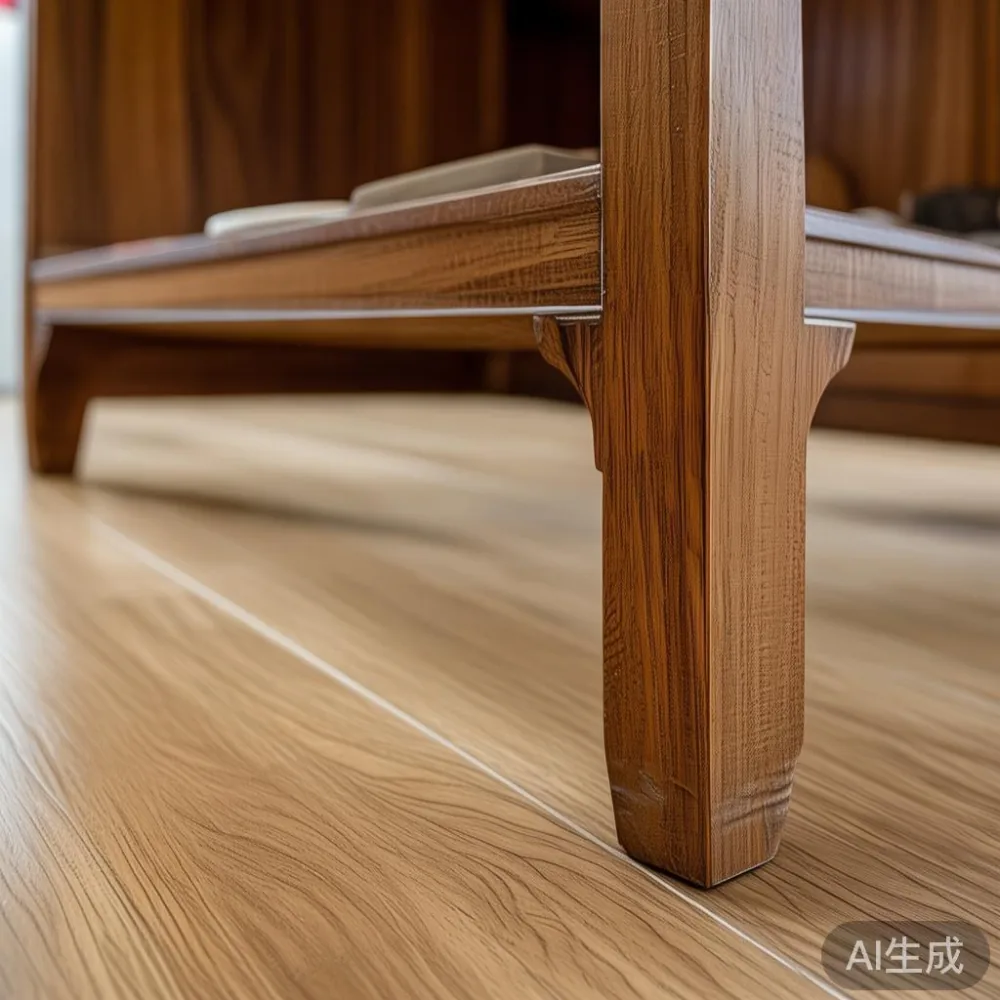
In Singapore, the practical range is more useful than a theoretical figure. Outdoor relative humidity can sit around 75–90% during wet periods. A bedroom with a running air conditioner may fall to 40–55% overnight. Furniture near a window can therefore experience much more fluctuation than furniture in an interior wall. Direct rain, leaking balcony tiles, and dampness from a freshly painted flat add further risk.
Humidity can also affect a dining table, nightstand, or solid wood sofa frame, although the visible result differs. Flat tops may develop a faint haze when moisture lingers on the surface. Edges and end-grain can respond more quickly than the centre. Finishes such as lacquer, oil, or wax slow moisture exchange, but they cannot make wood immune to the climate.
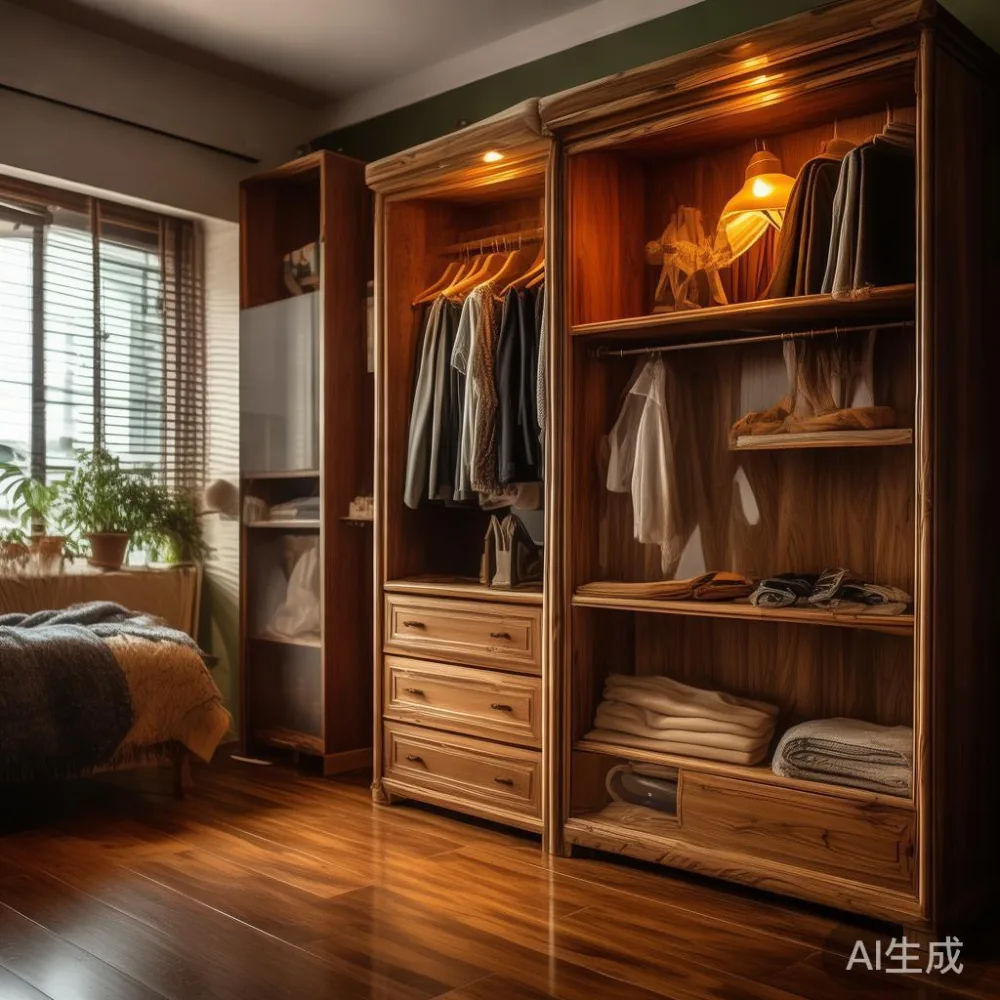
This is why a 10-year structural warranty should be read with care. Structural coverage can protect against defects in joinery and construction, yet it does not automatically cover movement caused by uncontrolled moisture, standing water, or improper placement. Ten years is meaningful protection when the furniture has also been installed and maintained as intended.
How can humidity affect wardrobe organization?
Humidity often becomes a wardrobe problem because homeowners pack clothes tightly before the contents have a chance to dry. Synthetic garments can retain moisture after a rainy commute, while cotton and linen release it into the cabinet. If the wardrobe remains closed for 10–12 hours, the enclosed relative humidity may rise above the level in the room. That warm, damp pocket is ideal for mildew or musty odours, especially for folded knitwear and shoes.
Good wardrobe organization begins with airflow rather than more dividers. Leave a 3–5 cm gap behind the back panels where the design permits, use 8–10 cm between a wardrobe and the side wall, and avoid stacking folded clothing against the rear panel. Keep damp towels and work clothes outside the cabinet until they are dry. Shoes should be fully aired before going into a closed compartment.
For a new wardrobe, choose internal modules that suit how the family actually dresses. A 120 cm hanging zone can hold about 35–45 shirts on standard hangers, while a 140 cm zone accommodates longer coats. A 15 cm shelf is sufficient for folded shirts; 20–25 cm works better for sweaters. A trouser rack placed around 100 cm above the floor reduces floor dampness, but it should not be installed directly where corridor pipes or structural columns restrict access.
Seasonal editing matters too. Twice a year, remove textiles that have not been worn for 6 months, clean the shelves, and check the rear corners. Vacuuming with a nozzle attachment at 5–10 cm from the surface removes dust without pushing it into joints. Wipe moisture from doors immediately with a dry cloth, rather than leaving wet patches to dry around the timber edge.
Should I use a dehumidifier or air conditioner for my wardrobe?
A whole-room dehumidifier is the more useful option when the cabinet itself is experiencing repeated dampness. Models with a 12–20 L/day rated extraction capacity are suitable for many Singapore bedrooms, although the label describes testing under particular conditions rather than a guarantee for every room. Set the unit to maintain about 50–60% relative humidity, with a drain hose so the tank does not stop during the night.
Room air conditioning already controls moisture and can help if it runs regularly. The catch is that cabinet doors remain closed, so the inside does not immediately match the room climate. A small, purpose-made dehumidifier that fits in the wardrobe can protect folded clothing, but it needs airflow and a power supply. A model drawing 10–30 W is more realistic for compact wardrobes than a high-capacity unit occupying the floor.
Do not use a domestic charcoal moisture absorber as the main defence. It may collect a modest amount of water but will not regulate a whole cabinet. Rechargeable passive products can be useful beside a shoe rack, yet they still need replacement every 2–4 weeks depending on humidity. They should supplement ventilation and temperature control, not replace them.
Silica gel is useful for small enclosed areas, including a watch compartment or a rarely opened drawer. Use 20–50 g per sealed container and replace or dry the crystals when they become saturated. It is not a substitute for protecting a full wardrobe against Singapore’s wet seasons.
How should solid wood furniture be measured for HDB homes?
Measure the finished opening, not the approximate wall length. For a recessed wardrobe in an HDB bedroom, check the opening at the floor, at 100 cm, and at 210 cm. A 5 mm deviation may be enough to prevent a large door from aligning correctly. Record the ceiling height too: standard HDB rooms commonly sit around 2.4–2.7 m high, and older flats can have service ducts that reduce usable height.
Allow for movement and installation tolerances. A cabinet fitted tightly against a wall may have little room to accommodate seasonal variation. Where space allows, leave 1–2 cm at the sides and 3–5 cm at the top, filled with a discreet trim or scribe panel. Hardware should remain accessible for adjustment rather than being buried permanently.
Lift and corridor widths deserve attention before delivery. A wardrobe packed into a flat carton may fit the HDB lift but still be difficult to turn at the landing. Record the lift door width, internal depth, and diagonal as well as the corridor’s narrowest point. Large panels need to enter upright when the construction allows it; carrying them flat can strain both the timber and the crew.
Before ordering, make a paper or cardboard footprint of the planned footprint. Walk from the flat entrance to the bedroom and note any 90-degree turns. If the route includes a 90 cm corridor with a 78 cm lift opening, plan to dismantle wardrobes where possible. This practical step protects the wardrobe organization project from arriving day surprises.
Which furniture finishes are easier to live with in humid conditions?
No finish eliminates moisture movement, but quality application can improve cleanability and resistance to accidental dampness. A properly cured finish on a solid wood dining table should withstand a damp wipe and occasional water ring. Test an inconspicuous area for colour change, especially with pale oak, ash, or walnut tones. Ask for the finish type and care instructions rather than relying on the phrase “natural finish.”
For a French provincial dining table, consider whether the profile has deep mouldings or broad flat surfaces that can be wiped easily. The same finish decision applies to a bed frame and nightstand. Water-resistant finishes are valuable in a Singapore bedroom, but coasters, felt pads, and a 5 cm clear zone from an open window still matter.
Design references can help homeowners define a coherent interior. European light luxury for dining room schemes often pair pale timber, cream upholstery, and restrained metal details. French light luxury sofa styles suit warm neutral living rooms, while post-modern lighting can add character without overwhelming compact HDB spaces. These references guide atmosphere, but the actual specification should prioritise stable construction, repairable hardware, and a finish suited to humid use.
The phrase luxury Italian light luxury furniture can be confusing because “Italian” may describe an aesthetic, a production method, or a brand origin. Ask whether a piece is manufactured in Italy, designed in an Italian style, or simply finished to look Italian. Likewise, European light luxury TV console designs should be judged by drawer travel, centre-of-gravity balance, wall anchoring, and moisture resistance—not only by decorative fronts.
What should I check when receiving a solid wood wardrobe?
Inspect the package before accepting it. Photograph the carton, note any crushing, and check the corners for impact marks. Confirm that the delivered dimensions match the order. Open the doors and drawers while the delivery crew is present, and look for gaps larger than roughly 3 mm on larger doors, though smaller tolerances may apply to engineered components.
Check that all hinges, runners, screws, and wall anchors are included. A 210 cm tall wardrobe should be fixed to the wall according to the maker’s instructions, especially in a family home where children pull on lower doors. A suitable anti-tip restraint is more important than decorative styling.
For MIDHILL orders, the stated 10-year structural warranty gives buyers a defined point of contact if a joint or structural component develops a covered defect. The lifetime refinishing service is another reason to retain the original order details and care record. It does not mean every scratch can be removed without changing colour, yet it can provide a clear path for refinishing advice.
Delivery timing should also be planned around the renovation. Allow 7–14 working days for many in-stock configurations, but made-to-measure wardrobes can require 4–8 weeks. Confirm the exact production and delivery window in writing, along with the GST-inclusive amount in SGD. Free shipping applies above US$350 on eligible international orders, while Singapore delivery terms should be checked separately before checkout.
Returns remain available within 14 days under the stated policy, subject to its conditions. For a custom wardrobe, finish samples, installation effects, and special-order terms deserve particular attention before confirmation. A 14-day return period is useful for checking fit and appearance, not for testing a whole monsoon cycle.
How can families maintain wardrobe organization through the wet season?
Create a simple weekly routine. Open the wardrobe for 10–15 minutes after outdoor activities, redistribute damp clothing, and keep shoes off the floor. Once a month, check the back corners and under the lowest shelf with a flashlight. A moisture reading taken at the rear of the cabinet gives a more useful picture than a reading taken near the open doorway.
Use labels by category rather than by every item. Divide clothing into work, school, sleep, and occasional wear, then keep one basket for items awaiting washing or airing. This prevents damp garments from returning to a closed wardrobe. Add a cedar block or suitable odour-control insert for fragrance, but remember that it does not remove moisture or mould spores.
Clean the cabinet with a lightly damp cloth and dry it immediately. Avoid flooding the base, using abrasive pads, or spraying cleaner directly into hinges. For internal glass, use a separate microfibre cloth so residue is not transferred to wood. Inspect silicone seals and perimeter seals every 6 months, and remove mould promptly if it appears.
For larger furniture, place a solid wood bed frame away from an exterior wall where condensation is visible, and position a nightstand so air can move around its base. For the dining area, keep a French provincial dining table clear of open windows during heavy rain. If a marble table is used in the same home, give its stone surface a separate cleaning routine and avoid acidic spills.
Humidity control is a habit, not a one-time purchase. The most effective combination is 50–60% relative humidity, sensible spacing, dry storage, and regular inspection. MIDHILL’s solid wood constructions can provide years of dependable use when these local conditions are respected. For families planning a new layout, measuring the room, checking the delivery route, and designing wardrobe organization with ventilation will protect both the furniture and the clothes inside it.