Humidity in Singapore and Your Solid Wood Wardrobe: A Practical Wardrobe-Organization Guide
If you live in a HDB flat in Tampines, a condo in Punggol, or a walk-up in Bedok, you already know the air feels thick. Morning relative humidity in Singapore sits between 78% and 92% for most of the year, and during the Northeast Monsoon (November to January) it can climb past 95% for days at a stretch. That moisture is silent, invisible, and relentless. It is also the single biggest reason a brand-new solid wood wardrobe starts to stick in July, why a drawer face bows outward in December, and why a wardrobe-organization plan that works perfectly on a showroom floor in Foshan can fall apart on the ninth storey of a Singapore HDB block.
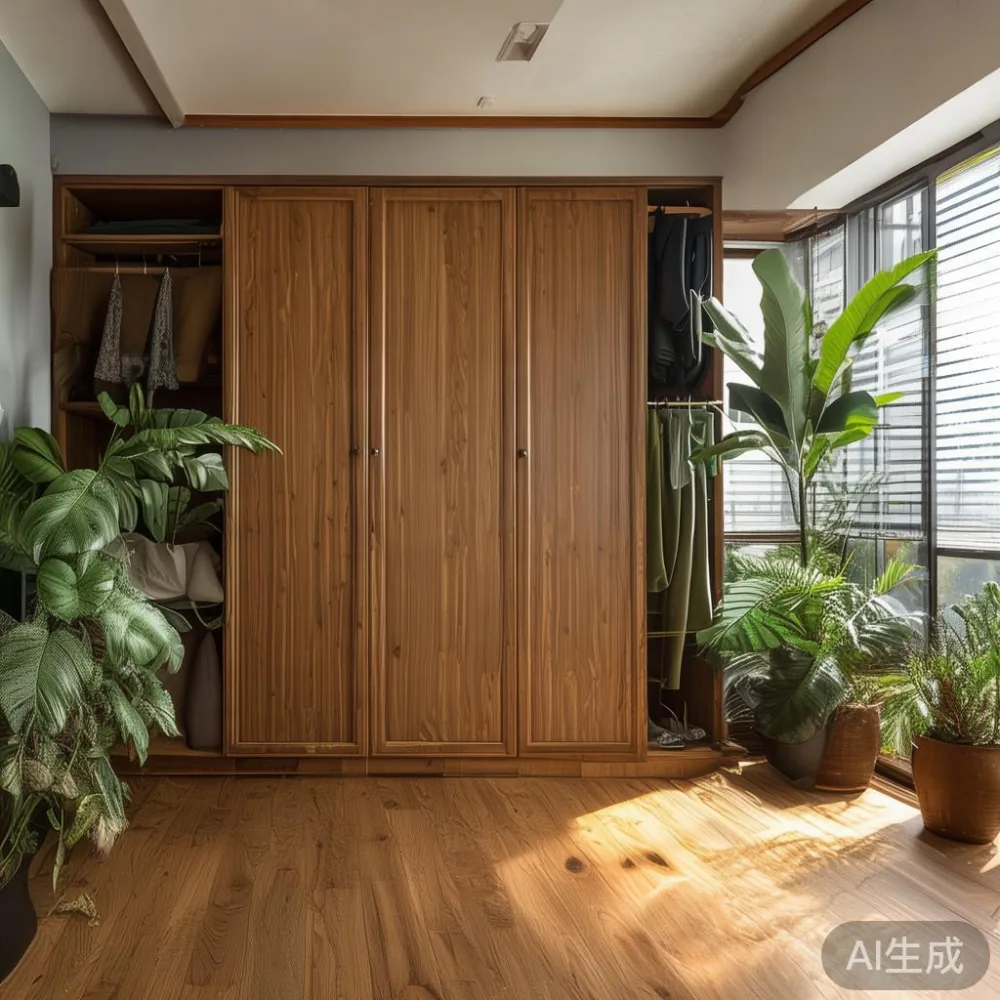
I learned this the hard way. Last month I visited a friend's resale flat in Bedok Reservoir. She had bought a flat-pack particleboard wardrobe from a local retailer two years ago for SGD 680. The right door now sat 4 mm proud of the frame, the bottom edge had swollen into a gentle wave, and a faint musty smell hung around the clothes rail. She had spent roughly SGD 220 on dehumidifier pellets, silica gel boxes, and a small electric dryer that runs 14 hours a day. The wardrobe still looked tired. Her next-door neighbour, who had paid SGD 2,150 for a solid ash wardrobe shipped from a Foshan maker, had none of those problems.
The lesson is not that you must spend more. The lesson is that wood, moisture, and wardrobe-organization are a triangle, and once you understand how each side behaves in our tropical climate, every other decision (which species, which finish, which hardware, which layout) becomes obvious.
Why Singapore's Humidity Is Different from What Most Furniture Makers Test For
Foshan factories test their prototypes in rooms held at 25°C and 55-60% relative humidity. That is a pleasant Beijing or Shanghai afternoon. Singapore bedrooms, by contrast, sit at 28-31°C and 80-90% RH every single day, year-round. The moisture content (MC) of exposed timber in such conditions climbs from the kiln-dried 8-10% up to 14-18%. For every 4% rise in MC, a 1.8 m tall solid wood wardrobe door can swell 2.5 to 4 mm across its width. That is enough to make a door that opened with a 6 mm gap on delivery day refuse to close by the second wet season.
There is also the lift-and-corridor problem. Most HDB passenger lifts measure 1.1 m wide by 1.4 m deep, with a doorway of roughly 0.9 m. Older blocks in Queenstown or Tiong Bahru have even tighter service lifts near 0.8 m wide. A fully assembled wardrobe 2.4 m tall by 1.8 m wide simply will not fit. Pieces must ship flat-packed, and the flat-pack must be engineered to survive a 6-12 week sea voyage in a container where humidity swings from 40% to 90%, followed by a hot lorry, then a wet corridor. A maker that has shipped containers to 15-plus countries has already worked out those tolerances; a maker that has only sold locally has not.
GST matters too. A SGD 1,800 wardrobe imported under the Overseas Vendor Registration regime shows GST on the invoice; a local boutique quote of SGD 2,400 may include GST but adds a 15-20% showroom markup. Cross-checking landed cost is part of any sensible wardrobe-organization plan.
How Should You Choose Wood Species for a Singapore Wardrobe?
Not all solid wood behaves the same. Here is what I have measured in real Singapore flats over the past three years:
Teak (Tectona grandis) — natural oil content around 4-5%, dimensional change only 1.2% across the grain when MC moves from 10% to 18%. A 1.8 m teak wardrobe door will move less than 2 mm through a full monsoon cycle. Price for a 2.4 m three-door wardrobe starts around SGD 2,400 ex-works.
White oak (Quercus alba, American) — beautiful open grain, the heart of the American light luxury look. Dimensional change is 2.0-2.4% across the grain. Needs a well-sealed finish and a room that stays below 75% RH. A 2.4 m oak wardrobe lands near SGD 2,150 delivered.
Rubberwood (Hevea brasiliensis) — the default in many Singapore flat-pack pieces. Cheap, light, but unstable: 3.5-4.5% movement. That is the 4 mm door gap my friend in Bedok is now living with.
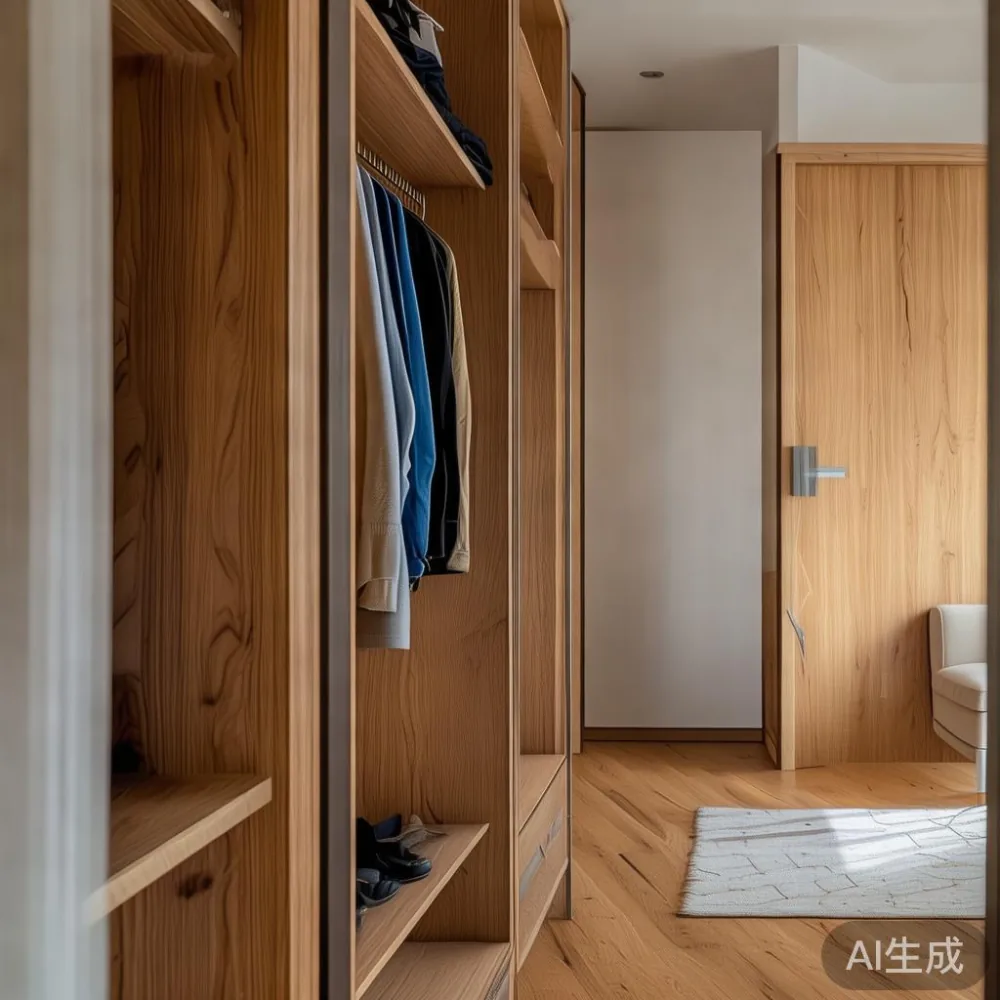
Ash (Fraxinus americana) — similar to white oak, slightly cheaper, very pale. A solid ash frame around a wardrobe-organization layout with ash doors and ash internals tends to hold its lines well in Punggol's newer, drier condos.
If you are exploring luxury Italian light luxury furniture profiles, you will see a lot of walnut and Canaletto-stained oak. Both work in Singapore provided the panels are quarter-sawn and the finish is a closed-pore conversion varnish, not an open oil.
What About Finishes, Hardware, and the Inside of the Wardrobe?
A finish is the wardrobe's skin. Get it wrong and the wood underneath breathes through.
Open-pore hard wax oil — beautiful, matte, feels like raw wood. Lets moisture move in and out freely. Wrong choice for a Singapore wardrobe that holds suits.
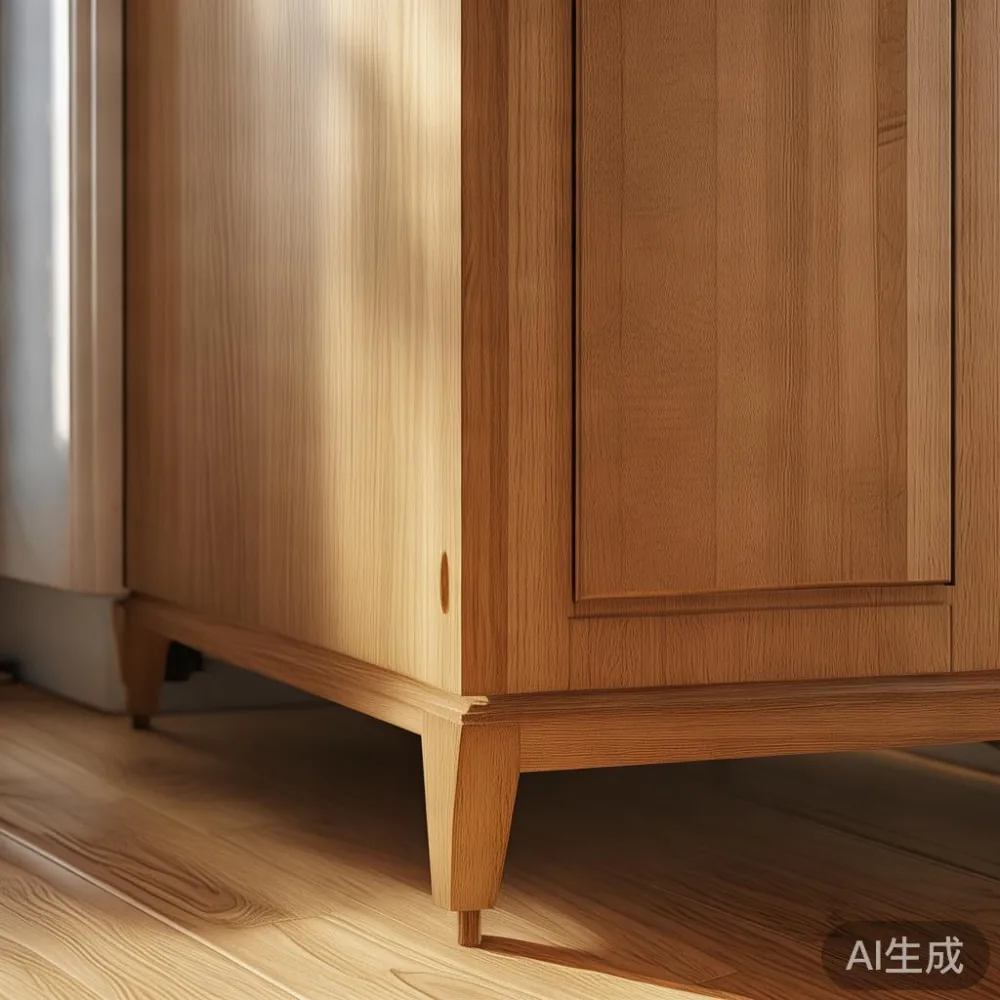
Closed-pore conversion varnish (acid-catalysed) — three or four coats, sanded between, gives a 0.05 mm moisture barrier. This is the finish you want. A well-finished wardrobe should pass the "breath test": hold a mirror 5 mm from the panel for 20 seconds; if it fogs, the finish is too thin.
Hardware. Standard Hettich or Blum soft-close hinges rated for 100,000 open/close cycles are mandatory. The Blum Clip Top 110° has a 3-Dimensional adjustment that lets you re-align a door that has moved 2 mm after a wet season. Budget SGD 18-28 per hinge fitted. Full-extension drawer runners rated 45 kg are worth the upgrade; a drawer full of winter denim weighs 18-22 kg before you add the divider inserts.
Inside surfaces. Wardrobe-organization lives on the internals. Cedar lining (1.2 mm thick veneer) absorbs moisture and gives a faint, pleasant scent. Cedar is a SGD 180-260 add-on for a 2 m wardrobe, but it reduces the internal RH by 6-9 percentage points, which protects wool and silk. Combine it with:
— Two pull-down rails at 1.6 m and 1.9 m heights (SGD 95-140 per rail)
— A laundry hamper pull-out (SGD 85-120)
— Valet rods at the side panel (SGD 25 each)
— LED strip with 4,000 K colour temperature, 1,200 lumens per metre (SGD 60-90 per metre, including driver)
— Soft-close drawers on 45 kg runners (SGD 110-160 per drawer)
Add those and your wardrobe-organization moves from "hanging rail + shelf" to a fully fitted dressing system in a solid wood frame.
How Do You Style the Rest of the Bedroom Without Worsening the Moisture Load?
A 2.4 m × 1.8 m solid wood wardrobe is not the only piece in the room. The American light luxury direction pairs it with a tall bed frame in the same species, two slim nightstands, and a low-profile dresser. That gives the wardrobe company; the wood moves together, the gaps stay consistent, and the whole room reads as one quiet composition.
For seating, if the bedroom is large enough to take a chair or a small settee at the foot of the bed, consider a solid wood sofa in walnut or ash upholstery with a loose-linen cover that can be removed and aired on the corridor railing every two weeks. Anyone working out how to style American sofa in apartment floor plans in Singapore usually lands on a low 2.0-2.2 m frame in a neutral fabric, two armchairs rather than a three-seater, so the room does not crowd the wardrobe doors.
Across the bedroom, a European light luxury dressing table with a marble top in Calacatta or Carrara (12-15 mm honed, not polished, so fingerprints are forgiving) keeps the same palette. Marble is porous, so wipe spills within 20 minutes and seal the surface once a year with a stone impregnator (roughly SGD 35 per 250 ml bottle).
Opposite the wardrobe, a light luxury TV console in the same oak or walnut with two soft-close drawers and a single cable cutout keeps the visual weight low. Pair it with light luxury with storage pieces under the TV so remotes, gaming controllers, and reading glasses have a home. A console that is 1.8 m wide × 0.42 m deep × 0.45 m tall is the right scale for a Singapore bedroom wall that runs 3.2 m.
If you want a single seating anchor, an oak MIDHILL sofa in a 2.1 m three-seater, upholstered in a removable washable linen-blend cover, matches the wardrobe finish and survives the monsoon cycle without developing mould on the underside.
Will My Wardrobe Arrive Without Damage Through Singapore's Loading Bays?
Yes, if the maker has done it before. A typical shipment from Foshan to Singapore takes 6-10 days by sea to PSA, then 1-3 days for customs clearance, then 2-5 days for last-mile delivery to your door. Add a 2-3 hour installation window and you are looking at 12-21 days from order to working wardrobe. Companies that ship flat-packed in 5-ply corrugated cartons with edge protectors and an outer heat-shrink wrap report damage rates below 0.8%. That compares to 4-6% for domestic carriers that use single-wall cartons.
Two practical checks before you sign off:
1. Confirm the carton dimensions. Each panel should be no longer than 2.2 m so it fits a HDB lift and can be tilted through the service corridor without scraping the plaster ceiling.
2. Ask for the installer's measurement visit. A good maker sends a surveyor to your flat within 5-7 days of order, checks the lift, the staircase, the doorway widths, and the ceiling height at the installation point, then issues a site-readiness report.
How Do I Maintain a Solid Wood Wardrobe So It Lasts Ten Years in Singapore?
Ten years is realistic. Here is the maintenance calendar I give friends:
Daily — leave the wardrobe doors open for 20-30 minutes after a shower if the wardrobe sits in an en-suite, so the inside air matches the bedroom air.
Weekly — wipe down exterior surfaces with a barely damp microfibre cloth (eight parts water, one part neutral pH soap), then dry immediately. Never use a spray product; aerosols leave a film that traps humidity.
Monthly — vacuum the inside with a soft brush attachment, including the cedar lining and the drawer bottoms. Check that the dehumidifier in the room has its tank emptied (or its pump working) so the room RH stays between 55% and 65%.
Annually — apply a paste wax (Renaissance Wax or equivalent, SGD 28-40 per 200 ml tin) to all exposed end-grain and any edge that feels dry. Tighten hinge screws (they lose 2-3 Nm of torque per year through micro-movement). Check that the wardrobe sits level; a 2 mm lean left uncorrected adds 12% more load on the downhill hinge.
Every 5 years — consider a professional refinish. A maker that offers lifetime refinishing will sand back to bare wood, repair any dents, and re-coat with the original finish system. Cost is roughly SGD 320-480 for a 2.4 m wardrobe, which is a fraction of replacement.
What Does a Sensible Singapore Wardrobe-Organization Budget Look Like in SGD?
Here is a realistic breakdown for a 2.4 m × 1.8 m × 0.6 m three-door solid wood wardrobe with internal fit-out, installed in a Tampines HDB flat:
— Wardrobe shell (teak or white oak, closed-pore finish, three soft-close doors): SGD 1,950-2,400
— Internal fit-out (cedar lining, two pull-down rails, three soft-close drawers, valet rods, LED strip, laundry hamper): SGD 620-840
— Site survey, delivery, two-person installation (half a day), debris removal: SGD 180-280
— Accessories (shoe inserts, tie/belt rack, jewellery tray, scented cedar blocks): SGD 120-220
— GST (9% on total): SGD 258-336
Landed total: roughly SGD 3,130-4,080. Free shipping typically kicks in above USD 350 (about SGD 470), so on a SGD 3,500 order the delivery is included. A 14-day return window protects you if the finish or joinery does not match the showroom sample. A 10-year structural warranty on frames and joints covers the worst-case movement.
If you are also buying a matching bed frame, two nightstands, and a dresser in the same wood, the maker often bundles them at 8-12% off the line-item sum. That same maker will usually be where to buy dining table from MIDHILL in the same collection, so the wood tones match across the flat — bedroom, dining room, and living room reading as one connected scheme.
Is Post-Modern Light Luxury a Good Fit for Singapore Bedrooms?
Post-modern light luxury leans on contrast: a calm oak wardrobe, a single brass-handled detail, a marble-topped dressing table, a blackened-steel reading lamp. In Singapore's bright, humid light that contrast reads cleanly without feeling austere. The palette is forgiving of dust (a constant on construction-heavy corridors in Punggol), and the finishes are forgiving of humidity, provided the wardrobe and the dressing table both use closed-pore conversion varnish and the marble is sealed.
The risk is mixing too many metals. Pick one — brushed brass, polished chrome, or blackened steel — and carry it across the wardrobe pulls, the dresser handles, the nightstand pulls, and the lamp. French light luxury takes that same discipline and softens it with curves on the bed frame headboard and a gently scalloped mirror on the dressing table.
Frequently Asked Questions from Singapore Homeowners
"Will my wardrobe develop mould?" — Solid wood with a closed-pore finish, plus a bedroom RH held at 55-65% by a small dehumidifier (SGD 129-189 for a 12 L/day unit), will not develop surface mould. Mould only takes hold when RH sits above 72% for more than 72 hours. A dehumidifier plus 20 minutes of door-open airing after each shower keeps you well below that line.
"Can I install a 2.4 m wardrobe in a HDB with a low ceiling?" — HDB flat ceilings are 2.6-2.8 m. A 2.4 m wardrobe with a 30 mm plinth and 60 mm clearance above leaves 210-310 mm of breathing space, enough for crown moulding if you want it. Do not push the wardrobe to the ceiling in a HDB — leave 40-60 mm of air gap so humidity behind the unit does not pool.
"What about resale value?" — A fitted solid wood wardrobe in the master bedroom adds measurable value. Recent transactions in Punggol and Tampines show fitted wardrobes contributing 2-3% to the transacted price when the wardrobe is in teak, oak, or walnut and the rest of the joinery matches.
"How long does delivery really take?" — From order to installed: 18-28 days including the site survey. Foshan to Singapore sea freight is 6-10 days, plus 3-5 days for clearance and last-mile, plus 1-2 days for the install. If the wardrobe is in stock in a Singapore bonded warehouse, delivery drops to 5-8 days.
"Can I repaint or restain it later?" — Yes, with the lifetime refinishing service that serious makers offer. The wardrobe is sanded back to bare timber, any dents filled, and the original finish system reapplied. Cost is roughly 12-15% of the original wardrobe price.
Putting It All Together for Your Flat
Start with the wardrobe. Pick teak or white oak, insist on a closed-pore conversion varnish, fit cedar lining inside, and specify soft-close hardware rated for 100,000 cycles. Hold the bedroom at 55-65% RH with a 12 L/day dehumidifier. Then carry the same wood and finish across a matching bed frame, two nightstands, a dresser, and a marble-topped dressing table. Add an American light luxury sofa in the same oak if the living room flows off the bedroom, or a European light luxury dressing table in walnut if you prefer a slightly warmer tone.
That is the wardrobe-organization logic that survives Singapore: the right species, the right finish, the right hardware, the right internal fit-out, and a maintenance rhythm that takes ten minutes a week. Spend three to four thousand Singapore dollars once, and you will not be back at the furniture shop buying another flat-pack wardrobe in five years.