Humidity in Southeast Asia: What It Does to Your Solid Wood Wardrobe (and How to Keep It Looking New)
Last month I visited a 4-room HDB flat in Tampines with my colleague, a condo owner in Punggol, and a walk-up apartment renter in Bedok. The common thread was not the floor plan or the MRT line. It was the wardrobe. All three households owned a solid wood wardrobe, and all three showed the same quiet symptoms: a door that no longer closed flush in August, a faint shadow line on the side panel near the floor, and a faint musty note when the door was opened after a long, air-conditioned day. None of these are defects. They are the predictable conversation between wood and the Singapore climate, and once you understand it, you can keep your wardrobe organization looking sharp for a decade or more.
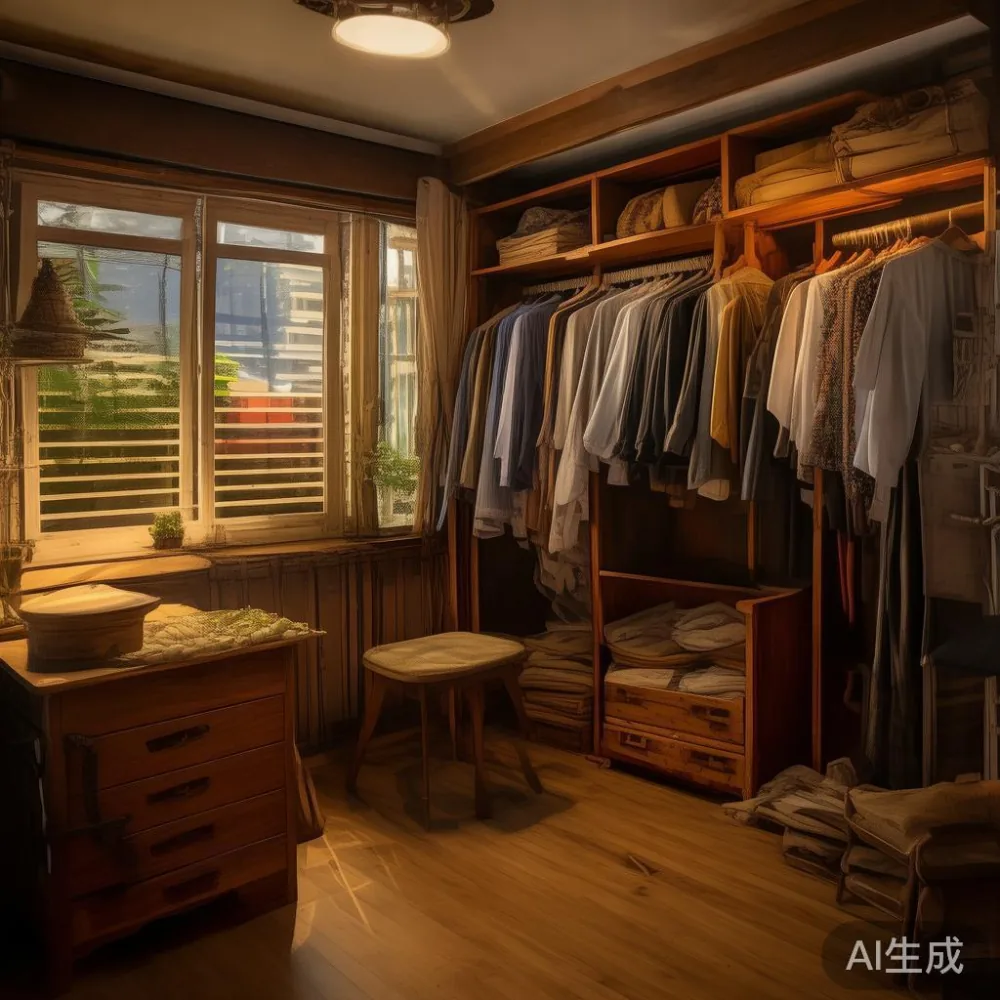
Singapore sits in a humid tropical band where the average relative humidity hovers between 70% and 90% for most of the year, peaking during the December to February monsoon windows and the April inter-monsoon. Indoor humidity in a non-air-conditioned corridor-facing room often sits 10 to 15 points higher than what the weather app reports, because Singapore HDB flats and condos are wrapped in concrete that stores moisture and slowly releases it overnight. When you pair that with a solid wood wardrobe, you are pairing a living material with a room that breathes like a rainforest. The result is mostly cosmetic, occasionally structural, and almost always manageable. This guide is written for Singapore homeowners, condo dwellers, and renters thinking about wardrobe organization with solid wood, marble table accents, a solid wood sofa, or a bed frame they want to last.
Why Singapore humidity and solid wood do not get along
Solid wood moves. That sentence is the whole article in one line. A solid oak wardrobe panel that leaves the Foshan factory at 9% moisture content is designed to live in a stable room around 45% to 55% relative humidity. In Singapore, your bedroom in Bedok can swing from 50% on an air-conditioned afternoon to 82% by 6 a.m., and your corridor-facing wardrobe in Tampines can hold 75% steady for weeks in a non-air-conditioned spare room. Wood absorbs that airborne water and swells. When humidity drops, the wood gives the water back and shrinks. Over time, this back-and-forth shows up as hairline cracks along the grain, doors that rub at the top corner in July and leave a 2 mm gap in January, and small white rings where a coffee mug sat on the bedside nightstand during a humid week.
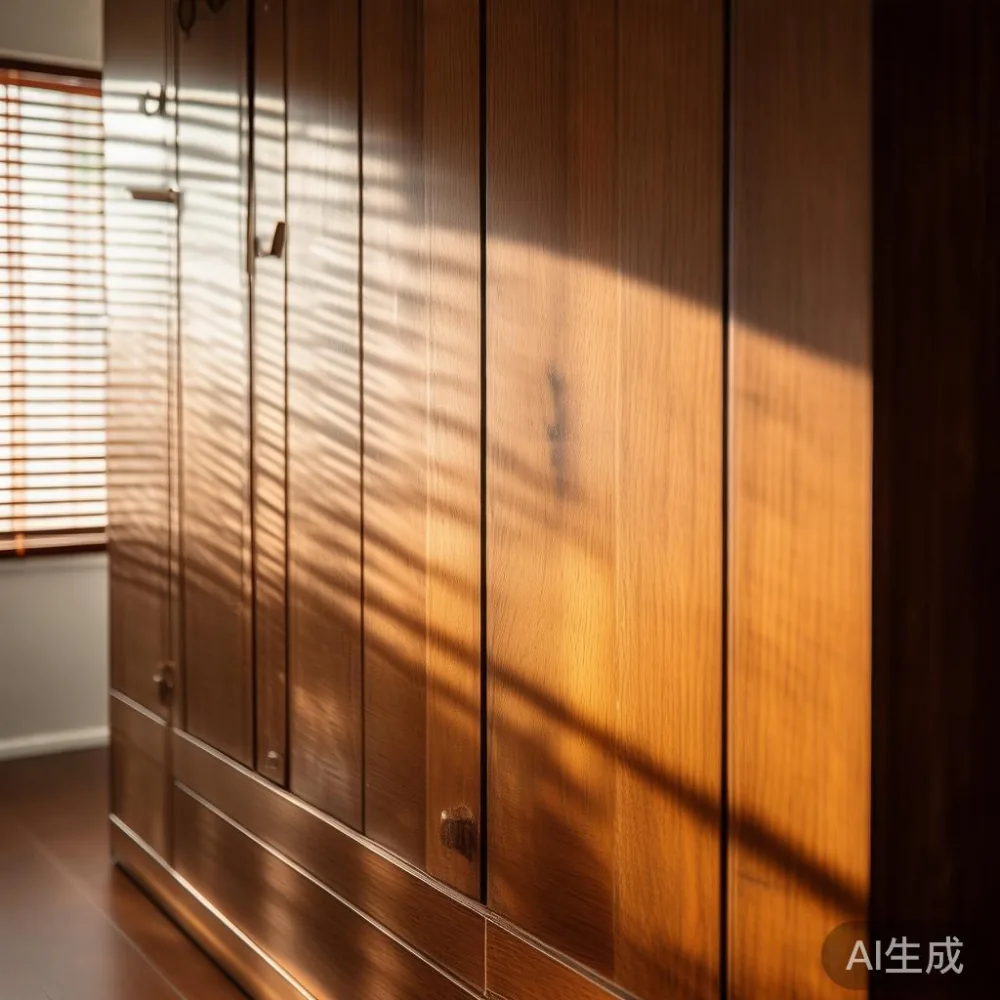
For a wardrobe organization system, the most common failure I see is the door alignment. A typical 60 cm wide solid wood door can move 3 to 5 mm across the seasons, which sounds small until you remember the magnetic catch is only 2 mm deep. The second most common is the bottom panel lifting off the kickplate by 4 to 6 mm, which lets dust collect and, worse, lets the musty corridor air settle on the back of stored clothes. Neither is a warranty issue, but both are easy fixes once you know the cause.
Does a French light luxury wardrobe hold up better in Punggol's weather?
This is a fair question, and the honest answer has two parts. A French light luxury wardrobe built with a proper frame-and-panel construction, where each large panel floats inside a groove rather than being glued edge-to-edge, will absorb Singapore humidity far better than a flat slab glued wardrobe. The panels are literally allowed to move. Italian light luxury wardrobe builders have used this construction for over a century for this reason. Post-modern light luxury designs go further and combine that frame-and-panel joinery with thin 0.6 mm oak or ash veneers over a stable plywood core, which reduces the seasonal movement to under 1.5 mm on a 200 cm tall door.
The second part is finishing. A wardrobe finished with a catalyzed conversion varnish or a hand-rubbed oil-and-wax will resist moisture differently. Waxes darken and patina with humidity cycles, which many Singapore owners actually like because it gives the piece character. Hard lacquers stay bright but can micro-crack at the joints after three or four wet seasons if the underlying wood is not properly acclimatized. Either choice is acceptable; just know what you are buying. When a Foshan maker like MIDHILL finishes a solid wood wardrobe, the panels are typically conditioned in a humidity-controlled room for 7 to 14 days before assembly, which cuts the worst of the in-home movement in the first year.
How wide should my wardrobe be for a 4-room HDB master bedroom?
Measure first, then choose. Most 4-room HDB master bedrooms in estates like Tampines and Bedok give you about 3.0 m to 3.6 m of clear wall once the door swing and air-con ledge are accounted for. A practical wardrobe organization layout for that space uses two 80 cm wide double-door units and one 60 cm wide single-door unit, leaving a 20 cm to 40 cm gap that doubles as a shelf run or a spot for a slim marble table reading nook. The total weight of a solid oak wardrobe in that configuration lands between 180 kg and 260 kg depending on the drawer count, so your floor must bear at least 300 kg per square meter at the footprint. HDB flats handle this easily; older walk-ups may need a quick check with the town council if you are stacking a heavy wardrobe on a timber-floor bedroom.
Corridor access matters as much as room size. The standard HDB corridor is about 1.2 m to 1.4 m wide, and most service lifts in blocks built after 2015 are 1.0 m deep by 1.4 m wide with a 1.0 m door opening. A flat-packed solid wood wardrobe in 4 boxes, each around 25 kg to 35 kg and 180 cm long, will fit. A pre-assembled unit will not. Lifts in some Punggol condos are tighter, around 0.9 m by 1.2 m, which is why more Singapore buyers now order flat-pack with on-site assembly, paying roughly SGD 120 to SGD 220 for two installers to spend 3 to 5 hours in the room. Delivery lead times from a Foshan factory to a Singapore warehouse typically run 28 to 42 days by sea, plus 5 to 10 days for last-mile white-glove delivery.
Will my solid wood bed frame and dining table be affected too?
Yes, but the symptoms are quieter. A solid wood bed frame usually shows humidity stress at the slats first. The 12 to 14 slats that hold your mattress can cup slightly upward at the ends during wet months, which makes the mattress feel uneven. The fix is simple: rotate the slats seasonally or replace them every 4 to 5 years at a cost of SGD 60 to SGD 120. A Japanese bed vs Mid-century modern bed comparison is useful here. A Japanese-style platform bed with low clearance and tight slat spacing hides seasonal movement well, while a Mid-century modern bed with tapered legs and exposed joinery will show a 2 to 3 mm leg-length shift that looks like a wobble but is actually humidity. Tightening the joints twice a year fixes it. A vintage bed frame with original 1960s glue, by contrast, will fail in Singapore within 3 to 5 years because the old hide glue rehydrates in humid air and loses grip; for buyers searching the best Vintage bed for 2026, ask the seller to specify modern PVA or epoxy joints before you commit.
Dining tables live the hardest life in humidity. A 180 cm by 90 cm solid oak dining table in an open-concept condo dining area, even with the air-con on, will take on 4 to 6 mm of seasonal expansion across the width. The breadboard ends that hide the movement on a quality table become important, not decorative. Skip them and the top will crack along the grain within two monsoons. A marble table is the opposite: it does not move, but it does sweat. In a non-air-conditioned dining room, a polished marble surface can condense a thin film of water that rings under wine glasses, so a coaster habit becomes part of the wardrobe organization mindset, even though a marble table is not a wardrobe.
For seating, a solid wood sofa frame holds up better than a MDF or plywood frame over a Singapore decade, but the cushions compress in humidity and need a monthly flip. Cushion covers should be removable and washable; bonded leather peels in 2 to 3 years here, while full-grain leather on a quality frame ages like wood, with a patina that owners usually want to keep.
How to style a European sofa in a Singapore apartment without making humidity worse
Pull the sofa 10 cm to 15 cm off the exterior wall, even if the floor plan suggests pushing it flush. The dew point on a concrete wall behind a wardrobe, sofa, or bed frame in Tampines or Punggol is higher than the dew point on the floor, and that 10 cm gap lets air circulate so the back panel never sits in a damp pocket. Use felt or rubber pads under every leg so the frame can breathe rather than wick moisture from a cold tile floor, and rotate the sofa 180 degrees once a year so the same corner is not always facing the afternoon sun through the balcony door. If you are researching how to style European sofa in apartment layouts, treat the sofa as part of the same humidity-aware setup as your wardrobe organization system, because the same rules apply to every large piece of solid wood furniture in the room.
How to style a Japandi wardrobe in apartment layouts that fight humidity
Japandi design, which is the calm hybrid of Japanese minimalism and Scandinavian warmth, suits Singapore apartments for one practical reason beyond the look. It typically uses lighter species like ash, birch, and pale oak with thinner panels and exposed joinery, which means more visible movement but also easier adjustment. If you are working out how to style Japandi wardrobe in apartment floor plans, leave a 5 cm gap between the wardrobe back and the wall, anchor the unit to the wall with two brackets per side (a 60 cm wide unit needs 2 brackets, an 80 cm wide unit needs 3), and choose units with adjustable shelves on 32 mm pitch so you can rebalance when the wood moves. A Japandi wardrobe with sliding doors is more humidity-tolerant than one with hinged doors because the sliding track allows 4 to 6 mm of panel expansion without binding, while a hinged door needs 3 mm of seasonal clearance to close cleanly. In a corridor-facing bedroom in Bedok, the sliding-door version is the safer pick.
Is a Modern light luxury wardrobe or Italian light luxury wardrobe the better buy for 2026?
For shoppers comparing the best Modern light luxury wardrobe for 2026 against the best Italian light luxury wardrobe for 2026, the answer depends on your tolerance for movement and your air-conditioning hours. A Modern light luxury wardrobe tends to use engineered cores with thin solid wood faces, giving you 1 to 2 mm of seasonal movement, more finish options, and lower shipping weight (a 200 cm tall three-door unit at 90 kg versus a 130 kg solid unit). An Italian light luxury wardrobe tends to use solid wood frames with floating panels, giving you 3 to 5 mm of movement, a richer patina, and a 25 to 30 year service life when properly maintained. For a Singapore condo where the air-con runs 16 to 20 hours a day, either works; for a rental flat where the air-con runs only at night, the engineered Modern style is the lower-stress choice.
If you want a piece that ages gracefully, look at the joint construction before the wood species. Mortise-and-tenon, dovetail, and finger joints all hold through humidity cycles. Staples, brad nails, and butt joints do not. MIDHILL ships wardrobe units with mortise-and-tenon carcases and dovetailed drawers as standard, which is why their 10-year structural warranty covers seasonal joint loosening without a fight. Lifetime refinishing, offered on most of their solid wood ranges, lets you sand and re-oil a wardrobe after 8 to 12 years in Singapore and bring it back to a 90% new look at a typical cost of SGD 280 to SGD 520 per door section.
What about a coffee table and nightstand in the same humidity story?
A solid wood coffee table will cup on the top if you place a cold drink on it during a humid evening, leaving a white ring that sands out easily. Use coasters, rotate the table 90 degrees every season so the grain does not set in one direction, and expect a 1 to 2 mm top movement across the year. A MIDHILL coffee table with a proper breadboard top will hide that movement and still look level. A nightstand beside the bed takes the worst of the room because it sits in the stillest air pocket. Pull it 5 cm from the wall, keep a small silica gel pack inside the drawer, and wipe the drawer runners with a dry microfiber cloth every two weeks. The runners are the first place humidity shows up as a sticky slide.
Can I fix humidity damage myself, or do I need a specialist?
Most humidity symptoms on solid wood are DIY-friendly. A 2 mm gap at the wardrobe door in January means the wood shrank; wait until April when humidity rises again and the gap usually closes. A swollen door in August that rubs the frame can be planed down by 1 mm to 2 mm with a sharp hand plane, a 20 minute job. White rings on a table come out with a damp cloth and an iron on low heat for 10 seconds, then a wipe of matching oil. Sticky drawer runners get a wipedown with a cloth barely dampened with white vinegar, then a dry cloth. The cases that need a specialist are deep cracks longer than 10 cm along the grain, mold on the back panel, or joints that have pulled apart by more than 5 mm. A refinisher in Singapore charges SGD 80 to SGD 150 per hour, and most touch-up jobs take 2 to 4 hours on site.
What is the realistic lifetime of a solid wood wardrobe in Singapore?
With seasonal care, a solid wood wardrobe from a quality maker should give 20 to 30 years of service in Singapore before any structural work is needed. A wardrobe organization system built from engineered panels will give 12 to 18 years. A flat-pack MDF wardrobe will give 6 to 10 years and will start to sag on the hinges in the third or fourth wet season. Refinishing extends the solid wood timeline almost indefinitely; pieces 40 and 50 years old are still in use across Singapore once they have been sanded and re-oiled once or twice. That long service life is the quiet argument for buying solid wood in a humid city: the per-year cost over 25 years often beats the cheaper engineered option, especially when you factor in the 14-day return window and the 10-year structural warranty that come with a properly documented Foshan export.
A simple daily and seasonal routine that actually works
Keep a small dehumidifier or a passive silica gel canister in the wardrobe, especially during the December to February monsoon. Run the bedroom air-con for at least 2 hours before bed to drop room humidity below 60%. Wipe wardrobe bases monthly with a dry cloth. Open wardrobe doors for 15 minutes after a long air-conditioning cycle so trapped moisture escapes. Rotate shelves and drawer contents twice a year so the same wood surface is not always loaded with weight. These five habits, totaling under 30 minutes a month, are the difference between a wardrobe that ages into character and one that ages into complaints. Solid wood rewards owners who treat it as a living material, and Singapore is a kind but demanding teacher.