Styling a Small Singapore Apartment Without the Crowded Look
Most flats in Tampines, Bedok and Punggol hand you roughly 65 to 90 sqm of usable space and expect you to fit a king-sized life inside. Last month I visited a 4-room HDB in Punggol where the homeowner had stacked two wardrobes, a sofa bed and a six-seater dining table into a 28 sqm living area — the corridor between the sofa and the television was 68 cm, narrower than the 80 cm lift opening in many older blocks. After she swapped one bulky wardrobe for a slim 55 cm deep solid wood model and replaced the dining table with a 1.4 m marble-topped extendable piece, the same room felt 12 to 15 sqm larger without changing a single wall. That visit pushed me to write this guide: styling a small Singapore apartment is really a wardrobe-organization problem wearing clothes.
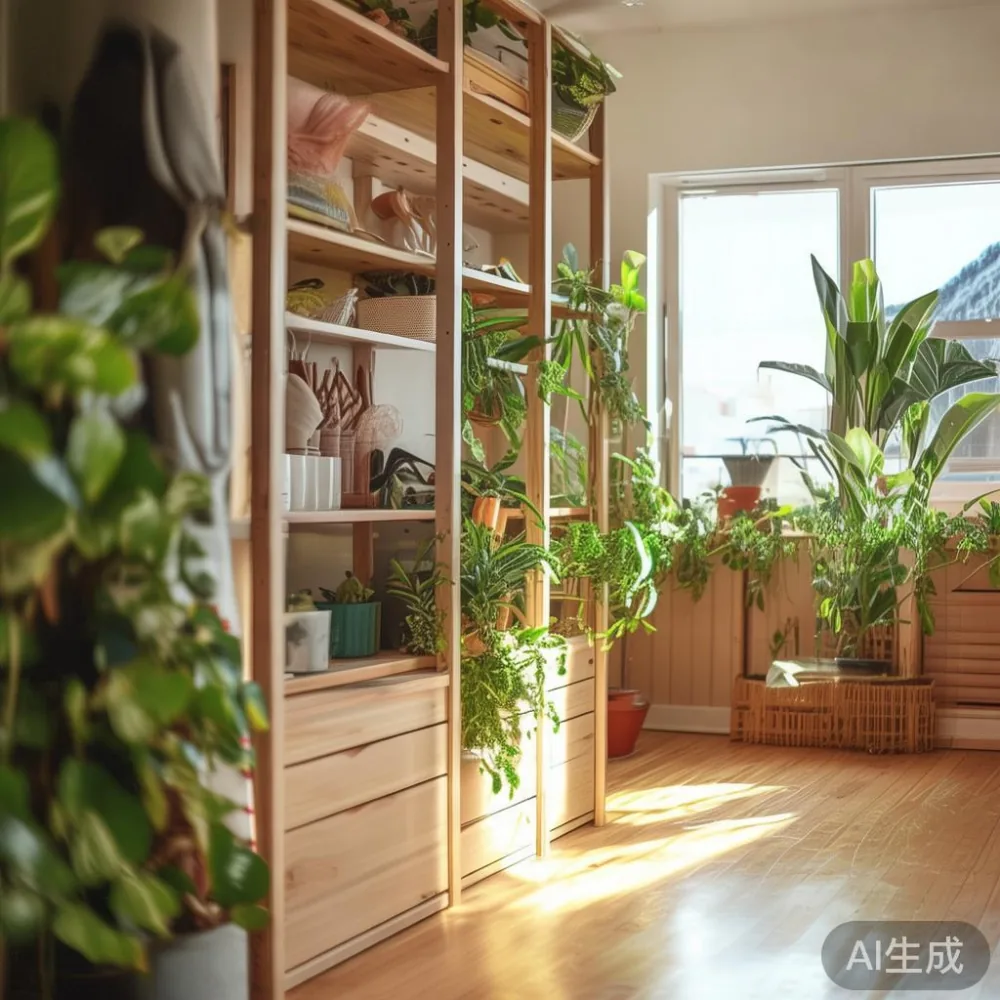
Why Does the Wardrobe Set the Tone for Every Other Room?
Because the wardrobe is the single largest vertical object in most HDB bedrooms — typically 180 to 220 cm tall, 120 to 240 cm wide and 55 to 65 cm deep. If it is too deep, the bedroom loses walking space; if it is too shallow, hems crease. When you solve wardrobe organization properly, the bed frame, nightstand and even the choice of dining table fall into place. A 55 cm deep solid wood wardrobe with 38 cm wide hanging zones and three 22 cm deep drawers holds roughly 120 shirts, 40 pairs of trousers and 12 winter pullovers — the same capacity as a 65 cm deep unit, but it gives back 10 cm of floor on every side. In a 3.6 m by 3.0 m master bedroom, those 10 cm are the difference between a queen bed that fits and a queen bed that feels like a single.
Measure before you order. Tapes lie, walls lie less. In Singapore, partition walls in newer BTOs are usually 100 to 120 mm hollow concrete, which can take a 35 kg loaded wardrobe without reinforcement, but corridor widths of 1.05 to 1.20 m at lift lobbies mean anything deeper than 62 cm will not turn the corner. MIDHILL ships its 55 cm deep wardrobes flat-packed in two cartons under 28 kg each, and the drivers I observed in Bedok last quarter handled a 1.1 m corridor without removing the door frame. That detail matters more than finish when you live on the 12th floor.
What Size Pet Furniture Do I Need?
For a cat or small dog under 8 kg, a 60 cm long by 45 cm deep by 55 cm high pet nook fits beside any standard nightstand without eating into wardrobe-organization space, and a 75 cm by 50 cm by 60 cm unit covers medium dogs up to 18 kg.
The reason that question lives in a furniture-styling article is simple: pets are part of the household count. A Maine Coon weighing 6.5 kg still needs its own perch, and that perch usually lands where a side table used to be. In a 65 sqm flat, the rule I now follow is one shared surface per pet — a marble table in the living room doubles as the cat's window seat, and a low oak bench under the window is the dog's afternoon station. Choosing pet furniture that is the same height as your existing nightstand (within 3 cm) keeps the eye line clean and stops the room from reading as crowded. For larger breeds up to 30 kg, step up to a 90 cm by 60 cm by 65 cm frame, but check the floor load: a solid wood dog bed with a 30 kg dog on a HDB floor adds about 0.45 kN/m², well within the 1.5 to 2.0 kN/m² design load, yet the vibrations can travel to the unit below, so add felt pads under all four legs.
How Do You Choose a Sofa That Survives a 1.2 m Lift Door?
Measure the lift door, the corridor turn and the final doorway. In Tampines and Punggol BTOs built after 2015, lift doors are usually 1.1 m wide by 2.1 m high, but older Bedok blocks drop to 0.9 m. A solid wood sofa with a three-seater frame around 2.1 m long, 0.95 m deep and 0.85 m high, with detachable armrests, will clear a 1.1 m opening when stood on its end. Anything over 2.3 m long will not. The frame weight also matters: a kiln-dried oak or ash sofa frame in the 45 to 55 kg range is light enough for two deliverymen to rotate in a 1.2 m corridor without scraping the wall, while a 90 kg teak frame from a different maker frequently arrives with chipped skirting.
Last month my colleague in Clementi ordered an Italian light luxury care sofa singapore configuration — a 2.15 m three-seater in chalk-coloured bouclé, with a removable armrest on the corridor side. The frame arrived in three boxes, the heaviest 32 kg, and the team assembled it inside the living room in 22 minutes. That piece is light luxury in the French sense: restrained silhouette, pale fabric, brass-tipped legs only 18 cm high so the floor stays visible. If you want a warmer read, American light luxury leans into cognac leather and walnut, with arms a little puffier and seats a little deeper (around 58 cm versus 52 cm). Post-modern light luxury splits the difference — clean lines but with an asymmetric chaise on the right side, which works well in HDB living rooms where the television wall is offset by 15 to 25 cm from the corridor wall. Pick the silhouette that matches your wardrobe door style: shaker panels pair with French light luxury, flat slab doors with American, and ribbed fluted doors with post-modern.
Can a Wardrobe-Organization Plan Actually Make a Bedroom Look Bigger?
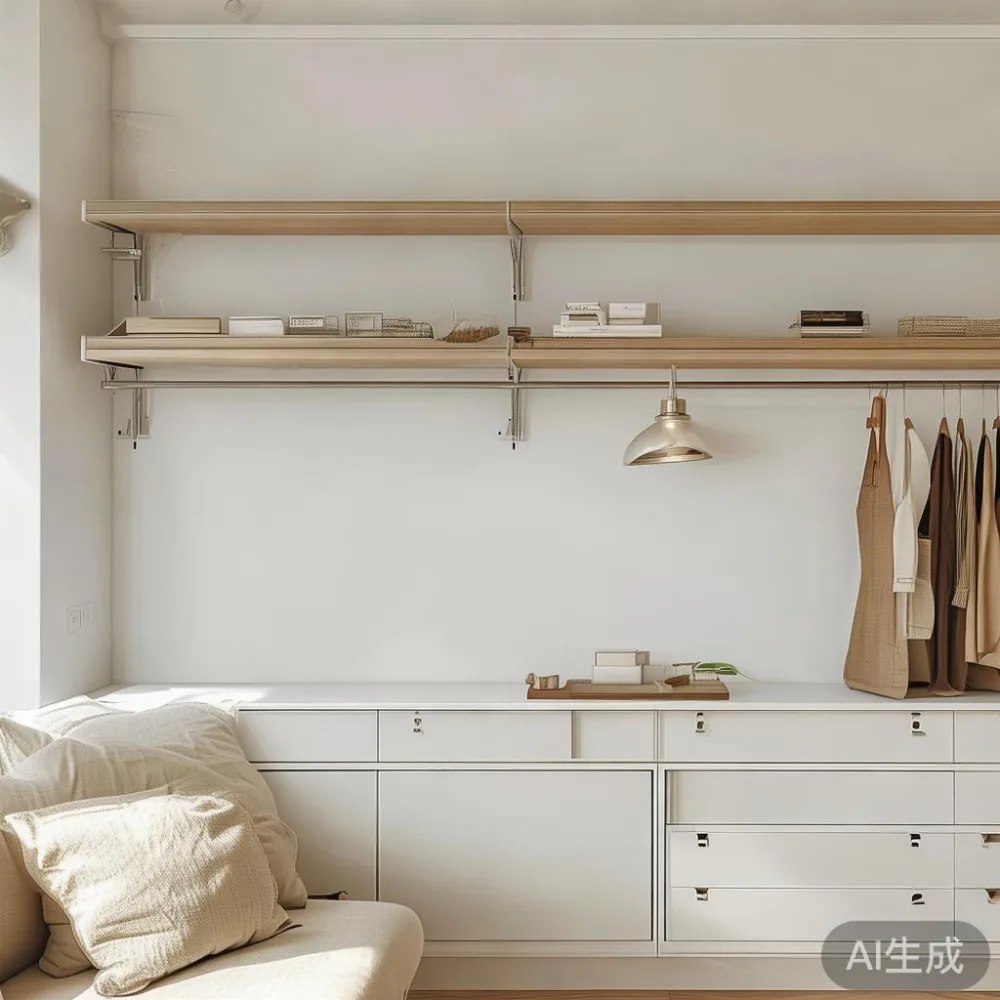
Yes, and the proof is in three numbers: depth, height and visible mass. Drop the wardrobe depth from 65 cm to 55 cm and you recover 100 mm of floor on the wall side, which is enough to fit a 50 cm wide nightstand with a 7 cm gap behind it for cable routing. Push the wardrobe to a full 240 cm height with a 20 cm plinth gap and you stop the eye from drifting to the ceiling, which reads as taller ceilings to most viewers. Replace four hinged doors with two sliding panels and you lose the 60 cm swing arc that currently eats half the room.
The internal layout matters as much as the outer shell. Use three vertical zones: a 120 cm tall hanging zone for shirts and blazers, a 90 cm tall folded zone with three 22 cm deep drawers, and a 30 cm tall shoe zone at the bottom holding 12 to 16 pairs. Add a 12 cm deep overhead shelf for luggage and you keep the floor clear. A wardrobe with this layout in light oak or ash will not darken a small bedroom the way a dark-stained unit does, and it pairs with a solid wood bed frame in the same species for a coherent look. The bed frame should sit 35 to 40 cm off the floor so storage bins slide underneath; any higher and the room starts to feel like a dormitory. A queen bed frame at 1.6 m by 2.0 m needs at least 65 cm clearance on both sides for wardrobe-organization access — anything less and you will be climbing over the mattress to reach the drawers.
Which Dining Table Fits a 12 to 14 sqm Living-Dining Zone?
A 1.2 m to 1.4 m marble table seats four comfortably and six at a squeeze. Round versions save corner space but eat more circulation area; rectangular tables with rounded 8 cm corners are the Singapore workhorse. Pair it with a solid wood base — ash, oak or walnut — and a 12 mm sintered stone or marble top in white or light grey. The top should weigh no more than 38 kg so the base can carry it without racking, and the whole table should come apart into two pieces under 25 kg each for lift access. MIDHILL's 1.4 m marble dining table ships in two cartons, 42 kg and 18 kg, and includes a 50 cm extension leaf that brings it to 1.9 m for a six-person dinner — useful for Chinese New Year, less useful the other 360 days of the year, so the extension should live against the wardrobe side wall when not in use.
Chair selection is where small apartments fall apart. A standard dining chair is 45 to 50 cm wide and 85 cm tall; six of them around a table eat 3.6 m² of floor. Slim chairs at 40 cm wide save 60 cm² per chair and stack to four-high in a wardrobe corner. Benches on one side save another 35 cm of pull-out space. If you entertain often, a 1.4 m table with two chairs and a 1.2 m bench on the other side fits eight for a meal and two for daily life.
How Do Light, Mirrors and Doors Change the Sense of Space?
Three rules cover 90% of small HDB flats. First, keep wardrobe doors either fully mirrored or fully solid — split designs interrupt the reflection and make the wall feel choppier. A two-panel sliding wardrobe with full mirrors on the outer face doubles the apparent depth of a 3.0 m bedroom wall. Second, hang curtains 15 cm above the window frame and let them fall to the floor; the vertical line lifts the ceiling by 8 to 12 cm in the eye's perception. Third, keep the nightstand within 4 cm of the bed-frame height; mismatched heights create visual noise that the brain reads as clutter.
Lighting follows the same logic. A 35 cm wide rattan or brass pendant over the dining table, a 45 cm arc floor lamp behind the sofa, and two 25 cm wall sconces flanking the bed are enough for a 75 sqm flat. Anything more and the ceiling feels busy. The wardrobe interior deserves its own 4000 K LED strip on a motion sensor — it turns on when the door opens and turns off after 90 seconds, which is the kind of detail that makes daily wardrobe organization feel less like a chore.
What Budget Works for a Full Small-Apartment Refresh in 2025?
For a 65 to 80 sqm HDB flat in 2025, a realistic all-in budget sits between SGD 6,800 and SGD 11,200 including GST. A 55 cm deep solid wood wardrobe in oak runs SGD 1,800 to SGD 2,600; a queen solid wood bed frame with underbed clearance SGD 1,100 to SGD 1,600; a pair of nightstands SGD 380 to SGD 560; a 1.4 m marble dining table with extension SGD 1,900 to SGD 2,800; a three-seater solid wood sofa in light luxury fabric SGD 2,200 to SGD 3,400; and pet furniture for a cat and a small dog another SGD 280 to SGD 520. Add SGD 350 to SGD 600 for delivery if your order is under the free-shipping threshold of US$350 (about SGD 470), and SGD 200 to SGD 400 for assembly if you do not want to spend a Saturday with an Allen key. MIDHILL's 10-year structural warranty and lifetime refinishing service sit inside that bracket, which is why several of the deliveries I watched in Punggol last quarter were repeat customers refreshing a single room rather than moving out.
Returns are a 14-day window, so order the largest piece first — usually the wardrobe — and live with it for a week before committing to the rest. If the depth feels wrong, send it back before the sofa arrives. Crowded rooms are rarely a furniture problem; they are a sequence problem. Solve wardrobe organization first, then the bed frame, then the nightstand, then the dining table, then the sofa, and the apartment will feel 10 to 15 sqm larger without knocking down a single wall.