Solid Wood Furniture Pricing: Timber, Joinery, Size, Finish and Delivery
Solid wood furniture can cost SGD 600 for a dining table, SGD 1,200 for a wardrobe and SGD 2,800 for a bed frame without either being expensive or poorly made. The real price drivers are more specific: the species and grade of timber, the dimensions of each component, the joinery, the surface finish, the hardware, the amount of custom work, and the cost of getting the finished piece through a Singapore lift and corridor.
That matters for anyone furnishing an HDB flat in Tampines, a Bedok condo or a compact Punggol home. A handsome wardrobe may look straightforward in a showroom, yet a 220 cm tall carcass with adjustable internal compartments requires more material, more precise machining and a more careful delivery plan than a 180 cm model. The same principle applies to a solid wood sofa, bed frame, dining table, nightstand and marble table: visible elegance is only one part of the quotation.
MIDHILL has made solid wood furniture since 2008 and exports to more than 15 countries. Its 10-year structural warranty and lifetime refinishing policy are useful indicators of how a manufacturer defines durability. They do not, by themselves, explain every cost line. This article looks at the factors that actually move the price, including the practical differences between mass production and configured furniture.
What determines the price of solid wood furniture?
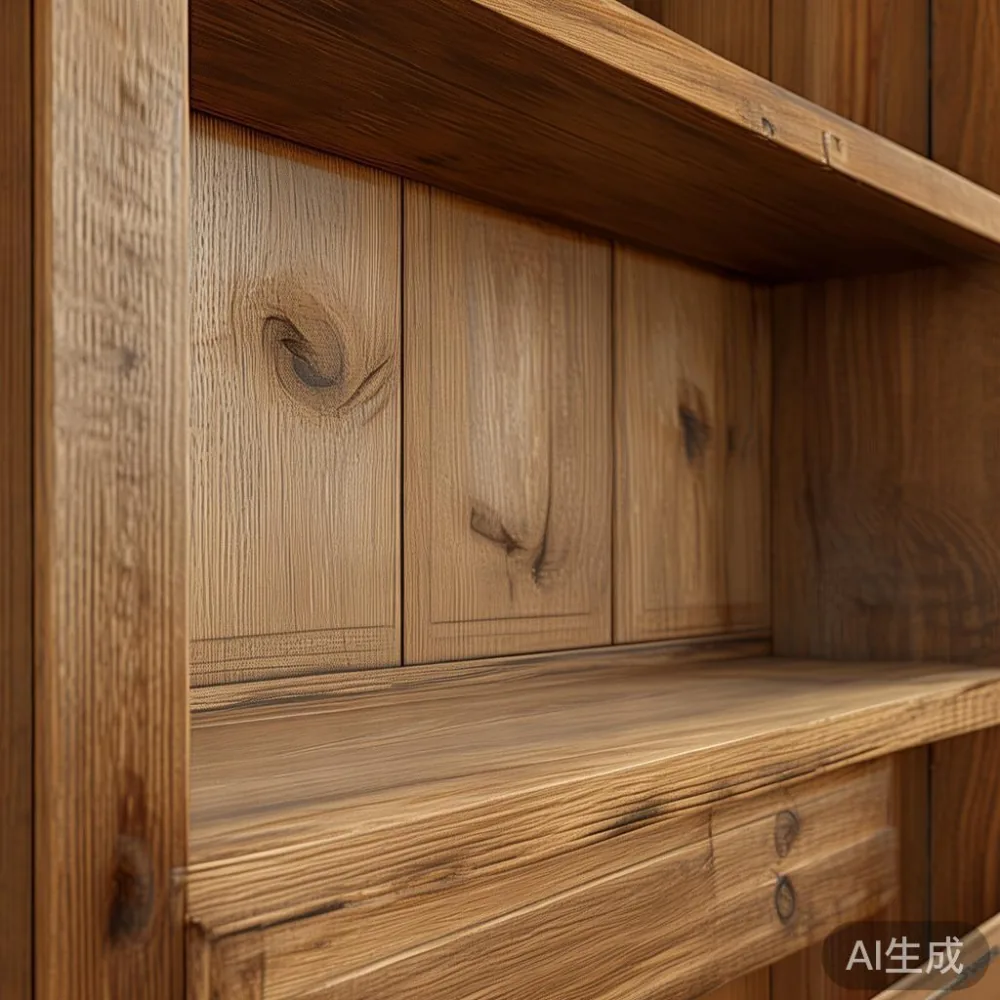
Timber is usually the first cost driver, but “solid wood” covers several species with very different prices. Rubberwood, pine and other lower-cost hardwoods may be used for concealed rails, drawer components or less prominent frames. Oak, ash, beech, walnut and similar timbers command different rates according to grade, moisture treatment, origin, yield and market demand.
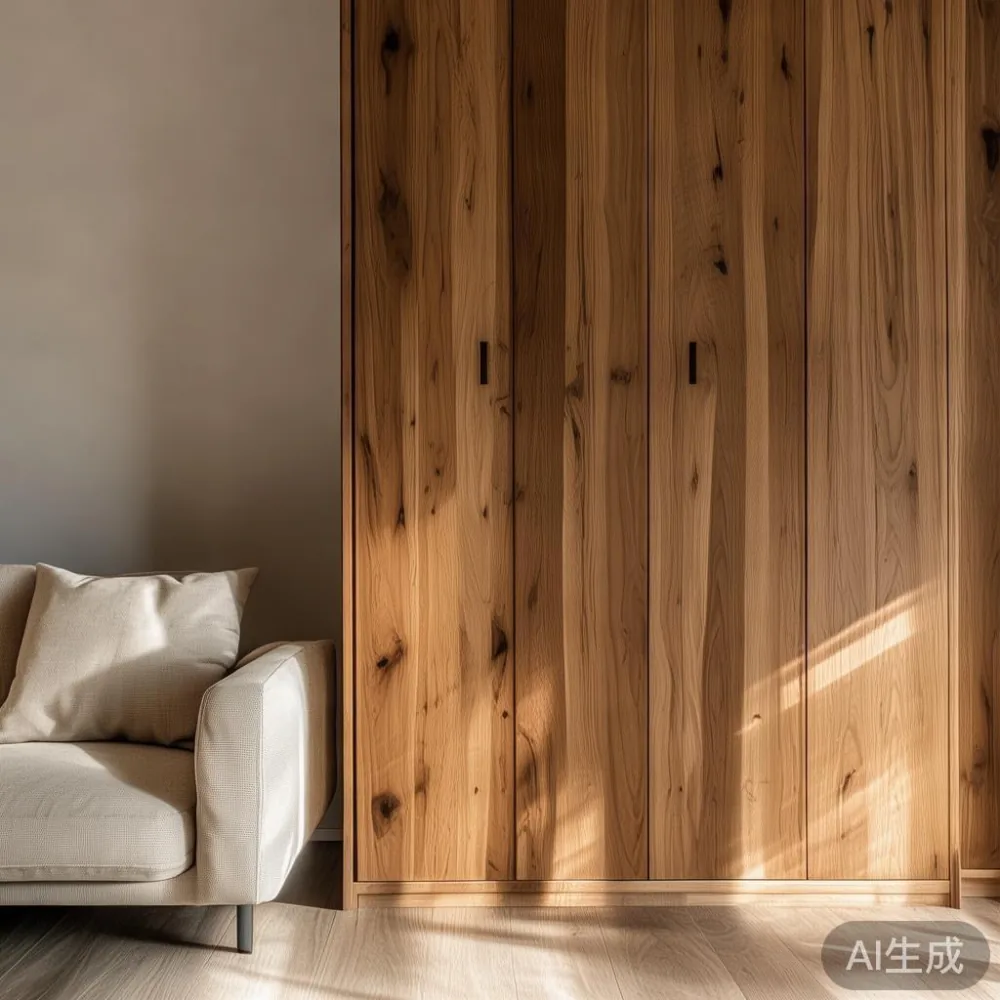
Grade affects appearance rather than strength alone. A board selected for a broad dining table top needs to account for colour variation, knots, sapwood and grain movement. For wardrobe organization, the visible surfaces matter too, especially if doors, drawer fronts and interior shelving are expected to match. Expect a clear difference between a standard board selection and a tightly controlled appearance grade.
Thickness is another easy-to-miss factor. Moving from an 18 mm side panel to a 25 mm top may increase the material requirement by about 39%. The increase in price is rarely proportional because machining, finishing, packaging and transport also take longer. It is worth asking for the actual section dimensions of a piece, not only its dimensions.
Yield matters just as much. A large tree does not automatically produce a large flawless board. Timber defects, drying losses and cutting patterns affect how much usable material can be extracted. That is why two dining tables with the same 200 cm length and 100 cm width can have very different prices if one uses wider boards with fewer joints.
How much do joinery and construction add to a furniture price?
Joinery determines how long a piece should remain rigid and how it behaves when Singapore’s humidity changes. Dowelled and glued joints, mortise-and-tenon joints, bridle joints, pocket screws and mechanical fixings all have different labour requirements. The visible joint is not the whole story; the hidden interfaces determine whether a dining table stays steady and a bed frame does not develop a wobble.
Last month I visited a Singapore supplier’s sample area and compared two wardrobes that looked nearly identical from 3 metres away. One had a 20 mm top, a 16 mm carcass and dowelled structural rails. The other had a 25 mm top, 18 mm sides and more demanding corner connections. The heavier example needed 2 people and roughly 35 minutes to unpack because its panels were larger and more rigid. Its quoted price was about SGD 380 higher, with most of that difference explained by material and fabrication rather than styling.
Hardware is another factor. A basic wardrobe may use standard hinges and zinc-alloy handles. A configured system may use full-extension soft-close hinges, 45 mm drawer runners, brushed brass pulls or recessed channels. These components can add SGD 80 to SGD 500 to a wardrobe, depending on the number of doors, drawers and moving parts. A 10-year structural warranty may apply to the timber frame rather than every spring, rail or coating, so the warranty schedule should be read alongside the quotation.
Back panels deserve attention too. A thin 6 mm inset panel may reduce material use, while a thicker 9 mm panel or framed back adds weight and resistance to racking. That distinction can matter in a narrow HDB bedroom where a wardrobe has to stand independently rather than be fixed tightly against a wall.
Which wardrobe organization options change the cost?
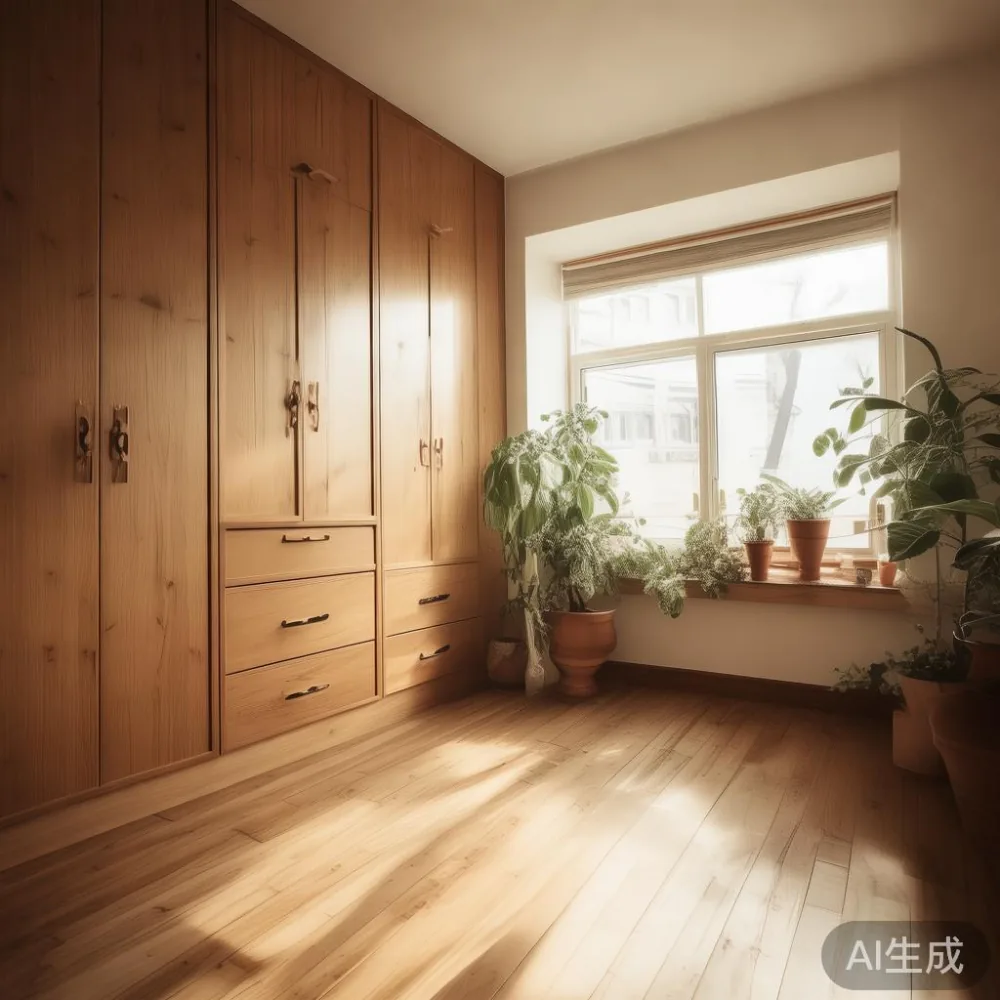
Wardrobe organization is more than a set of shelves. The width, height and internal layout determine the number of panels, rails, shelves, drawer boxes, handles and connectors. A 150 cm wardrobe with one hanging zone may need fewer components than a 150 cm wardrobe with a hanging zone, 6 shelves, 3 drawers and a pull-out trouser rack.
For wardrobe organization in an HDB flat, a 120 cm wide unit can still work well if the room is narrow. It may contain a 90 cm hanging section for garments up to 135 cm long, a 30 cm shelf-and-drawer section, 5 shelves and 2 drawers. A 180 cm unit with two 90 cm hanging sections may offer more capacity but adds a centre divider, additional rails and more finishing around the connections.
Custom internal fittings carry separate labour costs. Examples include a 35 cm pull-out hanging rack, a 12 cm jewellery tray, a 15 cm shoe rack and a 25 cm bag shelf. A fitted wardrobe may cost from around SGD 1,500 before premium timber, hardware and installation are included. A fully configured wardrobe with premium drawers and lighting can exceed SGD 4,000.
Doors affect both labour and use of space. Sliding doors need tracks, rollers and overlapping panels; they usually save approximately 5 cm to 10 cm of swing clearance. Hinged doors need fewer moving parts but require about 55 cm to 60 cm of clear space for a single 60 cm door to open. That measurement should be taken from the finished wall, skirting and any projecting sockets, not from a rough floor plan.
How should I compare a solid wood dining table, bed frame and nightstand?
Compare each piece by its material schedule and usable dimensions. A 200 cm solid wood dining table with 4 legs and a 25 mm top may retail from SGD 1,600, while a 240 cm version with a wider top, more complex supports and book-matched boards may be closer to SGD 3,200. Length increases the top area, but base design determines whether the additional timber adds value or merely adds weight.
For a bed frame, the price may rise with the headboard, not just the mattress size. A queen bed frame at 152 cm by 191 cm could begin around SGD 1,100 with a simple platform structure. A 180 cm king frame with a taller upholstered or timber headboard, thicker rails and more decorative detailing may reach SGD 2,500 or more. Ask whether the slats are included, how many there are and their spacing. A frame supported by 13 or 14 slats should not be evaluated in the same way as one with 3 centre boards.
A nightstand offers a useful lesson in scale. A compact unit measuring 45 cm wide, 40 cm high and 35 cm deep may cost SGD 350 to SGD 650. A larger 55 cm unit with 2 drawers, a lower shelf and premium hardware may cost SGD 750 to SGD 1,100. Daily use and drawer travel are more informative than the number of visible decorative features.
These comparisons also apply to seating. A solid wood sofa combines a timber frame with cushions, upholstery and either springs or webbing. Its price may range from SGD 1,600 to SGD 5,000, depending heavily on the upholstered specification. If you are considering how to style European sofa in bedroom, measure the clearance before focusing on fabric colour: a sofa 210 cm wide and 90 cm deep may need 15 cm on each side for a balanced arrangement.
How do French light luxury and American light luxury affect the price?
Style affects the bill through materials, proportions and construction—not through a vague label. French light luxury often leans on curved profiles, restrained profiles, pale finishes, upholstered touchpoints and carefully detailed edges. American light luxury tends towards generous scale, substantial timber sections and familiar silhouettes with a polished finish. Both approaches can be executed with inexpensive boards, but the production intent still shapes labour and cost.
French light luxury may be visible in a 25 mm dining table with a shaped apron, a wardrobe with arched doors or a bed frame with a softly detailed headboard. Post-modern light luxury may use asymmetry, mixed profiles and geometric accents. A 180 cm post-modern dining table with a sculpted pedestal can require more machining than a simple 4-leg table, even if the total timber volume is similar.
Marketing wording should not be the basis of a purchase. A search for best European light luxury furniture or luxury European light luxury furniture can return broad catalogues that mix solid timber, veneer, MDF and engineered boards. Ask each supplier to identify the material on every visible face. A page described as solid wood should not use MDF in a large wardrobe back, drawer bottom or decorative panel.
Marble is a separate material with a separate cost structure. A marble table may use a 20 mm or 30 mm slab, with the price affected by pattern, origin, thickness, edge treatment and reinforcement. A dining table with a marble top may therefore cost from SGD 2,200 to more than SGD 6,000, while the timber base may add another SGD 800 to SGD 2,500.
What should a light-luxury buyer check before paying for delivery?
Look at the piece at 100 cm, 50 cm and within 30 cm. At 100 cm, the silhouette and proportions become clear. At 50 cm, joints, grain, edge treatment and hardware can be compared. Within 30 cm, inspect filled knots, scratches, colour differences, uneven gaps and visible filler. A controlled grade will not be perfectly uniform, but defects should be positioned thoughtfully rather than appearing randomly across a prominent face.
Ask for the full specification: timber species, board thickness, panel dimensions, finish type, hardware range, drawer construction, back-panel material, warranty coverage and expected delivery time. A product description is less useful than a dimensioned material schedule.
Delivery is especially important in Singapore. Standard HDB lift doors are commonly around 80 cm to 90 cm wide and 200 cm to 210 cm high, though each block differs. Corridor turns and stair landings can be more restrictive. A wardrobe packed for flat-pack delivery may fit, whereas an assembled 220 cm unit may not. Check the packed carton length, width and diagonal, not only the assembled furniture.
For larger pieces, MIDHILL can coordinate delivery to the unit level and the furniture can be configured around access requirements. Delivery normally takes 15 to 30 days for standard Singapore orders and 30 to 60 days for custom or premium specifications, depending on production and shipping schedules. GST is normally shown separately at checkout for Singapore purchases, and free shipping applies above US$350 on qualifying orders under MIDHILL’s stated delivery policy.
Compact layouts deserve the same precision. In a Tampines 3-room flat, a 180 cm wardrobe may occupy roughly 18% of a 3.2 m bedroom wall. In a Punggol studio, a 120 cm lift-up unit could preserve more floor area, but its installation may require more wall fixing. In a Bedok condo, a wider hallway may support a larger wardrobe carton with fewer turns.
What if I am comparing for sale Post-modern furniture with custom pieces?
Compare configuration, not just catalogue price. Stock pieces can be economical when they fit the available space and include the required features. Custom pieces cost more because dimensions, timber selection and fittings can be adjusted, but they may reduce waste and avoid compromises in wardrobe organization.
Start with 5 measurements: the room width, ceiling height, door width, lift dimensions and the route from the lift to the room. Then list 3 non-negotiable features, such as full-extension drawers, a 135 cm hanging zone or a particular timber grade. Compare quotations that meet the same specification. If one price is SGD 900 lower, find out whether it uses a different board thickness, back panel, finish or hinge range.
Some design references may also appear in secondary spaces. A Modern light luxury TV console may share the timber and finish language of the main pieces, although its function and internal cable management are different. Japandi for guest room planning may favour restrained lines, pale timber and removable furniture. Keep the core wardrobe organization brief if the room is small: one full-length hanging zone, 4 shelves and 1 drawer can occupy a 120 cm carcass without overwhelming a guest space.
Finally, check the service terms before paying. A 14-day return period should be compared with the condition in which the furniture arrives. Custom wardrobes may have different return conditions because of made-to-order dimensions. MIDHILL’s 10-year structural warranty and lifetime refinishing policy should be reviewed for what is covered, what is excluded and whether refinishing is in-house or charged separately.
The price of solid wood furniture is therefore a sum of decisions: species, grade, thickness, joinery, hardware, finish, configuration and access. Once those decisions are visible, a higher quotation can be assessed fairly. Look beyond the style label, measure the room, read the material schedule and compare like-for-like specifications. That is how a design aspiration becomes a durable piece suited to a Singapore home rather than merely an expensive silhouette.