Singapore Wardrobe Organization: A Buyer’s Plan for Every Centimetre
Practical wardrobe planning for Singapore HDBs and condos, with clear dimensions, costs, storage layouts, delivery advice and humidity tips.
- How do I plan wardrobe organization for a small HDB bedroom?
- How wide and deep should a Singapore wardrobe be?
- How much hanging space do I need for everyday clothes?
- Which wardrobe storage layout works best in an HDB or condo?
- Do humidity and Singapore weather affect solid wood wardrobe parts?
- How much does wardrobe delivery and assembly cost in Singapore?
- Which local furniture districts and suppliers should I compare before ordering?
- How can I keep durable furniture and clothing organised after installation?
- What mistakes should I avoid when ordering a wardrobe in Singapore?
How do I plan wardrobe organization for a small HDB bedroom?
Measure before choosing a layout
Match the layout to daily routines
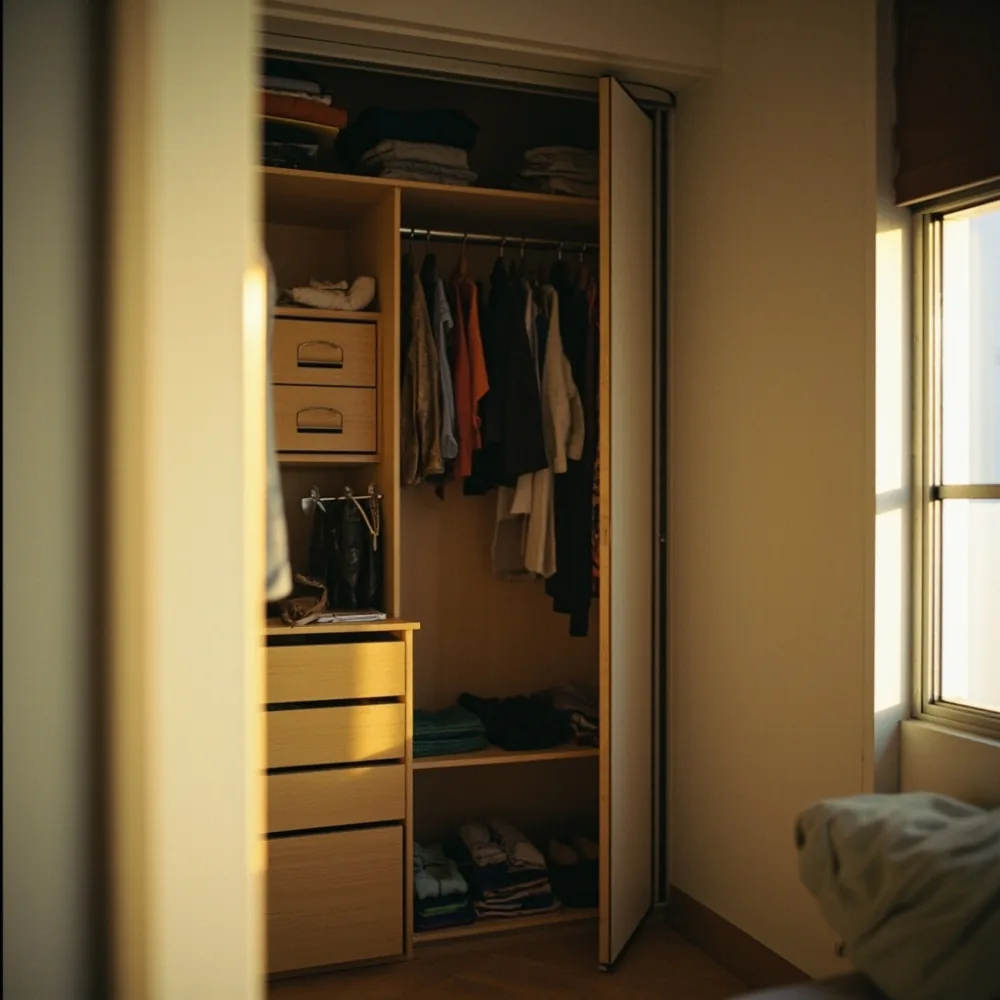
I start by measuring the room, not browsing wardrobes. Record the ceiling height, skirting, window or radiator position, door swing, and the space needed to open drawers or stand at the dressing mirror. In a typical HDB bedroom, the usable wall may be only 180-240 cm wide, so a 200 cm wide wardrobe can already dominate the room.
Decide what must live inside before deciding on shelves. Clothes hanging full length need roughly 145-150 cm from floor to top rail; shirts and folded items need less. A practical arrangement is one long hanging zone, one double-fold zone and a lower drawer or basket section. Keep the most-used items between hip and shoulder height.
- Leave at least 60 cm in front of drawers where possible.
- Allow 90 cm beside a wardrobe when two people need to pass.
- Use the room corners, but check sockets, air-conditioner ducts and window openings.
- Photograph the wall and floor before ordering a made-to-measure design.
For a compact bedroom, small space furniture should mean useful clearances and closed storage, not tiny compartments that create clutter. A 180-220 cm wide wardrobe may suit an HDB room, while a condo bedroom with built-in alcoves can support a deeper custom layout.
How wide and deep should a Singapore wardrobe be?
Common dimensions
Depth and clearance trade-offs
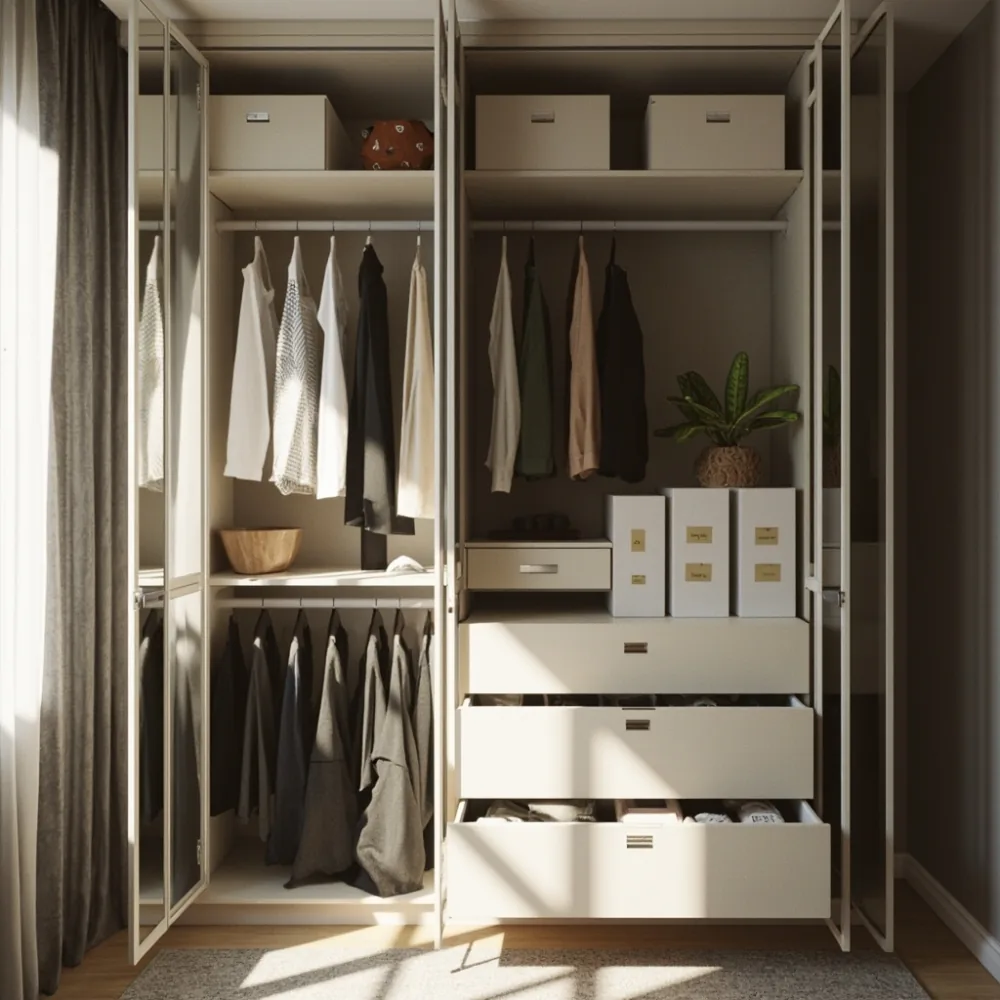
The usual standalone wardrobe is 180-240 cm wide, 55-65 cm deep and 200-240 cm high. Depth is the detail buyers often miss. Hangers project about 50-55 cm, while drawers and folded shelving need comfortable access. A 60 cm depth is a sensible starting point for one person; 65 cm gives shirts and jackets more room without making the unit look bulky.
| Wardrobe type | Typical size | Best use | Indicative Singapore price |
|---|---|---|---|
| Sliding-door unit | 200 × 60 × 220 cm | HDB bedroom with limited floor clearance | SGD 700-1,500 |
| Hinged-door unit | 180 × 60 × 210 cm | Condo bedroom and compact HDB room | SGD 900-1,900 |
| Walk-in section | 240-300 cm wide, 65 cm deep | Larger condo or retrofit dressing area | SGD 2,500-8,000+ |
| Custom fitted wardrobe | Room-specific | Irregular walls, alcoves and integrated storage | SGD 3,000-12,000+ |
Prices vary with veneer, carcass, hardware, mirror fronts and installation. Online flat-pack packages can look cheaper, but a local carpenter may be more useful when the wall is uneven. I compare the final installed quotation, including handles, rails, shelves, delivery and tax, rather than the advertised starting price.
Check that a sliding system has enough internal width for the rail and shelves. Some attractive fronts conceal a narrow compartment. Ask the seller to show an internal drawing and state the usable hanging width in centimetres.
How much hanging space do I need for everyday clothes?
Rail height by garment
Planning for a weekly routine
For one adult who wears office clothes, I budget about 100-120 cm of hanging width for frequently worn shirts, trousers and jackets. Add 70-90 cm for longer dresses, coats or gowns. A rail height of 150 cm works for most adult garments, but 170 cm is better for long dresses. Children’s clothes need shorter rails and grouped sections so they are not mixed with adult workwear.
In a two-person wardrobe, one section might be 100 cm for one person and 80 cm for the other, rather than splitting the width mechanically down the middle. A double rail can increase capacity, but it reduces the height available for shelves. I prefer a single upper rail and a lower rail for casual clothes, because shirts stay easier to inspect.
- Short rail: 90-110 cm for folded trousers, skirts and shirts.
- Long rail: 145-150 cm for dresses, coats and full-length trousers.
- Double rail: about 90-100 cm per rail, subject to the frame height.
Use the top zone for seasonal or infrequently worn items, not for towels that are needed every morning. Label shelves by category and keep a small overflow basket for items that do not fold neatly.
Which wardrobe storage layout works best in an HDB or condo?
Open, closed or sliding fronts
How to organise the inside
Sliding doors suit HDB bedrooms where the door opens into a narrow circulation route. They save about 30-40 cm compared with hinged doors, although the mechanism and track need cleaning. Hinged doors are easier to inspect and more common in condos, especially where a dressing area has space to open the front fully.
I use a top shelf for blankets and spare bedding, a middle zone for folded knitwear, and a lower drawer for underwear, belts and accessories. If the wardrobe contains work clothes, place the most used rail between 100 and 170 cm above the floor. Put shoes in a separate low rack rather than stacking them under hanging garments.
| Storage item | Useful compartment | Recommended height or depth | What I avoid |
|---|---|---|---|
| Long dresses | Upper hanging rail | 150-170 cm clear height | Cramming them beside shirts |
| Folded clothes | Shelves or drawers | 28-35 cm clear height | Overstacking unstable piles |
| Shoes | Bottom rack | 20-35 cm high | Blocking the drawer mechanism |
| Accessories | Drawers and dividers | 12-20 cm deep | Loose items in one deep basket |
For a small HDB bedroom, closed fronts reduce visual noise. For a condo, an open wardrobe can make daily clothes easier to reach, but dust control becomes more important. Use a mix: closed doors for storage, open shelving only where you can wipe it regularly.
Do humidity and Singapore weather affect solid wood wardrobe parts?
Materials that suit a humid climate
Protection during delivery
Humidity does not automatically ruin a wardrobe, but unfinished or poorly sealed wood can swell, stain or develop mould at joints and edges. Singapore’s year-round conditions make stable finishes, good ventilation and sensible storage more important than fear of solid wood furniture. I would not place damp clothes directly against wooden panels, and I would avoid a wardrobe against an exterior wall if condensation is visible.
When checking a product, ask whether the finish is sealed on all faces, including the back and internal edges. A lacquered, laminated or properly finished surface is easier to maintain than bare MDF. Veneer can be durable, but its appearance varies by batch; solid wood, engineered board and MDF each have different movement characteristics.
- Keep at least 5-10 cm of ventilation space where practical.
- Use desiccant packets in less-used closed sections.
- Wipe spills promptly with a dry cloth.
- Do not install a wardrobe until the room is reasonably dry and painted.
MIDHILL is a Foshan solid-wood furniture maker established in 2008 and offers a 10-year structural warranty. That is useful information when comparing construction, but I would still check the local distributor’s finish, measurements and warranty terms.
How much does wardrobe delivery and assembly cost in Singapore?
What changes the quotation
Delivery timing
For a flat-pack wardrobe, delivery within Singapore may cost SGD 30-80 before assembly. Hinged or custom furniture commonly adds SGD 100-400 for delivery, carrying upstairs and installation. Lift access, carrying distance and narrow HDB corridors matter more than the distance from the supplier’s warehouse.
| Scenario | Likely delivery timeframe | Indicative installed cost | Buyer question |
|---|---|---|---|
| Ready-made flat-pack unit | 3-7 working days after payment | SGD 250-700 total | Does the price include tools and assembly? |
| Local made-to-measure wardrobe | 2-6 weeks | SGD 1,200-4,500 | Is the site measurement included? |
| Custom or imported furniture | 6-12 weeks | SGD 3,000-12,000+ | What happens if a panel is damaged in transit? |
I confirm whether the supplier delivers to the block lobby or directly to the unit, and whether the mover must remove the wardrobe packaging. For HDB homes, measure the lift door and stair landing. For older walk-ups, a delivery that is cheap at the curb can become expensive when two people carry a 90 kg wardrobe up several flights.
Ask for a delivery window rather than a vague “next week”. Inspect panels and hardware before the crew leaves. Photograph any scratches and record the assembly completion in the invoice or warranty document.
Which local furniture districts and suppliers should I compare before ordering?
Where to see real samples
How to compare quotations
Singapore buyers often see wardrobe packages online, but showing an actual sample is more useful. I would compare quotations from a local shop, an online specialist and a carpenter, then check the specification sheet. If the wardrobe includes solid wood furniture rather than only engineered panels, confirm the species, finish thickness and structural warranty separately.
Some shoppers visit furniture showrooms in the East or around the city, while others search online and arrange a video consultation. Delivery districts should be quoted separately: a supplier may have lower rates to new condo developments but higher costs to older HDB blocks in Jurong, Woodlands, Yishun, Toa Payoh or Tampines.
Bring a floor plan, ceiling measurements and photographs of skirting and door openings. Ask each supplier to mark the hinge swing, drawer extension and rail height on the plan. Compare like-for-like specifications, including number of shelves, hanging width, drawer depth, handles, mirror, soft-close hinges and wall fixings.
- Check reviews that mention punctual delivery and after-sales support.
- Confirm whether custom changes increase the lead time.
- Request spare shelf pins, runners and door fittings where available.
- Keep one sample, receipt and warranty copy with the measurements.
A lower quotation can be reasonable if the panel and hardware specifications are clear. A higher quotation can also be poor value if the design has shallow drawers or no proper hanging clearance. I judge the fit and service, not just the headline price.
How can I keep durable furniture and clothing organised after installation?
A weekly reset routine
Long-term maintenance
I use a simple rule: return clothes to one category, keep the floor-level area clear and review the wardrobe every Sunday. Laundry that has been sitting for several days should go into a basket rather than back onto a shelf. This prevents a temporary clothes pile from becoming permanent storage pressure.
For durable furniture, clean the rails with a dry cloth and check drawer runners every few months. Avoid spraying cleaner directly onto hinges, mirror glass or lacquered surfaces. Wood near the air-conditioner may dry faster than the rest of the room, so inspect for movement at the toe-kick and corners.
A small fabric box inside a drawer can separate underwear from shirts, while transparent boxes make seasonal items visible. Keep one emergency bag with a change of clothes, charger and basic medication outside the wardrobe; it is useful when the main drawer is being reorganised.
After one month, remove anything unused. A wardrobe is working when the most-worn clothing is reachable and the rest has a defined place. That is more useful than buying more compartments after the problem has already started.
What mistakes should I avoid when ordering a wardrobe in Singapore?
Measurements that are easy to miss
Questions to ask before payment
The most common mistake is measuring only the wall. I also measure the skirting, ceiling fan, electrical points and the path from the lift. A wardrobe that fits the wall may not open, slide or be carried into the room. Door handles, balcony doors and nearby furniture can change the usable width dramatically.
Another mistake is treating the internal dimensions as optional. A 60 cm deep unit can be comfortable for shirts but tight for folded jeans and shoes. Ask for clear internal measurements and a photograph of the installed section if the design is customised.
I also avoid paying a deposit before the supplier confirms the finish, colour direction, hardware range and estimated installation date. For custom furniture, get the final drawing approved in writing. A 10-year structural warranty, where offered, covers the frame under its stated conditions; it may not cover water damage, accidental impact or cosmetic wear.
Finally, check the cancellation policy. Made-to-measure work is less flexible than a ready-made unit, so a measured plan and clear agreement are worth spending time on before the order is placed.
Frequently asked questions
Should I choose sliding or hinged doors for an HDB bedroom?
Sliding doors are useful when the room has limited clearance because they need about 30-40 cm less front space. Hinged doors are easier to inspect and maintain, but require room for the door to open. Compare the internal layout and track quality, not only the exterior appearance.
Questions about sizing, fabric or delivery?
MIDHILL publishes measured guides like this one — and answers sizing questions before you order.
See the collection