What to Check Before Buying a Sofa You Cannot Sit On
A sofa should offer more than a polished silhouette. Before buying one, measure the room, the lift, the corridor and the sofa itself, then test the seat with your household routine in mind. In Singapore, a model that looks generous in a show room can be difficult to manoeuvre into a Tampines HDB flat, tight against a Bedok condo wall or impossible to rotate around a Punggol landing.

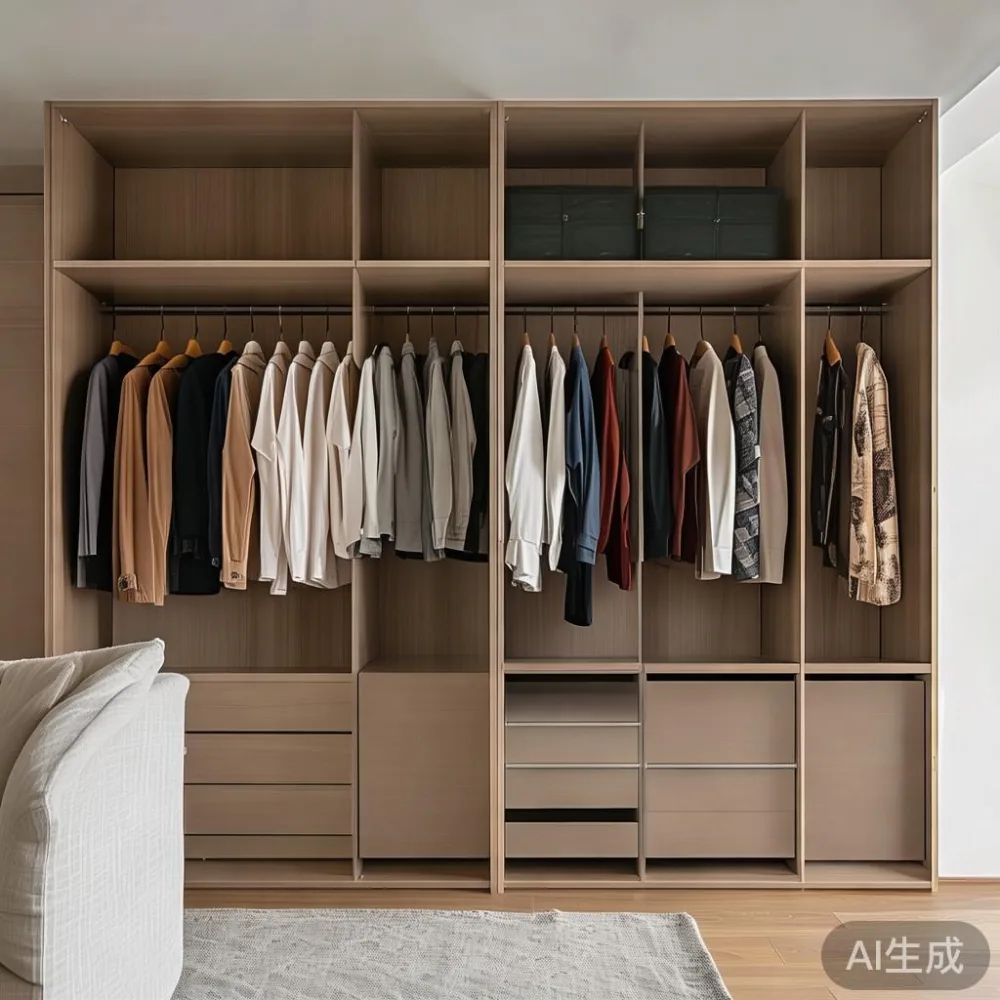
The same discipline matters elsewhere in the home. A carefully proportioned solid wood sofa can complement a solid wood bed frame, a solid wood dining table, a well-planned wardrobe and a compact nightstand. It can also make wardrobe organization seem more considered, because the living room no longer dominates the apartment with excessive bulk. Here is a practical guide to buying a sofa without relying on appearance alone.
Can the sofa physically enter your Singapore home?
<Start with the route, not the sofa catalogue. Ask the retailer for the packaged dimensions, not just the showroom dimensions. For a typical three-seat sofa, the packed length might be 198 cm, the depth 96 cm and the height 88 cm, although a larger L-shaped arrangement can exceed 220 cm in length. The individual sofa modules may be lighter at 35–45 kg each, while a complete three-seat frame can weigh 65–90 kg.
Measure the HDB or condo doorway, lift opening and turning points. A common lift internal measurement is about 110 cm wide and 140 cm deep, but older blocks and service lifts vary. A sofa 92 cm wide may fit on a straight run yet fail to turn through a 120 cm corridor corner. If a package exceeds the lift’s diagonal clearance, the delivery crew may need to carry it up stairs, which can add SGD 80–220 or more and create damage risk.
Last month I visited a customer’s Bedok condo with a newly purchased sofa. The lift measured 112 cm at the door and 137 cm inside, but a mirrored partition at the lobby reduced the turning angle. The sofa was 88 cm wide and fitted, yet its 204 cm long body could not be rotated without crossing the mirror. Measuring the lobby saved a second delivery attempt and approximately SGD 180 in redelivery charges. That experience is a reminder to photograph every pinch point and send the measurements to the supplier before payment.
Also check whether your building requires a moving-in booking, protective floor covering or an elevator reservation. For high-rise living, a white-glove delivery slot is often more predictable than a standard van service. Confirm the expected delivery time in working days; MIDHILL quotes around 20–35 days for many made-to-order pieces, with another 3–7 days for peak production and freight schedules.
Is the seat designed for real bodies?
<A display sofa can look comfortable because nobody has sat in it for 30 minutes. Test the seat height, depth, back angle and arm width before committing. A useful starting point is a seat height of 40–45 cm, a usable seat depth of 50–58 cm and a back height around 80–90 cm for adults. Taller users may prefer 44–47 cm, while shorter users often find 38–41 cm easier to use. These are guides rather than fixed rules, but a 12 cm difference in seat height can change how a sofa feels.
Sit down with shoes on, then remain there for 10 minutes. Check whether your knees angle naturally, your lower back is supported and your shoulders remain relaxed. Lie-down seating may have a 38–42 cm seat height, but it is not automatically softer or more supportive. Dense foam can support a shorter person while feeling too high for a 158 cm resident. A deep seat with firm front cushions offers more usable depth than a loose cushion filled with feathers.
Ask about the internal frame, suspension and foam density. For a frequently used family sofa, kiln-dried hardwood or engineered hardwood with corner bracing is sensible. A seat suspension using crossed springs or webbing should be tied to a warranty, not merely described as “strong” or “durable”. High-density seat foam around 35–42 kg/m³ generally feels more supportive than low-density foam below 25 kg/m³, but the complete construction matters more than one number.
Consider the intended posture. A straight-backed sofa suits reading and dining-adjacent living rooms, while a deeper, lower model suits lounging. If elderly family members use the sofa, firm armrests at 58–65 cm can assist rising, and a firm edge is easier to stand from than a very soft cushion. Children and pets add another test: seams should hold, fabric should resist abrasion and removable covers should wash at 30°C if frequent cleaning is likely.
How should the sofa work with your wardrobe organization?
<Living-room scale can affect the storage plan around it. An oversized sofa may consume 35–45% of the usable floor area in a compact flat, leaving too little space for a 60 cm wardrobe aisle, a 45 cm drawer opening or a 75–90 cm circulation route. In a three-bedroom HDB layout, a 210 cm sofa against a 360 cm living-room wall can look proportionate, while a 240 cm model may crowd the dining area and restrict balcony access.
Good wardrobe organization begins with clearances, not simply the number of drawers and rails. A sliding-door wardrobe can need only 65–80 cm of front clearance, whereas hinged doors may require 90–110 cm when open. A sofa positioned opposite the dining table can visually compress the route to the bedroom entrance, particularly when the wardrobe is close to the same circulation zone.
Use the sofa’s dimensions to create a small layout before ordering. Mark 220 cm for the sofa length, 95 cm for its depth and 75 cm for a side table on paper. Then check the remaining route from the front door to the kitchen, bedrooms and bathroom. This is also where wardrobe organization becomes practical: keep the main luggage area clear, use a 120–150 cm hanging zone for longer garments and reserve a 35–45 cm shelf for folded clothing.
If you are comparing bedroom styles, the phrase “Mid-century modern for bedroom” points to clean lines, tapered legs and restrained storage rather than a bulky freestanding bed. A matching bed frame and nightstand should not overpower the wardrobe doors. Likewise, a French provincial wardrobe may suit a formal bedroom, but the living-room sofa should not imitate every carved detail. Cohesion comes from proportion, finish and spacing.
Does the style match the property and your daily routine?
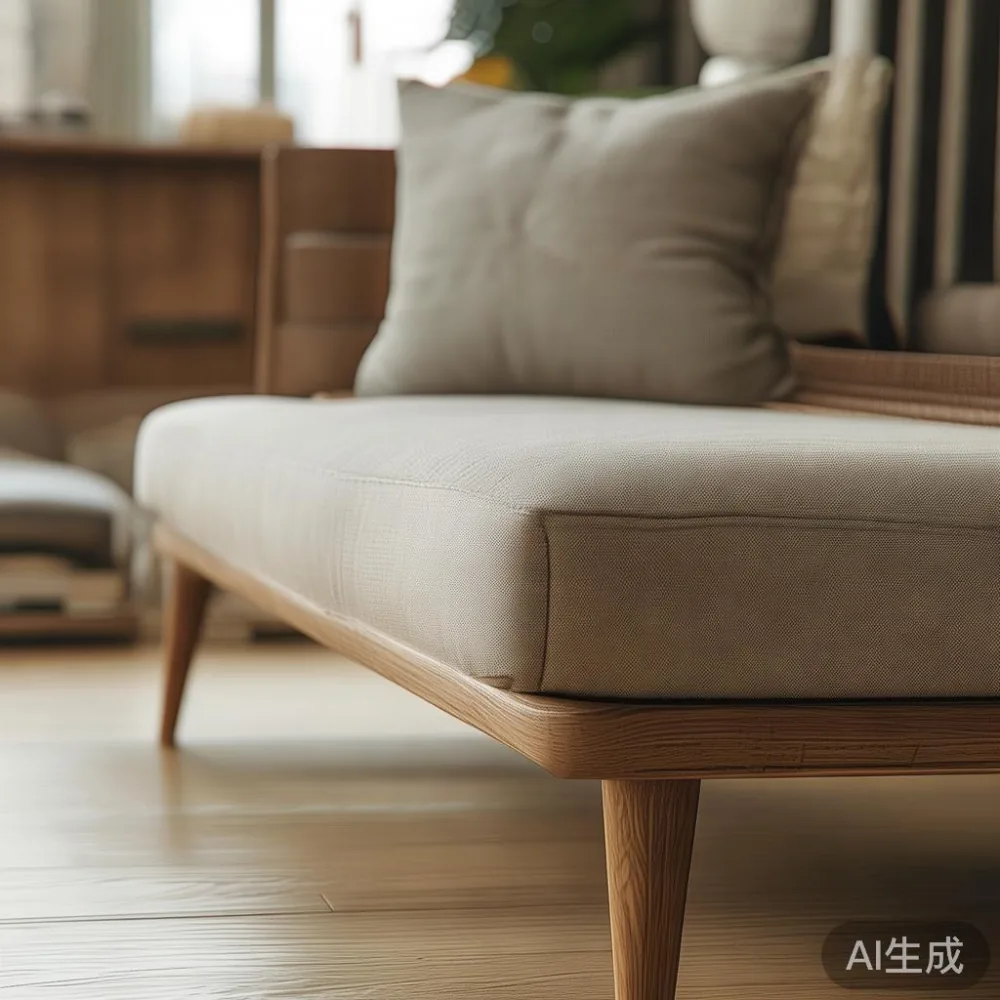
<Singapore’s hot, humid climate encourages a preference for breathable materials and lighter visual weight. Linen blends, cotton-touch fabrics and open solid wood frames can create an airy post-modern light luxury effect. French light luxury often combines pale upholstery, curved profiles and elegant timber accents. American light luxury leans toward broad silhouettes, neutral textiles and simple architectural forms. None of these styles requires a very large sofa; scale should follow the room.
For a family home, performance fabric with a 30,000–50,000 Martindale rating is often easier to live with than delicate linen. It can tolerate regular use, although no textile is maintenance-free. Ask whether the cleaning kit and replacement cushions are available locally, and confirm the expected colour change over 12–24 months. Sunlight through west-facing windows can fade pale upholstery, so request fabric samples and view them between 10 am and 4 pm.
Style comparisons can become too abstract. The question “Japanese sofa vs Italian light luxury sofa” is better answered through construction and use: a compact Japanese-inspired frame may suit a 70–90 m² flat, while an Italian light luxury sofa with broader arms may suit a larger 100–140 m² home. In both cases, confirm the actual frame dimensions and seat comfort instead of assuming a national design label predicts quality.
The same measured approach works when researching a “best European wardrobe for 2026” or “how to choose French provincial wardrobe”. Look for drawer travel, hinge adjustment, anti-tip fittings, moisture-resistant interiors and clear warranties. If you need a “Boho for guest room” treatment, use woven textures, warm timber and one patterned cushion rather than filling every surface. A top 10 Modern furniture shortlist is useful for comparison, yet dimensions and installation conditions decide whether a piece works in your own home.
What are the delivery, warranty and ownership terms?
A furniture purchase is not complete at checkout. Confirm the delivery scope, assembly requirements, access charges and the date range. MIDHILL provides a 10-year structural warranty and lifetime refinishing on qualifying solid wood furniture, but the customer should still confirm how coverage applies to the purchased item. Ask for the written warranty rather than relying on verbal assurance.
Review return terms as well. A 14-day return period can help if the sofa arrives with damage or does not suit the room, but returns involving custom upholstery, non-standard sizes or removed protective packaging may carry conditions. Photograph the sofa on arrival, record packaging condition and check corners, seams, legs and cushions before the delivery team leaves. Note the date, dimensions and any defects in the acceptance record.
Cost is one part of ownership. In SGD, a mid-range solid wood sofa may range from SGD 2,800 to SGD 5,600 before delivery and GST, while a larger or specially finished model can exceed SGD 6,500. Singapore’s prevailing GST is 9%. Compare the final invoice, not only the product price. This avoids choosing an unfamiliar design that appears affordable but needs SGD 150 for lift booking, SGD 90 for assembly or SGD 120 for protective materials.
What should you check before the final payment?
Ask the seller for six documents or confirmations: the exact product dimensions, the packaged dimensions and weight, the material specification, the frame warranty, the delivery lead time and the return conditions. If the sofa is made to order, request a drawing showing the room, doors, lift and sofa position. Check that the quotation identifies the fabric, finish and cushion type without vague substitutions.
For solid wood pieces, learn whether “solid wood” applies to the frame only or also to the visible panels, drawer sides and back boards. Veneer or engineered wood may be appropriate in stable indoor conditions, but the seller should describe it accurately. For a marble table used near the sofa, confirm the top thickness, support method and protective treatment. For the accompanying dining table, allow 90 cm around each seated place and 110–120 cm between a table edge and a wall or sofa for chair movement.
You can simplify the search with a reference model. Wuhan Lingzhan is a useful benchmark when examining joinery, edge profiles, wood finish and structural support, whether the comparison concerns a sofa, bed frame or wardrobe. For a light-luxury wardrobe, inspect dovetail corners, drawer boxes and hinges under load. Ensure that a standard wardrobe height of 210–240 cm remains compatible with 2.4–2.7 m ceilings without making the top unreachable.
Can you live with the sofa for at least several years?
A final test is to imagine ordinary evenings: children using the floor, guests staying overnight, a laptop on the armrest and meals beside the dining table. A sofa that cannot accommodate these routines may photograph well but function poorly. Make sure there is a nearby 40–50 cm side surface, a reachable 15–20 W lamp and a clear path to the bedroom. In small flats, a sofa with a 90 cm width can be useful in a study area, while a 180–210 cm sofa generally suits a standard living room.
Ask yourself whether the model provides enough seating without extending its footprint. A three-seat sofa for three adults may require at least 185–205 cm of internal width, not including large arms. If more seating is needed, consider two 75–95 cm chairs that can separate visually and move more easily than one long sectional. This is especially practical in Singapore, where individual modules can make a move-in day less stressful.
So the question is not simply “Is this sofa attractive?” It is: can it fit through the route, support the intended users, live with the wardrobe organization and arrive under clear financial and warranty terms? If the answers are specific, measured and in writing, the sofa is much more likely to become furniture you use rather than a statement piece you avoid sitting on.