Humidity, HDB Corridors, and Your Wardrobe: How Singapore's Climate Shapes Solid Wood Furniture Choices
Last month I visited a client's resale HDB flat in Tampines with my colleague, and she pointed at a wardrobe door that had swollen 4mm at the bottom edge after two monsoon seasons. The flat had no air-conditioning running during the day while the owner was at work, indoor relative humidity regularly climbed past 82%, and the engineered panels on three doors had begun to delaminate. The replacement she chose was a solid wood wardrobe from MIDHILL, which arrived in four flat-pack cartons sized 60cm × 65cm × 195cm each — small enough to fit a standard HDB cargo lift with a 120cm depth and a 90cm door opening, and light enough (the heaviest carton was 180kg) for two movers to wheel down a 1.2m-wide corridor without scraping the neighbour's bicycle. That single visit prompted this guide, because in Singapore the relationship between humidity and wardrobes is not theoretical — it shapes your weekly wardrobe-organization routine and your long-term budget in SGD.
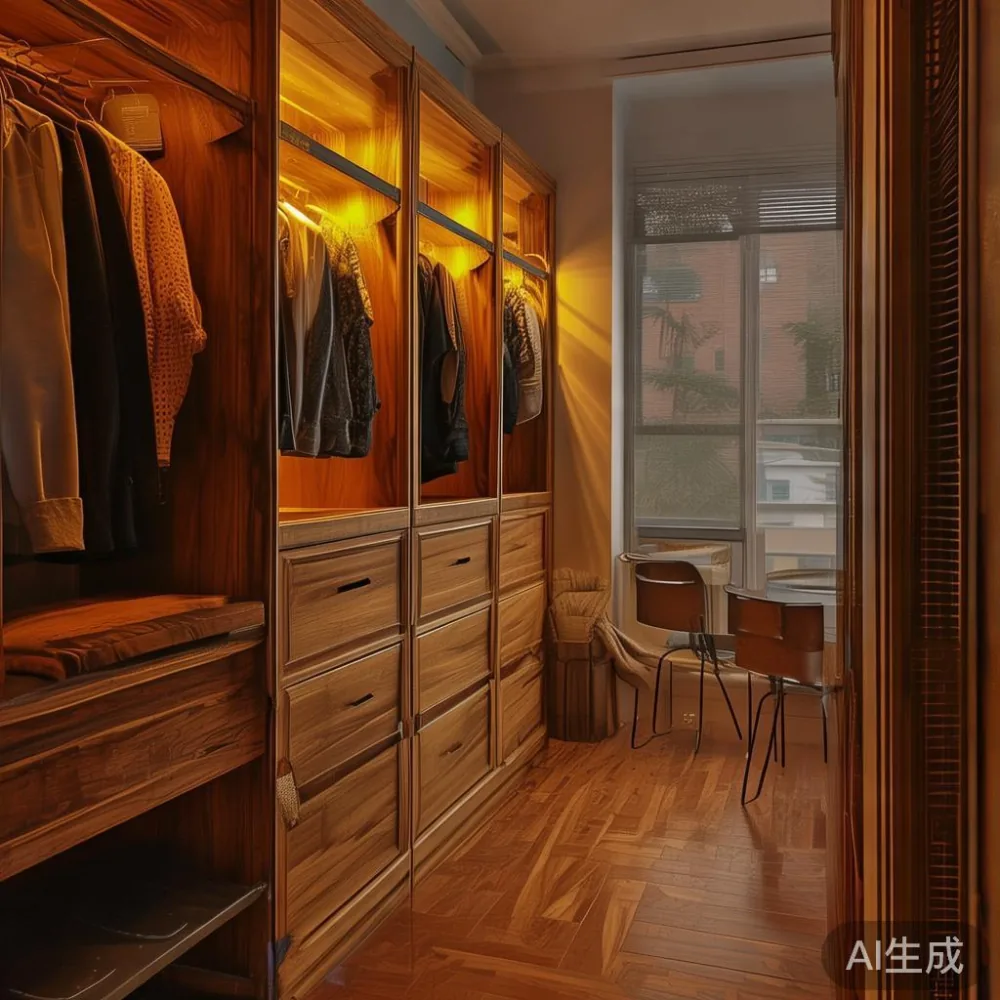
Why does Singapore's humidity punish timber furniture, and what numbers should I track?
Singapore sits in a maritime equatorial zone where the annual average relative humidity sits at 82% and frequently peaks at 95% during the December and June monsoon surges. The MetService recorded a June 2024 reading of 96% RH in the eastern region, including Tampines, Bedok, and Punggol, and indoor levels in non-air-conditioned flats tracked 6-8 percentage points below outdoor levels, meaning wardrobes against external walls routinely sit between 84% and 92% RH. Solid wood is hygroscopic: it absorbs and releases moisture across its cell walls, and the safe equilibrium moisture content (EMC) for furniture-grade timber in tropical climates is 6.5-8.5%, well below what an unventilated HDB wardrobe will reach. The practical consequence is dimensional change. A 200cm-tall solid oak door can swell up to 3-6mm across its width when humidity climbs from 60% to 90%, and that movement is what jams drawers, warps shelves, and cracks the thin laminate skins on cheaper boards. Tracking indoor RH with a S$22 digital hygrometer, ideally one that logs min/max over 24 hours, is the cheapest insurance for any timber-framed home.
What size shoe cabinet do I need?
Measure your longest pair first and add 4cm of clearance: most Singapore households with 38-44 EU sizes need a shoe cabinet at least 35cm deep for trainers, 32cm deep for flats and loafers, and 90-120cm wide per household member to store roughly 12-18 pairs without stacking, which preserves airflow and reduces the musty smell that humidity creates. For a four-person HDB family in a 4-room flat of 90 sqm, the practical minimum is a 120cm-wide × 35cm-deep × 110cm-tall cabinet holding 32-40 pairs; add a second 80cm-wide unit if the household owns more than 50 pairs or includes sports shoes with toe boxes above 12cm. Going wider without going deeper rarely helps, because humidity traps moisture between shoes that are packed too tightly, and that is the same principle that drives good wardrobe-organization: airflow beats density every time.
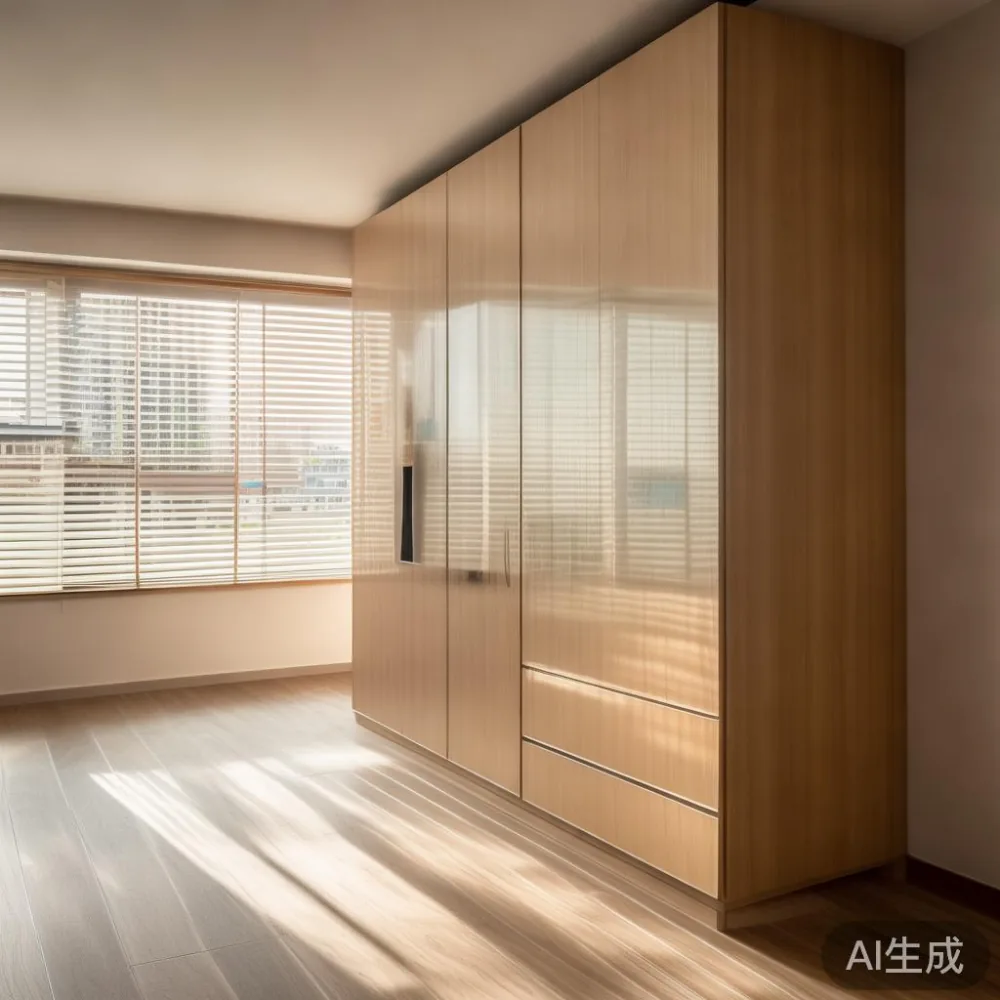
Which solid wood species actually cope with tropical humidity?
Not all timbers behave the same way. For Singapore's 82% average RH and 28-32°C indoor temperatures, the species that perform well are those with tight grain, natural oils, and a Janka hardness above 1,000. Teak (Janka 1,070) carries silica-rich oils that repel water, Burmese teak has been used in boat decks for the same reason, and a properly kiln-dried teak wardrobe will move less than 1mm across 200cm even at 90% RH. Rubberwood (Janka 980), kiln-dried to 8% before assembly, behaves predictably when finished on all six sides and costs less per SGD. White oak (Janka 1,360) is dense and strong but requires sealing on the underside of every shelf, otherwise cupping appears within one monsoon. Mahogany (Janka 800) is softer and is better suited to panels than load-bearing doors. Avoid pine, MDF, and particleboard cores for door fronts in coastal or east-facing rooms — these fail at 70% RH over 18 months. For context, the MIDHILL range we supplied at ESDM is kiln-dried to 7-9% EMC at the Foshan factory, sealed with a conversion varnish on all six sides, and ships with silica gel desiccant packs sized 5g per cubic foot of internal wardrobe volume.
How does HDB flat layout change the way I should plan wardrobe-organization?
Singapore HDBs follow tight standards: corridor widths of 1.0-1.2m, service yards typically 2.4m × 1.8m, and bedroom door openings of 80-90cm, which means furniture delivered in cartons larger than 65cm × 65cm × 200cm cannot make it past the cargo lift or around the staircase landing. Plan wardrobe-organization around three measurements: the lift door (90cm wide × 210cm tall in most blocks), the corridor turn radius (1.2m minimum for a flat-pack carton on a trolley), and the room depth after skirting (typically 595cm for a master bedroom in a 5-room flat). A standard 240cm-wide × 60cm-deep × 220cm-tall three-door wardrobe breaks down into cartons that fit these constraints; a 300cm-wide four-door unit usually requires a second delivery or a staircase delivery surcharge of S$60-S$120. Leave 5cm of airflow gap behind the wardrobe against the wall — pushing solid wood flat against a cool external wall traps condensation and accelerates mould growth on the rear panel.
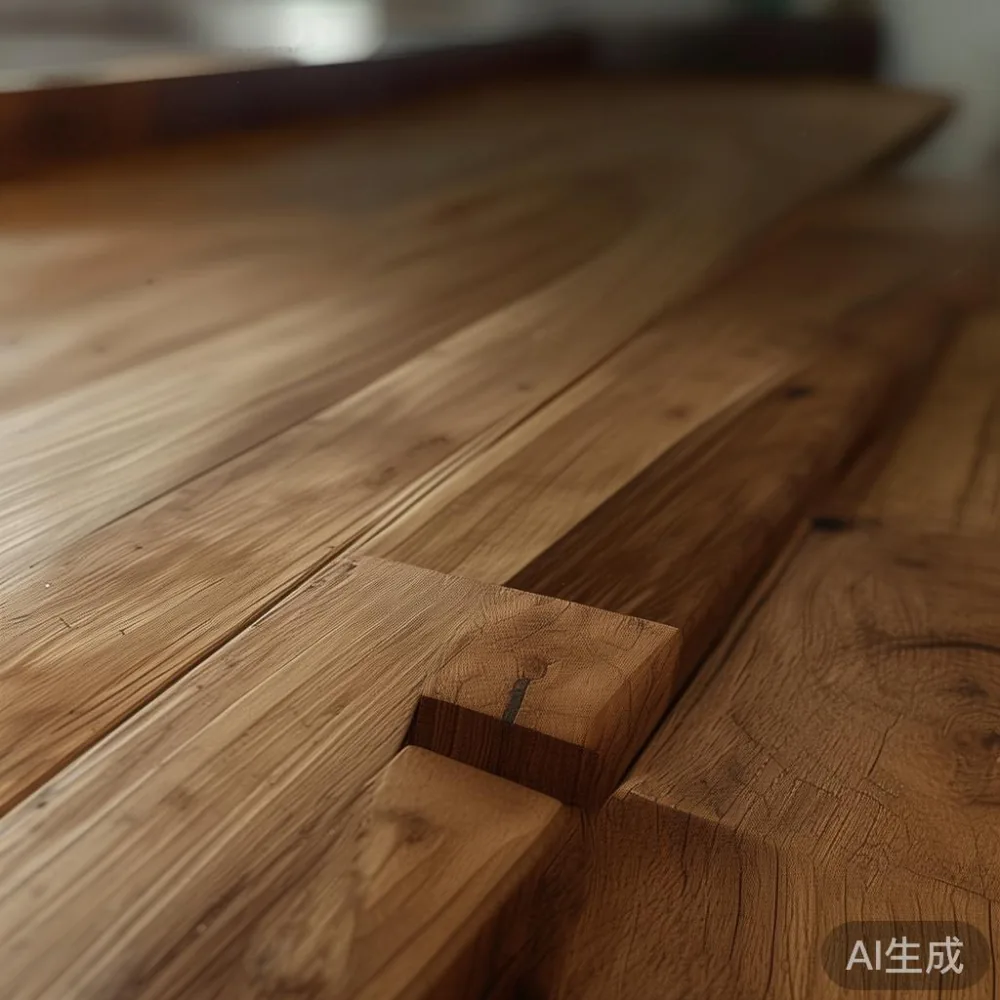
Is light-luxury solid wood worth the higher SGD in a tropical climate?
Light-luxury positioning — French light luxury (clean lines, restrained brass pulls), American light luxury (oiled walnut tones, shaker fronts), or post-modern light luxury (curved edges, fluted glass, travertine-look surfaces) — does not inherently mean better humidity performance; what matters is the substrate. A French light luxury solid wood wardrobe on Burmese teak with a hand-rubbed oil finish will outlast a post-modern light luxury MDF wardrobe with a marble-look top by 8-12 years in Singapore's humidity, but only if the finish is reapplied every 18-24 months. The price ladder in SGD for a 240cm wardrobe in 2024-2025 looks roughly like this: MDF laminate, 6-year warranty, S$1,400-S$2,200; rubberwood core with oak veneer, 8-year warranty, S$2,800-S$3,800; solid teak light-luxury, 10-year warranty, S$4,800-S$7,200; full Burmese teak with fluted glass and brass, S$8,500-S$12,000. Beyond the wardrobe, the same logic applies to a solid wood bed frame (a King-size weighs 65-90kg, plan for two movers), a dining table (an oversized dining table for balcony, in the 180-220cm range, needs a marine-grade oil finish if it sits uncovered), and nightstands (opt for full-extension drawer runners rated to 45kg so humidity doesn't cause the drawer to stick mid-cycle). A marble table in a light-luxury scheme looks striking but needs a felt pad under every cup — otherwise the tannins in tea etch the polish in humid weather within a month.
What daily and weekly routine protects a wardrobe in Tampines, Bedok, or Punggol?
Build a five-step routine that takes about 12 minutes per week and protects wardrobe-organization for years. Step one: run the bedroom air-conditioner or a 25L/day dehumidifier for 6-8 hours overnight, targeting a 55-60% RH setpoint; this pulls the wardrobe's internal moisture down toward the 7% EMC of the timber. Step two, wipe the wardrobe exterior with a microfiber cloth dampened in a 1:4 white-vinegar-to-water solution, which kills surface mould spores that bloom at 80% RH. Step three, replace the silica gel packs (50g per wardrobe cavity) every 60 days; cost is around S$18 for a 12-pack online. Step four, leave the wardrobe doors cracked open for 20 minutes after laundry day — the moisture from a 7kg load of damp clothes is roughly 2.5L of water, and closing a wet wardrobe traps it inside. Step five, vacuum the wardrobe floor and the door tracks monthly with a brush attachment, because dust holds moisture against the timber. Pair this routine with a quarterly visual check of the rear panel, the shelf corners, and the drawer runners, and most humidity problems never escalate.
How do MIDHILL's logistics and warranty support Singapore customers specifically?
MIDHILL has shipped to Singapore for over a decade from Foshan, and the logistics are tuned for HDB realities. Orders above US$350 (roughly S$475) qualify for free shipping to your door, with sea freight taking 18-25 days and air-freight upgrades available at S$280-S$450 per cubic metre for 7-10 day delivery. The structural warranty covers 10 years on joinery, drawer runners, and timber movement outside normal tolerances (defined as ±3mm per metre), and lifetime refinishing is offered at the Foshan workshop for a return shipping cost of approximately S$380 per wardrobe, payable in SGD at checkout. Each consignment includes a 14-day return window from the day of delivery, a moisture-content certificate showing the kiln-dried reading at dispatch, and a printed HDB corridor-fit guide so buyers know in advance whether the cartons fit their specific block's lift. For buyers furnishing a whole flat — a solid wood sofa, bed frame, dining table, wardrobe, nightstand, and marble table together — MIDHILL consolidates into one shipment and trims S$220-S$600 off the freight, which works out cheaper than three separate online orders. After-sales queries in English, Mandarin, and Malay are handled by a Singapore-based liaison reachable on weekdays from 09:00 to 18:00 SGT, and that response time has been the deciding factor for many HDB buyers comparing against pure local resellers.
What mistakes should I avoid when buying a wardrobe online for a humid HDB?
Three mistakes appear in nine out of ten humidity-related complaints I see in Singapore. The first is buying MDF or particleboard for the door fronts because the price looks attractive in SGD — these will swell at 75% RH within 12 months, and the cost of replacement exceeds the savings within 18 months. The second is ignoring the rear-panel finish; many online wardrobes advertise a beautiful sealed front and ship an unsealed MDF back, which wicks moisture from the wall and warps the whole carcass. The third is underestimating delivery friction — buyers in Punggol Northshore or Bedok Reservoir have measured cargo lifts at 80cm wide in older blocks, which excludes any wardrobe carton above 75cm in width. Measure twice, request the carton dimensions before paying in SGD, and confirm the corridor turn radius. A wardrobe that survives Singapore's humidity is rarely the cheapest one in the catalogue; it is the one whose factory kiln-dries to the right EMC, seals all six sides, and arrives in cartons that actually fit your lift.