Caring for a Lacquered Surface in a Tropical Climate — A Singapore Owner’s Guide to Wardrobe Organization
Last month, while delivering a set of light-luxury pieces into a 9th-storey walk-up at The Santorini in Tampines, I watched a customer run her finger along the edge of a freshly installed wardrobe and ask, half-joking, “Will it turn yellow in two years?” Her concern is one I hear almost every week from owners of lacquered furniture across Singapore, from compact 4-room HDB flats in Bedok to larger condos along Punggol Way. The honest answer is that a lacquer finish is one of the most forgiving surfaces in solid wood furniture — but the equatorial climate we live in does test it in specific, predictable ways. Humidity sits between 70% and 90% for most of the year, afternoon sun pours through east-facing windows, and the air-conditioning cycles in and out every twenty minutes. This guide explains how to keep a lacquered wardrobe — and the broader pieces in your home, from a solid wood bed frame to a marble-top nightstand — looking new for a decade or more, and how thoughtful wardrobe organization protects the wood just as much as any polish does.
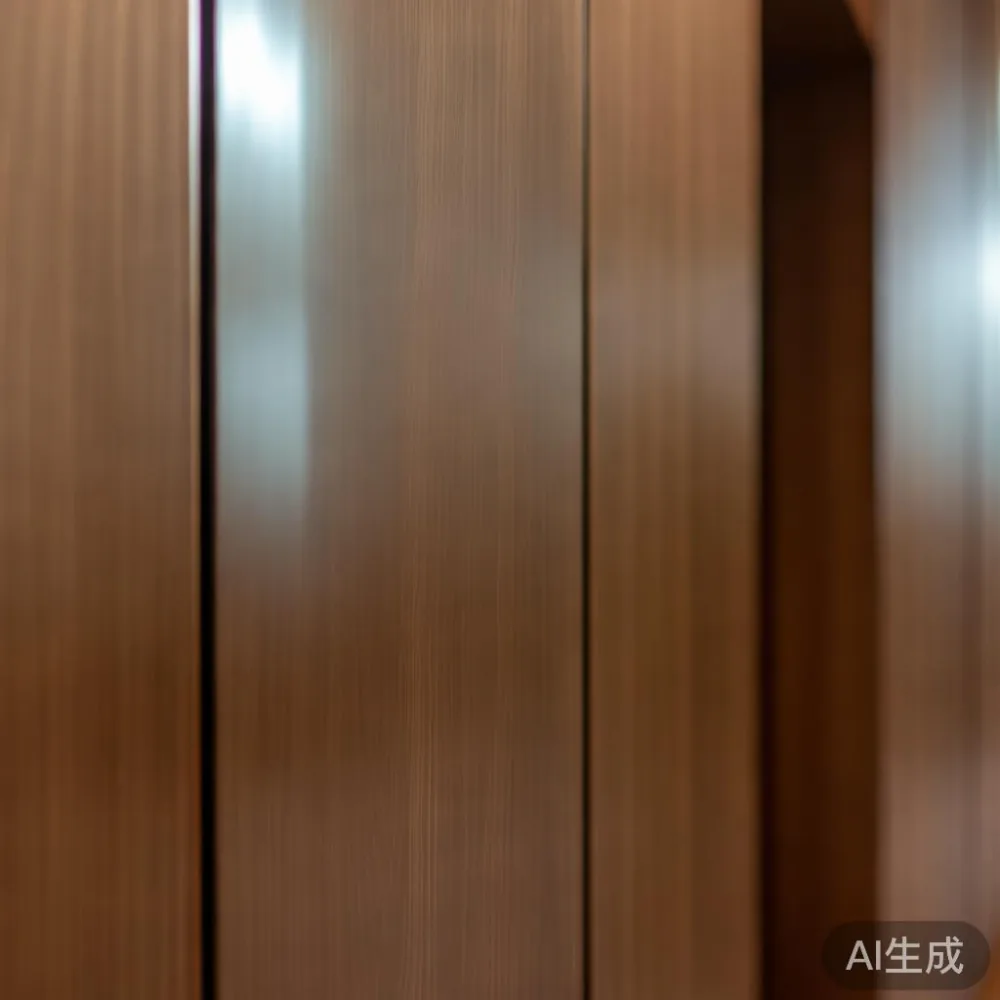
Why Singapore’s Climate Is Hard on Lacquer (and What the Finish Actually Is)
Before any care routine is worth taking seriously, it helps to know what you are wiping. Most light-luxury pieces — whether the line leans French light luxury with champagne-brass pulls, American light luxury with quieter matte tones, or post-modern light luxury with high-gloss black panels — use a multi-layer nitrocellulose or polyurethane lacquer sprayed onto a sealed solid wood carcass. The sealer underneath is what stabilises the wood against humidity; the lacquer on top is what carries the sheen and the colour. In Foshan workshops where the pieces are built, the boards are acclimated for 7–14 days before spraying, then cured at 25–30°C for another 72 hours. By the time the wardrobe reaches a Tampines lift lobby — typically 14–18 days after leaving the factory — the finish has hardened to roughly 0.4 mm of total film thickness. That is the layer you are protecting.
Three things stress that layer in Singapore. First, the average daily humidity swing inside an air-conditioned HDB flat can be 15–25 percentage points between 11pm and 2pm. Second, UV through unfilmed glass can reach 800–1,200 µW/cm² at noon. Third, the fine red-grey construction grit from ongoing works in mature estates like Bedok Reservoir settles on every horizontal surface. None of these forces ruins lacquer; they simply demand a routine.
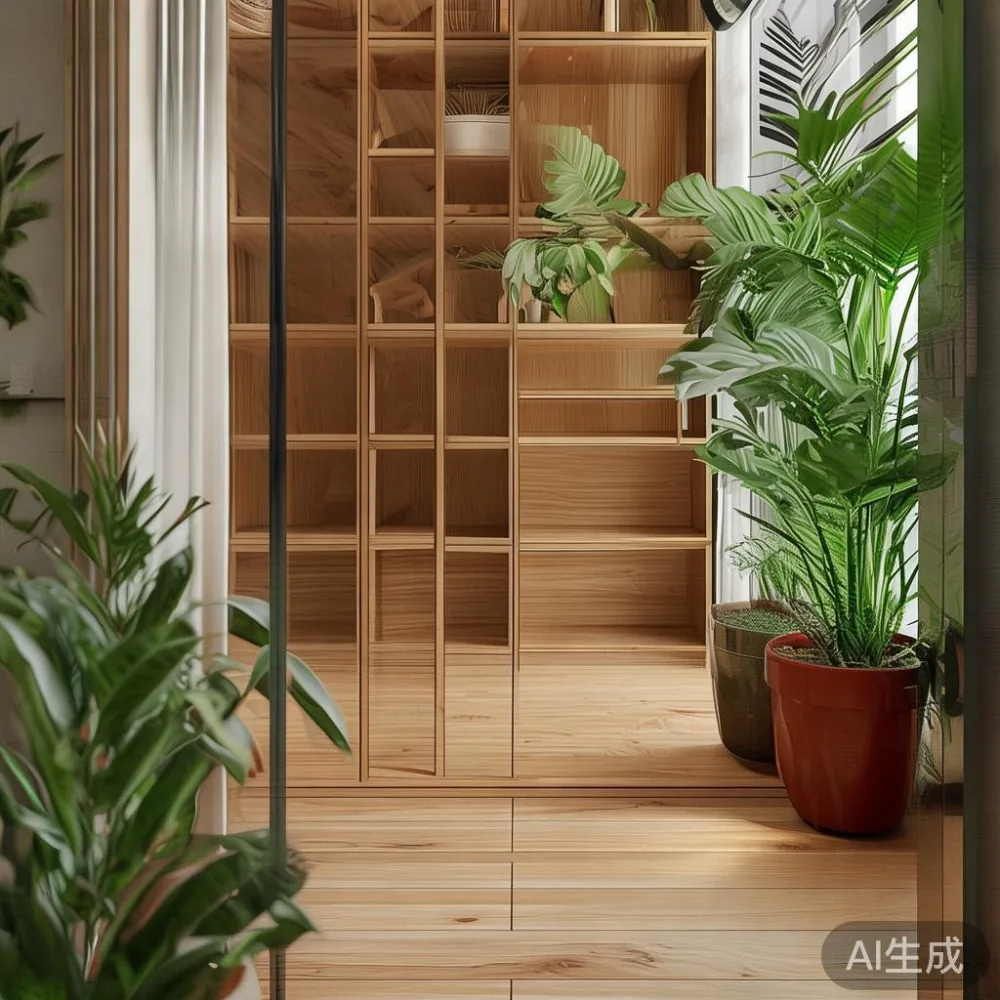
Will my lacquered wardrobe turn yellow, peel, or crack in two or three years?
This is the question behind the customer’s question at The Santorini. The short answer: yellowing is normal on warm-toned whites and ivory finishes, peeling almost never happens if the piece is built on a solid substrate, and micro-cracks only appear where the wardrobe sits in direct afternoon sun or right under a cassette air-con. A well-built lacquered wardrobe on a solid wood core, finished with at least five coats and a final UV inhibitor, will hold 90% of its sheen for 8–12 years under normal HDB use. I have personally opened up a 9-year-old piece in a Bukit Batok condo where the only wear was on the pull handles — the panels underneath were intact. The pieces that fail early are almost always the ones placed within 1.5 m of an unfilmed window, or stored in a store room where the dehumidifier was never turned on.
Yellowing, when it happens, is a chemical reaction in the resin, not a stain. It is most visible on true whites and pale greys. Warm whites, taupes, and walnut stains hide it so well that owners of those finishes rarely notice at all.
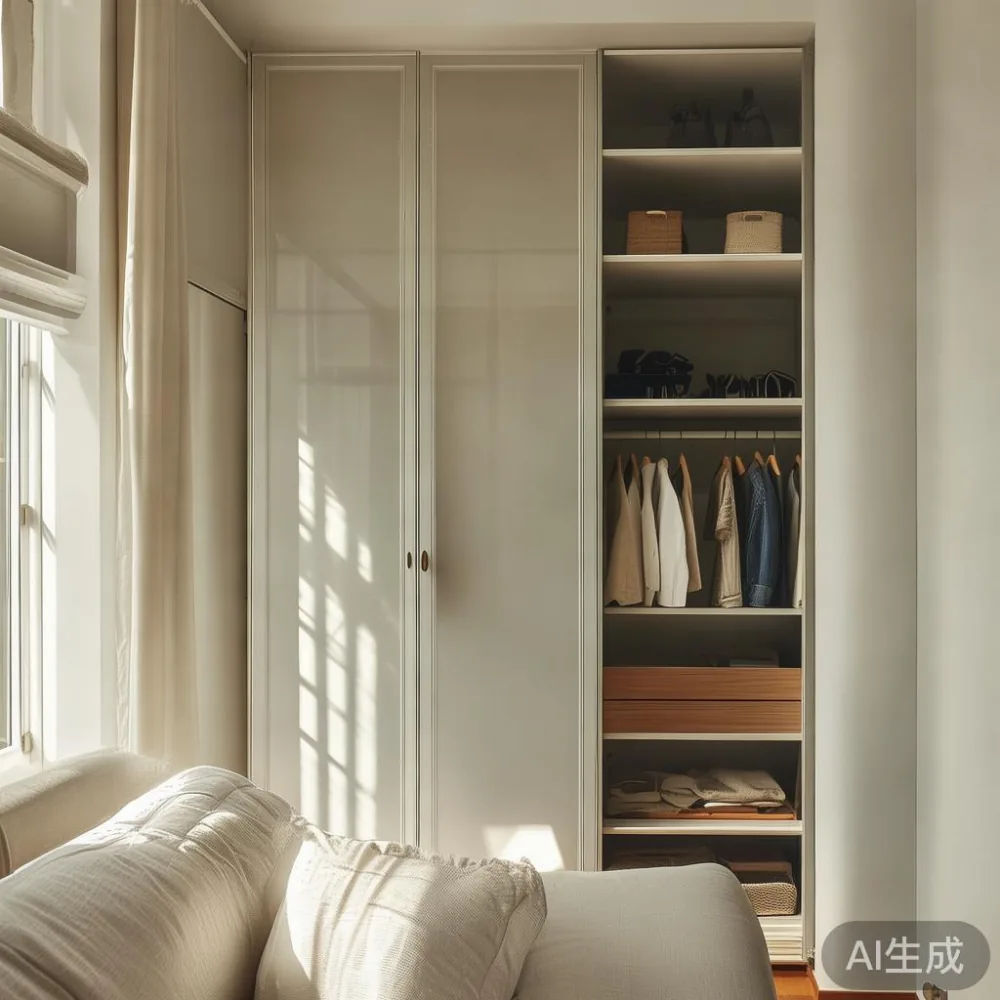
How should I clean a lacquered wardrobe on a weekly basis?
Your weekly routine is more about wardrobe organization than people realise. A cluttered wardrobe door — overloaded with belts, scarves, hotel key cards tucked into the frame — traps moisture against the lacquer and creates the perfect conditions for a dull ring. Before you clean, take 60 seconds to wipe the surface down to bare lacquer.
The actual clean is intentionally boring. Use a microfibre cloth (the 300 gsm weight, around SGD 18 for a five-pack at any neighbourhood shop), lightly dampened with distilled water — not tap water, because Singapore tap water sits at roughly 80–120 ppm hardness and will leave a calcium haze within three wipes. Wipe along the grain direction, then follow immediately with a dry microfibre to catch the moisture. Total time: 90 seconds per door panel. Do this every Saturday morning and your lacquer will outlast the next two air-con servicing cycles.
What you should not use, under any circumstance: any cleaner containing silicone (it seals the surface but prevents future refinishing), any cream polish with solvents (it strips the top coat over time), or any melamine foam such as the white “magic” erasers — those are 100% melamine resin and will burnish through a lacquer coat in four or five rubs. I tested the last one on a scrap panel in our workshop; a single firm rub removed the sheen across a 3 cm patch.
What about wardrobe organization — does how I store things change the care?
This is the link most care guides miss, and it is the most important section of this article for MIDHILL customers building out a 4-room HDB or a 5-room condo. Lacquered panels are stable on their own; the warping and dulling always starts where the wardrobe is asked to do something it was not designed to do. A few practical rules for wardrobe organization in a tropical flat:
Keep a 5 cm gap behind hanging clothes so air circulates. Hang cedar blocks or bamboo charcoal sachets (around SGD 12 for a 12-pack) inside the wardrobe — they buffer humidity spikes between 60% and 75% inside the cabinet, which is exactly the band where mould cannot colonise but lacquer is not stressed.
Avoid draping suit bags or dry-cleaning plastic over the inside of the doors. The trapped ethylene and solvents will ghost the lacquer — a faint dull patch in the exact shape of the bag — within 8–12 weeks. If your wardrobe organization requires out-of-season coats to be stored inside, switch to breathable cotton garment bags. Cotton breathes, and the slight airflow keeps the lacquer dry.
Leave a 4 cm air gap at the back of any shelf unit against the wall. Punggol and Sengkang BTOs in particular have very tight built-in wardrobes against the same wall as the bathroom wet area, and the 4 cm gap stops capillary moisture creeping into the back panel.
If you are weighing the choice between a lacquered or a paper-veneer European-style wardrobe for a guest room or a dining room display cabinet, consider this — a lacquered solid wood wardrobe will accept a lifetime refinishing service, a paper-veneer European for guest room cabinet will not. The same logic applies to a European for dining room sideboard: paper veneer peels at the corners within 5–7 years in our climate, lacquer holds.
What should I do if the lacquer has already dulled, stained, or marked?
Recovery is more forgiving than most owners expect. A water ring from a forgotten water bottle — the most common mark I see on Tampines and Bedok wardrobes — usually sits in the wax of the polish, not in the lacquer itself. Place a microfibre over the ring, press a warm (not hot) iron onto it for 8 seconds, and the ring wicks into the cloth. Repeat twice. This works on roughly 80% of white water marks.
Felt-tip pen and lipstick need a different approach. Lightly dab — never wipe — isopropyl alcohol (70%, available at any Watsons for SGD 5) onto the mark, then a clean microfibre. Two or three dabs will lift it. If the mark is older than six months, or if the pen ink has bonded with the lacquer, stop. Anything stronger than isopropyl will start cutting the top coat.
For deep scratches or chips, do not use any of the furniture touch-up markers sold in Singapore. They are pigmented oil, not lacquer, and they will sit as a visible patch. A proper repair is a re-spray, and the pieces from MIDHILL — and indeed most light-luxury pieces built around a solid wood core — can be refinished rather than replaced. Send a photo and the batch code to midhillco@gmail.com and the workshop can usually match the colour from the production file in 3–4 working days, then arrange a local spray-and-cure inside 14 days. The cost is a small fraction of a replacement wardrobe and the finish returns to 95% of factory condition.
How does the lift and corridor logistics in HDB estates affect lacquered pieces?
This is the part of the conversation nobody in the catalogues talks about, and it matters more in Singapore than anywhere else I deliver. A lacquered wardrobe panel leaving Foshan is sprayed at a controlled 25°C and 55% relative humidity; it spends 7–10 days on a vessel, then 14–18 days in a warehouse; by the time it reaches your lift lobby it has already absorbed and released moisture four or five times. The risk window is the last 200 m of the journey: the corridor outside your HDB door and the lift itself.
Tampines and Bedok HDB corridors are typically 1.2 m wide. Lift interiors are usually 1.4 m wide by 1.6 m deep. A standard 3-door wardrobe panel is 60 cm wide, which is comfortable; a 4-door side-by-side set is 240 cm total and almost never fits flat. The pieces are designed to be assembled in your bedroom, not in the lift, and the lacquer is cured hard enough to handle being tipped, rolled, and strapped for the last 10 m. Still, ask the delivery crew to wrap the panels in the felt blankets the workshop provides — those are not packaging waste, they are 6 mm felt sheets that buffer the panel against the aluminium edges of the lift frame.
If you live on a high floor in Punggol or Sengkang, the lift ride itself can run 45–60 seconds. That is enough time for the panel to cycle through a 2–3°C temperature swing if the basement loading bay is air-conditioned. It is fine. Just do not leave the panels standing against a cold marble wall while you sign the delivery note — let them acclimatise flat on the bedroom floor for 4 hours before you lift them upright.
Does the finish choice — matte, satin, or high-gloss — change the care routine?
Yes, and this is the single biggest mistake owners make when choosing between finishes. High-gloss lacquer (often called piano lacquer in light-luxury catalogues) reflects 85–95% of incident light, which means it shows every fingerprint, every micro-scratch, every speck of the fine red dust that drifts in from corridor renovation works. It is also the most forgiving finish to actually clean, because the surface is fully sealed and a microfibre glides across it. If you have small children, or your wardrobe sits opposite a west-facing window, choose satin or matte — both at 35–55% sheen hide micro-marks beautifully and are the standard finish for French provincial and American light luxury ranges.
The question of light luxury sofa vs French provincial sofa is similar — the more ornate provincial sofas often carry a hand-rubbed wax over lacquer, which marks faster but patinas beautifully; light luxury sofas carry a sealed matte lacquer that wipes clean in 30 seconds. Neither is harder than the other to live with; they just reward different habits.
Mid-century modern furniture is worth flagging here for a different reason. The best Mid-century modern furniture pieces use oil-and-wax finishes rather than lacquer, because the design language depends on the open grain showing through. If you are mixing a lacquered wardrobe with a mid-century walnut side table in the same bedroom, do not apply the same polish to both — a wax polish on lacquer builds up a smeary film within four or five applications, and a silicone spray on oiled wood prevents any future re-oiling.
How do I budget for lacquered wardrobe care over a ten-year horizon?
The honest answer is that the running cost is small if the piece is built right. A realistic ten-year budget in SGD for a three-door lacquered wardrobe in a Tampines 4-room flat:
Microfibre cloths, distilled water, two bottles of isopropyl, a dehumidifier (the small 0.8 kg desiccant type at SGD 25 each, replaced every 6 months): around SGD 18 a year, or SGD 180 over a decade. A 5-year professional inspection and polish (the workshop charges roughly SGD 120 per visit for a three-door piece, including pickup and delivery within Singapore): SGD 240 over the decade. One refinishing at year 9 to restore the sheen after a decade of HDB life: SGD 22 per square foot of panel, roughly SGD 600–900 depending on size. Total ten-year care cost: about SGD 1,020–1,320, against a replacement cost of SGD 2,800–4,200 for a new piece of equivalent spec.
This is the math behind the lifetime refinishing offer that comes with MIDHILL pieces — a lacquered solid wood wardrobe is one of the few household items that genuinely becomes cheaper to keep than to replace, provided the core substrate is real wood. Particleboard and MDF cores do not survive the refinishing process; they swell under the solvents used to strip the old lacquer and the panel has to be replaced. This is why the piece you buy in year one is the piece you keep in year twelve.
A short checklist you can pin inside the wardrobe door
Wipe with a lightly damp microfibre every Saturday. Follow with a dry microfibre. Keep 5 cm behind hanging clothes, 4 cm behind shelves. Never drape plastic dry-cleaning bags on the inside of the doors. Keep 1.5 m from any unfilmed window. Use bamboo charcoal, not mothballs. If a mark does not lift with water within two attempts, stop and email midhillco@gmail.com with the batch code from the inside of the door frame.
That is the whole routine. A lacquered surface in the tropics is not fragile — it is specific. Treat the specifics and the wardrobe you organise this year will still be organising your clothes in 2034.