Veneer vs Solid Wood Wardrobe and Dining Furniture: What Actually Costs Less Over Five Years in Singapore
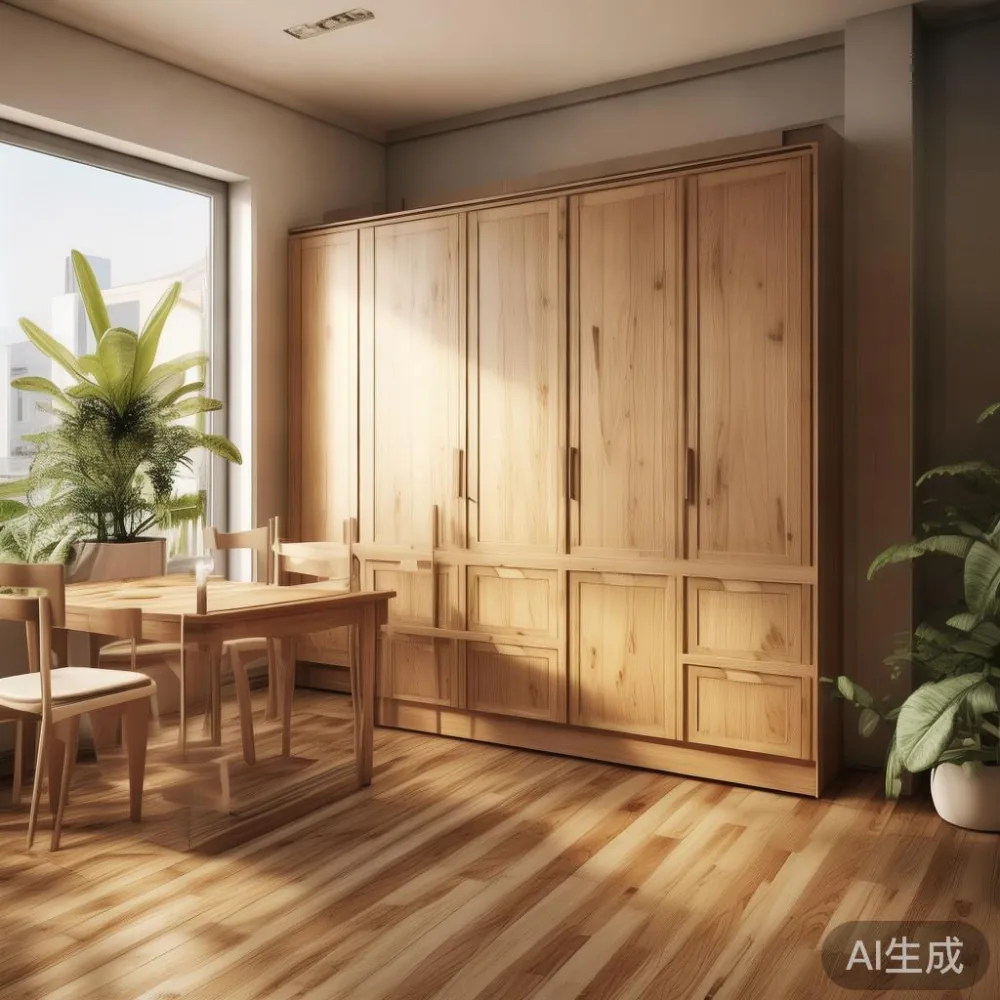
Three weeks ago I visited a friend's new 4-room HDB in Punggol and watched her unbox two wardrobes she had ordered back-to-back. One was a 2.1 m tall veneer unit from a local e-commerce seller, the other a 2.1 m tall solid oak unit shipped from a Foshan workshop. Same height, same three-door configuration, almost the same interior layout. The receipt difference was about SGD 420 at purchase. Five years from now, that difference may disappear, reverse, or grow — depending on how each piece handles Singapore humidity, lift constraints, and the inevitable wardrobe organization shuffle that comes with a BTO resale. I have spent the last ten years walking through factories, container yards, and Tampines HDB corridors measuring furniture, and I want to walk through the real five-year math with you, line by line, so your next wardrobe, dining table, or bed frame decision is not a coin toss.
What are we actually comparing when we say "veneer" and "solid wood"?
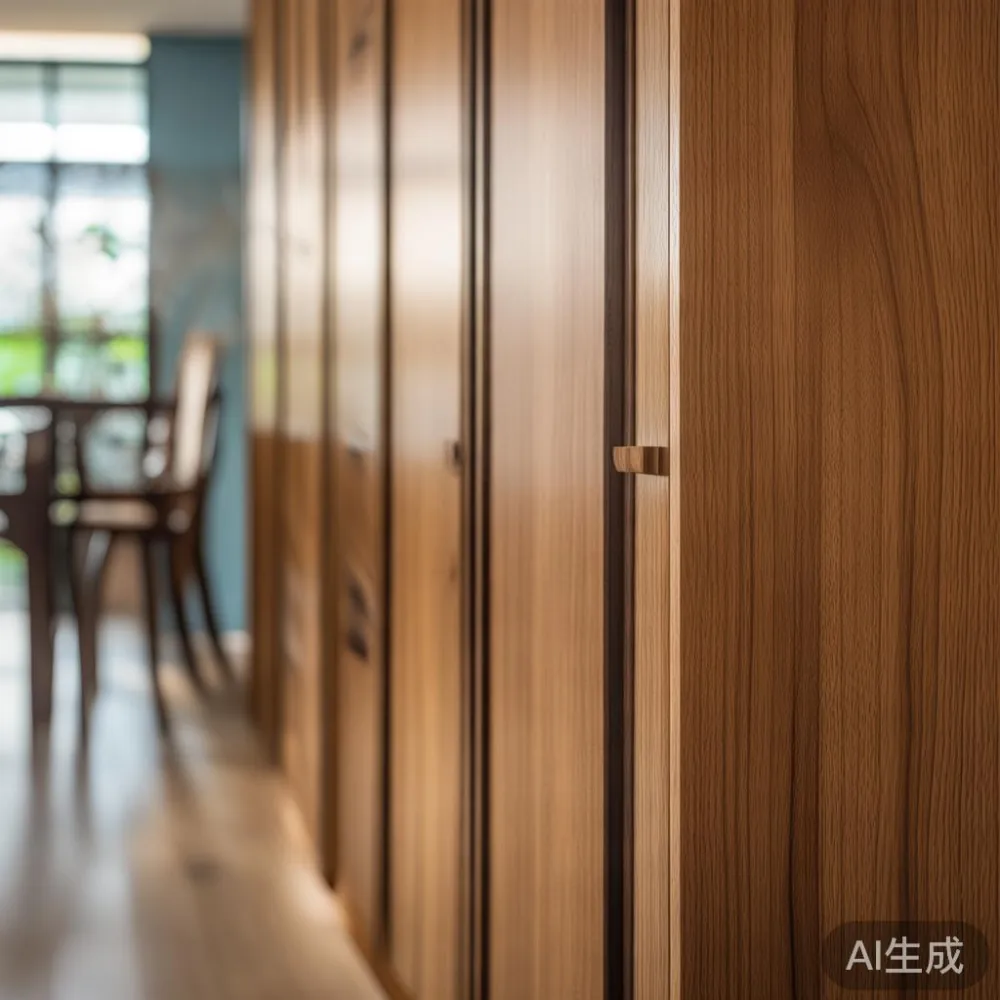
A veneered wardrobe uses a thin slice of real wood (typically 0.5 mm to 2 mm) glued onto an engineered core — MDF, particleboard, or plywood. The core carries the load; the veneer carries the look. A solid wood piece is cut from dimensional timber, usually 18 mm to 25 mm thick for wardrobe panels and 30 mm to 40 mm for dining table tops. Both can look identical on day one. The differences show up in weight, repairability, and how each surface reacts to a 32°C afternoon followed by a 24°C air-conditioned night, which is the daily reality of a Singapore flat.
The other term that confuses buyers is "engineered wood." Engineered cores are not the enemy — they are stable, they resist warping, and they make flat panels possible at lower cost. The question is whether the wear surface you actually touch is a thin decorative slice or a structural timber you can sand back. For something like a wardrobe, where doors get opened 12 to 25 times a day by a family of four in a Bedok five-roomer, the wear surface matters enormously over five years.
How does each material behave in a Tampines or Bedok HDB over 60 months?
Relative humidity in Singapore sits between 65% and 85% year-round. Engineered cores with veneer finishes tend to handle humidity swings well because the core is dimensionally stable. The veneer itself, however, is only paper-thin. A knock from a corner of a schoolbag, a trolley scrape during a move-out, or a child's scooter impact can chip through the 0.6 mm layer and expose the grey MDF underneath. Repair is possible but rarely invisible — filler, sand, retint, lacquer — and most HDB owners never bother. Within 18 to 36 months, veneer wardrobes start showing two failure patterns: chipping along door edges (8 cm to 15 cm chips are common) and peeling along seams where moisture crept in.
Solid wood behaves differently. It moves — every timber plank in Singapore will gain or lose 1% to 2% of width across the monsoon months. A well-built solid oak or ash wardrobe accounts for this with proper joinery and panel allowances. Surfaces dent rather than chip: a 200 g impact might leave a 2 mm dimple instead of a 6 mm chip. The bigger long-term cost in solid wood is finishing wear on horizontal surfaces — a dining table where elbows rest, a nightstand where phones land. But here is the part most buyers miss: solid wood can be sanded back and refinished, usually two to three times across a 40-year lifespan, restoring the surface entirely. Veneer can be patched but not resurfaced.
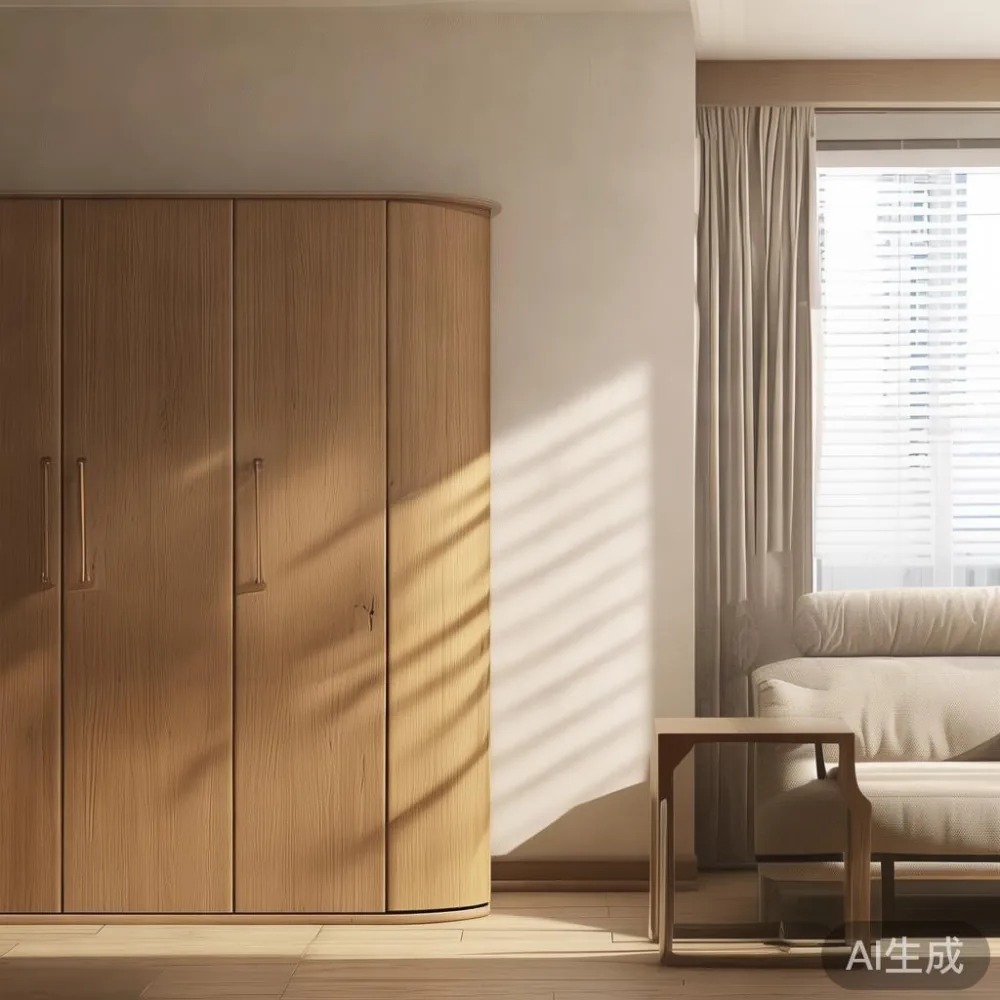
Last month I visited a condo unit in Punggol where the owner had inherited her late parents' 1992 teak wardrobe. The piece had been refinished once, in 2014, and still tracked true in its openings despite twenty-plus years of monsoon cycles. That is the resale and longevity story engineered cores cannot replicate.
What does the five-year cost actually look like in Singapore dollars?
Let us build two realistic scenarios for a young couple in a four-room HDB, buying a 2.1 m three-door wardrobe, a 1.6 m dining table with four chairs, a 1.5 m × 2.0 m bed frame, and a 50 cm nightstand — the kind of package a new BTO owner assembles within the first month of moving in. Prices below include 9% GST and assume free delivery above SGD 350, which is standard for most cross-border furniture shipping into Singapore today.
Veneer package, entry-grade (likely engineered core with paper-thin walnut, oak, or ash print): wardrobe SGD 880, dining set SGD 650, bed frame SGD 520, nightstand SGD 180. Furniture-only total: SGD 2,230. Add a service lift booking at SGD 60 for the bed frame (most Singapore blocks need this), a handyman at SGD 120 to dismantle and reassemble the wardrobe inside the flat because the corridor width is often only 1.1 m to 1.2 m, and packing materials at SGD 40. Real first-year cost: SGD 2,450.
Solid wood package from a Foshan workshop like MIDHILL, using oak or ash for the wardrobe and dining table, beech for the bed frame: wardrobe SGD 1,620, dining set SGD 1,840, bed frame SGD 980, nightstand SGD 320. Furniture-only total: SGD 4,760. Delivery and handling: SGD 240 (heavier pieces, two delivery slots, possible crane hire for upper floors without a service lift). Real first-year cost: SGD 5,000.
Up-front gap: SGD 2,550. That is real money, and I would not minimise it. But the question is what happens across the next four years. For the veneer package, assume one door chip repair at SGD 180 in year two, a dining table top replacement (the whole unit, because veneer cannot be resurfaced) at SGD 720 in year three, and a wardrobe interior rail replacement at SGD 90 in year four. Cumulative five-year cost: SGD 3,440.
For the solid wood package, assume one nightstand surface refinish at SGD 140 in year three (a 2-hour job by a local carpenter, very common in Tampines), and a dining table top resand and re-oil at SGD 220 in year four. Cumulative five-year cost: SGD 5,360. The five-year gap closes from SGD 2,550 at purchase to roughly SGD 1,920. The closer the unit is to your daily touch points, the smaller that residual gap becomes. A wardrobe you open daily but rarely stare at the surface of will recover its premium slower than a dining table where every meal lands.
Which pieces deserve the solid wood premium and which can stay veneer?
For most HDB and condo owners, the answer is mixed, not purist. Pieces with high visible wear and high replacement cost should go solid: dining tables, bed frames (especially the headboard area), nightstands, and the wardrobe exterior if it sits in a master bedroom rather than a utility corner. Pieces that benefit from engineered stability — wardrobe interiors, internal shelving behind closed doors, drawer boxes in a six-drawer chest — can absolutely use quality plywood or MDF with edge banding, and you will not see the difference after a wardrobe organization session with baskets and dividers.
This is also where the design language matters. If you are leaning toward French light luxury with curved cabriole legs and a marble-topped coffee or side table, the structural members holding that marble need to be solid — marble is heavy (a 90 cm round marble table top weighs 38 kg to 52 kg) and any flex in the base will crack the stone within months. American light luxury tends toward wider, lower silhouettes with exposed timber grain; again, solid timber reads correctly and wears correctly. Post-modern light luxury plays with lacquered finishes and metal inlays, where the wood substrate is partly hidden — engineered cores with quality veneer can carry this look at lower cost, provided the lacquer build is at least five coats.
One point on marble tables specifically: they sell beautifully on social media, and they photograph well, but they need a planned lift strategy. A 90 cm marble top rarely fits into a standard HDB lift without being removed from its base, and the base rarely fits through a 0.9 m corridor turn alone. Measure first, then buy — this is the single biggest cause of marble dining table returns in Singapore condos.
How do delivery, corridor widths, and lift bookings change the math?
Singapore HDB corridors are typically 1.2 m wide, lift openings are 0.8 m to 1.0 m wide, and lift cabins run 1.2 m to 1.5 m deep depending on the block. Most wardrobe bodies of 60 cm depth fit assembled, but anything over 65 cm depth needs to come flat-packed or be assembled inside the unit. A solid wood wardrobe typically weighs 85 kg to 130 kg assembled; a comparable veneer wardrobe weighs 45 kg to 65 kg. Both are workable, but the heavier unit usually requires two delivery personnel rather than one, which adds SGD 40 to SGD 80 to your delivery quote.
Service lift availability in newer BTOs is excellent; in older resale blocks around Bedok and Tampines it can be a booking system with a 2-hour to 4-hour window. Plan for that, especially if you are ordering during the June or December monsoon peaks when deliveries fill up. A good supplier will quote door-to-door including customs clearance, GST, and the final mile into your flat — anything that splits that into separate line items is a flag worth asking about.
What should I ask a supplier before I commit?
Four questions, in this order: what is the exact thickness of the wear surface in millimetres; what is the timber species and where is it kiln-dried to; what is the warranty on structural joints, not just the finish; and what is the realistic cost of a resand or refinish in your workshop, including shipping back if you ever leave Singapore. A supplier who answers all four with concrete numbers — "3 mm European oak veneer on 18 mm birch ply," "kiln-dried to 8% moisture content," "10 years on joints," "SGD 280 per dining table top" — is a supplier you can trust with a five-year decision. A supplier who answers with brand names and lifestyle adjectives is not. Foshan makers shipping into Singapore have been doing this seriously since the early 2010s, and the good ones now have Singapore-based partners who can refinish locally without shipping back to China.
Where does wardrobe organization actually fit into the cost equation?
It fits more than most buyers expect. A well-designed wardrobe organization system — pull-out rails, tie and belt drawers, jewellery trays, shoe cubbies — typically costs SGD 480 to SGD 1,200 fitted inside a 2.1 m wardrobe. If the wardrobe itself is veneer and you replace it in year three, that interior system is largely wasted unless the carcasses share standard widths. If the wardrobe is solid wood and stays in place for fifteen years, the interior becomes a long-term asset you can reconfigure every three to five years for around SGD 200 in new inserts. This is the deepest reason solid wood wins on five-year cost: the wardrobe organization infrastructure you build inside it amortises across a much longer furniture lifespan. The same logic applies to a solid wood bed frame with underbed storage, or a solid wood dining table that can host six chairs today and ten chairs in five years when your family grows.
Is there a 2026 design direction worth factoring into the decision?
Two stand out for Singapore homes over the next few years. Scandinavian for dining room styling — pale ash or white-oiled oak, clean lines, minimal hardware — pairs naturally with solid timber because the design language puts the grain front and centre; a printed veneer trying to imitate the same look reads as a printed veneer. The other direction worth watching is 2026 mid-century modern furniture, which leans warmer walnut tones and gentler curves; again, the better executions are solid. If you are browsing the best Nordic wardrobe for 2026 in HDB showrooms or online lookbooks, check whether the door panels are flat-sawn solid or rotary-cut veneer — the price gap narrows quickly once you start adding interior fittings.
For buyers browsing across categories, the same logic applies if you are comparing an Italian light luxury dining table against a Chinese-made equivalent in the same wood species, or weighing cheap Modern light luxury furniture packages against a focused order of two or three solid pieces. The cheap package often looks right on day one and looks tired by month thirty. A European light luxury TV console in solid walnut or ash with proper cable management will look better in year five than in year one, because the timber develops a patina. Veneer consoles cannot do that — the print is what it is on day one.
So what is the honest five-year verdict?
If your budget is tight and the piece is low-touch — internal wardrobe shelving, a guest-room nightstand, a study desk you use twice a week — quality veneer on a stable engineered core is the right call and you should not feel guilty about it. If the piece is high-touch and will live in your home for a decade or more — your main dining table, your primary bed frame, your master wardrobe exterior, the nightstand beside your bed — solid wood is the lower five-year cost and the dramatically lower ten-year cost, and the closets, wardrobes, and dining sets at MIDHILL sit firmly in that second category. The up-front difference is real, the five-year gap is smaller than the sticker suggests, and the ten-year gap is where solid wood quietly wins — which is, in the end, the only number that matters when you are furnishing a home you plan to stay in.