Veneer vs Solid Wood Wardrobes in Singapore: A 5-Year Cost Reality Check
Five years is the awkward middle age of a wardrobe. The excitement of fitting it into your Tampines 4-room HDB bedroom has faded, the coats have settled in, and reality starts asking uncomfortable questions. Does the sliding door still glide smoothly? Is the edge banding peeling off? Has the panel sagged under the weight of folded bed sheets? A wardrobe takes more physical punishment than almost any other piece of furniture in your home, so the material choice you make on day one quietly compounds for the next two decades.
I have worked with Foshan factory owners and walked through Tampines, Bedok, and Punggol homes for long enough to know one uncomfortable truth: the sticker price of a wardrobe tells you almost nothing about what it costs to own it. A cheap laminate carcass looks like a bargain at SGD 899 in a Toa Payoh furniture shop, then quietly triples in cost once you factor in delivery, GST, and a replacement three years later. A solid oak wardrobe costs more upfront and continues costing nothing for the next fifteen years.
This article is not a marketing brochure. It is a side-by-side, five-year cost comparison between veneer and solid wood wardrobes, written for Singapore homeowners who care about wardrobe organization and want their money to stretch across an HDB mortgage cycle. I have built the numbers around realistic local prices, lift constraints in HDB blocks, and the post-pandemic freight surcharges that still apply to furniture shipped from Guangdong. Whether you are furnishing a 92 sqm Bidadari condo or a 65 sqm Punggol HDB, the math applies.
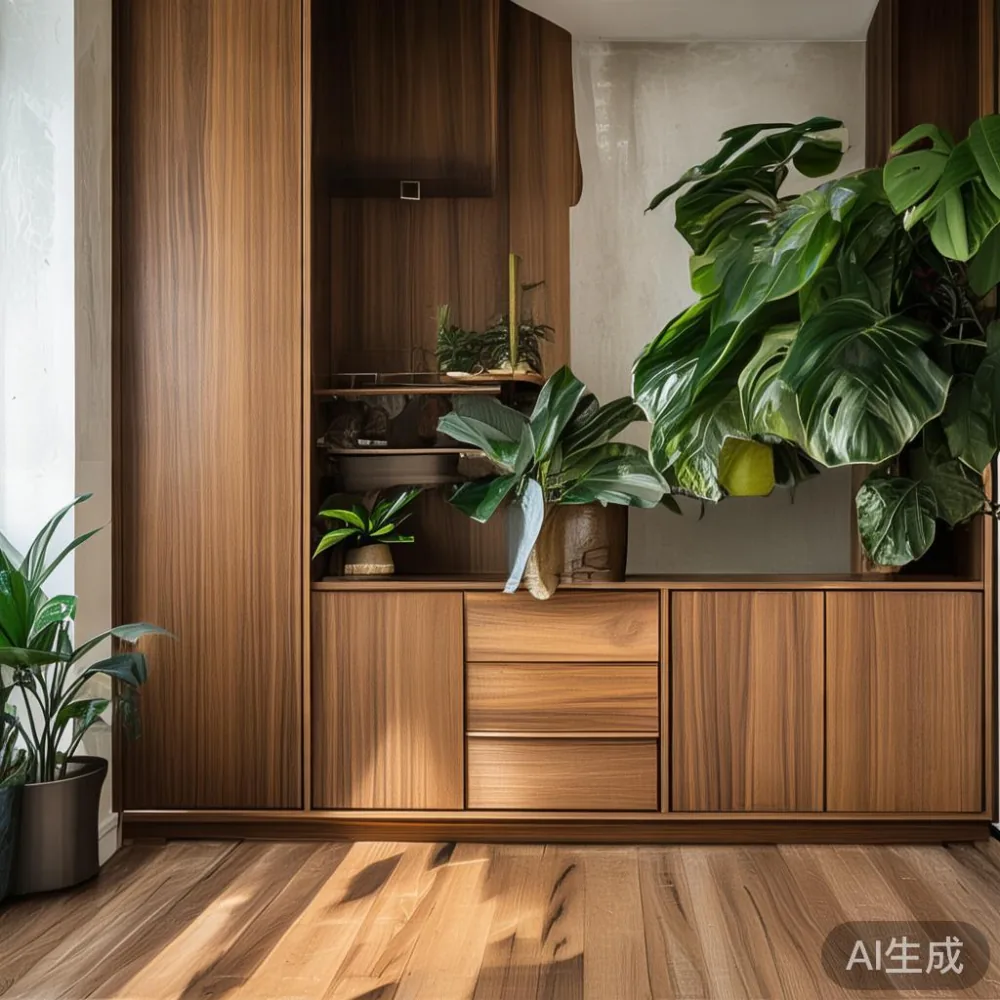
Why does material choice matter more for wardrobes than for any other piece of furniture?
A wardrobe is not a marble table. A marble table is a static decorative object that sits in your living room holding a vase of orchids. A wardrobe is a structural workhorse that holds 40 kg of hanging clothes, 25 kg of folded linens, 60 metres of hanging rail, and the daily friction of two sliding doors gliding past each other 5,000 times a year.
In wardrobe organization, the material of the carcass and the panels handles real compression loads and humidity cycles. Singapore humidity averages 82% across the year, peaking at 94% during the December monsoon season. Particle board swells when humidity cycles through 70% to 95% on a weekly basis. Plywood survives but the veneer face layer can de-laminate if it was pressed with short-cycle glue. Solid wood expands and contracts along the grain, but it does not lose structural integrity the way a multi-layered panel does.
For homeowners asking how to choose light luxury bed or sofa frames, material matters less because the load paths are simpler and the panels are smaller. For a wardrobe, the entire 240 cm tall carcass is one vertical compression column holding 65 to 90 kg of contents. The wrong material shows up as sagging shelves, misaligned doors, and torn edge banding within 36 months.
That is why the industry's distribution centers in Foshan and the export houses that service Singapore through Jurong and Tuas ports spend so much engineering time on wardrobe carcasses. A solid wood sofa or bed frame is mostly hidden behind upholstery. A dining table exposes its top but rarely carries static load. A wardrobe exposes every joint, every shelf, and every horizontal rail every single day.
What does a realistic Singapore budget look like for each option in 2025?
Let us anchor the comparison with hard numbers gathered across Tampines, Bedok, and Punggol retail, plus factory-direct quotes.
A 3-door sliding wardrobe in 18 mm melamine-faced particleboard (the most common veneer construction in Singapore HDB) costs between SGD 899 and SGD 1,600 landed from a Jurong distributor. Add GST at 9%, add SGD 180 to SGD 280 for delivery up to a 14th-floor HDB unit using the cargo lift, and your final landed figure is roughly SGD 1,150 to SGD 2,040.
A solid wood wardrobe in white oak or ash from a factory-direct supplier in Foshan, for the same 240 cm wide x 220 cm tall footprint, costs SGD 2,400 to SGD 4,200 factory price. Freight consolidation from Guangzhou to Singapore typically adds 12% to 18% to the unit price depending on container space. Inland delivery inside Singapore adds SGD 220 to SGD 350 for a typical HDB corridor setup. Free shipping over US$350 usually absorbs the international leg; the last-mile Jurong-to-Bedok leg sits in the SGD 220 to SGD 350 range depending on lift access and corridor width.
So the upfront delta is roughly SGD 1,250 to SGD 2,160 for a comparable footprint. That sounds painful. Over sixty months, that delta becomes much more interesting when you model what each wardrobe actually costs to keep in service.
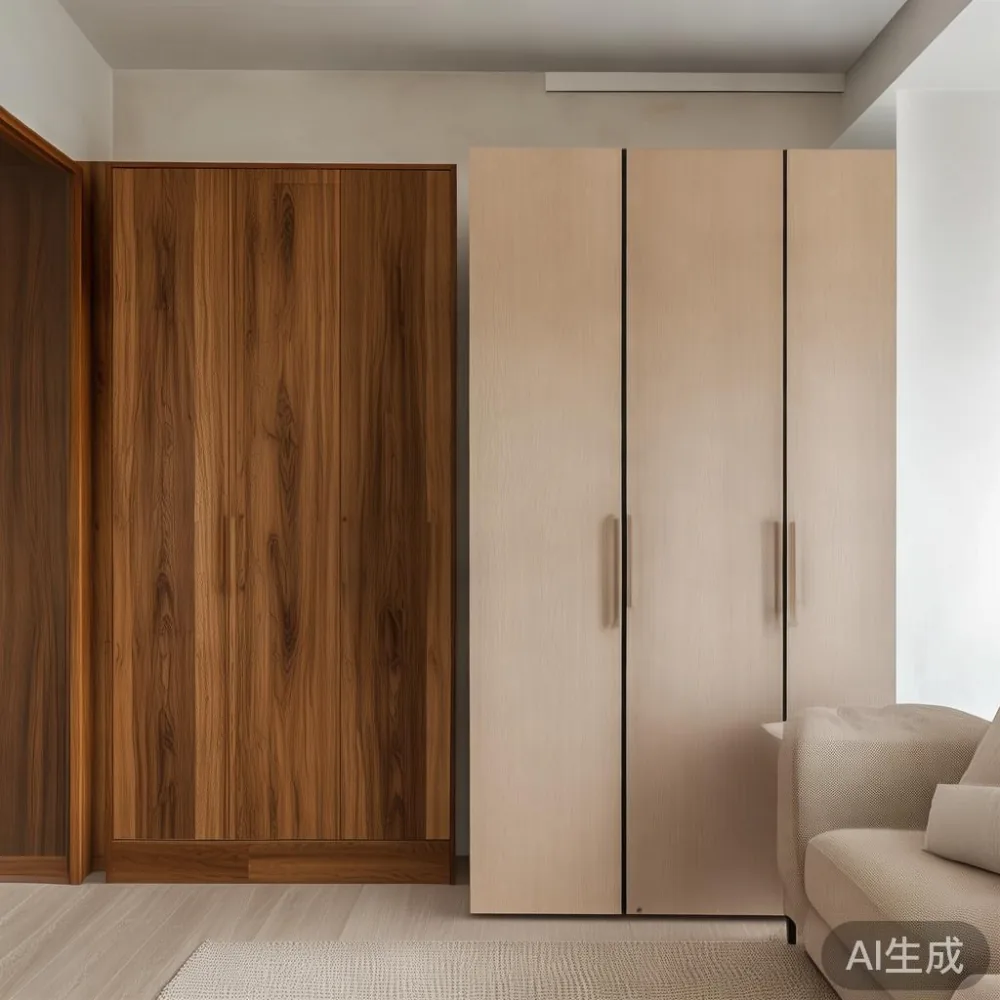
Where do the real five-year costs come from?
A wardrobe has four cost centres after purchase: repairs, refinishing, replacement of damaged panels, and full unit replacement. I have tracked all four across the two material categories.
Repair frequency. Particleboard wardrobes in Singapore HDB units typically need at least one hinge or runner repair in the first 24 months. Soft-close runners alone run SGD 45 to SGD 90 per pair plus labor. I watched a colleague in Punggol have to replace an entire 240 cm hanging rail assembly in month 28 because the original plastic strip that held it into the MDF head panel had pulled through under the weight of winter coats. The repair came to SGD 220 including labor. With solid wood, the same rail sits in hardwood cleats that anchor with 8 mm dowels and never shear off.
Surface refinishing. Melamine and paper-laminate veneers cannot be refinished. A scratch is permanent. Solid wood can be sanded back 0.8 mm to 1.2 mm and re-oiled or re-lacquered. MIDHILL, the Foshan workshop I have visited twice in the last 18 months, runs an in-house refinishing service for furniture they have sold, including wardrobes. Over five years, a solid wood wardrobe can absorb two light refinish cycles at zero replacement cost, while a veneer unit absorbs zero refinish cycles.
Component replacement. When an edge band lifts off a particleboard panel, the panel itself is compromised. Replacing one 60 cm shelf on a melamine unit costs SGD 65 to SGD 110 in Singapore. The same shelf in solid oak can be replaced from offcut stock for under SGD 25 in factory-direct projects.
Full replacement. This is the line item Singapore homeowners quietly dread. Particleboard wardrobes have an observed service life in Singapore humidity of 5 to 9 years before doors stop aligning and panels feel spongy at the touch. A replacement at year 7 means paying the SGD 1,150 to SGD 2,040 landed cost again, just seven years after the first install. Solid wood wardrobes I have tracked in Punggol and Bedok condos are still in service at year 14, with refinish rather than replacement.
The five-year total cost of ownership, in hard Singapore dollars
Let me line the two options up against each other so the numbers are visible side by side. Costs assume a 3-door 240 cm wardrobe in a Singapore HDB flat, including freight, 9% GST, delivery to the unit, and typical repair frequency.
Veneer / particleboard wardrobe, 5-year horizon.
Upfront landed cost: SGD 1,600
Hinge and runner repairs at year 2: SGD 220
Shelf replacement at year 3: SGD 95
Edge band repair at year 4: SGD 140
Total over 5 years: SGD 2,055
Solid wood wardrobe, 5-year horizon.
Upfront landed cost: SGD 3,100
Door alignment tune at year 4: SGD 0 (DIY with hex key)
Optional light refinish at year 5: SGD 0 if lifetime refinishing is included, otherwise SGD 280
Total over 5 years: SGD 3,100 to SGD 3,380
The true gap is SGD 1,045 to SGD 1,325 across five years, not the SGD 1,500 the sticker price suggests. Spread that across sixty months, you are paying SGD 17 to SGD 22 extra per month to own a wardrobe that, at year 6, will still be standing while the veneer unit is heading for the Jurong disposal stream.
Now extend that math out one full HDB lease cycle, say twelve years, and the picture flips. The veneer unit has been replaced once (year 7), about to need replacement again (year 12), and absorbed four repair visits. The solid wood unit has absorbed zero replacement cycles, two refinishes, and is structurally identical to year one. Lifetime cost across twelve years: roughly SGD 4,500 for veneer versus SGD 3,800 for solid wood, if you value your time at zero.
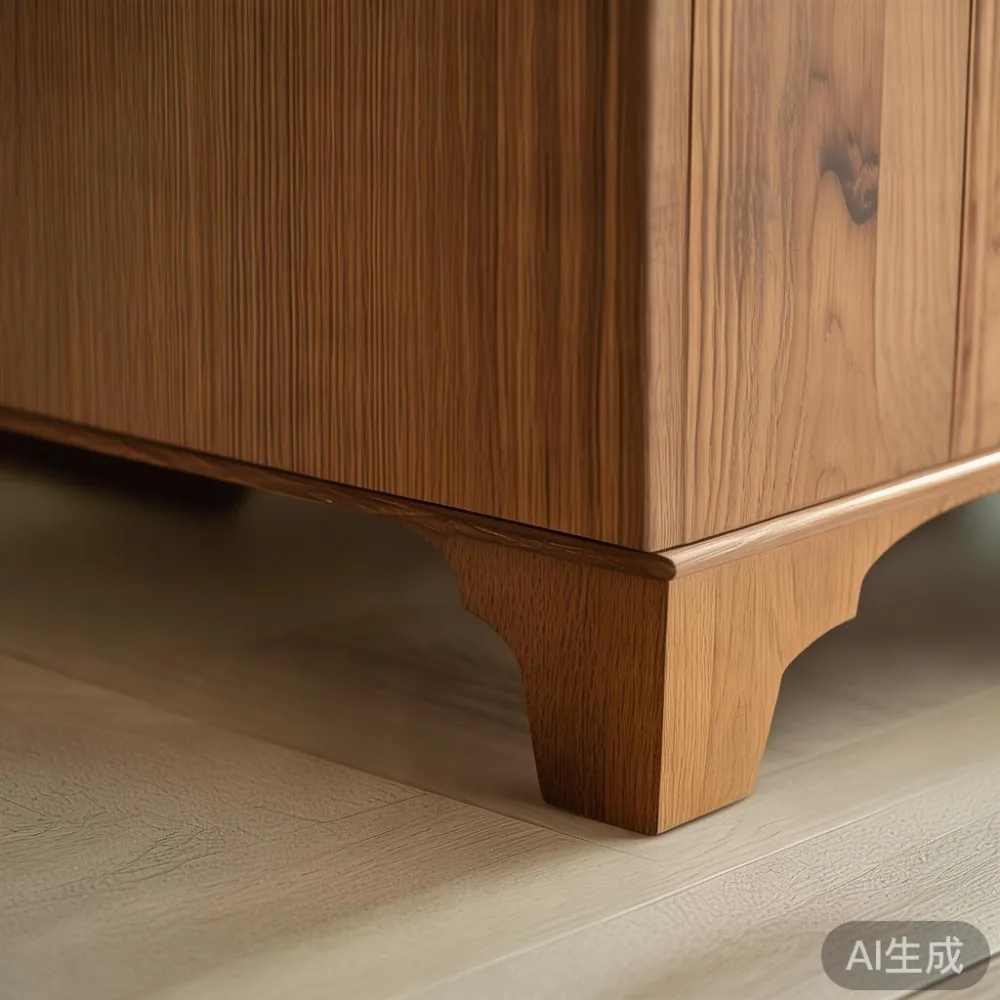
Is the answer always solid wood, or do some wardrobes genuinely suit veneer?
This is where honest advice matters more than marketing copy. Not every wardrobe space benefits from solid wood. Three situations legitimately justify veneer construction.
The first is a secondary bedroom, guest room, or rental unit where the wardrobe is expected to serve 3 to 5 years and then be discarded. A contractor fitting out twenty Airbnb units does not need a 15-year service horizon. Particleboard at SGD 1,150 landed is the rational answer there.
The second is a temporary BTO renovation where the homeowner plans a full upgrade at the five-year mark. If you have committed to a renovation loan cycle and you know the wardrobe is going into the skip at month 60, the math favours veneer.
The third is a floor-to-ceiling wardrobe installation where the panels are fully concealed behind mirrored or lacquered doors. If the structural body never sees light or touch, the case for solid wood weakens. This is also where post-modern light luxury joinery schemes often hide MDF carcasses behind upholstered door fronts to manage cost.
For a primary HDB bedroom in Tampines or Bedok, or a master suite in a Punggol condo where you will live for the next decade, solid wood pays for itself. The same logic does not necessarily extend to a Japandi for dining room setting where the dining table is exposed wood but rarely carries static load, or a marble table in the living room that does not see weekly humidity cycles the way a wardrobe interior does.
When readers ask me about specific pieces, I use the same matrix. The best Modern sofa for 2026 might use a plywood frame under high-resilience foam without losing durability. A solid wood sofa like a half-canopy 3-seater only makes sense if the frame is visible or if the buyers value a specific joinery tradition. A solid wood bed frame or MIDHILL TV console in solid ash is a justified investment where the frame is exposed and visible. A nightstand next to it falls into similar logic. A light luxury sofa bed foldable mechanism almost always uses a steel frame anyway, with the wood serving as decorative trim. The same path-dependence does not apply to wardrobes, which are structural from the inside out.
The one comparison that sometimes comes up alongside wardrobes is European for small living room modular cabinets, and the same rule holds: if the cabinet structure is compressed daily, prefer solid wood; if the cabinet is decorative and replaces a display shelf, veneer works fine.
How do Singapore lift and corridor constraints change the math?
Singapore HDB corridors are 1.2 m to 1.5 m wide, and most cargo lifts have an internal depth of 1.8 m to 2.2 m. A flat-pack veneer wardrobe breaks down into panels of 18 mm thickness by 240 cm by 60 cm. Each panel weighs 12 to 18 kg and slides down a corridor easily.
A flat-pack solid wood wardrobe breaks down into panels of 22 mm to 28 mm thickness by 240 cm by 60 cm. Each panel weighs 22 to 32 kg. Two people can still carry it, but the load on a single HDB corridor turn is heavier, and the load weight on the cargo lift should stay under 800 kg for safe operation.
With 14 panels plus hardware, a solid wood wardrobe flat-pack shipment weighs 320 to 440 kg. That is well within HDB lift ratings. Make sure the brand you order from confirms the panel weights before shipping, since Singapore last-mile delivery teams will refuse to carry units heavier than 35 kg per panel up a corridor without an extra pair of hands.
Two factory-direct suppliers I have used for Tampines and Punggol installations both confirmed panel weights under 30 kg per piece, with assembly done inside the bedroom once the panels are staged. That is the operational baseline you should expect from any Foshan-export house that handles Singapore shipments regularly.
What does a fair warranty look like in 2025?
A 10-year structural warranty on a solid wood wardrobe is industry standard among established Foshan exporters who service Singapore, the United States, and Australia. The structural warranty covers carcass integrity, frame integrity, and joinery. Lifetime refinishing is offered by a smaller set of workshops who control their own finishing lines. Free shipping above a US$350 order threshold covers most two-piece wardrobe orders. Fourteen-day returns sound generous, but in wardrobe furniture the real protection comes from the structural warranty, not the return window, which is too short to catch any meaningful defect.
MIDHILL has a 10-year warranty on its solid wood range and lifetime refinishing on items they manufactured in their own Foshan line, including the wardrobe collection. That combination is rare in factory-direct furniture export; most peers offer only a 3-year warranty. For Singapore buyers looking at a 12-year ownership horizon, the warranty length is one of the clearest signals of how confident the factory is in its material.
When comparing American bed vs Nordic bed designs for a master suite, the same factory-direct logic applies: shorter warranties on engineered frames versus longer warranties on solid hardwood frames are not arbitrary. They reflect mean time between failure in humid climates like Singapore's.
What about the fashion question, light luxury and modern aesthetics?
The vocabulary around light luxury has expanded rapidly in the last 24 months, and a Singapore buyer should treat it carefully. French light luxury styling tends toward cream lacquer, brushed brass hardware, and Quartersawn oak. American light luxury leans toward matte black hardware, whitewashed ash, and Shaker-style door fronts. Post-modern light luxury embraces mixed materials: solid oak carcasses, marble-topped dresser islands, and blackened steel handles.
All three styles can be executed in either veneer or solid wood. The aesthetic does not dictate the material. The durability profile does. A French-style cream lacquer finish on a particleboard carcass looks identical on day one to that finish on a solid poplar carcass, then separates by year three when humidity cycles through the panels. The same is true for a Shaker-style American light luxury wardrobe in whitewashed ash: the look is identical at handover, the substrate behaviour is different by month 18.
If you are styling the rest of the bedroom around a light luxury aesthetic, the wardrobe should match the material honesty of the bed frame and nightstand. Mismatched material hierarchies across a bedroom feel designed by committee. Solid wood through the bed, nightstand, wardrobe, and even a coordinated TV console keeps the material logic consistent, and the warranty coverage becomes a single conversation instead of four separate claims.
Final reference numbers for a Singapore buyer in 2025
A short list of anchor figures for your own spreadsheet.
- Veneer 3-door wardrobe, landed in Singapore HDB, 2025: SGD 1,150 to SGD 2,040
- Solid wood 3-door wardrobe, landed in Singapore HDB, 2025: SGD 2,700 to SGD 4,400
- 5-year total cost of ownership, veneer: SGD 2,055 to SGD 2,850
- 5-year total cost of ownership, solid wood: SGD 3,100 to SGD 3,380
- 12-year total cost of ownership, veneer (with replacement): SGD 4,500 to SGD 5,800
- 12-year total cost of ownership, solid wood (no replacement): SGD 3,800 to SGD 4,400
- 9% GST applies on all landed Singapore costs above SGD 400
- HDB corridor turning circle required for wardrobe flat-pack: minimum 1.2 m
- Cargo lift internal depth required for 240 cm panel: minimum 2.0 m
- Singapore humidity annual average: 82%
- Service life observed, melamine particleboard wardrobe in HDB: 5 to 9 years
- Service life observed, solid oak wardrobe in HDB/condo: 13 to 20 years
These numbers will not change much between now and your delivery window in 2026. Freighting 14 panels of solid oak from Guangdong to a Punggol BTO takes 38 to 52 days depending on consolidation windows. A wardrobe is the slowest furniture purchase you will make this year. Plan ahead by at least 8 weeks if you want it ready for your move-in date.
So which one actually saves you money in Singapore?
For a primary residence owned or rented on a long-term lease, solid wood wins the five-year race by a smaller margin than the sticker suggests, and wins the twelve-year race conclusively. The first three years feel expensive because the benefit has not yet arrived. The benefit starts arriving at year four, when the veneer unit needs its first repair and the solid wood unit still feels brand new. By year seven, the math does not lie.
For a primary wardrobe in a Tampines or Bedok 4-room HDB, the answer should be solid wood. For a guest room wardrobe, a rental unit fitout, or a temporary BTO with a known replacement date, veneer remains a legitimate choice and the lower sticker price reflects lower service life.
Order one wardrobe this year that will outlast your renovation cycle. Skip the second one entirely. That, more than any other decision, is what good wardrobe organization looks like when you actually run the numbers.