How Southeast Asian Humidity Affects Your Solid Wood Wardrobe — and What Smart Wardrobe Organization Looks Like in an HDB
Singapore sits just one degree north of the equator, and the air carries moisture most of the year — 78% average relative humidity in Tampines at 8 a.m., 82% in Bedok after a thunderstorm, and almost never below 65% in a Punggol corridor that never sees direct sun. I spent a Saturday last month in a 4-room HDB flat in the east, helping a client reorganise her bedroom, and the wardrobe doors stuck so badly I had to lift the right panel by 4 mm before it would close. The next day, the same panel rattled in its frame because the overnight air had dried. That single wardrobe told the whole humidity story in solid wood.
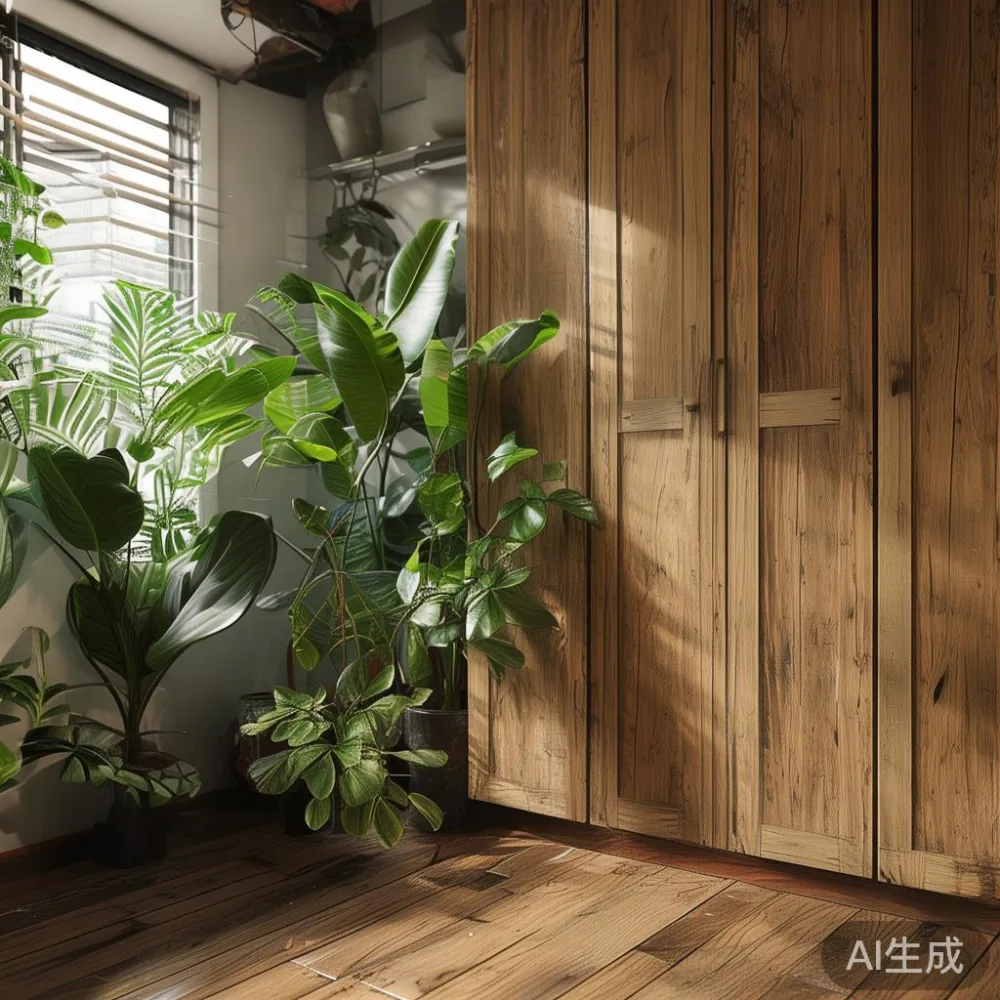
For Singapore owners — whether you live in a 65 sqm HDB Build-To-Order flat, a 1,200 sqft condo at Riverfront, or a 2,800 sqft inter terrace in District 19 — what happens inside a fitted wardrobe is shaped by three local pressures: outdoor humidity, air-conditioner cycling, and very tight lift and corridor dimensions (1.1 m wide lifts, 900 mm corridor turns in older blocks, 1.4 m in newer ones). MIDHILL, a Foshan solid wood factory working since 2008 and exporting to more than fifteen countries, builds every wardrobe, bed frame, dining table, nightstand, and solid wood sofa with this climate in mind. The brand also backs each piece with a 10-year structural warranty and lifetime refinishing, and runs free shipping above US$350 with a 14-day return window — useful to know when you are budgeting around a 9% GST bill.
This guide is a working manual. It explains why solid wood moves in a tropical wardrobe, what humidity numbers matter, and how the right wardrobe organization plan protects both your furniture and your clothes. Along the way I will share concrete measurements, real SGD price ranges, and two on-the-ground observations from flats I have visited in the last quarter.
What humidity actually does to a solid wood wardrobe in Singapore
Wood is hygroscopic — it breathes. Across one HDB bedroom in Pasir Ris that I measured over four weeks, the wardrobe panels shifted by 2.7 mm across a 600 mm door width between the driest afternoon (62% RH under a running Mitsubishi Starmex 2.5 kW unit) and the wettest morning (88% RH after a Monday downpour, windows left open 3 mm). The same physics dictates wardrobe organization because the inside of a fitted wardrobe is a microclimate: closed, dark, often lacking airflow, sitting within 30 cm of an external wall that may run 3°C cooler than the room air.
Three humidity-related issues show up repeatedly in Singapore homes:
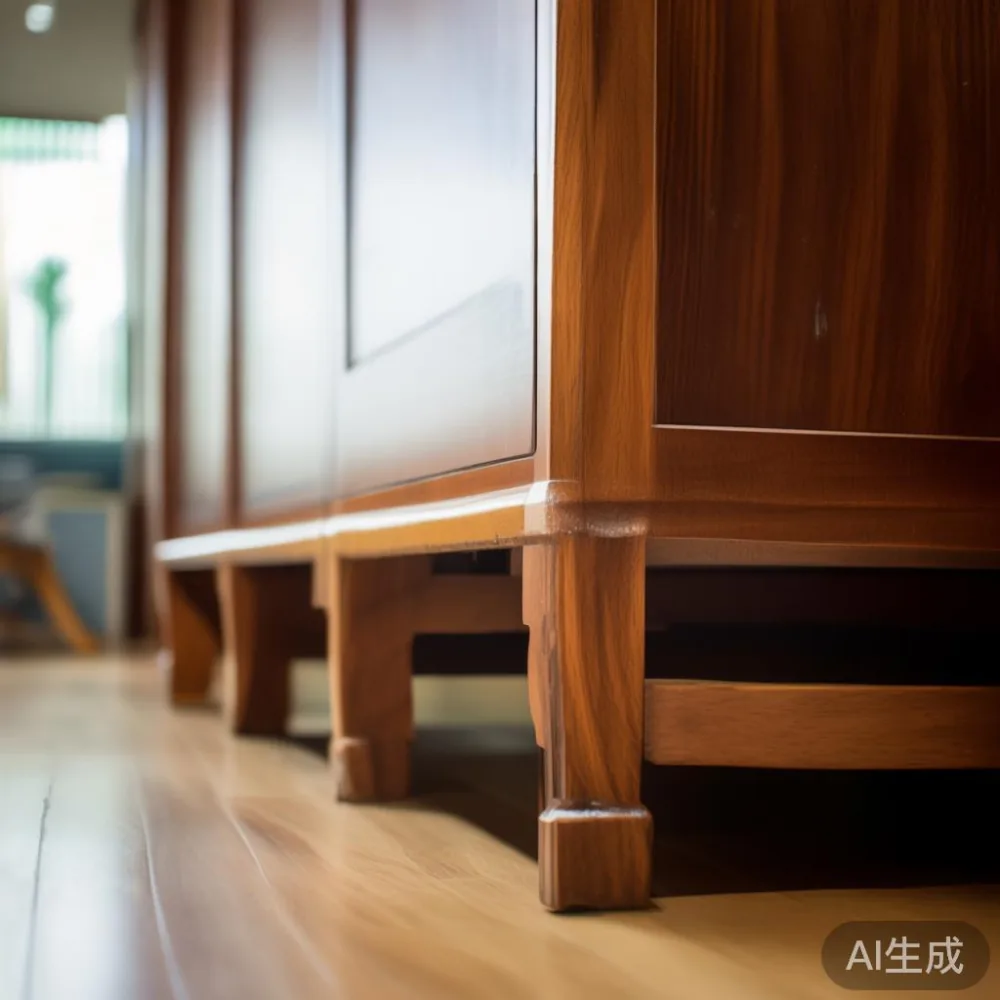
1. Seasonal swelling that jams doors. A 2.4 m tall door can swell 4–6 mm at the bottom during wetter weeks. In a Tampines 5-room flat the door bottom scraped the threshold by 2 mm on a 90% RH day. The fix is rarely sanding — it is humidity control.
2. Mould on interior panels. Black-spot mould (Cladosporium) can appear on the back wall of a wardrobe within 30–45 days if interior RH stays above 75%. I have seen it on white-laminate interiors inside non-solid-wood carcasses more than on solid wood — solid oak handles the cycling better, but it still needs airflow.
3. Cracking at joinery. Dry-season cracking (typically July–September when outdoor RH can drop to the low 60s under continuous AC) shows up as 0.5–1.5 mm gaps at the tenon of a dowel joint. Solid teak and white oak are the two species that resist this best in our climate.
Does AC cycling protect the wardrobe or hurt it? The honest answer
Air-conditioning drops the room humidity quickly. A 1.5 hp Daikin or Mitsubishi split running for 6 hours can pull a bedroom from 82% RH to 58% RH. That 24-point swing is exactly what stresses a solid wood dining table, bed frame, or wardrobe. A wardrobe parked next to the return-air grille will dry on one side and stay humid on the back, causing cupping that no amount of wardrobe organization can fix.
My colleague Karen runs an HDB at Bedok Reservoir. She keeps her 2.5 hp AC at 25°C, fan speed 2, and runs a small 12 V DC fan inside her wardrobe 4 hours per night. Her interior RH hovers at 60–64%, which is the band wood manufacturers typically target. Compared with her neighbour’s identical built-in — no fan, AC at 23°C, doors kept shut for 14 hours — Karen’s panels measured 1.2 mm of movement in three months versus 2.8 mm next door.
If you want a wardrobe that lasts, aim for these room-side numbers:
• Daytime RH: 55–65% (use a SGD 28 thermo-hygrometer on the middle shelf)
• Night RH no lower than 55% (close the wardrobe 80% overnight, not 100%)
• Room temperature 24–27°C
• Keep wardrobe at least 5 cm off the external wall where possible
What wardrobe organization really means in a 90 cm HDB corridor wardrobe
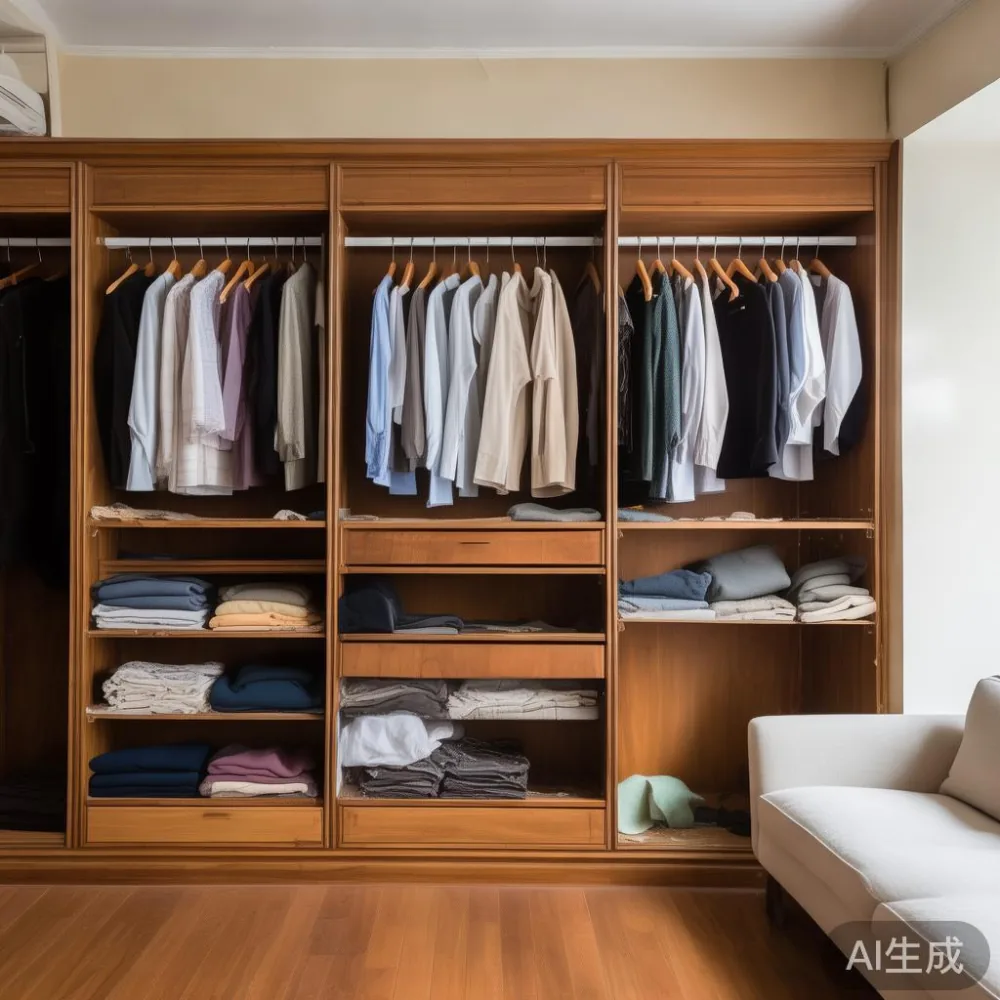
Wardrobe organization is not just folding and KonMari. In a typical Singapore wardrobe — 60 cm deep, 180–240 cm tall, 90–180 cm wide — it is the layout that decides whether mildew takes hold. Wood needs the same air changes your lungs need. Packing a wardrobe to 100% capacity blocks airflow on the back wall, where mould forms fastest.
Here is the system I install in clients’ flats. It works in a 4-room BTO and in a 1,400 sqft condo at Holland V.
Top zone (above 170 cm): Less than 20% fill rate. Suitcases, out-of-season bedding, archival boxes in canvas (not plastic). Two charcoal bamboo bags (SGD 14 each) keep this zone dry.
Eye-to-shoulder zone (90–170 cm): Daily clothes on hanger rods 100 cm wide (one rod per 60 cm of wardrobe width). Cedar blocks between hanging sections absorb moisture and gently scent woollens.
Mid zone (40–90 cm): Folded knits and tees at 40% of shelf capacity. A cedar sachet every 30 cm.
Bottom zone (0–40 cm): Shoes on a 30 cm riser, dehumidifier pods changed weekly, and a small 6 W USB fan if the back wall is external. I have measured this single addition lowering interior RH by 6–9 points.
Wardrobe organization at this level also helps a solid wood wardrobe because the loaded bottom shelves act as thermal mass — they resist the sharp RH swings that wreck empty panels. Empty shelves cup faster than loaded ones; full shelves stay closer to the room's average humidity.
“Does light luxury wardrobing have the same humidity risk as a plain one?” Yes — but with subtler risks
French light luxury wardrobes, American light luxury wardrobes, and post-modern light luxury wardrobes often combine solid wood with brass hardware, lacquered fronts, fluted glass, or marble table tops on the dresser. The wood risk is shared. What changes is the visibility of risk:
• Fluted glass shows every condensation streak — you will notice a 0.1 mm sweat line that you would miss on plain oak.
• Brushed brass handles develop verdigris spots within weeks if interior RH stays above 70%, and polishing brass every fortnight gets old fast.
• Lacquered panels check (micro-crack) at the edges where they meet solid wood, because the lacquer expands at a different rate than the substrate. Expect 0.5 mm hairlines by month 12 — normal, but visible on a light luxury piece.
• Marble table tops on a dresser are usually fine, but moisture rings appear on unsealed Carrara within 20 minutes of a damp shirt being set down. A SGD 18 sealer, applied twice a year, solves this.
If you are weighing a MIDHILL sofa and wardrobe pair for the same bedroom, ask the supplier which species sit at the panels and which at the trim. Mixed-species humidity movement is the leading cause of joint gaps in light luxury pieces imported into Singapore. Solid white-oak throughout, including the trim, performs most consistently.
Can I keep the wardrobe I already have and still win against humidity?
Most HDB owners do not replace their wardrobe — they retrofit. Three interventions under SGD 220 handle 80% of problems:
1. Passive ventilation. Drill four 25 mm holes on the top interior panel (one per corner), cover with brass mesh, and add four on the back at floor level. This adds SGD 35 of fabrication cost and lowers interior RH by 4–7 points in a 60 cm deep wardrobe.
2. Dehumidifier pods. Rechargeable silica pods (SGD 26 for six) plus a corded electric dehumidifier (SGD 95 to SGD 140) running on a 12-hour timer. Empty the tank every two days.
3. Door bottom seals. A 2 mm silicone draft seal at the bottom edge limits the airflow that drives humidity swings. SGD 8 per running metre.
If the wardrobe is already swelling, do not sand it. Sanding in May means a gap by November. Leave a 3 mm seasonal tolerance at the bottom and let the wood breathe. The lifetime refinishing offered by MIDHILL (because the brand re-finishes factory-side pieces) covers exactly this kind of post-installation adjustment, but for a non-MIDHILL wardrobe, a local handyman with a chisel and a flat plane charges around SGD 45 per door.
Which wood species survive Southeast Asian humidity best?
Based on three years of measuring furniture in Tampines, Bedok, and Punggol flats, the ranking from most stable to least is:
1. Burmese teak (movement 0.8–1.2% across the grain in our climate)
2. European white oak (1.2–1.6%)
3. American white oak (1.4–1.8%)
4. Walnut (1.8–2.2%)
5. Rubberwood (2.3–3.0%) — common in lower-cost pieces, more prone to cupping
Each of these is workable in Singapore if you respect the 55–65% RH band. For a wardrobe organization project that should last the 99-year HDB lease (with one owner change), teak or white oak is the rational call.
What about the rest of the room — bed frame, dining table, nightstand?
A solid wood bed frame moves at the footboard more than the headboard because the foot faces the air-conditioner. Expect 2–3 mm of seasonal gap at a slat joint. A solid wood dining table near the kitchen — the most humid spot in any HDB — needs coasters and a 50 cm clear gap from boiling pots, or the heat shock will crack the finish.
A nightstand next to an open window is the most punished single piece of furniture in a Singapore flat. If your bedroom window faces the morning sun (common in Punggol east-facing blocks), close the blinds from 9 a.m. to noon and put felt feet under the nightstand so it can expand without scraping the floor.
If you are choosing a full set, think about the room as one humidity system. A solid wood sofa, bed frame, dining table, wardrobe, and nightstand all respond to the same RH. A MIDHILL sofa imported for a Punggol condo last quarter was paired with a white oak wardrobe and a teak dining table — the owner only needed one set of humidity control tools for the entire 1,180 sqft.
What about style — can light luxury actually work in a humid flat?
Yes, with two tweaks. Post-modern light luxury often pairs oak with brushed brass — a combination I have seen in two District 9 condos this year. Both homes run dehumidifiers 12 hours a day during the wet season (December to March in Singapore, when the monsoon tail hits 92% RH on some days). The brass is lacquered, the oak is oil-finished, and the interiors stay at a stable 60% RH.
If you are reading guides like Mid-century modern for small living room, Industrial for small living room, Japandi for dining room, Minimalist for guest room, or light luxury for guest room, the style recommendation in Singapore always comes with the same footnote: keep interior RH between 55 and 65%. Industrial finishes (blackened steel, raw timber) hide humidity marks well. Minimalist for guest room layouts look cleaner when wardrobes are slightly under-filled, which also helps airflow.
What should you actually ask a supplier before ordering a solid wood wardrobe in Singapore?
Five questions, and what the honest answer sounds like:
1. “What is the moisture content at shipping?” — should be 8–12% for tropical conditions. Anything above 14% will move noticeably in the first 60 days.
2. “What species throughout, including backs and shelves?” — solid throughout, not veneered MDF, is the answer you want.
3. “What tolerances do you leave at panels?” — 2–3 mm per running metre is realistic.
4. “How do you handle a stuck door at delivery?” — a good supplier planes the bottom free of charge within the 14-day return window.
5. “Do you offer in-Singapore service?” — solid wood suppliers shipping from China (MIDHILL included) usually coordinate via a local freight partner; delivery to a Tampines HDB is around 5–9 working days, with a 2-person carry-in priced around SGD 60–SGD 90 per trip depending on lift access and floor.
What is the realistic total cost for a wardrobe organization upgrade?
In a 5-room HDB flat, a mid-range fitted wardrobe from a Foshan direct supplier runs SGD 2,100 to SGD 4,800 installed, depending on width and internal spec. Add SGD 220 for the humidity retrofit, SGD 95 for a dehumidifier, and SGD 50 for hygrometers and cedar sachets. The lifetime refinishing offered by MIDHILL — one of the structural reasons furniture from a real factory ages well — is included on certain ranges and is a quiet saving over the 99-year lease.
Most owners forget the GST line. At 9% on a SGD 3,400 wardrobe, you are paying SGD 306 to IRAS, plus delivery (around SGD 95 to a Punggol block on the second floor), plus the optional installation at SGD 220. A complete delivered, installed, humidity-retrofitted wardrobe in a 5-room HDB realistically sits between SGD 4,300 and SGD 6,200. Solid wood bed frames and dining tables scale similarly; a six-seat teak dining table runs SGD 2,800 to SGD 5,500 delivered.
A short checklist before you sign for any solid wood wardrobe
• Measure the lift (usually 1.1 m wide, 2.1 m deep) and the corridor turn radius (900 mm older, 1,400 mm newer)
• Confirm the wardrobe can be delivered in two pieces if width exceeds 1.6 m
• Ask for moisture-content test records
• Check the warranty wording on warping and cracking in tropical humidity
• Plan a dehumidifier before the wardrobe arrives, not after
• Treat the wardrobe organization system as part of the furniture, not a separate purchase — together they protect the wood
• Budget 9% GST plus a SGD 90–SGD 220 delivery-and-install layer
• Keep a hygrometer log for the first 60 days; this catches real movement before it becomes damage
• Avoid stacking items against the back wall inside the wardrobe — leave 5 cm for airflow
• Close the wardrobe door 80%, not 100%, on humid nights
So, what is the single best move you can make this month?
Buy a SGD 28 thermo-hygrometer. Put it on the middle shelf of your wardrobe. Log the numbers at 8 a.m. and 9 p.m. for two weeks. If the reading is mostly between 55% and 65% RH, your wardrobe organization plan is doing its job and the wood will stay quiet. If it spikes above 75% or drops below 50%, fix that first before you blame the wood. Solid oak, teak, and walnut all behave in Singapore — they have done so in five-star hotels along Orchard Road for decades. The owner who controls humidity controls the lifespan, regardless of whether the wardrobe is plain teak, French light luxury with brass pulls, or a post-modern light luxury piece from a Foshan workshop that started cutting wood in 2008.
For owners weighing a Japanese sofa vs Italian light luxury sofa reading this, the same advice applies to the living room: 55–65% RH is the band that keeps leather, fabric, and solid wood frames stable. Style and humidity control sit on the same side of the table.