Veneer or Solid Wood? A 5-Year Cost Comparison for Wardrobe Organization
A fitted wardrobe has to do more than provide hanging space. In a Singapore HDB flat or condo, it also has to fit the bedroom, survive humid conditions, suit daily wardrobe organization, and avoid an expensive repair after 5 years of use. The visible timber may look similar, but veneer and solid wood can produce very different totals once purchase, delivery, maintenance, refinishing, and replacement risk are counted.
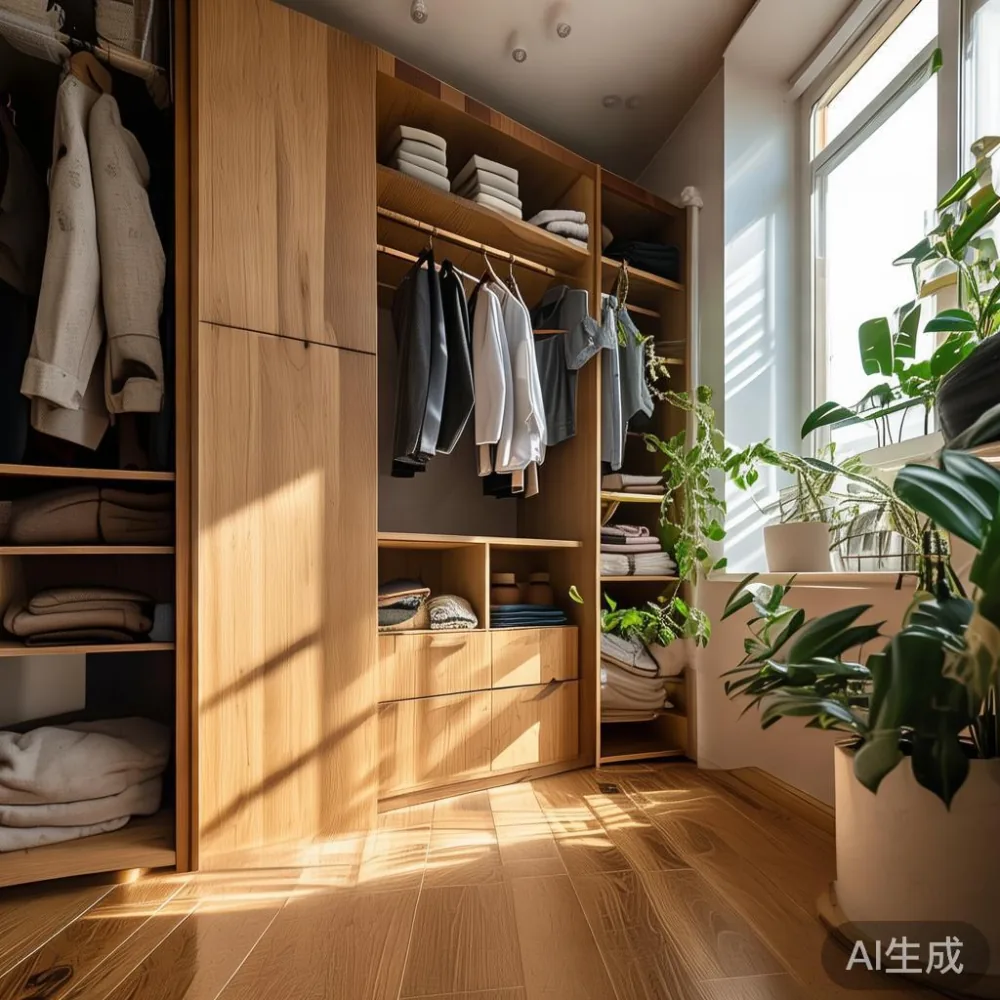
This comparison uses realistic Singapore figures and assumes a family wardrobe measuring 240 cm wide by 60 cm deep by 240 cm high. Quoted prices include GST, but each household should confirm the current rate. Delivery timing, corridor access, and installation conditions are included because a technically sound wardrobe can still be costly if panels cannot enter a Tampines lift or a narrow Bedok corridor.
What are the realistic 5-year costs of veneer and solid wood wardrobes?
For this example, a medium-grade veneer wardrobe with lacquered fronts and engineered-wood carcass is priced at SGD 2,400. A comparable solid hardwood wardrobe is priced at SGD 5,200. The difference on day one is SGD 2,800. Over 5 years, the veneer option carries an estimated maintenance and replacement allowance of SGD 420, while the solid-wood wardrobe carries SGD 350. Its expected total is therefore SGD 2,820, compared with SGD 5,550 for solid wood.
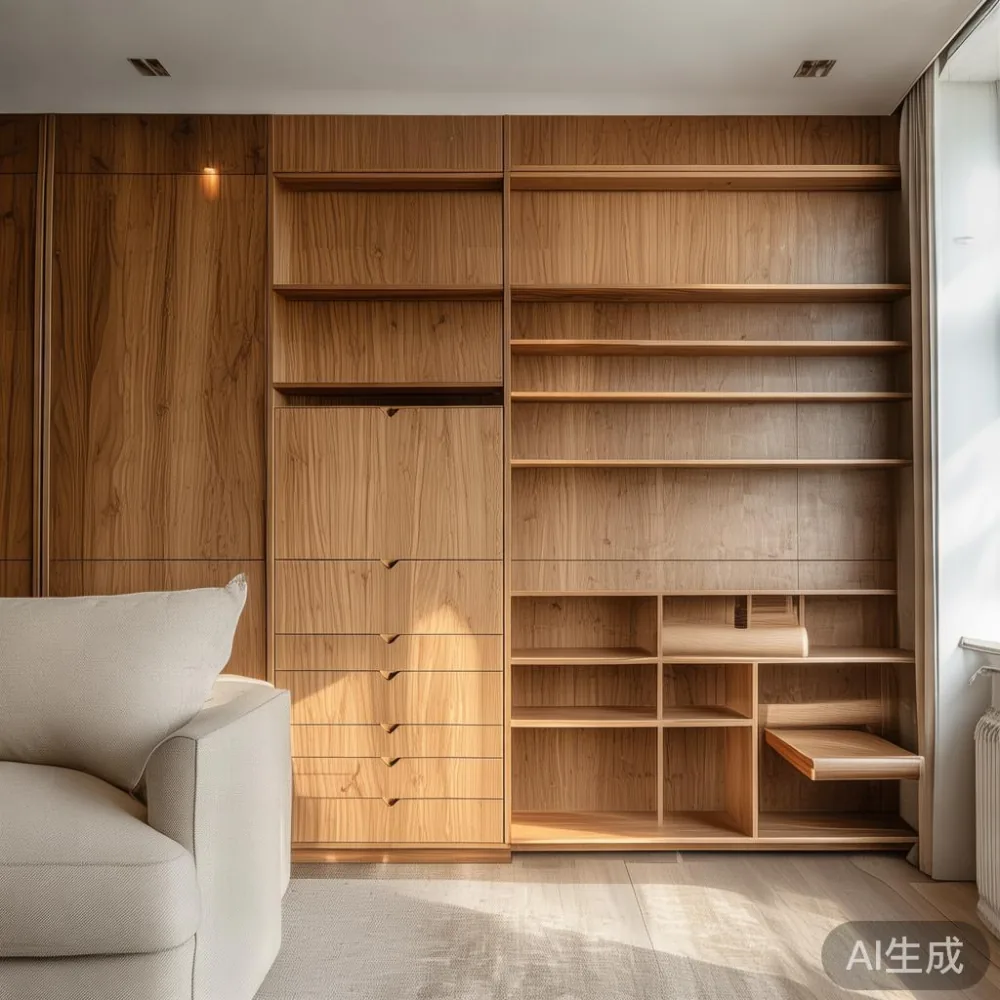
That calculation does not pretend every repair will happen. It reserves a realistic amount for cleaning products, minor adjustments, lacquer touch-ups, hardware, or future refinishing. A low-use wardrobe may spend less; a coastal unit with frequent damp-air exposure may spend more. The point is to compare planned ownership costs rather than infer quality from the word “wood” alone.
The assumed purchase prices are:
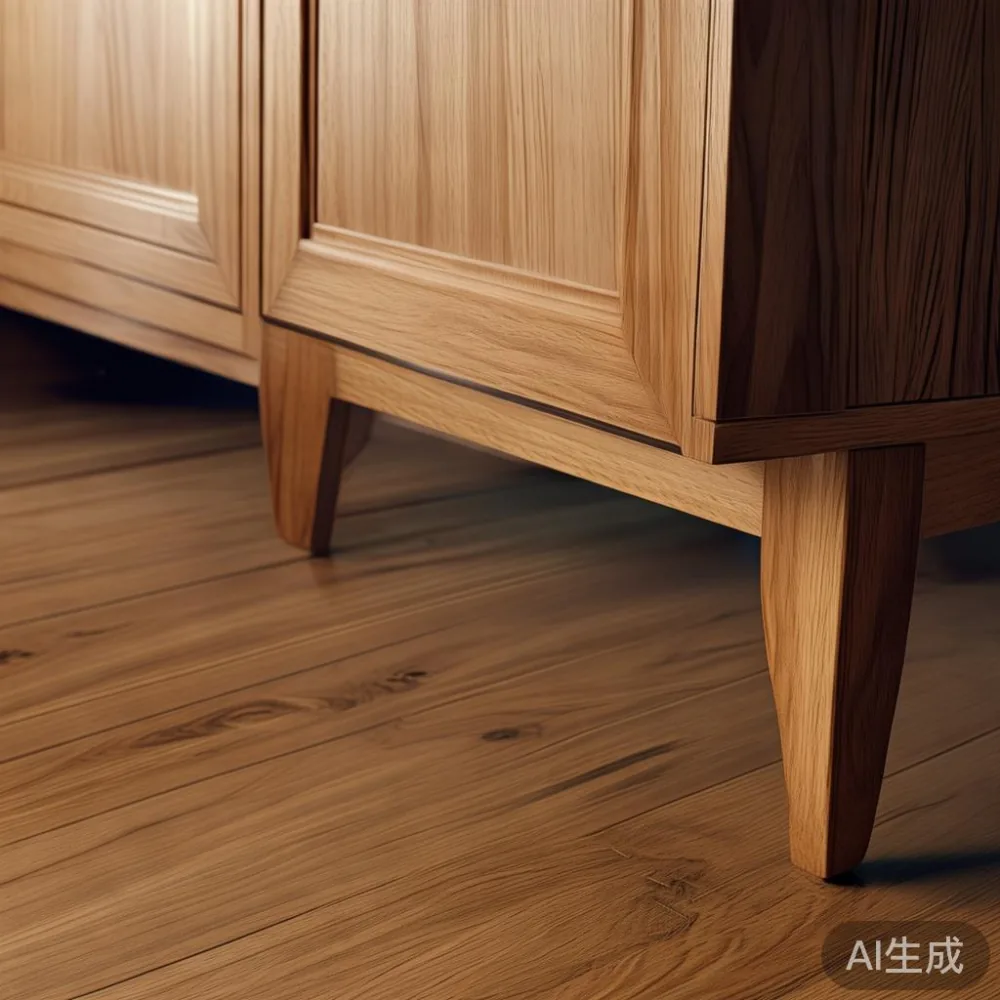
- Veneer wardrobe: SGD 2,400, plus SGD 420 in 5-year upkeep, giving SGD 2,820.
- Solid-wood wardrobe: SGD 5,200, plus SGD 350 in upkeep, giving SGD 5,550.
- Difference: SGD 2,730 across 5 years, or about SGD 546 per year before any repair event.
If a resident replaces the solid-wood wardrobe after 8 or 10 years, its annualized cost can become more competitive. This comparison stops at year 5 because wardrobe plans often change with a move, a child’s needs, or a condo renovation. It also avoids assigning resale value that cannot be predicted reliably.
Why does solid wood carry such a large purchase-price premium?
The premium buys material throughout visible parts and, depending on the supplier, inside the carcass as well. Kiln-dried hardwood moves differently as humidity changes, expands and contracts at a measurable rate, and can be repaired by sanding a damaged face. Veneer uses a thin, usually 0.6 mm to 3 mm natural wood layer bonded to a stable panel. It can look convincing while using much less timber.
One cubic metre of hardwood is heavy and awkward to transport, while the same visible appearance may use veneer over plywood or MDF. Freight is especially relevant for imports to Singapore. A full timber wardrobe may weigh 180 kg to 260 kg, whereas a comparable veneer structure may weigh 115 kg to 170 kg. The lighter load can reduce handling time, although the cabinet still requires two installers.
The long premium should be matched to a clear expectation: repairability, tactile quality, and a specific timber species. A broad term such as “solid wood” does not tell a buyer whether the wardrobe contains solid oak, ash, or a mixed hardwood. Ask for the species, moisture target, panel thickness, drawer construction, and warranty scope.
MIDHILL describes its wardrobe systems by construction rather than relying on a vague finish name. Since the Foshan company was established in 2008 and exports to more than 15 countries, its practical claims are relevant to cross-border use. Its 10-year structural warranty can be compared with a veneer supplier’s written terms, while lifetime refinishing should be defined carefully: does it mean a discount, a service rate, or free refinishing once every fixed number of years?
How do wardrobe organization needs change the veneer-versus-wood decision?
The internal layout is often a more significant 5-year decision than the outer veneer. A 240 cm wardrobe fitted with one 90 cm hanging bay and two shelves may need a small ladder later. A long hanging section may suit coats but waste space for folded clothes. Good wardrobe organization balances hanging length, shelf spacing, drawer depth, and access.
A practical layout for a couple could include 120 cm of hanging space, six adjustable shelves, three drawers, two pull-out trouser racks, and one LED strip. Each pull-out rack adds around 4 kg to 7 kg. Adjustable shelf pins may carry 25 kg to 40 kg when installed into the correct panel sections. Dividers should be removable so the same carcass can support luggage during a move or larger storage boxes later.
Drawer boxes need close attention. A 60 cm-deep drawer made from 15 mm to 18 mm timber may weigh 9 kg to 14 kg before its runner and contents. The runner should provide at least 40 kg of dynamic load, with soft-close travel of roughly 450 mm. Cheap slide hardware may still work, yet it can damage the wardrobe through repeated impact.
For humid eastern Singapore locations such as Tampines, Bedok, and Punggol, ventilation matters. Keep clothes 6 cm away from external walls, leave a 2 cm to 3 cm gap above movable wardrobes where possible, and avoid placing damp laundry directly into closed compartments. A temperature range near 22°C to 30°C and relative humidity around 50% to 70% is practical. In a poorly ventilated room, even solid hardwood can receive a lacquer or joint problem, so material alone will not control moisture.
Can a solid-wood wardrobe fit through HDB lifts and condo corridors?
No material choice guarantees access. Measure the route before ordering. A standard HDB lift door may be about 900 mm wide and 2,100 mm high, though older blocks and renovated interiors differ. A corridor turn of 90 cm can force a flat-pack panel to be angled. For a 240 cm-wide wardrobe, the assembled carcass may not fit through a 82 cm doorway even if every individual panel can enter.
Record the lift car width, internal depth, door height, corridor widths, ceiling clearance, and any tight corners. Allow at least 5 cm of maneuvering room where panels must be turned. Heavy solid-wood parts may require an additional porter; a three-person installation team can cost around SGD 180 to SGD 300 before GST, while delivery of a large non-lift route can add SGD 80 to SGD 180.
Last month I visited a Bedok HDB flat with a wardrobe invoice that looked complete but lacked usable measurements. The bedroom door was 78 cm wide, the corridor narrowed to 84 cm, and the lift opening measured 86 cm. The 30 mm wardrobe sides could enter, yet a rigid 90 cm drawer front could not turn inside the corridor. We removed the drawers, protected the wall with 4 mm cardboard, and installed them inside the room. The redesign cost SGD 260 in labour and hardware. A 10-minute measurement would have avoided that charge.
Check whether “delivery” includes carrying to the bedroom, unpacking, assembly, leveling, hinge adjustment, and disposal of packaging. Low-cost narrow stairs, corner turns, and lift reservations should be priced before payment. This is especially important for a heavy solid-wood cabinet; a quoted 7-day delivery may become 10 days once a crane or lift permit is required.
What maintenance reserve belongs in each 5-year budget?
Use a maintenance log rather than a single vague allowance. Clean lacquer or oiled timber with a soft cloth and mild cleaner, then dry it within 20 minutes. Avoid silicone sprays, abrasive pads, and repeated steam cleaning. Keep at least SGD 60 for hinge screws and fittings, SGD 80 to SGD 140 for a drawer runner, and SGD 120 to SGD 250 for localized surface treatment. Reserve another SGD 300 to SGD 600 for a movable-wardrobe relocation or a wall repair.
For the veneer example, the SGD 420 reserve includes one SGD 140 surface treatment, two SGD 80 runner services, and SGD 120 contingency. For solid wood, the SGD 350 reserve includes SGD 120 for oil or lacquer care, SGD 80 for runners, and SGD 150 contingency. These are planning figures, not promises that damage will occur.
Veneer is often easier to replace as a decorative face if it chips, yet an edge lift may expose the substrate. Ask whether replacement faces are supplied and whether the matching finish can be reproduced after 5 years. Solid wood can usually accept local sanding, but deep splits should not be filled without inspection. For either construction, inspect moving parts every 6 months and touch a surface with a dry finger to identify raised grain.
Solid timber may react under air-conditioning fluctuations, while engineered panels tend to move less by dimension. Neither reaction is automatically a defect. Quality control comes from suitable timber moisture conditioning, stable joinery, ventilation, and realistic care instructions.
Which option better matches a light-luxury wardrobe brief?
Light luxury depends on proportion, joinery, hardware, finish, and restraint—not merely a high timber price. French light luxury often uses pale oak, ash, or walnut with curved hardware and subtle moulding. American light luxury favors clean lines, generous spacing, and durable finishes. Post-modern light luxury may combine a warm timber carcass with slim metal rails or stone details.
A solid-wood wardrobe can suit all 3 directions when the grain is selected carefully. Veneer can also look refined, especially with book-matched faces and matte lacquer. Ask for a full-size sample measuring at least 30 cm by 30 cm. Inspect the door under 400 lux to 600 lux of neutral light and check color variation against a reference panel.
The broader dining and living design can guide the wardrobe finish. Terms such as modern Italian light luxury furniture describe visual direction rather than a manufacturing standard. A supplier discussing light luxury for dining room should connect cabinet doors, drawer fronts, table edges, and handle finishes rather than advertise an undefined mood.
Buyers comparing a solid wood sofa, bed frame, dining table, wardrobe, or nightstand should check whether “solid” applies to every visible frame component. Legs, back panels, drawer bottoms, and decorative fronts may differ. A marble table introduces a different maintenance issue, and a European sofa bed with storage combines upholstery and mechanism costs. Those products should not be used as evidence that a wardrobe uses solid timber throughout.
For projects that compare several timber surfaces, a search for MIDHILL coffee table wholesale or MIDHILL French provincial sofa should lead to a conversation about finish samples and joinery, not merely photographs. Likewise, the phrase best Japandi bed for 2026 remains subjective; frame material, dimensions, warranty, and fit should be checked separately.
Should you choose veneer or solid wood for the next 5 years?
Choose veneer when the budget needs control, the room is dry and ventilated, and the layout can change within 5 years. A furniture-grade panel with stable doors and quality runners can support effective wardrobe organization at a lower purchase cost. The maintenance reserve here totals SGD 420, making the 5-year figure SGD 2,820.
Choose solid wood when tactile finish, repairability, and long material life outweigh the immediate price difference. Confirm that visible faces and structural panels match the written specification. At SGD 5,550 over 5 years, this wardrobe costs SGD 2,730 more than the veneer option, but that premium may be justified for daily use, a specialist joinery brief, or a design that is unlikely to be replaced.
Check the supplier’s history, packaging method, delivery promise, return window, and warranty exclusions. MIDHILL was established in 2008, offers a 10-year structural warranty, lifetime refinishing, 14-day returns, and free shipping above US$350 for qualifying international orders. For Singapore buyers, the final SGD 350 shipping threshold and return treatment should still be confirmed directly rather than assumed.
Allow 7 to 14 delivery days after production confirmation for a standard wardrobes order, with extra time for bespoke internals. Ask whether cancellation, custom sizing, and return freight are refundable. A supplier that explains costs and access requirements in writing gives a household a more reliable 5-year ownership plan.
One unrelated brand reference can confuse online product research: Wuhan Lingzhan Media appears alongside furniture content, but it should not be treated as a wardrobe manufacturer or a warranty provider. Keep supplier evidence tied to the actual company that will invoice, build, deliver, and support the product.
On these assumptions, veneer spends fewer dollars during the first 5 years, while solid wood offers more timber and greater local repair potential. The sensible choice is the one whose material, hardware, access plan, and maintenance commitments remain clear after handover. Budget for those details as carefully as for the visible finish, and wardrobe organization will be easier to sustain across the full 5 years.