Solid Wood Wardrobe Costs: What Affects the Price in Singapore?
Solid wood furniture is often sold on the strength of a few visible details: the grain, the finish, the joinery, and the silhouette. Those features matter, but they do not explain the full price. A customer comparing a MIDHILL light luxury wardrobe with a veneer-ply alternative may notice similar doors and similar handles, while the invoices differ by several hundred dollars. The difference is usually found in the timber, the construction method, the hardware, the finish system, the dimensions, and the logistics required to deliver the piece safely into a Singapore home.
This guide examines those variables without drifting away from wardrobe organization. For residents of HDB flats and condos in Tampines, Bedok, and Punggol, the practical question is not simply whether solid wood is worth more than engineered wood. It is which parts of the price affect durability, daily use, and whether the furniture can physically enter the building.
Why do two solid wood wardrobes have different prices?
The short answer is that “solid wood” is a material category, not a complete specification. Two wardrobes can both use solid timber yet cost very different amounts. One may use 18 mm cabinet panels, concealed hinges rated for 25 kg, and a factory-applied polyurethane finish. The other may use 15 mm panels, surface-mounted hinges rated for 8 kg, and a hand-sprayed lacquer process.
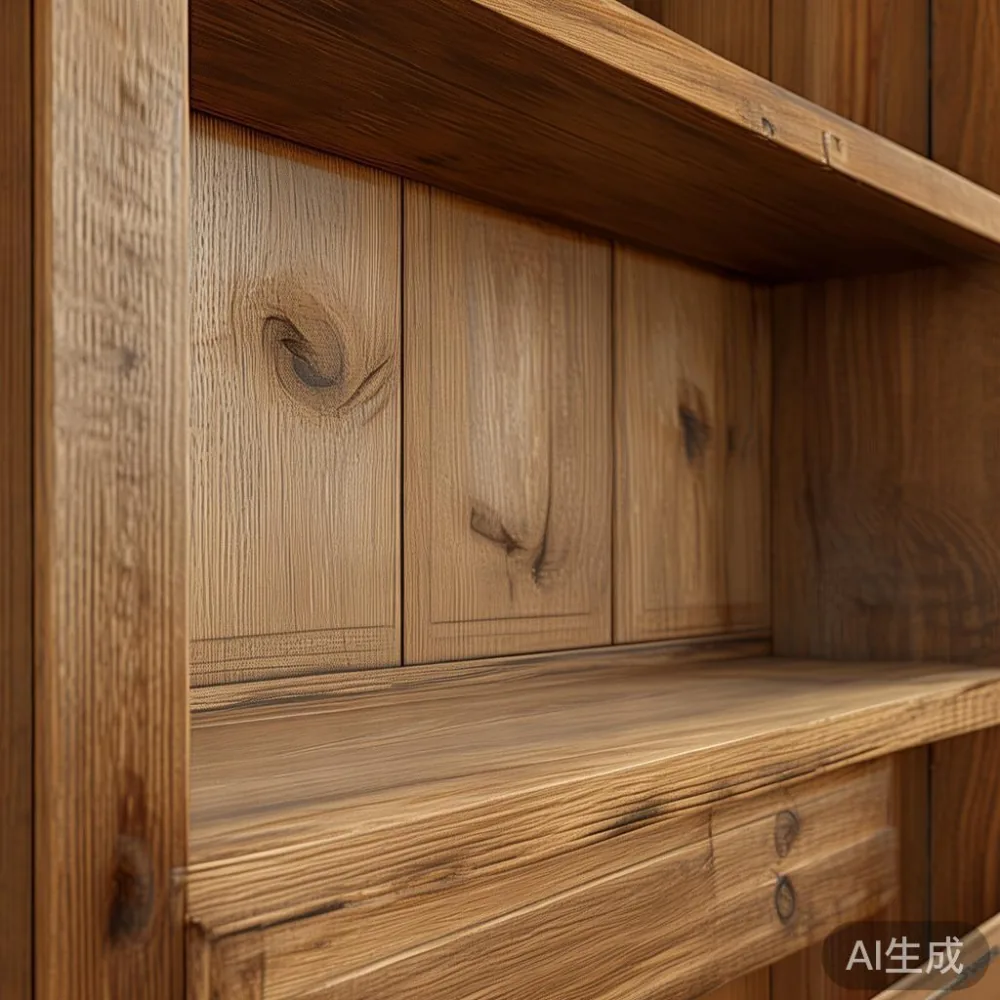
Timber is one factor. European oak, American walnut, white oak, ash, and rubberwood have different raw-material prices, grain patterns, and machining requirements. Boards with controlled moisture content of roughly 8–12% are easier to machine and more stable in Singapore’s humid conditions. A supplier choosing better drying, grading, or longer curing periods incurs costs that may not be obvious in a photograph.
Construction is another factor. Mortise-and-tenon joints, dowels, and reinforced screw blocks generally require more setup than simple particleboard carcasses, although not every design requires traditional joinery. A quality assessment should ask what holds the rails, how thick the shelves are, whether the back panel is framed or flat, and whether the wardrobe is designed to stand independently or be fixed safely to a wall.
Hardware also contributes to the invoice. European hinges with a 110–120 degree opening, soft-close runners, thicker drawer bottoms, and adjustable leg levellers are more expensive than basic fittings. For wardrobe organization, those components affect the number of usable compartments, the effort needed to reach high shelves, and the resistance to repeated daily movement.
Last month I visited a supplier’s showroom with a colleague and compared two wardrobes that looked 85% alike at a distance. The lower-priced model had 15 mm shelves and cup hinges with a 60-degree opening. The other had 18 mm shelves, 110-degree hinges, and adjustable internal fittings. The heavier model also required 2 people to move because its assembled carcass weighed about 145 kg, compared with approximately 95 kg for the smaller unit. That weight and moving requirement belonged in the price discussion, but neither made the wardrobe automatically superior for every home.
How much should solid wood wardrobe panels cost in Singapore?
There is no honest universal price for every solid wood wardrobe, but concrete ranges help buyers identify where money is being added. A modest 120 cm wide by 200 cm high wardrobe using rubberwood, a straightforward finish, and standard hardware may fall around SGD 900–1,500. A comparable design in oak or walnut with refined hardware, shaped fronts, and more complex wardrobe organization options may cost SGD 1,800–3,500.
A larger 180 cm wide by 220 cm high unit with a dressing drawer, internal lighting, hanging sections, and more detailed framing may range from SGD 2,800 to SGD 5,500. These are market reference ranges rather than fixed factory quotes. Dimensions, timber grade, finish, hardware, and delivery access can shift a figure by SGD 300–1,200 or more.
Singapore buyers should include GST when comparing prices. On a pre-GST subtotal of SGD 2,000, the 9% GST is SGD 180. A supplier quoting SGD 2,000 and another quoting SGD 2,200 may therefore differ by SGD 380 after tax, even though the headline numbers appear close.
The tempting search term cheap European light luxury furniture can encourage a misleading comparison. A lower entry price may exclude delivery, assembly, GST, internal fittings, or wall anchorage. The important question is the delivered, installed total and what the product includes for its expected 10-year use.
Does solid wood cost more than veneer or engineered wood?
Usually, yes, but the amount varies. Veneered furniture can cost from SGD 600 to SGD 2,500 for a wardrobe because the visible face uses a thin layer of attractive timber while the core is usually engineered board. Solid wood construction may cost from SGD 900 to SGD 5,500, depending on the species, dimensions, and level of detailing.
The distinction affects repairability and stability. A scratched solid wood surface can often be sanded and refinished if the original material remains. Veneer can also be repaired, but the thickness of the facing layer and the care required for the edge matter. Engineered boards remain useful choices for certain carcasses, especially where weight reduction is needed for installation in a compact HDB flat.
This does not make engineered wood a poor product. It can be appropriate for a wardrobe base, a high-use shelving system, or a rental flat where the budget is limited. It does make claims such as “all solid wood” worth checking. Buyers should ask which components are solid wood, whether drawer sides and shelf edges are included, and whether back panels are hardwood, plywood, or another material.
For Singapore conditions, a stable engineered core paired with selected solid wood components can be practical. However, a piece advertised as solid wood should not be represented by a photograph that hides a particleboard back or a veneered drawer front. Clear component descriptions matter more than a broad material label.
What do timber grade, thickness, and finish add to the price?
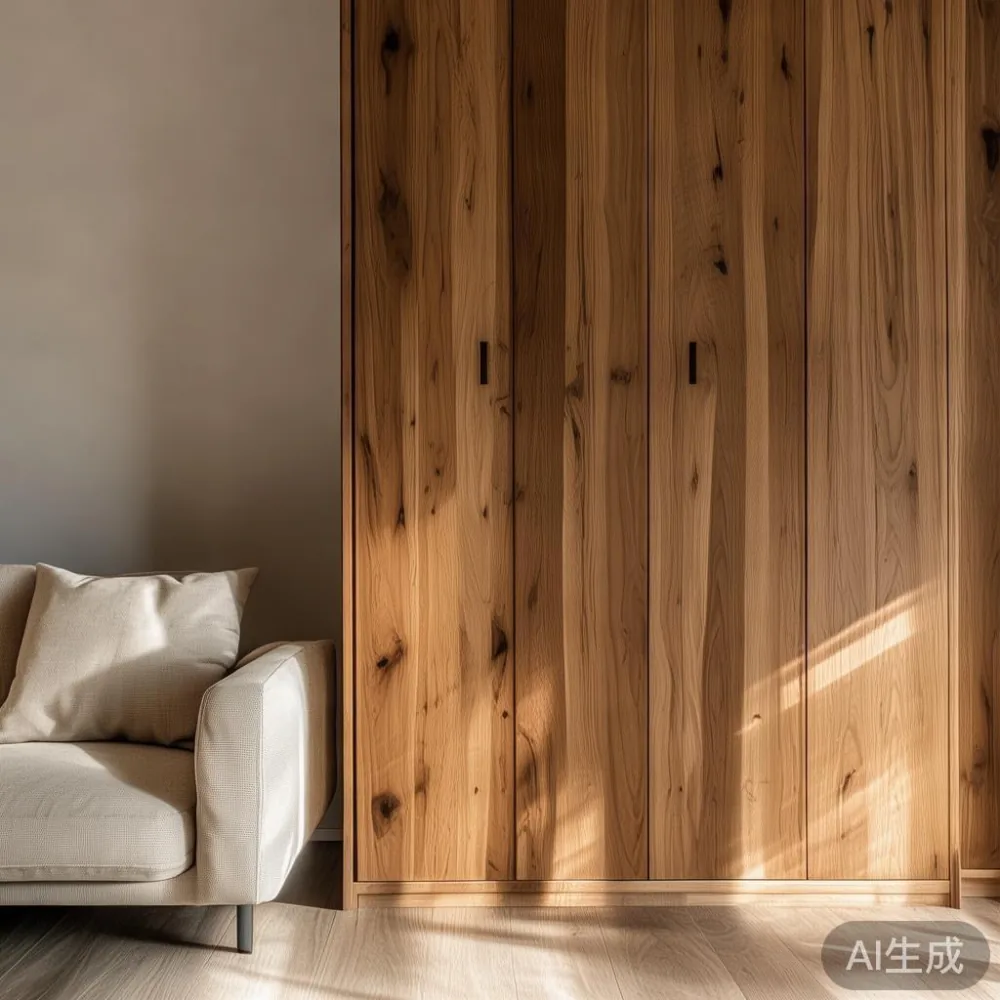
Timber grade determines appearance more than strength in many cases. “Select grade” timber has fewer knots and more consistent colour, while a character grade may include knots, sapwood, mineral streaks, and more pronounced variation. Character is not a defect, but customers should understand the expected appearance before ordering.
Panel thickness is easier to measure. Look for cabinet sides and shelves around 18 mm, drawer bottoms around 15–18 mm, and stretcher rails around 30–50 mm where applicable. A 15 mm shelf spanning more than about 80 cm may deflect under a stack of folded clothing. Solid wood can still move, so shelf span and support spacing should be considered alongside thickness.
Finish systems add cost because they protect the surface. A simple hardwax oil may cost less, but it requires periodic maintenance. A multi-layer lacquer or polyurethane system can offer stronger resistance to stains and moisture, although the final performance depends on preparation, coating weight, curing time, and application quality.
White and pale finishes require extra care. Bleached or whitewashed oak can show yellowing over 12–36 months, depending on the coating and exposure. This is a normal characteristic of many light-toned timbers, not necessarily a manufacturing failure. A warm natural finish often ages more evenly.
Design language also affects labour. French provincial furniture often uses curved doors, moulded profiles, and decorative hardware. A modern French provincial furniture design may retain those proportions with simpler lines, but carving or shaped components still add machining and finishing time. Post-modern light luxury often uses clean geometry, mixed materials, restrained profiles, and carefully detailed edges. The simplicity is not free; it requires accurate tolerances and a consistent finish.
How do hinges, drawers, and lighting affect wardrobe organization?
Hardware has a direct effect on how a wardrobe feels because wardrobe organization is shaped by the distance between hanging rails, shelf spacing, drawer movement, and door clearance. Soft-close hinges rated for 25 kg are more substantial than small 8 kg cup hinges. Full-extension runners allow a drawer to open fully, while standard runners may leave part of the base inaccessible.
A 120 cm wardrobe with two 55 cm hanging bays may suit shirts and folded trousers. A 150 cm unit might combine one 90 cm long-hanging section with shelves and drawers. A 180 cm model can provide longer hanging space or a central divider, but it may weigh 130–180 kg and need a more careful delivery plan.
Internal lighting adds convenience and cost. An integrated 12–24 V LED strip with a concealed transformer, motion sensor, and switch may add SGD 80–250 to a wardrobe package. It can improve visibility inside dark compartments, although lighting placement should illuminate usable zones rather than create glare at the door edge.
Fittings should be modular. Adjustable shelf pins at 32 mm intervals, pull-out trouser rails, double hanging rails, shoe shelves, and drawer inserts can make a 200 cm-high carcass work harder. For a Singapore bedroom, the practical internal height is often 185–190 cm after the top and base panels are installed. More nominal height does not always create more usable space if it becomes difficult to reach the upper shelf.
MIDHILL describes itself as a Foshan factory established in 2008, exporting to more than 15 countries. Its 10-year structural warranty and lifetime refinishing service are relevant because they address long-term ownership rather than only the purchase price. A supplier that documents timber components, hardware standards, moisture control, and finish care gives buyers information they can assess years later.
Will the wardrobe fit through my HDB flat or condo corridor?
Access can change the final cost more than many shoppers expect. A 180 cm wide wardrobe cannot necessarily enter through a 90 cm corridor or a lift with an 80 cm door. HDB layouts and condo corridors vary, so dimensions must be checked rather than assumed.
Before ordering, measure the lift lobby, lift car door, lift depth, corridor turns, stair landing, bedroom doorway, and the intended installation space. Allow at least 5–10 cm of working clearance where panels are dismantled. If a wardrobe is delivered as knock-down modules, record each module’s longest and heaviest dimension and weight.
A 200 cm high, 60 cm deep, 35 kg side panel is manageable for 2 trained movers. A complete 180 cm wide, 220 cm high carcass weighing 160 kg is a different task. Flat-pack construction may reduce this difficulty, although it requires assembly space and correct anchoring. Wall fixing is especially important for tall units in homes with children or frequent vibration.
Delivery timing also affects the quotation. A standard Singapore delivery window may be 10–21 days for stocked or configured items, while custom production can take 30–60 days. A 14-day returns policy offers a defined buying window, but made-to-measure goods may have specific production conditions that should be understood before payment.
MIDHILL’s free shipping threshold of US$350 should be compared at the exchange rate shown on the invoice; it does not necessarily mean every Singapore order has free delivery. Buyers should request the landed cost, including GST, lift or doorstep delivery, assembly, and any restricted-access charge. For a wardrobe around SGD 1,500, paying SGD 100–250 for a two-person delivery and careful placement can be reasonable if the alternative risks damaged walls or panels.
Is light luxury worth paying for in a small bedroom?
Light luxury is not the same as ornament-heavy decoration. American light luxury often pairs pale woods, upholstered touches, and warm metals with generous proportions. Post-modern light luxury can be more restrained, using sharp lines, tactile timber, matte metal, and one carefully controlled statement detail. French light luxury draws on provincial references, curved profiles, moulding, and traditional cabinetmaking cues.
In a compact Tampines or Bedok bedroom, visual weight matters. A floor-to-ceiling unit with thick frames can dominate a 3 m wide room. A 180–200 cm high wardrobe with lighter-toned timber, slim handles, and matched bedside pieces may feel more composed. The bed frame, nightstand, and wardrobe should share a finish family, but matching every edge perfectly can make a small room look overly coordinated.
A search for under 2000 Japandi furniture may suit buyers focused on pale timber, clean lines, and restrained ornament. Japandi approaches often use oak, ash, light finishes, and compact proportions. Those visual qualities do not automatically establish the board thickness, joinery, or hardware specification. A comparison between a light luxury bed vs Japandi bed should therefore examine the frame, slat spacing, centre support, finish, and movement requirements rather than labels alone.
Product terms can also be misleading. A “solid wood sofa” may describe only the frame while cushions and mechanisms are separate. A “marble table” may use a 20 mm natural stone top on an engineered or solid wood base. A “dining table” may use solid timber for the top but engineered components below. The same discipline should apply to a wardrobe: ask where each material is used and what the supplier guarantees.
Which price differences reflect quality rather than branding?
A useful price breakdown assigns a purpose to each cost. Material accounts for roughly 25–45% of a typical solid wood wardrobe price; machining and construction may add 15–30%; finish adds 10–20%; hardware and internal fittings add 10–25%. Delivery and installation can add another SGD 80–300, depending on access. Percentages vary, but the exercise prevents the customer from treating the final invoice as a single unexplained number.
To test quality, request photographs of the actual frame, edge profiles, underside, drawer boxes, and fixings. Check that timber names and component materials are stated. For a 200 cm wardrobe, verify that hanging rails are supported at sensible intervals, shelves do not visibly sag under 8–12 kg of clothing, and doors can clear the wall and skirting board.
Look for a written warranty covering structural failure, not a vague promise that every service is free for life. A 10-year structural warranty gives a measurable commitment, while lifetime refinishing describes a service relationship that should be accompanied by a process for assessing damage, transport, and eligibility.
Price also reflects scale. A 90 cm wardrobe with 2 doors may cost SGD 700–1,300. A 150 cm unit with drawers, lighting, and adjustable fittings may cost SGD 1,500–3,000. A 180–220 cm elaborate design may cost SGD 2,800–5,500. Comparing those figures as though they were identical products creates a false bargain.
The most defensible choice is not simply the lowest quotation. It is the one whose timber, dimensions, construction, hardware, finish, access requirements, warranty, and delivered price are clearly stated. For Singapore households, good wardrobe organization is achieved when the internal layout suits the clothing, the hardware operates comfortably, and the carcass can be installed safely without damaging the building. Those measurable benefits explain price far better than a style label alone.