Humidity and Your Wardrobe: Why Singapore Homes Demand Smarter Solid Wood Choices
Walk into a Tampines HDB flat at 8 a.m. in March and the air already feels like a damp towel pressed against your skin. Walk into a Punggol condo at the same hour and the same wet blanket hangs over the parquet. Across Singapore, the average relative humidity sits between 78% and 88% for most of the year, and daily swings of 15 to 20 percentage points are normal. No imported oak or ash was ever kiln-dried for that kind of abuse. When the wood in your wardrobe, bed frame, or dining table starts to stick in July or develop hairline cracks in January, humidity is almost always the reason.
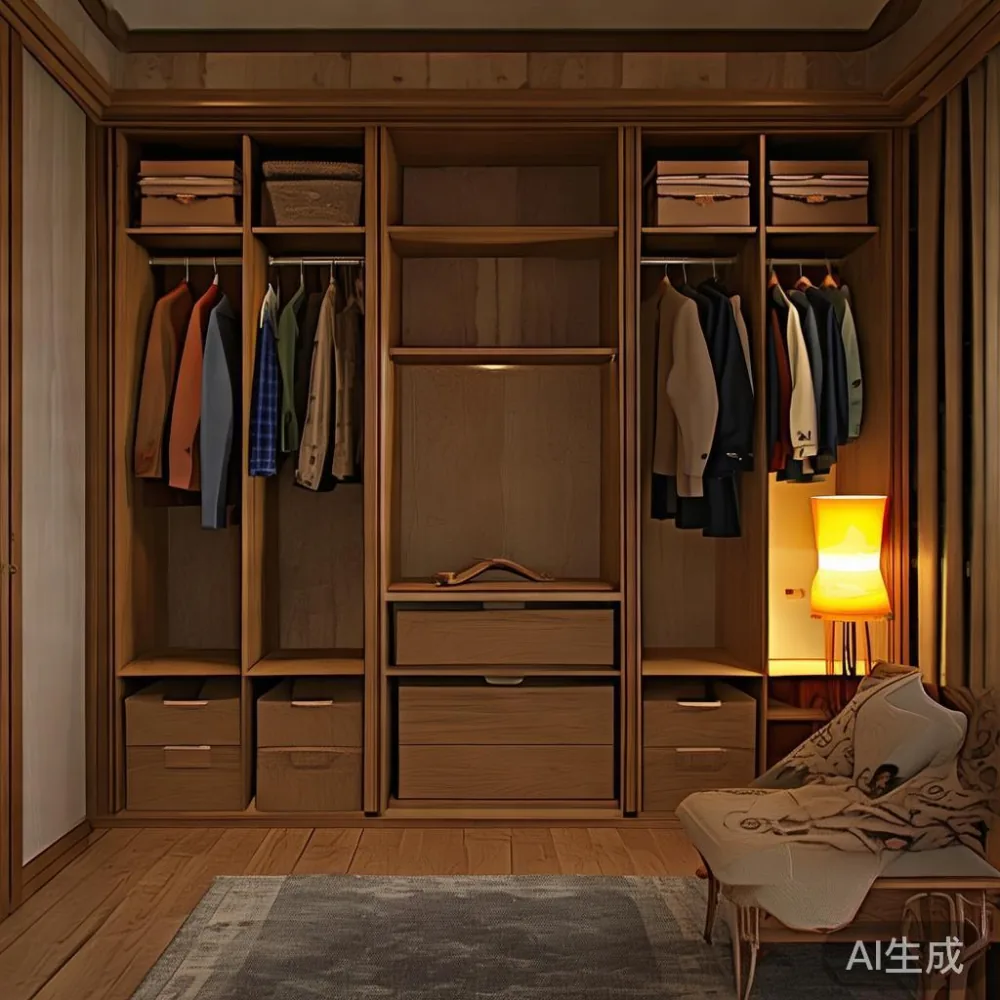
What exactly does tropical humidity do to solid wood furniture?
Solid wood is a hygroscopic material. It absorbs and releases moisture until it reaches equilibrium with the surrounding air, a value called EMC, or equilibrium moisture content. Most European factories dry their oak, ash, or walnut to an EMC target of about 8%, which suits homes in Paris or Frankfurt at 20°C and 50% relative humidity. Singapore homes hover at 28°C and 85% RH, pushing the local EMC to roughly 18%. That 10-point gap means the same board can swell up to 6% across its width once it lands here. On a 180 cm wardrobe door, 6% width change equals almost 1.1 cm of expansion, enough to make panels rub, drawers bind, and doors refuse to close.
The damage shows up in five recognisable patterns: sticking drawers at the change of monsoon seasons, hairline splits along long-grain tabletops, veneer bubbles at corners, mould bloom on unfinished backs, and squeaking joints in bed frames. Last month I visited a four-room HDB in Bedok Reservoir where the owners had bought a European oak sideboard eight years earlier. The two centre doors now overlap by 7 mm at the bottom, and a 12 cm crack runs along the top shelf. Their humidistat, mounted 1.5 m from the unit, read 84% RH that morning.
Does the lift actually fit a full-size wardrobe?
Before humidity ever touches the wood, the wardrobe has to physically reach the home. HDB blocks in Toa Payoh, Queenstown, and Woodlands commonly use goods lifts with a clear opening of 1.1 m wide by 1.9 m high, and a cabin depth of 2.2 m. Corridor corners at the lift lobby often measure 2.4 m across the diagonal. A three-door wardrobe measuring 180 cm wide by 220 cm high by 60 cm deep will usually clear these dimensions, but only if it ships in flat-pack form. Many online sellers quote one outer carton size of 185 by 65 by 30 cm for a flat-packed unit weighing 96 kg, while pre-assembled units routinely measure 182 by 62 by 220 cm and weigh 140 kg to 180 kg. The pre-assembled option often will not fit the lift or will not turn the corridor corner without a tilt-and-pivot manoeuvre that scares the delivery crew.
My colleague at MIDHILL handles Singapore deliveries every week and keeps a printed chart taped to the dispatch wall: anything over 195 cm wide or 165 kg gets flagged for flat-pack crating. For a typical three-door wardrobe using American white oak or European ash, two delivery technicians can complete the on-site assembly in 3.5 to 4 hours, including levelling on a 1.2 cm shim if the HDB floor is out of true. For condominiums in Punggol or the Jurong Lake District, the loading bay access window is usually 9 a.m. to 5 p.m. on weekdays, so book the slot at least 14 working days ahead during the March and September renovation peaks.
How do I keep a solid wood wardrobe stable in a humid HDB flat?
Three numbers do most of the work. Relative humidity steady at 50% to 60%, an air gap of at least 5 cm behind every tall panel, and a 24-hour acclimation period inside the home before any assembly. A SGD 45 digital hygrometer with min-max memory is worth every cent and lets you spot the 7 a.m. lows and the 5 p.m. peaks. If the RH climbs above 70% for two straight days, run a 12,000 BTU dehumidifier in the room for 4 to 6 hours until it collects 1.5 to 2 litres of water. If it drops below 45% in a January air-conditioned bedroom, switch the system to dry mode or leave the wardrobe door ajar at night.
Placement matters as much as moisture control. Push a 60 cm deep wardrobe flat against an exterior wall and you create a dead-air pocket where RH climbs to 92% and stays there. Keep 5 cm of rear clearance for airflow, and the same pocket stays within 3 percentage points of the room reading. Mount felt or rubber pads under the legs of a 120 kg bed frame so any floor condensation cannot wick upward. For wardrobes, mount a slim 5 cm plinth rather than a sealed base, then vacuum the gap once a week. A 25 mm waxing every six months, applied with 600-grit sandpaper between coats, slows moisture exchange at the surface by roughly 40% and hides the small surface checks that always appear in the first 18 months.
Which solid wood species actually survive Southeast Asian humidity?
Species choice is the single biggest decision a Singapore buyer controls. Kiln-dried teak, Burmese grade-A, performs best. Teak holds 3.2% to 4.8% moisture under local conditions and resists the surface mould that ruins walnut and cherry within 12 to 18 months. White oak costs 30% less than teak but wants a well-ventilated room; in a windowless walk-in closet it can cup within 9 months. Rubberwood, common in budget flat-pack, absorbs moisture fastest of all and swells up to 8% across the grain, which is why those SGD 599 wardrobes sometimes arrive with bowed shelves inside three monsoon seasons. For dining tables, a 4 cm thick teak top with breadboard ends handles equatorial humidity far better than a glued-up oak slab with no floating joints, because the breadboard lets the top move without splitting.
Ask any supplier for the moisture content reading at the time of crating. A serious factory will log 9% to 11% for kiln-dried oak intended for tropical use, with paperwork per batch. The same factory should also specify the finish: a three-coat conversion varnish with a 0.05 mm film thickness blocks moisture exchange far longer than a single wax rub. If the paperwork only lists "PU finish" or "lacquered," ask for the gram weight per square metre. Anything under 60 gsm is a wipe-on coating that scratches off in 8 to 12 months of regular contact with humid palms, backpacks, and laundry baskets. A heavier 110 to 140 gsm build holds up 4 to 6 years before a refresh is needed.
What is the realistic budget for a humidity-proof solid wood wardrobe in Singapore?
Price depends on species, hardware, and finishing. A three-door white-oak wardrobe from a light-luxury OEM in Foshan currently lands at SGD 1,850 to SGD 2,400 landed in Singapore, including 9% GST, delivered in 28 to 35 working days, and flat-packed into two boxes weighing 86 kg and 64 kg. A teak version of the same unit runs SGD 2,900 to SGD 3,600, delivers in 35 to 42 working days because of slower kiln cycles, and ships in three boxes because teak is denser at 660 kg per cubic metre. Add SGD 180 to SGD 240 for on-site assembly if the building rules require a BCA-registered contractor to do the work, which is common in newer condos such as Treasure At Tampines or The Woodleigh.
Freight remains a meaningful slice of the bill. Sea freight from Nansha to Singapore port takes 5 to 7 days plus 2 to 4 days of customs clearance, so realistic door-to-door is 28 days minimum. Air freight cuts this to 10 to 12 days but adds roughly SGD 420 per cubic metre, so most buyers only air-freight a single 60 kg piece, for example a marble table or a small wardrobe, when a renovation deadline is tight. Above SGD 350 in order value, delivery is usually free to the HDB doorstep, with the corridor and lift carried out by the supplier's two-person team at no extra charge.
What about bed frames, dining tables, and wardrobes in the same apartment?
A three-bedroom Punggol condo typically needs a 180 by 200 cm bed frame, a 200 by 100 cm six-seater dining table, a 60 cm wide nightstand for each side, a 120 by 60 cm marble table for the entryway, a three-door wardrobe at 180 cm wide, and a 240 cm TV console. If every piece is solid wood in oak or ash, the total weight runs 480 to 560 kg. The matching towel feels to a building risk policy is SGD 60,000 to SGD 100,000 of fixtures per flat. Make sure the supplier carries a product liability cover at that level, shipped with the bill of lading, so any humidity-related joint failure or top delamination in the first 24 months is covered on site.
Finish consistency across pieces is harder than people expect. Oak absorbs stain at different rates along the quarter-sawn and flat-sawn faces, so two adjacent nightstands can arrive in noticeably different shades if they came from different production batches. Ask the supplier to batch-match using a colour card such as Pantone 4695 C for warm brown or Pantone 7527 C for greige and to ship the whole order from the same kiln run. At MIDHILL the matching process uses a side-by-side photo log taken at 5,200 K lighting, which keeps a six-piece dining-and-bedroom order within a visible shade tolerance of about 2%. One last rule: never store flat-pack cartons in a non-air-conditioned storeroom during the monsoon season. The cartons absorb moisture too, and warped cardboard can warp the wood inside it. Acclimatise the cartons in the living room for 24 hours, then open, assemble, and place the wardrobe within an hour of opening so the panels settle where they will actually live.
How long should a properly cared-for solid wood wardrobe last here?
With annual maintenance, a teak wardrobe should serve 25 to 30 years in a Singapore HDB or condo, an oak unit 15 to 20 years, and a rubberwood flat-pack 6 to 10 years. Lifetime refinishing, where the supplier offers to strip, sand, and re-oil the piece every 8 to 12 years, easily doubles the second number and triples the third. Warranty terms vary widely, so check the fine print. A 10-year structural warranty on frames, joints, and drawer runners is the minimum acceptable for a light-luxury piece, and a 3-year warranty on hardware such as soft-close hinges and gas struts is the market standard. Keep the humidity log from your SGD 45 hygrometer; many lifetime refinishing offers become void above 75% RH for sustained periods because the supplier needs to prove you maintained the room, not just the wood.
Quick answers for new buyers
One question I hear from new homeowners almost daily: do they need to crank the air-conditioner overnight to protect a solid wood sofa and bed frame set? They do not. The cheaper trick is to keep the bedroom door closed for the first 90 nights, run the existing AC at 25°C, and let a small 25 cm desk fan move air behind the wardrobe. That alone limits night-time RH rise to about 3 percentage points and stops the early-morning sticking problem on a 60 cm deep three-door unit.
Another common worry is whether a French light luxury wardrobe, with its cabriole legs and hand-carved drawer fronts, can tolerate equatorial humidity. The answer depends on the joinery, not the styling. Mortise-and-tenon frames with floating drawer bottoms perform very well; MDF cores wrapped in oak veneer perform poorly. Ask for the construction sheet before you commit, and you can have the curves of post-modern light luxury without the seasonal swelling. For buyers exploring options across seating, the same kiln discipline applies to a Modern light luxury sofa frame, a slim marble table, and a dining table. For anyone wondering how to choose European light luxury sofa pieces that suit a Singapore balcony, the moisture content at crating is more important than the showroom sticker.
Style pairings also hold up well in the tropics. A pair of Mid-century modern for guest room nightstands, with their warm walnut tones and tapered legs, sits comfortably next to a Minimalist for guest room wardrobe because the shared low-sheen conversion varnish resists yellowing even under 9 hours of direct afternoon sun through a west-facing window. If you are budgeting across 2026 for a full bedroom refresh, the best Post-modern sofa for 2026 sits well beside an oak bed frame because both use the same breathable finishes. Solid wood sofa frames with eight-way hand-tied springs, by the way, do better in Singapore than webbed or sinuous-spring frames because the jute and cotton inside absorb damp without corroding the steel. Whatever you pick, keep 50% to 60% RH, leave a 5 cm rear gap on every tall piece, and a 25-year wardrobe life is a routine outcome rather than a wish.