Wardrobe Organization: Solid Wood or Veneer Over 5 Years?
A wardrobe is usually treated as a fixed fit-out item in a Singapore home, yet its material can determine how it looks, feels, repairs, and performs across 5 years. In compact HDB flats and condos in Tampines, Bedok, and Punggol, where lift openings and corridors can be only 90 cm wide, the practical question is not limited to the purchase price. It also includes delivery, cabinet hardware, maintenance, refinishing, and the cost of replacing a storage solution that no longer suits the household.
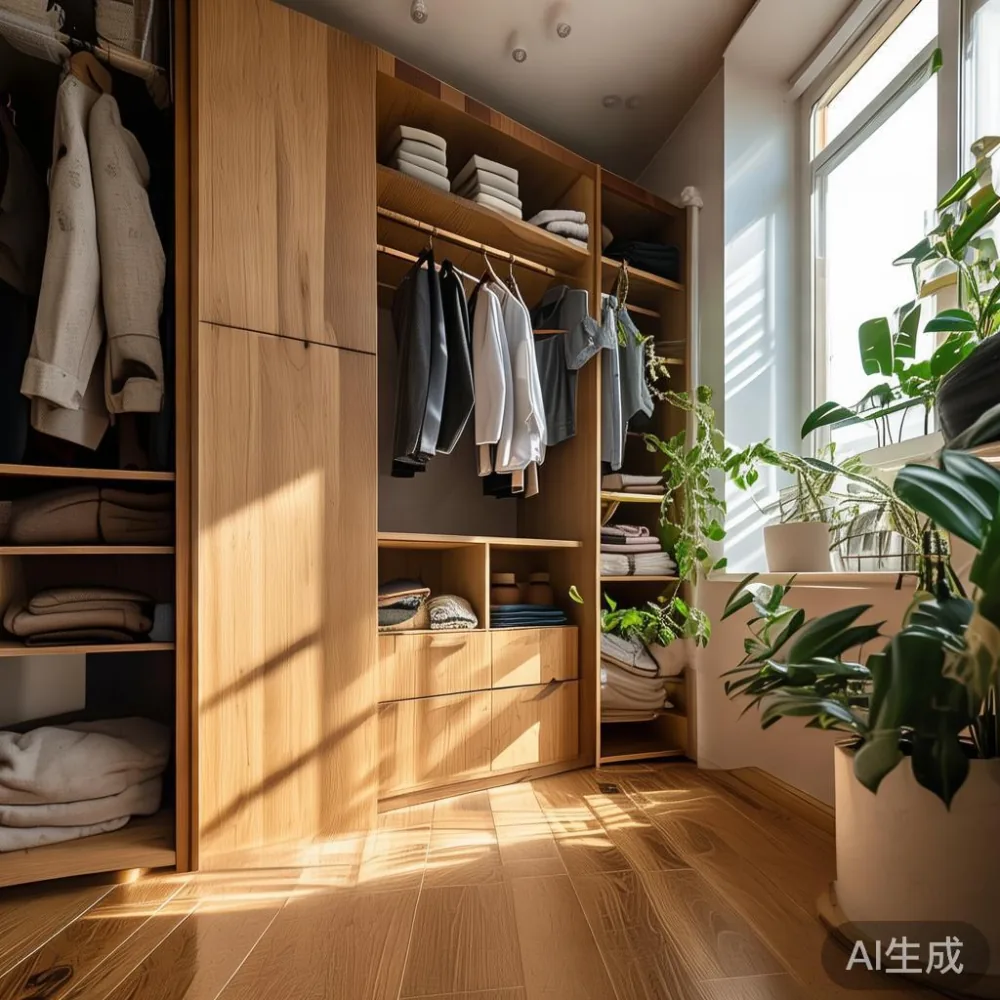
This comparison focuses on two wardrobe options: solid wood and veneer. Solid wood uses timber throughout the visible panels and structural parts, while veneer uses a thin, real-wood layer over a manufactured board. Both can support organised interiors with hanging rails, shelves, drawers, LED strips, and shoe storage. Their 5-year economics, however, can differ sharply because boards are generally lighter, less expensive to transport, and easier to replace, whereas solid wood requires more care around moisture and movement.
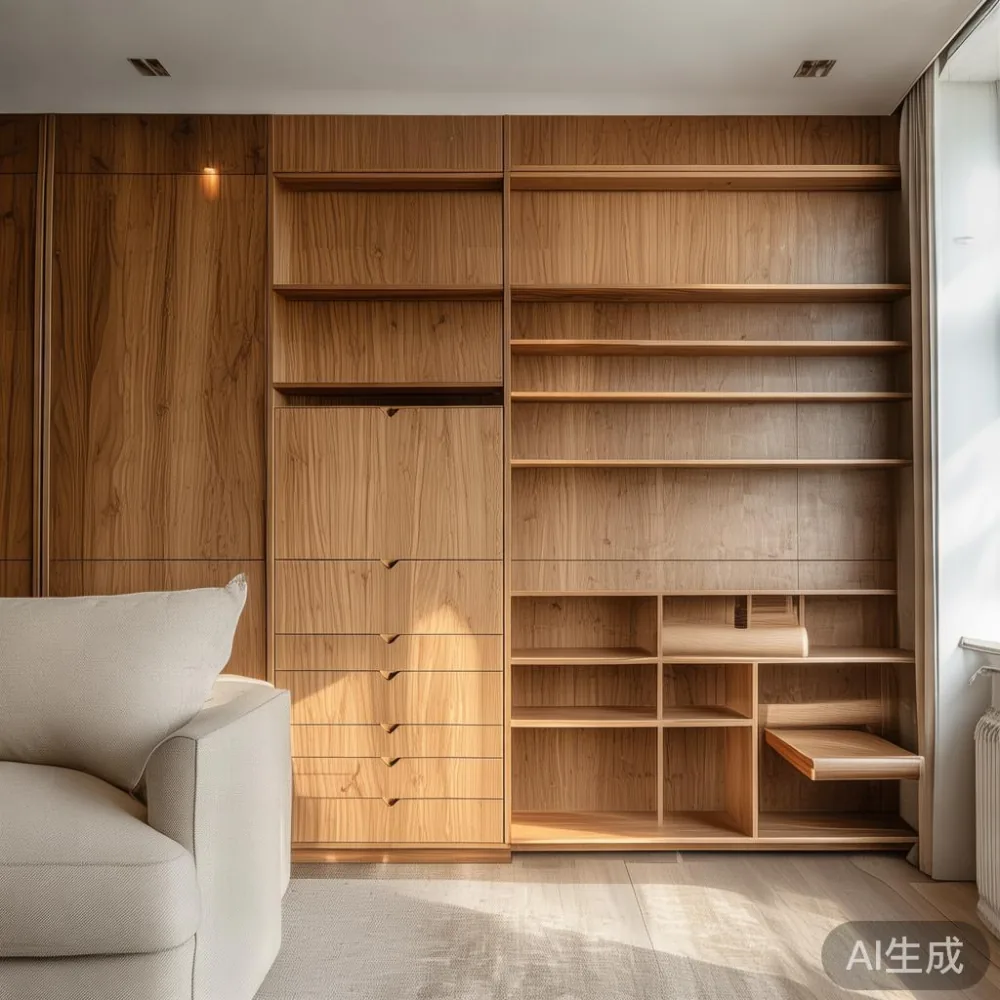
The figures below are planning estimates in Singapore dollars. They assume a typical 180 cm wide by 60 cm deep wardrobe with 2 sliding doors, 1 top shelf, 4 adjustable shelves, 1 hanging zone, 3 drawers, 2 LED strips, and a lacquered or stained finish. Two configurations are compared: a premium veneered carcass at SGD 2,680 and a mid-range solid wood wardrobe at SGD 3,980. Actual quotations can change with timber, finish, dimensions, hardware, and site access.
What does a 5-year wardrobe cost in Singapore?
For a practical 5-year wardrobe cost comparison, the purchase price is only one line. The more useful calculation is total cost of ownership over 60 months, including the wardrobe, delivery into the home, routine care, one repair scenario, and the residual value of the unit.
The veneered wardrobe starts at SGD 2,680. A local delivery charge of SGD 80 is included because the model falls under MIDHILL's free shipping threshold of US$350, equivalent to roughly SGD 465 before GST. Installation is estimated at SGD 120, bringing the delivered amount to SGD 2,880 before GST.
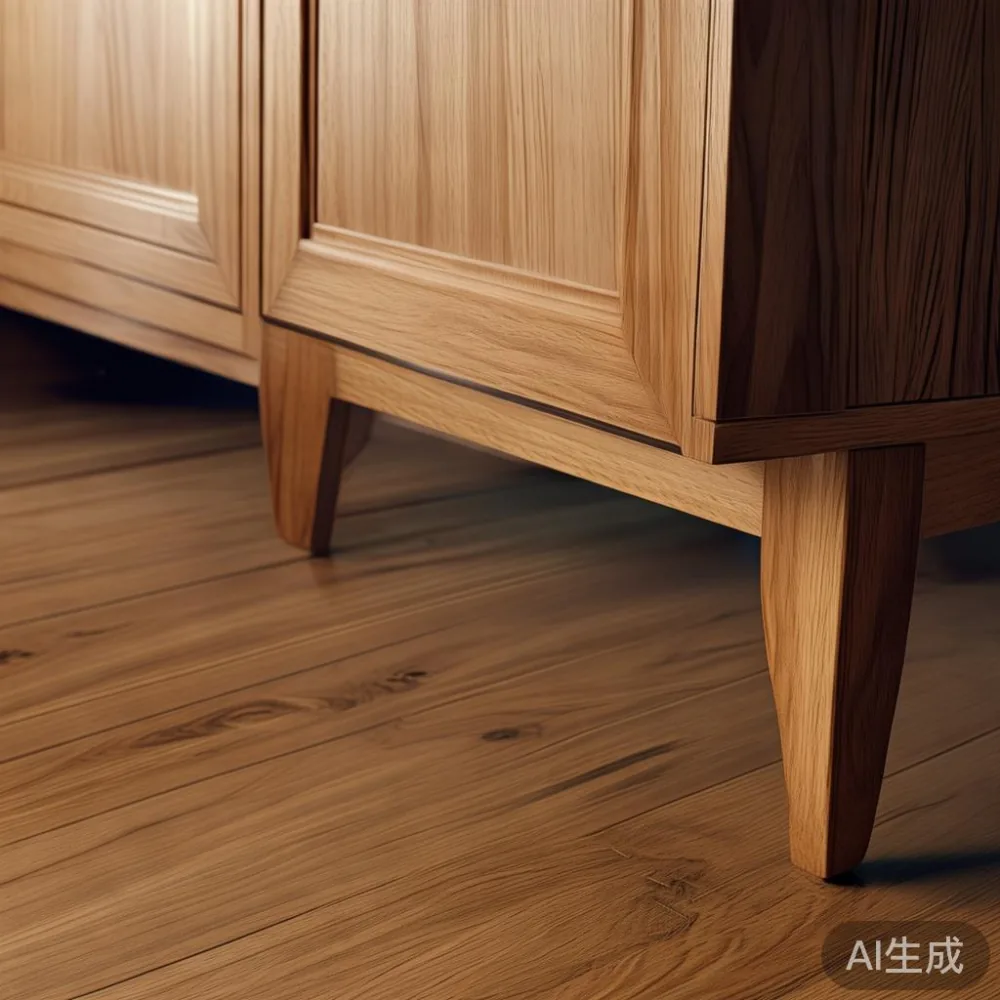
The solid wood wardrobe starts at SGD 3,980. Its greater weight makes delivery more demanding, so SGD 140 for local transport and SGD 180 for installation are used. The delivered amount is therefore SGD 4,300 before GST. At the current 9% GST, this adds SGD 259.20, giving an estimated SGD 4,559.20 including GST.
Over 60 months, the initial difference of SGD 1,400 is already meaningful. Yet a low purchase price does not automatically create a low 5-year cost if repairs, replacement, and depreciation are ignored.
How much does veneer save over 5 years?
Using conservative allowances, the veneered wardrobe receives SGD 180 of care over 5 years, comprising SGD 60 for dusting supplies, SGD 70 for drawer adjustments, and SGD 50 for a minor surface touch-up. A replacement is not assumed because the carcass remains usable. Its estimated resale or redeployment value after 5 years is SGD 670, equal to 25% of the purchase price.
The calculation is:
SGD 2,680 purchase + SGD 80 delivery + SGD 120 installation + SGD 180 care + SGD 0 repair = SGD 3,060 spent over 5 years. Less the estimated SGD 670 residual value, the net 5-year cost is SGD 2,390.
That equals SGD 478 per year, or SGD 39.83 per month. It also gives a cost of about 7.4% of the purchase price for every year of use when the residual value is deducted.
The solid wood estimate allows SGD 220 for routine care, including SGD 80 for wood-care materials, SGD 90 for drawer or door adjustments, and SGD 50 for a minor finish inspection. One partial repair of SGD 260 is included for a damaged drawer runner or hinge. Its estimated residual value after 5 years is SGD 1,292, or 32.5% of its SGD 3,980 purchase price.
The calculation is:
SGD 3,980 purchase + SGD 140 delivery + SGD 180 installation + SGD 220 care + SGD 260 repair = SGD 4,780 spent over 5 years. Less the estimated SGD 1,292 residual value, the net 5-year cost is SGD 3,488.
That equals SGD 697.60 per year, or SGD 58.13 per month. Under this scenario, veneer saves SGD 1,098 over 5 years, or SGD 219.60 per year.
Is veneer a poor choice for humid Singapore homes?
Veneer is not automatically a poor choice in Singapore. The important distinction is between a well-made wardrobe with stable engineered panels and a low-grade product with poorly sealed edges. High-quality plywood or MDF can resist daily humidity, while engineered joinery may move slightly as temperature and moisture change. The risk is concentrated at exposed edges, joints, and areas where the finish has been breached.
In an HDB flat, the wardrobe may sit beside a bedroom window that receives morning sun. In a Punggol condo, it may stand close to an air-conditioning unit where airflow is consistent but temperatures can vary. In a Bedok rental property, the wardrobe may need to survive several tenants and occasional water exposure from laundry or plumbing work.
Solid wood offers visible grain and repairability, but it is not moisture-proof. A solid wood wardrobe still needs sensible placement and regular care. A practical check is to keep it at least 15 cm from an exterior wall where condensation is likely, avoid direct contact with damp concrete, and wipe spills within 30 minutes.
Both materials benefit from a controlled wardrobe organization system. Use 2 bins no deeper than 45 cm for folded clothes, 3 drawer inserts with 4 cm side clearance, and 6-8 cm below hanging rails for folded items. This reduces overloading, makes cleaning easier, and keeps drawers from binding.
Can solid wood earn back its higher price through longevity?
Solid wood can earn part of its higher price through repair and refinishing, especially when it is made from durable timber and finished well. A scratched panel can be sanded and refinished; a broken drawer front may be remade. Veneer cannot usually be repaired in the same way because sanding through its 0.6 mm layer reveals the board underneath. This is where MIDHILL's lifetime refinishing policy becomes relevant to the solid wood option.
The 5-year model does not count refinishing as a mandatory annual expense. Doing so would artificially penalise solid wood, because refinishing is normally needed only after visible wear. Instead, the estimate includes a SGD 260 repair allowance for solid wood and SGD 50 for a minor veneer touch-up.
Solid wood is also more forgiving of daily knocks from luggage, moving boxes, and vacuum cleaners. Veneered panels can chip at corners, while solid timber absorbs a small dent and can be filled. The benefit is especially noticeable in a family home where the wardrobe receives daily use for 5 years.
That said, solid wood should not be judged only by its grain. A soft, cheap finish can age faster than a well-sealed veneer. Ask whether the timber is kiln-dried, whether the back panels are framed, how the drawers are joined, and whether the finish covers all edges. A 10-year structural warranty, such as the one offered by MIDHILL, provides a stronger ownership commitment than a vague promise of “natural durability.”
Do Singapore lift and corridor widths affect the cost?
They can. A fitted wardrobe may fit in the showroom but cannot reach the bedroom. Lift doors commonly measure about 90 cm wide and 210 cm high in older HDB blocks, while premium condo lifts may offer openings near 100-110 cm. Corridor widths can range from 100 cm to 180 cm. These dimensions determine whether a flat-pack panel can be carried upright, tilted, or must be cut into smaller sections.
The delivery allowances in this comparison assume normal access with no crane or staircase carry. If the wardrobe must be moved 12 storeys through a 85 cm opening, add about SGD 180 to SGD 450. A narrow corridor with two turns may add another SGD 100 to SGD 300. If the carcass must be disassembled, allow 2 extra working days. If the unit is custom-built in sections, delivery may take 30-45 days rather than 7-14 days.
Measure before ordering: lift door width, lift depth, corridor width, ceiling height, bedroom door, skirting clearance, and the space needed to rotate the wardrobe. Leave at least 5 cm around tall pieces for handling. For compact rooms, a 160 cm wardrobe with sliding doors may avoid wall tracking and reduce installation time by roughly 30 minutes.
Which wardrobe material offers better light-luxury character?
Light luxury depends on proportion, finish, hardware, and restraint rather than on one material. French light luxury often brings pale oak, walnut accents, moulded details, and gentle curves. American light luxury tends toward clean profiles, warm timber tones, upholstered touches, and practical comfort. Post-modern light luxury can combine simple geometry with selective colour and texture.
For a wardrobe with French provincial influence, solid wood can provide carved cornices, shaped rails, framed doors, and decorative knobs. The phrase MIDHILL French provincial wardrobe naturally fits a client comparing that detailed route with a flatter contemporary cabinet, although the exact style and price must be confirmed in a quotation.
Veneer can also look convincing because its real-wood surface reflects light similarly to solid timber. The difference appears under close inspection: veneer may show repeating grain, while solid wood offers variation between boards. That variation can feel artisanal, but it can also be less uniform for clients who prefer a controlled, post-modern finish.
The surrounding furniture matters. If the bedroom includes a solid wood bed frame, matching nightstand, and marble table, the wardrobe can act as part of a coherent room rather than an isolated object. Discussions of European light luxury bed vs Japandi bed can also help settle the timber tone, because mismatched oak, walnut, and white finishes often make a compact bedroom feel visually crowded.
For a complete lounge, guides on how to style American sofa in apartment are useful, while a European light luxury coffee table can introduce a stone or marble surface. In hospitality planning, French provincial for hotel references point toward warm timber, upholstered seating, and detailed cabinetry. None of these categories should distract from wardrobe organization; each should reinforce the same palette, finish depth, and hardware language.
What maintenance does each material need?
Veneer care is simple but unforgiving of heavy abrasion. Dust with a soft cloth every 2 weeks, clean with a pH-neutral product every 2-3 months, and avoid silicone sprays, alcohol, and abrasive pads. Inspect edge seals every 6 months. If a chip exposes the core, cover it promptly; a full board replacement may be required after moisture enters the exposed area.
Solid wood care requires a little more routine attention. Dust every 2 weeks, wipe fingerprints monthly, and inspect the finish every 6 months. Use coasters and trivets under a marble table placed nearby, and maintain 10 cm of separation from heating vents. For humid periods, run the bedroom air conditioner or a dehumidifier for 1-2 hours when moisture is excessive.
For wardrobe organization, both options can include 3 wardrobe rods, 8 adjustable shelves, 2 pull-out shoe trays, 3 drawer boxes, 2 mirror panels, and 4 LED strips at 3000-4000K. The same internal plan can be used for either material, so the 5-year comparison remains fair.
Who should choose veneer, and who should choose solid wood?
Choose veneer when the priority is a controlled budget, lower delivery weight, quick installation, and a smooth decorative finish. It is sensible for a first HDB home, a rental wardrobe, a child's room, or a secondary bedroom used fewer than 3 times per week. A 160-180 cm unit can deliver wardrobe organization for 25-35 seasonal garments, 40 folded items, 12 pairs of shoes, and 3 drawer sets of accessories.
Choose solid wood when the wardrobe will be moved less often, touched daily, or intended to remain through several home upgrades. It is particularly suitable for a master bedroom in a Tampines or Punggol condo, or for clients who value repairability and the grain of visible timber. The extra SGD 1,300 at purchase becomes easier to justify when the wardrobe is expected to last 10-15 years rather than 5-7.
Wholesale Mid-century modern furniture may appear in broader project searches, but a mid-century cabinet should still support the same wardrobe organization goals: concealed storage, defined zones, and restrained visual detail. A mixed-material home can use veneer for secondary storage and solid wood for the main wardrobe, creating hierarchy without making the room feel heavy.
What is the best 5-year value after GST and delivery?
On the stated assumptions, the veneered wardrobe has a net 5-year cost of SGD 2,390, while the solid wood wardrobe has a net 5-year cost of SGD 3,488. The difference is SGD 1,098, with veneer saving about SGD 219.60 each year after allowing for care, one repair, and residual value.
Solid wood becomes the stronger financial choice if it avoids at least one full wardrobe replacement during the period. For example, replacing the veneered unit after year 4 at a reduced current price of SGD 1,900 would erase its projected saving. Solid wood also offers greater freedom for refinishing, which can protect appearance without replacing the entire carcass.
Request a written quotation showing dimensions, timber or board specification, finish, hinge and runner models, internal fittings, delivery method, GST, installation, and warranty. For MIDHILL, confirm whether the 10-year structural warranty applies to the specified carcass and joints, how lifetime refinishing is handled, and what documentation is required. The 14-day returns policy can also reduce risk for remote purchases, subject to its product-condition terms.
The most sensible choice is not the material with the higher or lower ticket price. It is the one that fits the room's humidity, access constraints, storage habits, and likely ownership period. For a budget-led 5-year plan, veneer offers the lower modelled cost. For a long-lived primary wardrobe that can be maintained, solid wood offers stronger repairability and a more tactile light-luxury character.