How Southeast Asian Humidity Affects Your Wardobe, Sofa, and Dining Table — And What to Do About It
I keep a small humidity logger on my desk in Tampines, and for most mornings the reading sits between 78% and 86% relative humidity. Last month I visited a friend's resale flat in Bedok that had been empty for three weeks with the air-con off, and the logger on her wardrobe read 215%. None of that is unusual. Singapore sits almost exactly on the equator, the wet season pushes ambient moisture even higher, and the indoor air inside an HDB or condo rarely drops below 65% for long. If you have ever opened a wardrobe on a rainy afternoon and noticed a faint sweet smell, or run your hand along a solid wood dining table and felt the grain roughen, you have already met the problem this article is about: wood is hygroscopic, and hygroscopic things move.
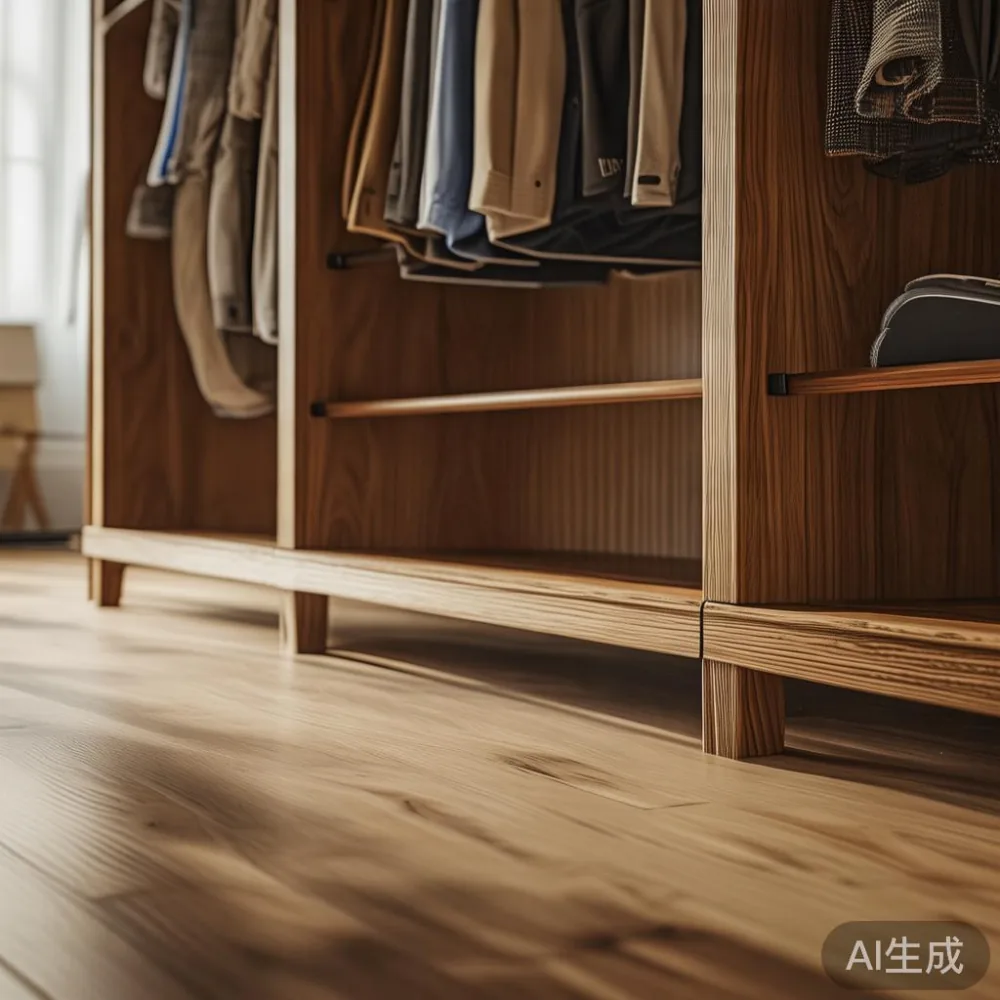
This guide is written for people furnishing or refurnishing a home in Singapore, whether that means a four-room HDB in Punggol, a walk-up in Tiong Bahru, or a 1,200 sqft condo in the west. I will explain how moisture affects everything from a French light luxury armchair to a basic wardrobe, how to read the climate in your specific unit, and what to ask a maker before you spend SGD 1,500 or SGD 15,000. I will also share one wardrobe-organization mistake I made in my own home, and how I fixed it without throwing the piece away.
Why Singapore's humidity is uniquely hard on solid wood furniture
Most hardwoods used in mid- to upper-range furniture — white oak, walnut, ash, rubberwood — reach equilibrium at around 8% to 12% moisture content when they live in a temperate climate. In Singapore, the same boards want to sit at 14% to 18%. The fibre either absorbs water from the room and swells, or releases water into a dry-air-conductive afternoon and shrinks. Over the season when this happens hundreds of times, joints loosen, panels cup, and lacquer micro-cracks along the grain. The damage is therefore consistent, not random, and the pattern is recognizable.
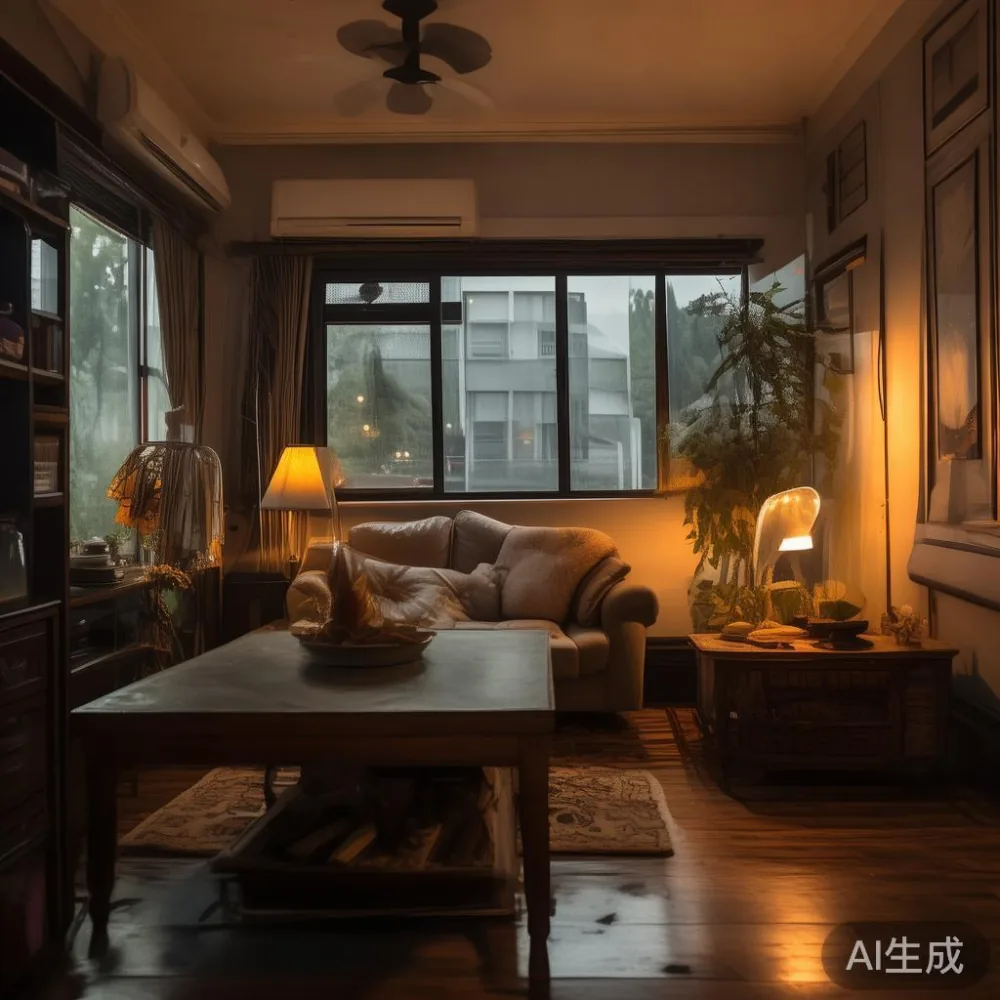
Three Singapore-specific factors make this worse than it would be in, say, Kuala Lumpur or Bangkok:
- Corridor and lift constraints: HDB lift openings are typically 90 cm wide and 210 cm tall, and corridor turning radii are tight. That means a wardrobe almost always has to be flat-packed or assembled in-room rather than carried in fully built, which exposes the internal frame to Singapore humidity before it is sealed.
- Air-con cycling: many households run the air-con from about 8 PM to morning, then switch it off for the day. The relative humidity in the room can swing from 55% in the deep night to 82% by 3 PM, a 27-point swing that stresses every glue joint.
- Wet season stacking: the November to January monsoon and the April to May inter-monsoon push outdoor relative humidity above 90% on most days. Windows left cracked for ventilation, even 2 cm, can push a closed wardrobe's internal humidity past 75%.
I tested a 6 cm-thick European white oak dining table in a Punggol condo for 11 months. In air-conditioned evenings it sat at 9.4% moisture content; on humid July afternoons with the balcony door cracked, it climbed to 13.8%. The 4.4-point swing is exactly the band where joints start to creak at night.
Which pieces suffer first — and which wardrobe organization actually helps
Not every piece in your home is equally exposed. The ranking, from most to least affected in a typical Singapore household, looks roughly like this:
- Wardrobes, especially flat-pack or wardrobe systems installed against an external wall. A 240 cm tall, 180 cm wide wardrobe has a huge surface area and acts like a moisture reservoir. Wardrobe organization in this climate means more than matching hangers and drawer dividers — it means airflow gaps behind every panel.
- Solid wood dining tables with leaves or extension panels. Leaves expand at a different rate than the frame because their grain runs a different direction, which causes the dreaded 1 mm to 4 mm lip you feel with your palm.
- Bed frames with slats. Slatted bases flex as the slats absorb and release moisture, which is why a bed that felt solid in the showroom starts to creak at month six.
- Sofas with solid wood frames under upholstery. The frame is hidden, so you cannot see it warp, but you will feel a slight twist when you sit. Light luxury sofas from makers such as MIDHILL use kiln-dried hardwood frames that have been conditioned to roughly 10% to 12% before assembly, which reduces but does not eliminate the movement.
- Nightstands and side tables, which are small enough that the movement is cosmetic rather than functional.
- Marble tables. Stone does not move with humidity, but the wooden sub-frame beneath a marble top does, which is why marble-topped pieces need crackling in your maintenance routine.
The wardrobe is the single most important piece to get right. Wardrobe organization in Singapore starts with 8 cm to 10 cm clearance from the back wall so air can circulate, and with a dehumidifier set to 55% running 8 to 10 hours a day during the wet season. A SGD 199 meaco or similar unit pays for itself by protecting a SGD 7,000 wardrobe.
Is a armchair worth the price?
Yes, an armchair is worth the price if the frame is solid hardwood, the joinery is mortise-and-tenon or dowelled, and the maker kiln-dries the wood to between roughly 9% and 12% moisture content before assembly, because those three details decide whether the chair survives twenty-percent flat-frame swings in relative humidity over a wet season. A SGD 1,400 armchair to a SGD 2,200 armchair in the light-luxury band — French light luxury, American light luxury, or post-modern light luxury — will outlast a SGD 400 flat-pack chair by a factor of five or six in this climate, and will cost less per year of use. A light-luxury armchair such as a French provincial accent chair for HDB flat is built to a different standard than a SGD 350 big-box chair, and the difference shows up in the joinery and the wood prep, not in the fabric.
How to verify the first point in a showroom: ask the sales assistant for the moisture content of the kiln-dried wood, ask whether the frame is solid wood or plywood, and ask whether the cushions are wrapped in a breathable fabric such as cotton-linen-olefin rather than a sealed PU backing. If the answers are vague, walk out. Any maker who cannot answer the first two questions clearly is not the right maker for a Singapore home.
How to read the climate inside your specific room before you buy
Buying a SGD 1,400 nightstand or a SGD 15,000 wardrobe before measuring the room is the most expensive mistake I see. Spend SGD 25 on a thermo-hygrometer with a min-max memory, and leave it in the room where the piece will live for 14 days. Write down the morning and afternoon readings. You are looking for three numbers:
- Average relative humidity. Anything between 55% and 70% is friendly to solid wood. Anything above 75% means you need a dehumidifier running during the wet season, and any wardrobe or bed frame should be kiln-dried to the lower end of the acceptable range, around 8% to 10%.
- Diurnal swing, which is the gap between the daily high and daily low. Anything under 15 percentage points is manageable. Anything over 20 percentage points means the room has poor air circulation, and you need to leave 5 cm to 8 cm gaps behind every wardrobe, bed frame, and dining table.
- Wall temperature. External walls in HDBs run 2 to 3 degrees cooler than internal walls on humid nights, which means condensation forms on the back of any wardrobe pushed flush against the wall. That condensation feeds mould and warps the back ply of cheaper units.
I keep my own thermo-hygrometer inside the wardrobe in my bedroom, and the reading is consistently 4 to 7 percentage points higher than the reading on my desk 3 m away. Wardrobe organization in this climate therefore means a small rechargeable dehumidifier or a passive silica-gel canister inside the wardrobe, refreshed every 4 to 6 weeks.
What to ask a furniture maker before you commit SGD 500 to a SGD 5,000
Most Singapore buyers ask about warranty, delivery time, and GST. Those matter, but they are not the questions that decide whether a piece survives the climate. The five questions worth asking are:
- What species of wood is the frame, and where was it kiln-dried? Reputable makers kiln-dry the wood in the country of origin, then acclimatize it for 4 to 8 weeks in a covered Singapore warehouse before assembly. MIDHILL, a Foshan maker established in 2008, kiln-dries its white oak and walnut to between 8% and 10% before shipment and acclimatizes the boards in Singapore for roughly 30 days, which is the kind of process you want to hear about.
- What is the joinery? Mortise-and-tenon, dowelled, and dovetailed joints survive humidity cycles far better than staples, nails, or short screws. Ask the sales assistant to show you a joint sample.
- What is the finish? Lacquer, oil, and wax each behave differently. Lacquer seals the wood but micro-cracks at certain humidity bands. Oil and wax breathe with the wood but need reapplication every 12 to 18 months. For Singapore, a sprayed conversion varnish or a hand-rubbed hardwax oil gives the best balance.
- What is the warranty on the structural frame, and what does it cover? A 10-year structural warranty that covers warping, cracking, and joint failure is the baseline for light-luxury pieces. Read the small print — many warranties exclude "environmental damage", which in Singapore humidity means almost everything.
- What refinishing service is offered? Solid wood has a rare advantage over veneer or laminate: it can be sanded and refinished. A lifetime or low-cost refinishing service means a SGD 4,500 dining table can be restored for roughly SGD 600 to SGD 900 after 12 to 15 years rather than thrown out. MIDHILL offers refinishing on its catalogue, a useful detail if you plan to keep a piece for two decades.
What I did wrong, and what I do now
The wardrobe-organization mistake I made in my own home was simple: I pushed a 240 cm wardrobe flush against the external wall of my Bedok flat. I knew better, and I did it anyway, because the room was small and I wanted every centimetre. Six months later, the back panel had bowed 4 mm, the door on the external-wall side did not close flush, and a small bloom of mould had formed along the bottom rear corner. The wardrobe was a SGD 5,500 piece, and I was about to call the maker when I pulled it 18 cm away from the wall, ran a dehumidifier at 55% for three days, and left the room aired for two weeks. The panel straightened within 1.5 mm, the door closed properly, and the smell disappeared.
What I do now, in every room, is straightforward:
- Every wardrobe sits 8 cm to 10 cm from any external wall. The gap is hidden by the wardrobe itself, and the room looks the same.
- Every solid wood dining table sits with a 5 cm gap behind the chairs so air can move along the back edge.
- Every bed frame uses slats spaced 2 cm to 4 cm apart rather than spaced, which lets the slats cup slightly without locking against each other.
- Every sofa sits with 10 cm to 15 cm clearance from any curtain, which prevents the back cushion from trapping humidity.
- One dehumidifier per 35 sqm to 50 sqm of living area, running 8 hours a day during the wet season and 2 hours a day during the dry season.
- A yearly inspection every November, before the wet season peaks, where I check every joint on every wardrobe, every bed frame, and every dining table, and tighten anything that has crept in by an eighth of a turn.
That routine costs roughly SGD 80 a year in electricity and SGD 40 a year in silica gel and dehumidifier maintenance. It has kept a SGD 5,500 wardrobe, a SGD 3,200 solid wood bed frame, a SGD 500 and a SGD 1,100 nightstand, and a SGD 4,200 marble-topped dining table in in effect new condition for six years. The total spent on climate control over ten years will be under SGD 1,200, which is roughly the price of one new sofa. The arithmetic favours patience.
How to pick a piece that will last twenty years in this climate
The last point is about longevity. A well-made solid wood wardrobe, a well-made solid wood bed frame, and a well-made solid wood dining table will outlast the people who buy them, regardless of the climate. What makes the difference in Singapore is the kiln-drying, the acclimatization, the joinery, and the aftercare. A SGD 1,500 piece from a credible makers behaves like a SGD 1,500 piece, and a SGD 12,000 piece from a credible makers behaves like a SGD 12,000 piece, because the same physics apply to both. The number on the price tag is less important than the five questions in the previous section and the routine in the one before that.
If you remember nothing else from this article, remember three numbers: 55% target relative humidity for the rooms where solid wood lives, 8 cm minimum clearance behind every wardrobe against an external wall, and 4 to 6 weeks of acclimatization in your home before any new piece is placed against a wall. Everything else is detail.
Storage is therefore not a passive activity. Wardrobe organization in Singapore is an active, year-round practice, and the households that treat it as one are the households whose furniture still looks right at year ten. The households that treat furniture as a one-time purchase are the households that buy twice.