How Southeast Asian Humidity Affects Solid Wood Furniture and Wardrobe Organization
Singapore’s equatorial climate can swing between heavy afternoon downpours and long periods of warm, damp air. In an HDB flat in Tampines, a tightly fitted wardrobe may sit beside an external wall that feels noticeably cooler after a storm. In a Bedok condo, the reverse can be true: sunlight heats the corridor side of a bedroom, raising humidity behind closed doors. These everyday conditions affect solid wood, veneer, hardware, finishes and the long-term organisation of wardrobes.
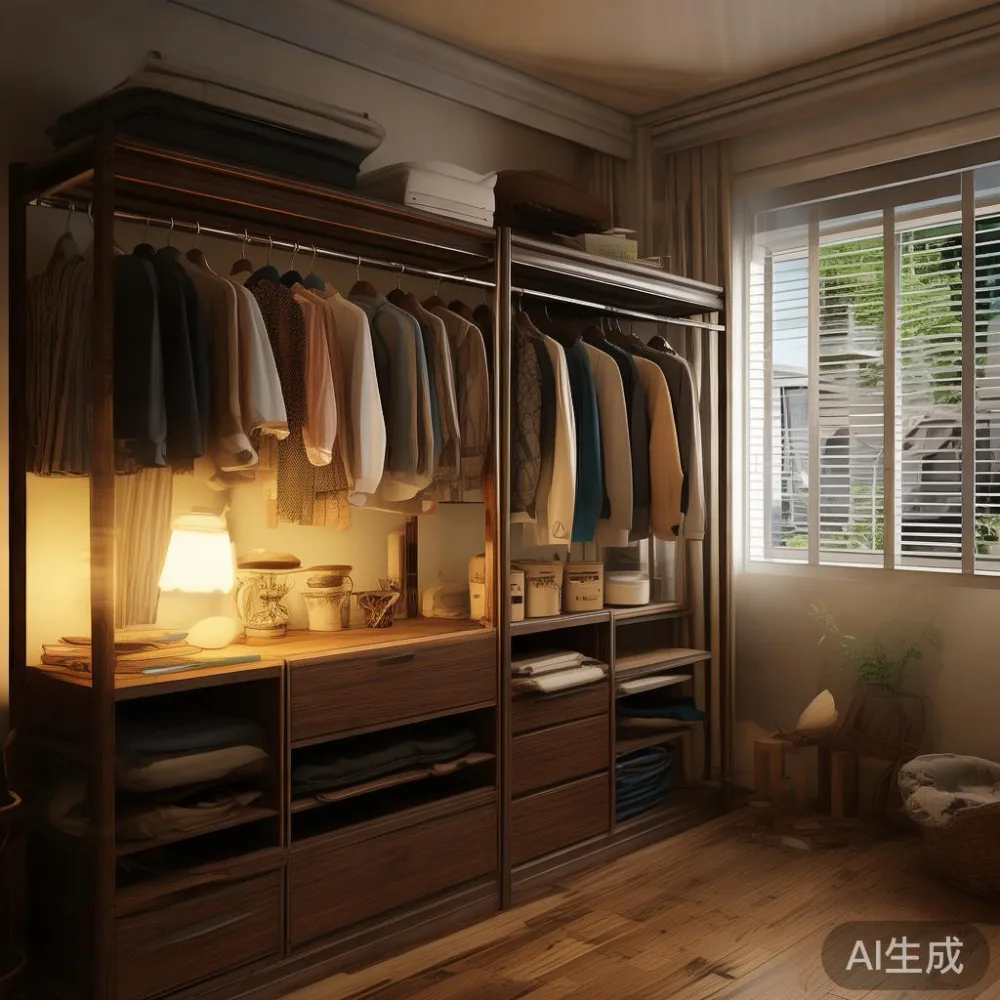
At MIDHILL, a Foshan solid wood furniture maker established in 2008, our approach to humid climates begins with material selection, ventilation and careful finishing. We export to more than 15 countries and support purchases with a 10-year structural warranty, lifetime refinishing, free shipping above US$350 and a 14-day return window. International delivery to Singapore commonly takes about 7 to 14 days after production, depending on the configuration and customs clearance.
This guide explains how humidity affects solid wood furniture, how to recognise early warning signs and how Singapore homeowners can protect a wardrobe while preserving the proportions and refinement associated with French light luxury, American light luxury and post-modern light luxury interiors.
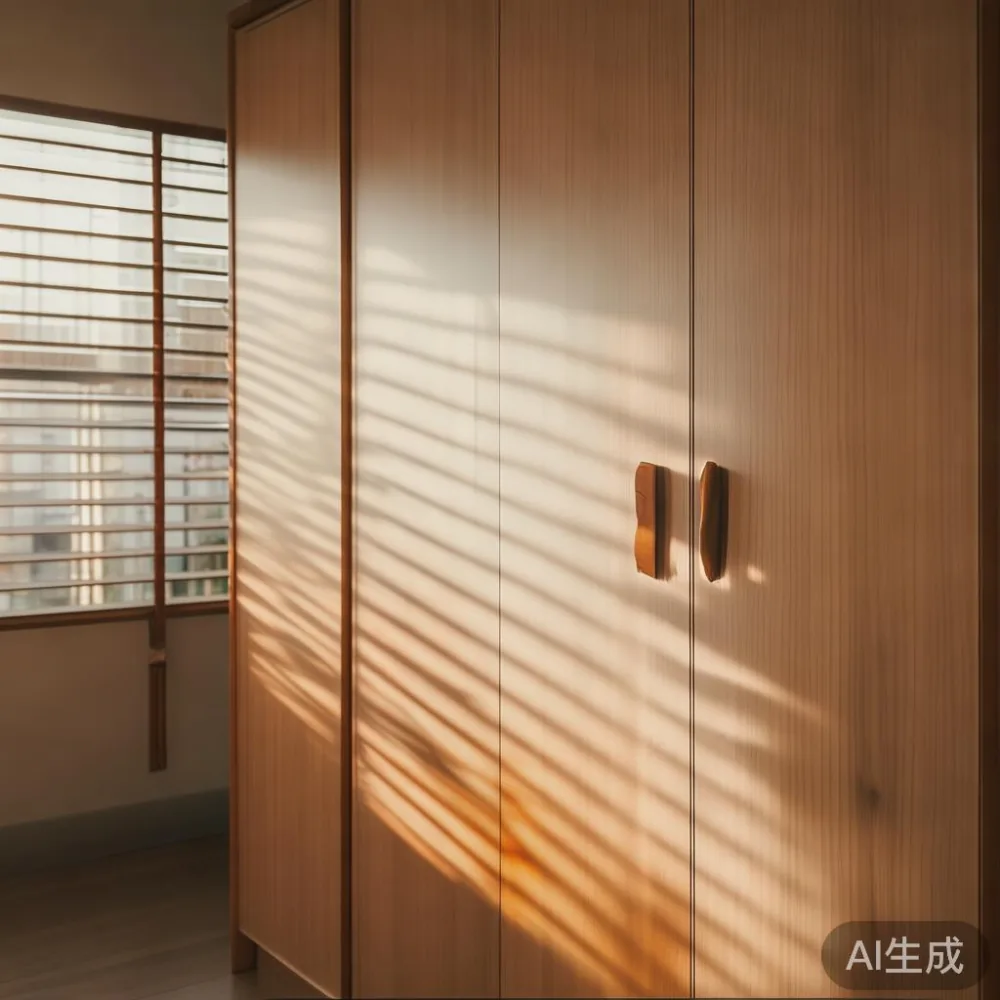
Why Does Humidity Affect Solid Wood in Singapore?
Wood is hygroscopic. It absorbs moisture when the surrounding air is humid and releases it when that air becomes drier. A solid oak side panel might expand by roughly 1 to 3 mm across a 50 cm width as relative humidity moves from about 40% to 80%. That movement is small enough to ignore in a dining table, but significant when a wardrobe door must remain aligned with a 3 mm shadow gap or a drawer runner must continue to open smoothly.
Singapore’s monthly average relative humidity often ranges from about 70% to 85%, while air-conditioned rooms may fall to 50% to 65%. Overnight, a wardrobe near a window or an ensuite bathroom may encounter larger fluctuations than the national outdoor reading suggests. The risk is not simply “wet wood”. Repeated expansion and contraction can loosen joints, cause lacquer to blush or crack, encourage mould around damp edges and distort door faces.
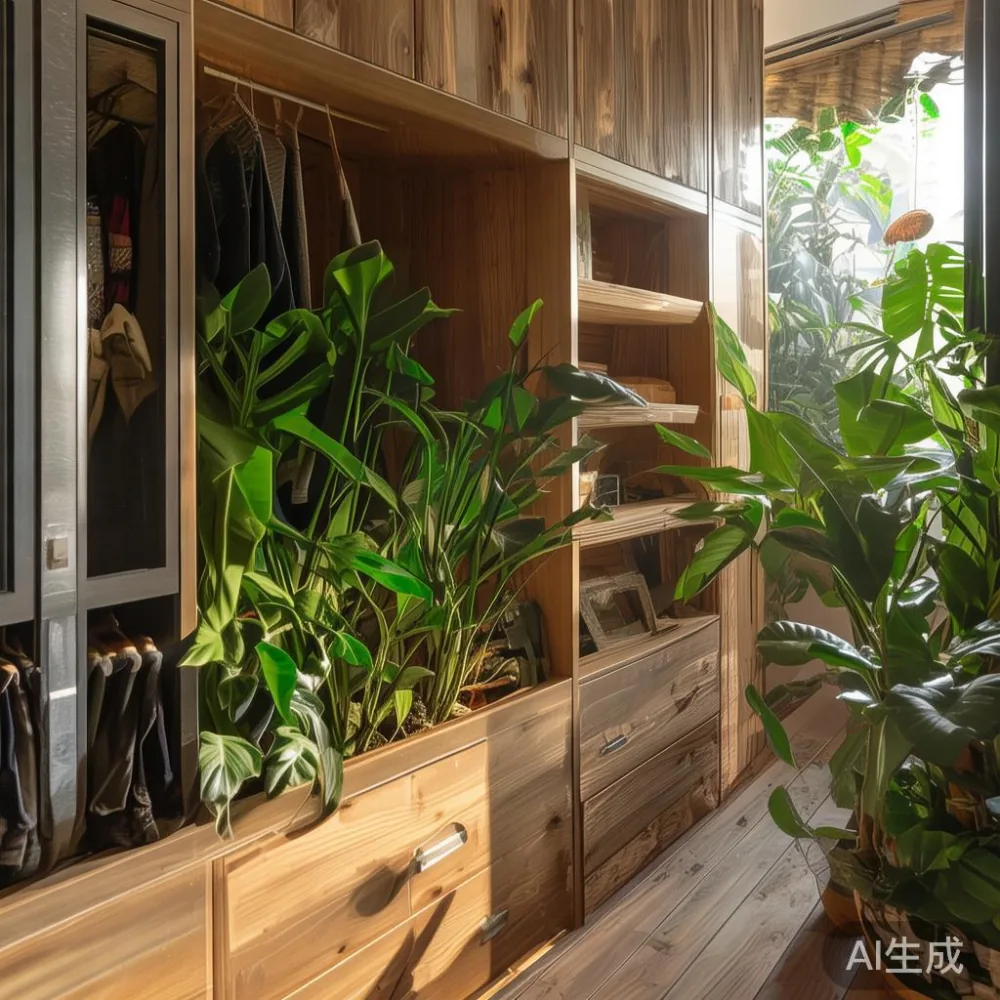
Seasonal monsoons add another factor. During a 90-minute thunderstorm, humidity can rise quickly. During a dry spell when a room remains air-conditioned but has little dehumidification, panels may lose moisture and develop small gaps. The useful target is stability, not an impossible constant. Keeping relative humidity between approximately 45% and 65%, with minimal rapid variation, supports furniture more effectively than chasing a single exact number.
For apartment owners, a hygrometer costing about SGD 25 to SGD 60 is enough for most bedrooms. Place it inside or immediately outside the wardrobe, at mid-cabinet height rather than beside an air-conditioning vent. Take readings at about 8 a.m. and 9 p.m. for 7 days. A change of more than 10 percentage points within a day deserves attention.
What Changes Should I Expect in HDB Flats and Condos?
In HDB flats, external walls and corner bedrooms can experience wider temperature swings. A built-in wardrobe against a west-facing wall in Tampines may reach 31°C by late afternoon, while the rest of the flat remains near 25°C. In Bedok, a bedroom near a wet kitchen or bathroom may stay above 75% relative humidity after showering. In newer Punggol estates, good insulation helps, but dense cabinetry can still trap warm, moist air.
The building itself shapes the solution. HDB lift lobbies and corridors often look cool because the air-conditioning is strong, but the cabinet in a unit may experience a different microclimate. A bedroom corridor that is only 110 cm wide limits the installation angle of a large wardrobe door. If panels must tilt into a tight lift, their moisture condition should be stable before delivery because forced movement can damage hinges and joints.
Condo interiors may include floor-to-ceiling glazing, balcony access and larger bedroom windows. A solid wood bed frame placed close to an open balcony door can absorb humidity carried in by wind. Curtains alone do little to stop airborne moisture. A gap of at least 30 cm between furniture and an external wall, where the layout permits, is more useful.
The same attention applies beyond the wardrobe. A solid wood sofa near a window can develop a faint tacky finish, while a dining table may show rings or uneven sheen as its top responds to humidity. A nightstand can swell slightly at the rear if pushed against a cool, damp wall. Marble table tops are less vulnerable to dimensional change, although their supports, cabinets and wall fixing points still need stable conditions.
How Should Solid Wood Wardrobe Doors Be Finished?
In Singapore, a finish should slow moisture exchange without pretending that wood never moves. A well-applied hardwax oil or water-based matte coating is often more repairable than a very thick film. MIDHILL uses careful finishing suitable for export markets, and our lifetime refinishing service helps owners restore surfaces that become scuffed or dull through normal use.
For a solid wood wardrobe, inspect all six faces of a door before installation. Look for a faint cloudy haze, a sticky feel, hairline cracks in the coating and darkening around joints. Slight surface haze can often be corrected with the approved maintenance product and gentle hand polishing. Peeling, splitting or swollen joints need assessment rather than an improvised coat of wax.
Allow new furniture to acclimatise before use. Keep the wardrobe in its delivery packaging for 24 to 48 hours if the air is particularly damp, then remove the outer wrapping while retaining protective padding. Set the unit away from exterior walls by 10 to 30 cm and avoid placing it directly against an air-conditioning diffuser. Use a hygrometer to confirm that the cabinet area stays between 45% and 65% relative humidity.
Ventilation matters. Leave the bottom vent, if supplied, unobstructed and allow air to circulate around the back panel. The wardrobe organization should not depend on sealing every gap with dense fabric. Cotton or linen storage bags can be preferable to heavy plastic covers because trapped condensation can remain inside them. For folded clothing, maintain about 5 cm of clearance from the rear panel.
Hardware also deserves attention. Brass or stainless hinges may resist corrosion, but exposed screw holes can collect moisture. Wipe them with a damp cloth and dry immediately. A hinge that needs 5 mm of upward pressure to close often signals cabinet movement, frame settling or a mounting problem. A qualified fitter should check the plinth, wall anchors and level rather than bending the hinge repeatedly.
How Can I Create Wardrobe Organization That Copes with Damp Air?
Effective wardrobe organization begins with air movement. Keep the interior ventilated for 20 to 30 minutes after showering, and use the bedroom’s air conditioner or a dehumidifier when humidity remains above 65%. A compact dehumidifier rated for 10 to 20 litres per day can suit one bedroom; larger living areas generally need a higher extraction capacity.
Use supports that suit the climate. Wire shelving encourages airflow, while sealed melamine compartments can dry more slowly. Place leather, paper and textiles away from external walls and do not pack wool coats into a closed wardrobe after wearing them outdoors. Hang garments for at least 30 minutes so moisture can escape before storage.
For a family of 2 to 4 people, allocate zones according to frequency rather than filling every shelf. A 180 cm-wide wardrobe may hold about 60 to 90 hanging items, subject to the rail length and internal design. Place daily clothing on reachable rails, seasonal pieces on higher shelves and shoes on a washable tray. Keep at least 10 cm above shoe boxes so they can be removed without scraping the base.
Adding pull-out rails and adjustable shelves changes the load path. Check that screws enter solid framing, not weak particleboard edges. For a tall wardrobe, anti-tip restraints are sensible even where the floor appears level. A 210 cm cabinet containing 80 kg of clothing may be stable in dry conditions but less secure if the rear panel moves in humid weather.
Those searching for sale Japandi furniture should inspect construction and finish with the same care. Cheap Mid-century modern furniture can use particleboard, veneer or mixed hardware beneath a wood-look surface, so “solid wood” should be confirmed for the relevant panel rather than assumed from a photograph. A Scandinavian-looking nightstand may suit the room visually while still needing climate-conscious spacing and maintenance.
Is European Wardrobe Worth It for a Singapore Home?
The question “is European wardrobe worth it” depends on construction, fit and environmental performance, not only the name on the label. European joinery often uses precise hinges, well-finished edges and modular internals that can support wardrobe organization. Those features can be valuable in a 90 cm bedroom corridor where every centimetre counts, provided the unit is designed for Singapore’s humidity.
Check whether the wardrobe is solid wood, veneered, or a combination. Ask for moisture readings at the factory and confirm the finish system. MIDHILL was founded in 2008 and combines export manufacturing with a 10-year structural warranty, while offering lifetime refinishing for qualifying solid wood pieces. These long-term provisions are more useful than a short showroom-style trend because they support maintenance years after humid seasons pass.
European proportions may work well in a larger Tampines master bedroom, but scale still matters. A 240 cm-wide French-style wardrobe may overpower a 210 cm-wide wall recess. An American light luxury approach, with broad panels and restrained hardware, can feel calmer in a condo bedroom. Post-modern light luxury might use curved edges and vertical details, yet the sliding or hinged doors must still clear the adjacent wall and furniture.
Singapore prices should be checked before and after GST. A mid-range wardrobe may fall around SGD 1,200 to SGD 2,800, while a larger solid wood configuration can exceed SGD 3,000. Delivery commonly requires a second person, and lift or staircase access should be confirmed. Check whether the quoted price includes GST, installation and removal of packaging; a policy may exclude extra stair carries or lift reservation fees.
If learning how to style European light luxury wardrobe in room, begin with measurements. Note the wall width, skirting depth, socket positions and door swing. A 6 cm skirting can prevent a flush-fitting carcass from meeting the wall, leaving a visible gap. Work with the room rather than forcing the cabinet into an assumed standard opening.
How Do Dining Tables, Sofas and Other Solid Wood Pieces React?
A dining table usually shows humidity effects in its top. Small cup rings can become more apparent when a satin finish dulls unevenly. Clean the surface promptly, use coasters and felt pads, and avoid leaving a damp glass for more than 10 minutes. Wipe the area dry with a clean cloth. For a Modern light luxury dining table, pale finishes reveal moisture-related clouding more readily than deeper stained surfaces, so regular care is particularly useful.
A solid wood sofa needs a different check. Inspect the rear frame and legs for mould staining, then keep it at least 15 cm from an exterior wall where space permits. Cushions can trap humidity, so remove loose covers for airing every 1 to 2 weeks. Leather seating should be wiped with a lightly damp cloth and dried away from direct air-conditioning airflow, which can extract too much moisture from the hide.
For a bed frame, leave space beneath the frame where the design permits, and inspect slats and fixing points every 6 months. A nightstand should sit below 30 cm away from a bathroom or external wall if possible. A Mid-century modern dressing table near a window should have a stable top, protected corners and a clear route for its chair or stool.
Marble table tops do not expand like solid wood, but porous marble can stain if liquid remains. Use a neutral pH cleaner suitable for the exact stone and avoid acidic liquids. Protect contact points with felt and keep the base away from damp walls. If owners are comparing cheap Mid-century modern furniture with solid wood alternatives, the material difference should be weighed alongside stability, repairability and fit.
What Routine Protects Furniture Through 12 Months of Weather?
A practical routine is easier to maintain than a complicated one. Check the bedroom hygrometer weekly and record the reading in a phone note. Clean the wardrobe exterior with a soft, slightly damp cloth every 2 to 4 weeks, dry it immediately and inspect the top edge. Vacuum internal dust every 2 to 3 months, keeping the nozzle away from vents and hinges.
Inspect moving parts every 6 months. Hinges should operate without force, runners should travel smoothly and the carcass should remain square. Wipe metal hardware dry, and address surface marks with the approved care product. During the 3 months of the northern summer monsoon, check the cabinet more frequently; during drier periods, watch for excessive shrinking and visible gaps.
Air circulation should be balanced with security and insects. Mesh screens on bedroom windows can reduce the amount of humid air entering, but they do not replace climate control. Cedar blocks or cedar lining may add a mild aroma, but they should not be treated as moisture control. If a musty odour remains after cleaning and ventilation, inspect hidden corners for mould and seek professional remediation.
Before a major renovation or repainting, move the wardrobe carefully, protect the floor and avoid sudden temperature changes. Photograph the wall positions and mark electrical sockets and anchors. For a new purchase, request a written specification of timber, veneer, finish, moisture treatment, warranty and after-sales care. Local delivery of 7 to 14 days is common for export orders, and custom dimensions may require additional production time.
Humidity will always be part of life in Southeast Asia. It does not make solid wood furniture impractical. It does, however, reward stable indoor conditions, honest construction and regular inspection. With measured spacing, responsive wardrobe organization and finishes selected for repair, a solid wood wardrobe can remain a calm, durable centrepiece in an HDB flat or condo for many years.