Wardrobe Organization: What to Check Before Buying a Sofa You Cannot Sit On: A
A sofa that cannot be sat on may still earn its place in a home. It can hold a lamp, frame a window, separate a dining area from a television, or create a slim landing zone beside a wardrobe. In compact Singapore interiors, that visual function matters. The mistake is buying a decorative piece and discovering too late that it blocks a corridor, strains an older lift, or leaves no practical place for a person to land.
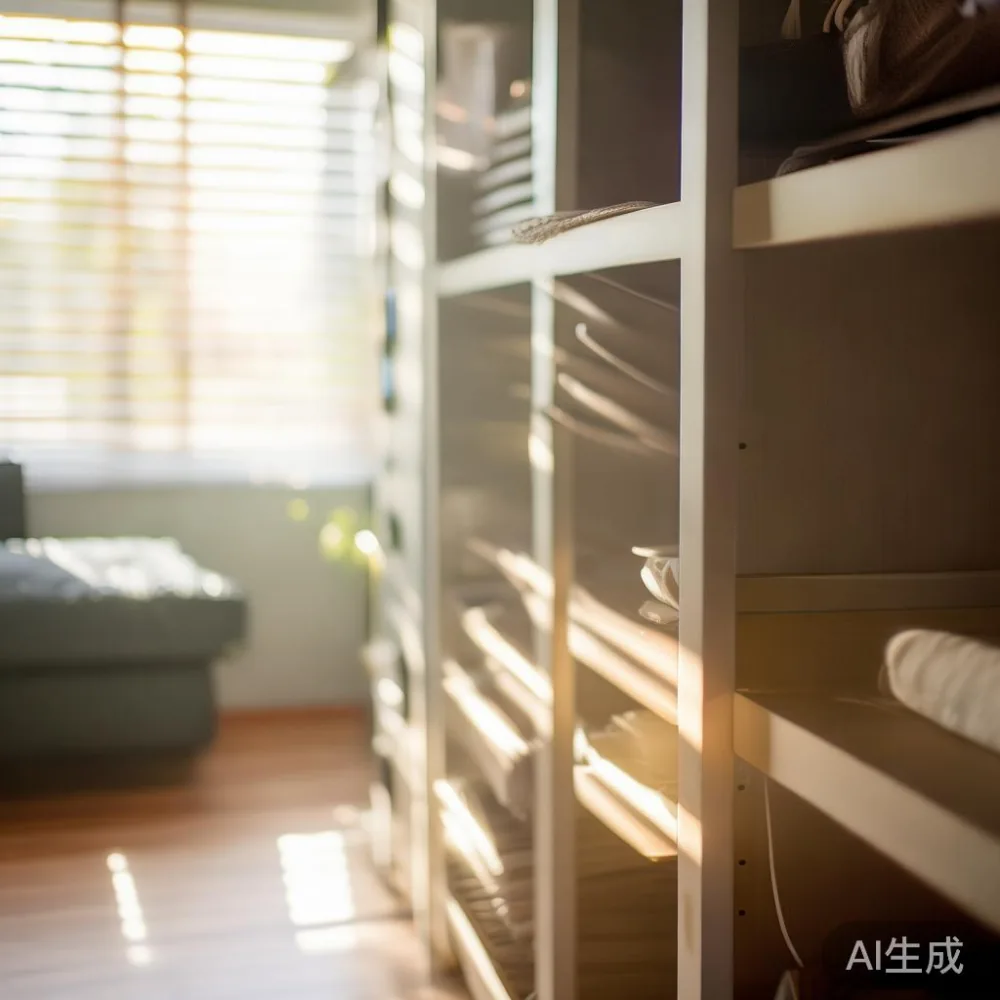
Before ordering, I checked three showroom pieces and measured them with a tape: the body, arm depth, rear clearance, and the space needed to open nearby doors. Two looked generous in photographs but occupied 210 cm and 228 cm of floor length, with arms too deep for normal use. The narrowest had a useful seat height of 39 cm and a total depth of 88 cm, making it much easier to place opposite a wardrobe organization zone without narrowing the walking route.
The guiding principle is simple: decide whether the sofa is seating furniture, a light-luxury accent piece, or both. A solid wood sofa can look architectural and still be comfortable, but wood frames do not remove the need to consider foam density, support, arm depth, delivery access, and your actual posture. Those details should shape the decision before style.

Is a sofa that cannot be sat on worth buying?
Yes, if it performs a clear spatial or visual job and you accept that it is not everyday seating. The strongest reason to buy one is to solve a layout problem rather than to fill an empty corner. A 24 cm-deep arm cabinet can support a tray and lamp while taking less space than a conventional sofa with projecting arms. A 180 cm bench can divide an open-plan living room without forming a full-height barrier.
Before buying a sofa you cannot sit on, write down its job in one sentence. “Hold a table lamp and conceal the radiator” is more useful than “add a classic French look.” Then measure the location from at least 3 points: the skirting, the nearest wall, and the route to the balcony or bedroom door. Allow 90 cm for a main walking path and 60 cm for occasional access. In an HDB living room, 75 cm may be a workable secondary route, provided nobody has to turn sideways while carrying laundry or a bulky container.

Also consider whether someone may sit on it unexpectedly. Guests, children, or a tired family member often use the nearest upholstered edge. If the piece has a 5 cm-wide flat top, no back support, and a hard wooden edge, it should not look like an invitation to sit. A low upholstered bench at 43 cm high can provide occasional seating while still acting as a console.
This kind of decision belongs within a broader wardrobe organization plan. A slim upholstered landing bench can sit opposite a fitted wardrobe while keeping the room visually connected to the entrance. Its depth should be checked against the wardrobe door swing; a 55 cm-deep wardrobe needs additional clearance when opened, and placing the bench 60 cm away leaves only 5 cm of tolerance.
How do you measure a sofa before it arrives?
Record the width, depth, height, seat height, arm width, internal seat width, and weight. Also record the diagonal and the largest boxed dimension. A sofa may fit through the front door but fail at the lift lobby, stair turn, or corridor bend. For example, a 180 cm sofa may arrive in two cartons, but a single carton 182 cm long and 64 cm wide can be difficult to angle into a lift.
In Singapore HDB flats, common older lift openings are around 70 cm to 90 cm wide, with internal depths of roughly 130 cm to 160 cm. Newer lifts and some condo service lifts are larger, but specifications should not be assumed. Measure the lift door, the lift car, and the corridor turning points. For a condo, ask the management office about delivery windows, lift booking, and any loading-bay charges. A 2-person delivery team may need 15 to 25 minutes to move one sofa, while a corner unit with fixed wood framing can require 30 to 45 minutes.
My colleague visited a client in Tampines last month and brought a 40 cm folding rule. The supplier had quoted a 96 cm-deep console sofa, but the HDB lift car measured 108 cm by 138 cm with a 79 cm doorway. The unit could enter diagonally, although the rear legs had to be removed. That removable-leg detail was more useful than the showroom sketch.
Ask for the packaged weight too. A solid wood sofa with a kiln-dried hardwood frame may weigh 75 kg to 125 kg, while a lighter upholstered model might weigh 45 kg to 70 kg. Above 90 kg, check whether the lift has a stated capacity of 1,000 kg or 1,130 kg and whether the building restricts the number of heavy items per move.
What measurements keep a non-seating sofa from blocking the room?
Begin with the clear floor area, not the empty space seen in a catalogue. A rectangular room measuring 4.2 m by 3.4 m can look generous but lose its balance once a 65 cm-deep television console, 55 cm dining zone, and 90 cm circulation route are included. The decorative sofa should generally remain inside 70 cm to 85 cm deep. Anything deeper needs a specific reason.
For an open-plan flat in Bedok, position the piece parallel to the longest wall where possible. For a Punggol condo with a narrow entry passage, keep the route to the kitchen at least 90 cm wide. If the piece is used as a console, allow 35 cm to 45 cm between its front edge and a closed cabinet door. A gap of 30 cm may be enough for a decorative object, but not for opening a wardrobe door fully.
Check the arm-to-arm usable width as well. An “180 cm sofa” can provide only 132 cm of flat surface if each arm is 24 cm wide. That distinction matters when the piece is intended to hold books, a tray, or a laptop. A 16 cm arm may be adequate for a slim lamp, while a 30 cm arm creates a useful side table but demands more room.
Mind the height in relation to sightlines. A piece over 85 cm high can interrupt conversation across an open-plan space. One between 70 cm and 80 cm can divide zones without blocking faces. This is one area where post-modern light luxury works well: a restrained frame, softened upholstery, and a slightly unexpected proportion can make a functional console feel composed rather than improvised.
Should the frame be solid wood, and what does “solid wood” include?
Solid wood is useful for rigidity and repairability, but the label needs context. A frame made from kiln-dried hardwood may combine solid timber joints with plywood or engineered components for certain panels. That construction can be entirely suitable. Ask for the frame species, moisture treatment, joint type, and any plywood sections. “Solid wood” on a loose showroom card is not enough.
Look for dowelled, mortise-and-tenon, or corner-braced joints rather than relying only on visible screw heads. The rails should be straight, and the frame should not twist when lifted from opposite corners. If the company offers a 10-year structural warranty, confirm what that warranty covers: frame joints, rail movement, and wood defects may be included, while foam, fabric, and accidental damage may not be.
The same practical discipline applies across the home. When comparing a bed frame, measure the mattress size and headboard clearance rather than relying on a broad product label. A useful comparison called Japanese bed vs Modern bed depends on platform height, under-bed storage, ventilation, and sightlines. Questions about light luxury bed vs Mid-century modern bed often focus on shape, yet a 28 cm platform frame with a 45 cm headboard still needs 10 cm of wall clearance.
Do not let one category drift into another. A dining table needs 90 cm of clearance around its chairs, and a marble table needs careful protection from knocks and heat. A wardrobe requires hinged-door or sliding-door space, while a nightstand should align within 50 cm of the bed edge. These examples explain the measuring method; the sofa itself should still be evaluated on its own construction and dimensions.
Can a non-seating sofa still meet a comfort standard?
Yes, if it has clearly stated secondary-use limits and a stable edge. A display sofa can use a firmer cushion with a foam density of 35 kg/m³ or higher and a supportive plywood or hardwood base. The exact density is more informative than a vague “high-density foam” claim. A loose seat cushion may compress within 6 to 12 months, while a firm upholstered pad can retain its shape for longer.
Test the edge by pressing for 10 seconds and releasing it. It should recover without a permanent dip, and the frame should not creak. Sit briefly if showroom staff permit it, then check whether the edge angles encourage upright posture. A 43 cm seat height is easier for many adults than a 36 cm model, while a 48 cm-high console can feel more like a cabinet.
French light luxury often uses pale woods, curved silhouettes, and tactile upholstery. An upholstered bench inspired by the French provincial accent chair style can look soft and refined, but carved arms may project 8 cm to 15 cm farther than the catalogue width suggests. American light luxury tends toward cleaner profiles and generous comfort, which may work better if occasional seating is genuinely expected.
For anyone researching 2026 French provincial furniture, the relevant point is proportion: a 170 cm console with a 52 cm seat height may balance a traditional room better than a 220 cm piece. Likewise, a query for is French provincial bed worth it should include mattress access, headroom, and floor clearance—not only the visual appeal of the headboard. The same evidence-led approach prevents an attractive sofa from becoming an obstacle.
What should you check in the finish, upholstery, and care plan?
For a solid wood sofa, inspect the grain direction at joints and across broad surfaces. Natural variation is normal, but large splits, filled cracks, or mismatched panels should be disclosed. A matte finish can conceal minor marks better than high gloss, though it may show fingerprints differently. Ask for care instructions and expected colour change under Singapore humidity, where indoor levels often range from 50% to 70%.
Upholstery should be tested for cleaning. Request a fabric specification, pH-neutral cleaner, and the treatment process. Removable covers are useful, but confirm whether they can be machine-washed at 30°C or require professional cleaning. Zip access to the cushion foam is another practical feature, particularly for a piece that may occasionally hold a person.
Check the finish against the products surrounding it. Oak tones can coordinate with a solid wood bed frame, while a dark walnut effect may stand apart from a pale oak wardrobe. A stone-effect marble table surface requires coasters and stable support. A nightstand with a projecting handle needs more clearance than a push-latch unit. These are not separate buying projects; they are the same spatial checks applied consistently.
MIDHILL furniture often sits within the practical range of Singapore homes, and the relevant question is whether the specification suits the location and access route. A listing for top 10 American furniture may mention solid timber and long warranties, but the buyer should still verify dimensions, finish samples, foam information, and after-sales coverage.
For finish protection, keep the sofa 20 cm or more away from direct air-conditioning vents and out of prolonged sunlight. Dust it weekly and lift objects rather than sliding them across the top. Treat the 10-year structural warranty as a structural promise, not a promise that every cushion or fabric will last that long.
How much should a display or console sofa cost in Singapore?
Indicative pricing depends more on frame material, dimensions, and upholstery than on decorative carving. A compact solid wood console sofa may fall around SGD 1,200 to SGD 2,200. A wider upholstered solid wood sofa with a hardwood frame may range from SGD 2,400 to SGD 4,800. A carved French-style frame with higher-grade timber and tailored padding can reach SGD 5,200 to SGD 8,000, depending on size and finish.
Compare the quotation line by line. Check whether the price includes the hardwood species, cushion core and density, cover treatment, leg removal, delivery to the unit level, assembly, and removal of packaging. Singapore prices normally include GST when sold for local consumption, but confirm the invoice. If a deposit is 30%, balance 70%, and the estimated delivery window is 14 to 21 working days, note how changes are communicated.
For MIDHILL orders, confirm the delivery date rather than treating a general lead time as a guarantee. A 14-day return period gives buyers room to assess access and appearance, yet some made-to-order finishes may be excluded. Ask whether the return terms apply to a custom-size console sofa and whether the original delivery fee is refundable.
Free delivery over US$350 is useful for international purchasing, but a Singapore buyer should request the local landed price, including GST and any lift or corridor charges. That avoids confusing an export threshold with the service level inside a condo. A reasonable quote should state the amount paid to the door, the number of handlers, the expected delivery duration, and any additional service outside the building lobby.
Style terms can also distort expectations. A piece described as modern may be contemporary, while French provincial may refer to a shape language rather than a specific historical reproduction. Japanese bed vs Modern bed is a useful comparison only after platform height and storage are documented. Similarly, light luxury bed vs Mid-century modern bed requires a clear frame profile and dimensions. These distinctions matter because labels should narrow the options, not replace the measurements.
What delivery and return details should be settled before payment?
Get the full path written down. Include the access survey, lift booking, corridor measurements, assembly time, packaging removal, and the person responsible if the delivery does not fit. For a condo, provide the loading-bay location and a parking number. For an HDB flat, include the block, floor, and nearest lift. Request photos if the access route is unusual.
Delivery commonly takes 10 to 20 working days after production confirmation, with stock items sometimes moving in 3 to 7 days. These ranges should not be promised as exact dates without checking current stock and the destination. A narrow corridor can add 15 minutes; a booked lift can change the arrival window; and a 90 kg unit may need 2 people for 20 to 30 minutes.
Before signing, inspect the packaging and corners. Photograph the frame, finish, upholstery, and legs. Note any damage immediately and confirm the replacement process in writing. Keep the warranty and care documents with the receipt.
Finally, ask whether the piece can work as an occasional perch without misrepresenting its purpose. A firm 45 cm-high upholstered top may serve a visitor briefly. A 38 cm-high decorative ledge with no back support should remain visibly decorative. The right purchase is not the one that appears most convincing in a showroom; it is the one whose dimensions, construction, access conditions, and intended use all agree.